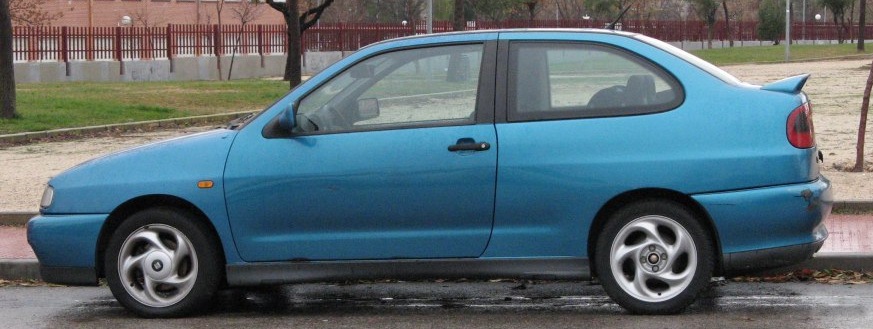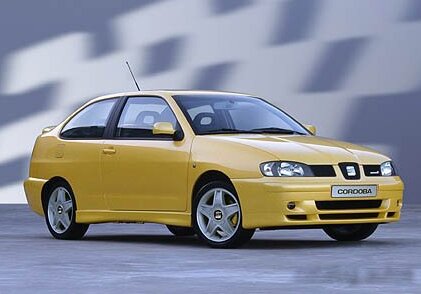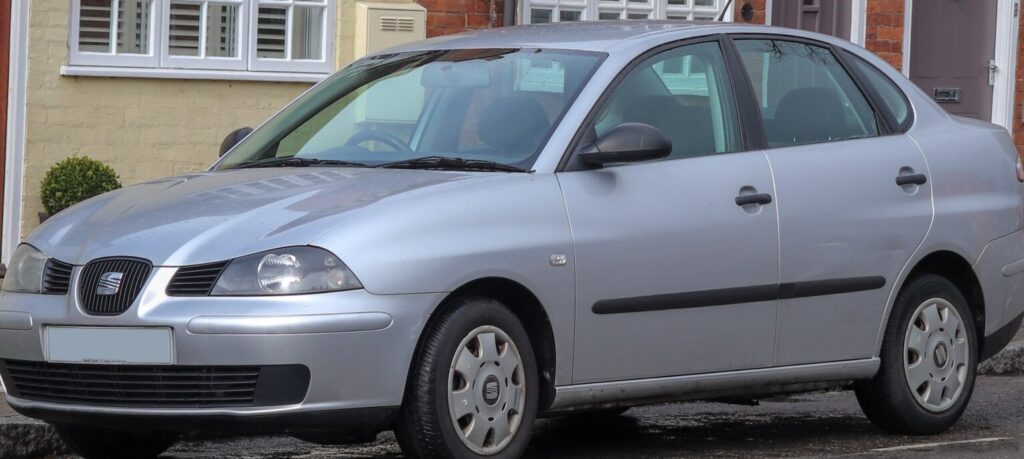
The SEAT Córdoba II 2.0 i Sport, produced between September 2002 and November 2008, represented a performance-oriented variant within the second generation of SEAT’s compact sedan. Positioned as a step up from the base models, the 2.0 i Sport aimed to deliver a more engaging driving experience while maintaining the Córdoba’s reputation for practicality and value. It was a key offering in the European market, where SEAT, as part of the Volkswagen Group, competed directly with models like the Volkswagen Golf and Ford Focus. The Córdoba II was built on the Volkswagen Group’s A4 platform (internally designated 1HX0), shared with the Volkswagen Bora, Audi A3, and Škoda Octavia, providing a solid foundation for a range of body styles and engine options.
| Brand | SEAT |
| Model | Córdoba |
| Generation | Córdoba II |
| Type (Engine) | 2.0 i Sport (115 Hp) |
| Start of production | September, 2002 |
| End of production | November, 2008 |
| Powertrain Architecture | Internal Combustion engine |
| Body type | Sedan |
| Seats | 5 |
| Doors | 4 |
| Fuel consumption (urban) | 11 l/100 km (21.4 US mpg) |
| Fuel consumption (extra urban) | 6 l/100 km (39.2 US mpg) |
| Fuel Type | Petrol (Gasoline) |
| Acceleration 0 – 100 km/h | 10.4 sec |
| Acceleration 0 – 62 mph | 10.4 sec |
| Acceleration 0 – 60 mph | 9.9 sec |
| Maximum speed | 200 km/h (124.27 mph) |
| Weight-to-power ratio | 9.8 kg/Hp |
| Weight-to-torque ratio | 6.6 kg/Nm |
| Power | 115 Hp @ 5400 rpm |
| Torque | 170 Nm @ 2400 rpm (125.39 lb.-ft. @ 2400 rpm) |
| Engine layout | Front, Transverse |
| Engine Model/Code | AZL, BBX |
| Engine displacement | 1984 cm3 (121.07 cu. in.) |
| Number of cylinders | 4 |
| Engine configuration | Inline |
| Cylinder Bore | 82.5 mm (3.25 in.) |
| Piston Stroke | 92.8 mm (3.65 in.) |
| Compression ratio | 10.5:1 |
| Number of valves per cylinder | 2 |
| Fuel injection system | Multi-port manifold injection |
| Engine aspiration | Naturally aspirated engine |
| Valvetrain | OHC |
| Engine oil capacity | 4.5 l (4.76 US qt | 3.96 UK qt) |
| Coolant | 6 l (6.34 US qt | 5.28 UK qt) |
| Kerb Weight | 1122 kg (2473.59 lbs.) |
| Max. weight | 1653 kg (3644.24 lbs.) |
| Max load | 531 kg (1170.65 lbs.) |
| Trunk (boot) space – minimum | 485 l (17.13 cu. ft.) |
| Fuel tank capacity | 45 l (11.89 US gal | 9.9 UK gal) |
| Length | 4280 mm (168.5 in.) |
| Width | 1698 mm (66.85 in.) |
| Height | 1441 mm (56.73 in.) |
| Wheelbase | 2460 mm (96.85 in.) |
| Front track | 1419 mm (55.87 in.) |
| Rear (Back) track | 1408 mm (55.43 in.) |
| Drivetrain Architecture | Front wheel drive |
| Number of gears | 5 |
| Gearbox type | Manual transmission |
| Front suspension | Coil spring |
| Rear suspension | Coil spring |
| Front brakes | Ventilated discs |
| Rear brakes | Drum |
| Assisting systems | ABS (Anti-lock braking system) |
| Steering type | Steering rack and pinion |
| Power steering | Hydraulic Steering |
| Tires size | 195/55 0R15 |
Powertrain & Engine Architecture
The heart of the Córdoba II 2.0 i Sport was the 1984cc inline-four cylinder engine, identified by engine codes AZL and BBX. This engine was a naturally aspirated unit featuring multi-port fuel injection and an overhead camshaft (OHC) valvetrain. The 10.5:1 compression ratio contributed to its respectable power output for its displacement. The engine’s design was relatively simple and robust, a hallmark of Volkswagen Group engineering at the time. The five-speed manual transmission was the only gearbox option available with this engine, prioritizing driver engagement over the convenience of an automatic. The transmission’s gear ratios were tuned to provide a balance between acceleration and fuel efficiency, though the Sport model’s focus leaned towards performance.
Driving Characteristics
The 2.0 i Sport offered a noticeable improvement in driving dynamics compared to the lower-powered Córdoba variants. With 115 horsepower and 125 lb-ft of torque, the car could accelerate from 0 to 60 mph in approximately 9.9 seconds and reach a top speed of 124 mph. While not a sports car by any means, the 2.0-liter engine provided sufficient power for confident overtaking and enjoyable cruising. The five-speed manual transmission allowed drivers to fully utilize the engine’s powerband, and the relatively lightweight chassis contributed to nimble handling. Compared to the 1.4 or 1.6-liter models, the 2.0 i Sport felt significantly more responsive, particularly at higher speeds. The manual transmission also offered better fuel economy than an automatic would have, though the Sport model wasn’t primarily purchased for its efficiency.
Equipment & Trim Levels
The “Sport” designation indicated a higher level of equipment compared to the base Córdoba models. Standard features typically included alloy wheels, a sport-tuned suspension, and upgraded interior trim. Inside, the 2.0 i Sport often featured sport seats with enhanced bolstering, providing better support during cornering. Air conditioning, power windows, and central locking were also commonly included. Optional extras could include a sunroof, upgraded audio system, and metallic paint finishes. The interior design was functional and straightforward, reflecting the Córdoba’s value-oriented positioning. The dashboard layout was typical of Volkswagen Group vehicles of the era, with clearly labeled controls and a focus on ergonomics.
Chassis & Braking
The Córdoba II utilized a MacPherson strut front suspension and a coil spring rear suspension. The Sport model often featured a slightly stiffer suspension setup compared to the standard versions, enhancing handling and reducing body roll. Braking duties were handled by ventilated discs at the front and drum brakes at the rear. Anti-lock Braking System (ABS) was standard, providing improved stopping power and control in emergency situations. The chassis was designed to provide a comfortable ride while maintaining a reasonable level of stability and handling. The steering was rack and pinion, offering precise and responsive control.
Market Reception & Comparison
The SEAT Córdoba II 2.0 i Sport was generally well-received by automotive critics as a practical and enjoyable compact sedan. It offered a good balance of performance, fuel economy, and value. Compared to the lower-powered Córdoba models, the 2.0 i Sport was praised for its improved acceleration and handling. However, some critics noted that the interior materials were not as refined as those found in some of its competitors, such as the Volkswagen Golf. In terms of fuel economy, the 2.0 i Sport was comparable to other 2.0-liter gasoline engines of the time, achieving around 21-39 mpg depending on driving conditions. The 1.4 and 1.6 liter models offered better fuel economy, but at the expense of performance.
Legacy
The SEAT Córdoba II 2.0 i Sport, while not a particularly rare or collectible car, has developed a following among enthusiasts who appreciate its simple, reliable engineering and engaging driving experience. The AZL and BBX engines are known for their durability, and with proper maintenance, they can provide many years of reliable service. In the used car market, these models are often sought after by those looking for an affordable and practical compact sedan with a bit more performance than the base models. Parts availability is generally good, thanks to the Córdoba’s shared components with other Volkswagen Group vehicles. Today, the Córdoba II 2.0 i Sport represents a relatively affordable entry point into the world of European motoring, offering a taste of SEAT’s sporty heritage.