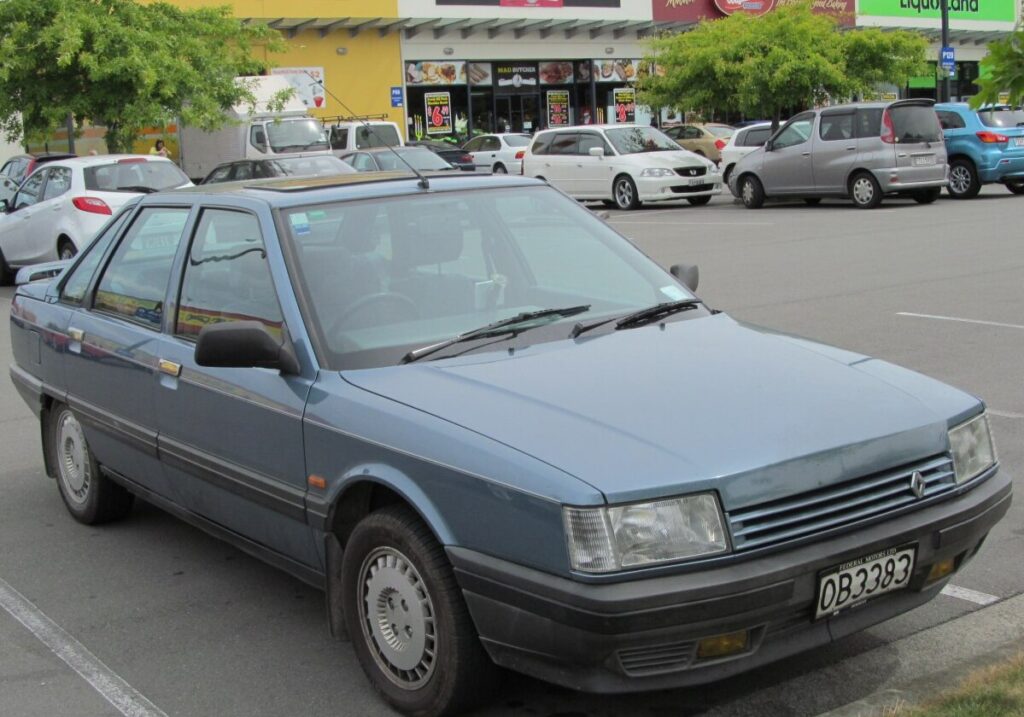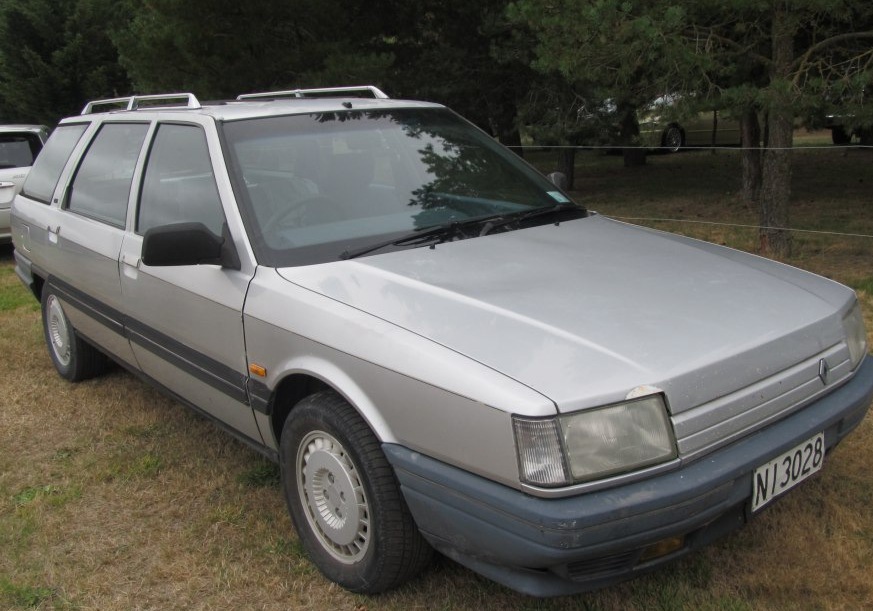
The Renault 21 Combi 1.7 i, produced between 1989 and 1993, was a practical and popular estate car within the Renault 21 range. Part of the K48 generation, the Combi (Renault’s term for station wagon) offered increased cargo capacity compared to the saloon version, making it a favored choice for families and those requiring versatile transportation. This particular variant, equipped with the 1.7-liter engine producing 95 horsepower, represented a mid-range offering, balancing affordability with reasonable performance. It occupied a space between the base models and the more powerful 2.0-liter and turbocharged options.
Technical Specifications
| Brand | Renault |
| Model | 21 |
| Generation | 21 Combi (K48) |
| Type (Engine) | 1.7 i (95 Hp) |
| Start of production | 1989 |
| End of production | 1993 |
| Powertrain Architecture | Internal Combustion engine |
| Body type | Station wagon (estate) |
| Seats | 5 |
| Doors | 5 |
| Fuel consumption (urban) | 10.5 l/100 km (22.4 US mpg, 26.9 UK mpg, 9.5 km/l) |
| Fuel consumption (extra urban) | 5.9 l/100 km (39.9 US mpg, 47.9 UK mpg, 16.9 km/l) |
| Fuel consumption (combined) | 7.5 l/100 km (31.4 US mpg, 37.7 UK mpg, 13.3 km/l) |
| Fuel Type | Petrol (Gasoline) |
| Acceleration 0 – 100 km/h | 10.7 sec |
| Acceleration 0 – 62 mph | 10.7 sec |
| Acceleration 0 – 60 mph | 10.2 sec |
| Maximum speed | 185 km/h (114.95 mph) |
| Weight-to-power ratio | 11.3 kg/Hp, 88.4 Hp/tonne |
| Weight-to-torque ratio | 7.5 kg/Nm, 133 Nm/tonne |
| Power | 95 Hp @ 5200 rpm |
| Power per litre | 55.2 Hp/l |
| Torque | 143 Nm @ 3000 rpm (105.47 lb.-ft. @ 3000 rpm) |
| Engine layout | Front, Transverse |
| Engine Model/Code | F3N |
| Engine displacement | 1721 cm3 (105.02 cu. in.) |
| Number of cylinders | 4 |
| Engine configuration | Inline |
| Cylinder Bore | 81 mm (3.19 in.) |
| Piston Stroke | 83.5 mm (3.29 in.) |
| Compression ratio | 9.5:1 |
| Number of valves per cylinder | 2 |
| Fuel injection system | Multi-port manifold injection |
| Engine aspiration | Naturally aspirated engine |
| Valvetrain | OHC |
| Engine oil capacity | 5.3 l (5.6 US qt | 4.66 UK qt) |
| Coolant | 6 l (6.34 US qt | 5.28 UK qt) |
| Kerb Weight | 1075 kg (2369.97 lbs.) |
| Max. weight | 1665 kg (3670.7 lbs.) |
| Max load | 590 kg (1300.73 lbs.) |
| Trunk (boot) space – minimum | 674 l (23.8 cu. ft.) |
| Trunk (boot) space – maximum | 1694 l (59.82 cu. ft.) |
| Fuel tank capacity | 66 l (17.44 US gal | 14.52 UK gal) |
| Length | 4693 mm (184.76 in.) |
| Width | 1726 mm (67.95 in.) |
| Height | 1450 mm (57.09 in.) |
| Wheelbase | 2809 mm (110.59 in.) |
| Front track | 1454 mm (57.24 in.) |
| Rear (Back) track | 1408 mm (55.43 in.) |
| Drivetrain Architecture | The Internal combustion engine (ICE) drives the front wheels of the vehicle. |
| Drive wheel | Front wheel drive |
| Number of gears and type of gearbox | 5 gears, manual transmission |
| Front suspension | Spring Strut |
| Rear suspension | Torsion |
| Front brakes | Ventilated discs |
| Rear brakes | Drum |
| Assisting systems | ABS (Anti-lock braking system) |
| Steering type | Steering rack and pinion |
| Power steering | Hydraulic Steering |
| Tires size | 175/65 R13 |
| Wheel rims size | 15 |
Powertrain & Engine Architecture
The Renault 21 Combi 1.7 i utilized the F3N engine, a 1721cc inline-four cylinder gasoline engine. This engine featured a single overhead camshaft (OHC) valvetrain with two valves per cylinder. Fuel delivery was managed by a multi-port fuel injection system, contributing to improved efficiency and smoother operation compared to earlier carbureted designs. The F3N engine was known for its relative simplicity and durability, though it wasn’t a powerhouse in terms of outright performance. The engine produced 95 horsepower at 5200 rpm and 143 Nm (105.47 lb-ft) of torque at 3000 rpm. The engine was transversely mounted, driving the front wheels. The standard transmission was a five-speed manual, although an optional four-speed automatic transmission was available, impacting performance and fuel economy.
Driving Characteristics
The 1.7-liter engine, paired with the five-speed manual transmission, provided adequate performance for everyday driving. Acceleration to 60 mph took around 10.2 seconds, and the top speed was approximately 115 mph. While not particularly sporty, the engine offered sufficient power for highway cruising and overtaking maneuvers. The automatic transmission option, while offering convenience, noticeably reduced acceleration and increased fuel consumption. The gear ratios were tuned for fuel efficiency rather than outright performance. Compared to the 2.0-liter and turbocharged versions, the 1.7 i felt less responsive, particularly at higher speeds. However, it offered a more relaxed and economical driving experience.
Equipment & Trim Levels
The 1.7 i Combi typically came with a reasonable level of standard equipment. This included power steering, central locking, and an AM/FM radio. Interior upholstery was typically cloth, with a relatively simple dashboard layout. Optional extras included air conditioning, electric windows, and a sunroof. The trim level varied depending on the market, but generally, the 1.7 i Combi was positioned as a mid-range offering, providing a good balance of features and affordability. The interior was designed with practicality in mind, offering ample space for passengers and cargo.
Chassis & Braking
The Renault 21 Combi featured a front-wheel-drive layout with independent front suspension utilizing MacPherson struts and a torsion beam rear suspension. This setup provided a comfortable ride, although handling wasn’t particularly sharp. The front brakes were ventilated discs, while the rear brakes were drums. An anti-lock braking system (ABS) was available as an option, enhancing safety. The suspension was tuned for comfort, prioritizing ride quality over sporty handling. The steering was a rack-and-pinion system with hydraulic power assistance, making it relatively easy to maneuver.
Market Reception & Comparison
The Renault 21 Combi 1.7 i was generally well-received as a practical and affordable family car. Critics praised its spacious interior, comfortable ride, and reasonable fuel economy. However, some noted its lack of outright performance compared to higher-powered variants. Compared to the 2.0-liter and turbocharged models, the 1.7 i offered lower running costs but less excitement. The automatic transmission version was often criticized for its sluggish performance. In terms of reliability, the F3N engine was generally considered durable, although regular maintenance was essential. Fuel economy was a strong point, averaging around 31.4 US mpg in combined driving.
Legacy
The Renault 21 Combi 1.7 i remains a relatively common sight on European roads today, testament to its durability and practicality. The F3N engine is known for its longevity, and parts availability is generally good. While not a collector’s item, well-maintained examples are appreciated by enthusiasts for their simplicity and affordability. The 1.7 i variant represents a sweet spot in the Renault 21 range, offering a good balance of economy, practicality, and reliability. It’s a reminder of a time when estate cars were valued for their versatility and practicality rather than outright performance.