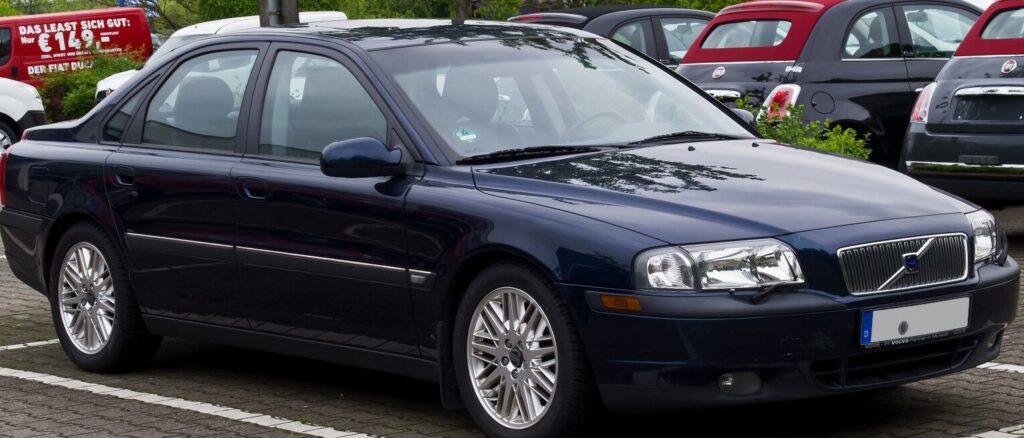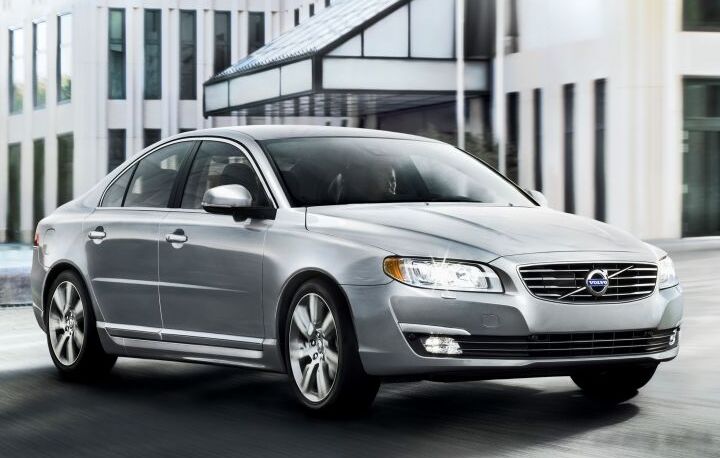
The Volvo S80 II (facelift 2013) 1.6 D2, producing 115 horsepower, represents an entry-level offering within the second generation of Volvo’s flagship sedan. Introduced in 2013 and continuing through 2016, this variant was primarily aimed at the European market, where fuel efficiency and lower running costs were highly valued. It occupied the lower end of the S80 lineup, positioned below the more powerful D4 and D5 diesel engines, as well as the petrol-powered T4 and T5 variants. The facelift brought styling updates and revised technology, aiming to keep the S80 competitive in the executive sedan segment.
Technical Specifications
| Brand | Volvo |
| Model | S80 |
| Generation | S80 II (facelift 2013) |
| Type (Engine) | 1.6 D2 (115 Hp) |
| Start of production | 2013 |
| End of production | 2016 |
| Powertrain Architecture | Internal Combustion engine |
| Body type | Sedan |
| Seats | 5 |
| Doors | 4 |
| Fuel consumption (urban) | 4.6-5.3 l/100 km (51.1 – 44.4 US mpg, 61.4 – 53.3 UK mpg, 21.7 – 18.9 km/l) |
| Fuel consumption (extra urban) | 3.8-4.0 l/100 km (61.9 – 58.8 US mpg, 74.3 – 70.6 UK mpg, 26.3 – 25 km/l) |
| Fuel consumption (combined) | 4.5 – 4.1 l/100 km (52.3 – 57.4 US mpg, 62.8 – 68.9 UK mpg, 22.2 – 24.4 km/l) |
| CO2 emissions | 119 – 107 g/km |
| Fuel Type | Diesel |
| Acceleration 0 – 100 km/h | 11.5 sec |
| Acceleration 0 – 62 mph | 11.5 sec |
| Acceleration 0 – 60 mph | 10.9 sec |
| Maximum speed | 190 km/h (118.06 mph) |
| Emission standard | Euro 5 |
| Weight-to-power ratio | 14.2 kg/Hp, 70.6 Hp/tonne |
| Weight-to-torque ratio | 6 kg/Nm, 165.7 Nm/tonne |
| Power | 115 Hp @ 3600 rpm |
| Power per litre | 73.7 Hp/l |
| Torque | 270 Nm @ 1700-2500 rpm (199.14 lb.-ft. @ 1700-2500 rpm) |
| Engine layout | Front, Transverse |
| Engine Model/Code | D4162T |
| Engine displacement | 1560 cm3 (95.2 cu. in.) |
| Number of cylinders | 4 |
| Engine configuration | Inline |
| Cylinder Bore | 75 mm (2.95 in.) |
| Piston Stroke | 88.3 mm (3.48 in.) |
| Compression ratio | 16:1 |
| Number of valves per cylinder | 2 |
| Fuel injection system | Diesel Commonrail |
| Engine aspiration | Turbocharger, Intercooler |
| Valvetrain | SOHC |
| Engine oil capacity | 3.8 l (4.02 US qt | 3.34 UK qt) |
| Coolant | 10.5 l (11.1 US qt | 9.24 UK qt) |
| Kerb Weight | 1629 kg (3591.33 lbs.) |
| Max. weight | 2090 kg (4607.66 lbs.) |
| Max load | 461 kg (1016.33 lbs.) |
| Trunk (boot) space – minimum | 480 l (16.95 cu. ft.) |
| Fuel tank capacity | 70 l (18.49 US gal | 15.4 UK gal) |
| Length | 4854 mm (191.1 in.) |
| Width | 1907 mm (75.08 in.) |
| Height | 1493 mm (58.78 in.) |
| Wheelbase | 2835 mm (111.61 in.) |
| Front track | 1588-1578 mm (62.52 – 62.13 in.) |
| Rear (Back) track | 1585-1575 mm (62.4 – 62.01 in.) |
| Ride height (ground clearance) | 151 mm (5.94 in.) |
| Minimum turning circle | 11.7 m (38.39 ft.) |
| Drivetrain Architecture | The Internal combustion engine (ICE) drives the front wheels of the vehicle. |
| Drive wheel | Front wheel drive |
| Number of gears and type of gearbox | 6 gears, manual transmission |
| Front suspension | Independent, type McPherson with coil spring and anti-roll bar |
| Rear suspension | Independent coil spring |
| Front brakes | Ventilated discs |
| Rear brakes | Ventilated discs |
| Assisting systems | ABS (Anti-lock braking system) |
| Steering type | Steering rack and pinion |
INTRODUCTION
The Volvo S80 II 1.6 D2 (115 Hp) was a key component of Volvo’s strategy to offer a more accessible and fuel-efficient option within the executive sedan class. Built on the Volvo Y20 platform (also known as the 1HX0/A3 platform), the S80 II represented a significant step forward in design and technology compared to its predecessor. The 2013 facelift refined the exterior styling, particularly the front fascia, and introduced updated interior materials and technology. This D2 variant was specifically tailored for markets prioritizing economy, offering a balance between comfort and operational costs.
Powertrain & Engine Architecture
At the heart of the S80 II 1.6 D2 lies the Volvo D4162T, a 1.6-liter inline-four cylinder diesel engine. This engine utilizes a common-rail direct injection system, delivering fuel directly into the combustion chamber at extremely high pressure for optimized combustion. The engine is turbocharged and intercooled, enhancing power output and efficiency. The D4162T engine is a Single Overhead Cam (SOHC) design with two valves per cylinder. The engine’s control unit manages fuel injection, turbocharger boost, and other parameters to optimize performance and minimize emissions. This variant was typically paired with a 6-speed manual transmission, although an automatic transmission was sometimes available as an option. The automatic transmission, a conventional torque converter type, was geared for fuel efficiency rather than outright performance.
Driving Characteristics
The 115 horsepower and 270 Nm (199 lb-ft) of torque produced by the 1.6 D2 engine resulted in a driving experience focused on fuel economy and relaxed cruising. Acceleration from 0-62 mph took approximately 11.5 seconds, making it noticeably slower than the higher-powered S80 variants. The engine’s torque peak, available from 1700-2500 rpm, provided adequate pulling power for everyday driving situations, but overtaking maneuvers required careful planning. The 6-speed manual transmission offered precise shifts, while the optional automatic transmission prioritized smooth gear changes over sporty responsiveness. The gear ratios were optimized for maximizing fuel efficiency at highway speeds.
Equipment & Trim Levels
The S80 II 1.6 D2 typically came with a respectable level of standard equipment, reflecting its position as a premium sedan. Standard features often included climate control, power windows and mirrors, a basic audio system, and alloy wheels. Safety was a key Volvo priority, and even the base D2 model included features like ABS, traction control, and multiple airbags. Higher trim levels offered options such as leather upholstery, a premium audio system, navigation, parking sensors, and advanced safety features like City Safety (Volvo’s automatic braking system). Interior upholstery was typically cloth in the base trim, with leather available as an upgrade. The dashboard layout was clean and functional, with a focus on user-friendliness.
Chassis & Braking
The S80 II 1.6 D2 utilized an independent suspension system on both the front and rear axles. The front suspension employed a McPherson strut design with coil springs and an anti-roll bar, while the rear suspension featured an independent coil spring setup. This configuration provided a comfortable ride quality, absorbing bumps and imperfections in the road surface effectively. Braking duties were handled by ventilated discs on all four wheels, providing adequate stopping power. ABS (Anti-lock Braking System) was standard, enhancing braking performance and stability, particularly in adverse conditions. Stabilizer bar thickness was moderate, prioritizing comfort over aggressive handling.
Market Reception & Comparison
The Volvo S80 II 1.6 D2 was generally well-received by critics for its fuel efficiency and comfortable ride. However, its relatively modest power output was often noted as a drawback, particularly when compared to more powerful competitors. Compared to the S80 D4 and D5 models, the D2 offered significantly lower running costs but sacrificed performance. The D4, with its higher horsepower and torque, provided a more engaging driving experience, while the D5 offered even greater performance and refinement. In terms of reliability, the D4162T engine proved to be generally robust, although regular maintenance was essential to prevent issues with the diesel particulate filter (DPF) and fuel injection system.
Legacy
The Volvo S80 II 1.6 D2 remains a relatively affordable and practical option in the used car market. Its fuel efficiency and comfortable ride continue to appeal to buyers seeking a spacious and reliable sedan. While not as sought-after as the higher-powered variants, the D2 offers a compelling value proposition for those prioritizing economy and low running costs. The D4162T engine, when properly maintained, has proven to be a durable and long-lasting powertrain. However, potential buyers should be aware of the potential for DPF issues and ensure that the vehicle has a documented service history.