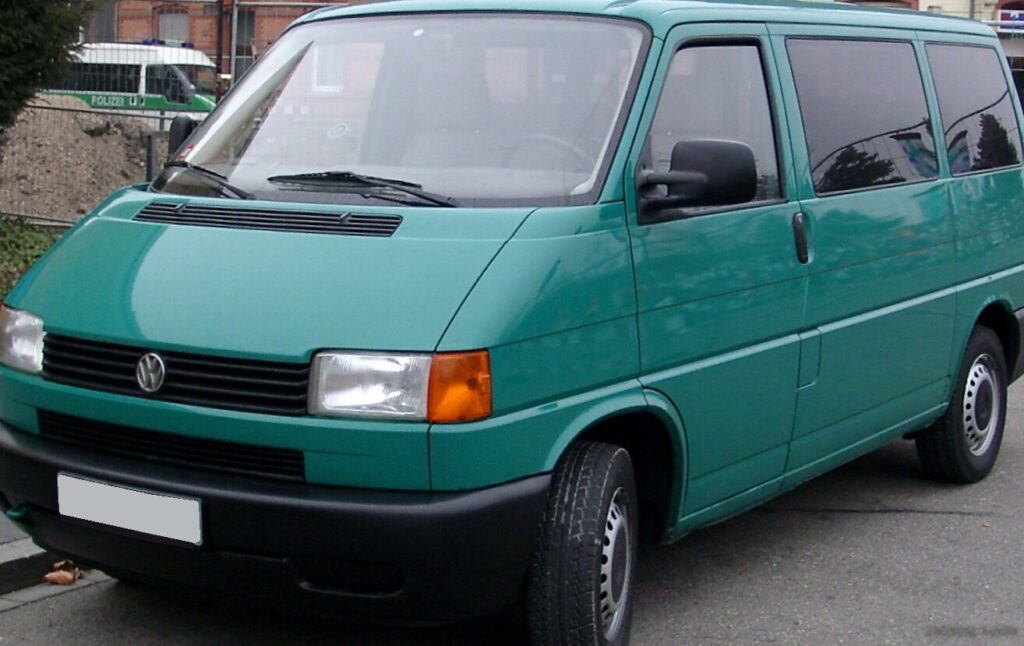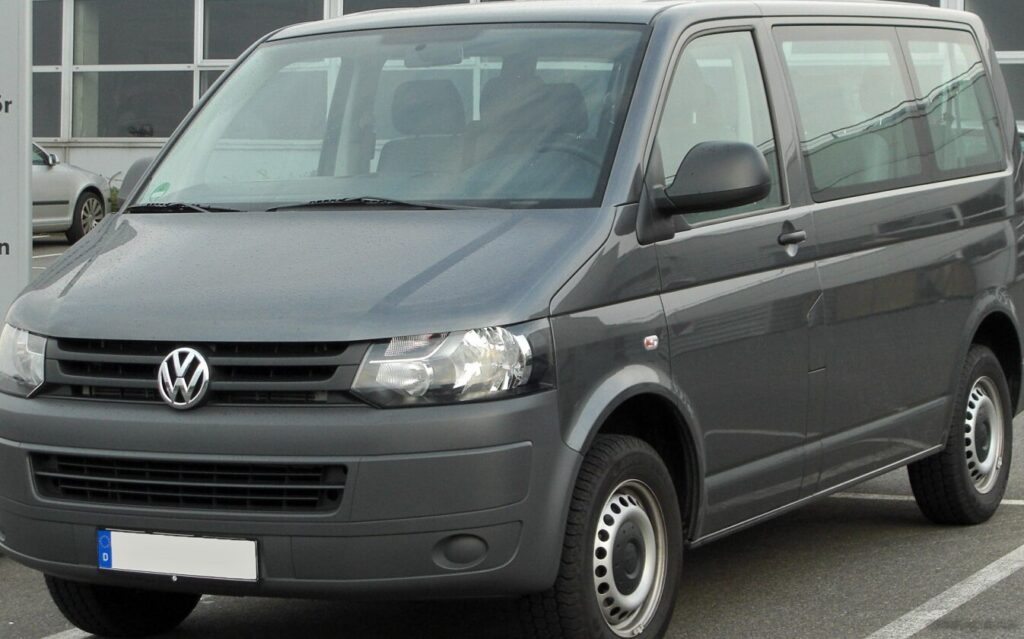
The Volkswagen Transporter (T5) facelift, produced from 2009 to 2015, represented a significant update to the fifth generation of Volkswagen’s iconic commercial vehicle. Within this generation, the Kombi variant offered a versatile blend of cargo and passenger capacity, appealing to both commercial users and families. The 2.0 TDI (140 hp) 4MOTION L2H3 configuration, introduced during the facelift, was a popular choice, particularly in European markets, offering a balance of fuel efficiency, all-wheel-drive capability, and practical load space. The “L2H3” designation refers to the vehicle’s body length and roof height, indicating a long wheelbase and high roof, maximizing interior volume.
Technical Specifications
| Brand | Volkswagen |
| Model | Transporter |
| Generation | Transporter (T5, facelift 2009) Kombi |
| Type (Engine) | 2.0 TDI (140 Hp) 4MOTION L2H3 |
| Start of production | 2009 |
| End of production | 2015 |
| Powertrain Architecture | Internal Combustion engine |
| Body type | Van |
| Seats | 4-9 |
| Doors | 4-5 |
| Fuel consumption (economy) – urban (NEDC) | 10.2 l/100 km (23.1 US mpg, 27.7 UK mpg, 9.8 km/l) |
| Fuel consumption (economy) – extra urban (NEDC) | 7.3 l/100 km (32.2 US mpg, 38.7 UK mpg, 13.7 km/l) |
| Fuel consumption (economy) – combined (NEDC) | 8.4 l/100 km (28 US mpg, 33.6 UK mpg, 11.9 km/l) |
| CO2 emissions (NEDC) | 221 g/km |
| Fuel Type | Diesel |
| Acceleration 0 – 100 km/h | 14.1 sec |
| Acceleration 0 – 62 mph | 14.1 sec |
| Acceleration 0 – 60 mph | 13.4 sec |
| Maximum speed | 158 km/h (98.18 mph) |
| Emission standard | Euro 5 |
| Weight-to-power ratio | 13.9 kg/Hp, 71.7 Hp/tonne |
| Weight-to-torque ratio | 5.7 kg/Nm, 174.2 Nm/tonne |
| Power | 140 Hp @ 3500 rpm |
| Power per litre | 71.1 Hp/l |
| Torque | 340 Nm @ 1750-2500 rpm (250.77 lb.-ft. @ 1750-2500 rpm) |
| Engine layout | Front, Transverse |
| Engine Model/Code | EA189 / CAAC |
| Engine displacement | 1968 cm3 (120.09 cu. in.) |
| Number of cylinders | 4 |
| Engine configuration | Inline |
| Cylinder Bore | 81 mm (3.19 in.) |
| Piston Stroke | 95.5 mm (3.76 in.) |
| Compression ratio | 16.5:1 |
| Number of valves per cylinder | 4 |
| Fuel injection system | Diesel Commonrail |
| Engine aspiration | Turbocharger, Intercooler |
| Valvetrain | DOHC |
| Engine oil capacity | 7 l (7.4 US qt | 6.16 UK qt) |
| Coolant | 11 l (11.62 US qt | 9.68 UK qt) |
| Kerb Weight | 1952-2350 kg (4303.42 – 5180.86 lbs.) |
| Max. weight | 3000-3200 kg (6613.87 – 7054.79 lbs.) |
| Max load | 850-1048 kg (1873.93 – 2310.44 lbs.) |
| Trunk (boot) space – maximum | 9300 l (328.43 cu. ft.) |
| Fuel tank capacity | 80 l (21.13 US gal | 17.6 UK gal) |
| Permitted trailer load with brakes (12%) | 2500 kg (5511.56 lbs.) |
| Permitted trailer load without brakes | 750 kg (1653.47 lbs.) |
| Permitted towbar download | 100 kg (220.46 lbs.) |
| Length | 5292 mm (208.35 in.) |
| Width | 1904 mm (74.96 in.) |
| Width including mirrors | 2283 mm (89.88 in.) |
| Height | 2476 mm (97.48 in.) |
| Wheelbase | 3400 mm (133.86 in.) |
| Front overhang | 896 mm (35.28 in.) |
| Rear overhang | 996 mm (39.21 in.) |
| Ride height (ground clearance) | 201 mm (7.91 in.) |
| Minimum turning circle (turning diameter) | 13.2 m (43.31 ft.) |
| Approach angle | 21° |
| Departure angle | 17° |
| Ramp-over (brakeover) angle | 12° |
| Drivetrain Architecture | The Internal combustion engine (ICE) drives the front wheels permanently, and the rear wheels are driven through an electrically or mechanically operated clutch if necessary. |
| Drive wheel | All wheel drive (4×4) |
| Number of gears and type of gearbox | 6 gears, manual transmission |
| Front suspension | Independent, type McPherson with coil spring and anti-roll bar |
| Rear suspension | Independent coil spring, Transverse stabilizer, Trailing arm |
| Front brakes | Ventilated discs, 308×29.5 mm |
| Rear brakes | Ventilated discs, 294×22 mm |
| Assisting systems | ABS (Anti-lock braking system) |
| Steering type | Steering rack and pinion |
| Power steering | Hydraulic Steering |
| Tires size | 215/65 R16 |
| Wheel rims size | 6.5J x 16 |
INTRODUCTION
The Volkswagen Transporter T5, particularly the facelifted models from 2009 onwards, solidified the vehicle’s reputation as a versatile and reliable workhorse. The Kombi variant, bridging the gap between a full passenger carrier and a commercial van, offered flexible seating arrangements and ample cargo space. The 2.0 TDI 140 hp 4MOTION L2H3 model was positioned as a mid-range offering, appealing to buyers who needed the added security and capability of all-wheel drive without the higher cost and complexity of the more powerful TDI engines. It was a common sight in European countries with varied terrain and inclement weather, serving as a dependable vehicle for tradespeople, families, and adventure enthusiasts alike.
Powertrain & Engine Architecture
At the heart of this Transporter variant lies the EA189 series 2.0-liter inline-four diesel engine, specifically the CAAC code. This engine utilizes a common rail direct injection system, delivering fuel at extremely high pressure for improved combustion efficiency and reduced emissions. The engine features a turbocharger with an intercooler, boosting power output and enhancing torque across a broad RPM range. The DOHC (Double Overhead Camshaft) valvetrain, with four valves per cylinder, further optimizes engine breathing. The 140 horsepower peak is achieved at 3500 rpm, while the substantial 340 Nm (250.77 lb-ft) of torque is available from 1750 to 2500 rpm. This broad torque curve is particularly beneficial for a van of this size and weight, providing strong pulling power and effortless cruising. The engine is transversely mounted in the front of the vehicle. The 4MOTION system is a part-time all-wheel-drive system, engaging the rear wheels when traction is lost at the front, providing enhanced stability and control in slippery conditions.
Driving Characteristics
The 2.0 TDI 140 hp engine, coupled with a manual transmission, provided adequate, though not exhilarating, performance. Acceleration from 0-60 mph took around 13.4 seconds, and the top speed was approximately 98 mph. The focus was on usability and efficiency rather than outright speed. The engine’s strong low-end torque made it well-suited for everyday driving and hauling loads. The 4MOTION system significantly improved traction, especially on loose surfaces or in wet conditions. Compared to the more powerful 180 hp TDI variant, the 140 hp model offered a more economical driving experience, but lacked the extra punch for quicker overtaking or steeper inclines. The manual transmission, while not particularly sporty, was robust and reliable, offering precise gear changes.
Equipment & Trim Levels
The Kombi trim level typically included features such as air conditioning, power windows, central locking, and an adjustable steering wheel. Interior upholstery was generally cloth, with durable and practical materials used throughout the cabin. Depending on the specific market and optional extras selected, features like a CD player with radio, heated mirrors, and parking sensors could be added. The flexible seating configuration was a key selling point, allowing the rear seats to be folded, removed, or even rotated to create a versatile space for passengers and cargo. The L2H3 body style provided a generous cargo volume of 9300 liters (328.43 cu. ft.) with the rear seats folded.
Chassis & Braking
The T5 Transporter utilized an independent suspension setup, with McPherson struts at the front and a trailing arm arrangement at the rear. This provided a comfortable ride quality, even when the vehicle was loaded. A stabilizer bar was fitted to both axles to reduce body roll during cornering. The braking system consisted of ventilated discs on all four wheels, providing ample stopping power. ABS (Anti-lock Braking System) was standard, enhancing safety and control during emergency braking situations. The 4MOTION system contributed to improved stability and handling, particularly in adverse weather conditions.
Market Reception & Comparison
The 2.0 TDI 140 hp 4MOTION Kombi was well-received in the market as a practical and reliable all-wheel-drive van. Critics praised its fuel efficiency, versatility, and robust build quality. Compared to the more expensive 180 hp TDI variant, it offered a more affordable entry point into the 4MOTION range. While some reviewers noted the engine’s lack of outright power, they acknowledged its suitability for most everyday tasks. Fuel economy was a strong point, with combined figures around 33.6 mpg (UK) making it an economical choice for businesses and individuals alike.
Legacy
The EA189 engine, while generally reliable, has been subject to scrutiny regarding emissions compliance, leading to software updates and recalls in some markets. However, well-maintained examples of the 2.0 TDI 140 hp Transporter T5 continue to be popular on the used car market. The 4MOTION system remains a desirable feature, adding to the vehicle’s resale value. The T5 Transporter, in all its variants, has earned a reputation for durability and longevity, making it a dependable choice for those seeking a versatile and practical commercial vehicle.