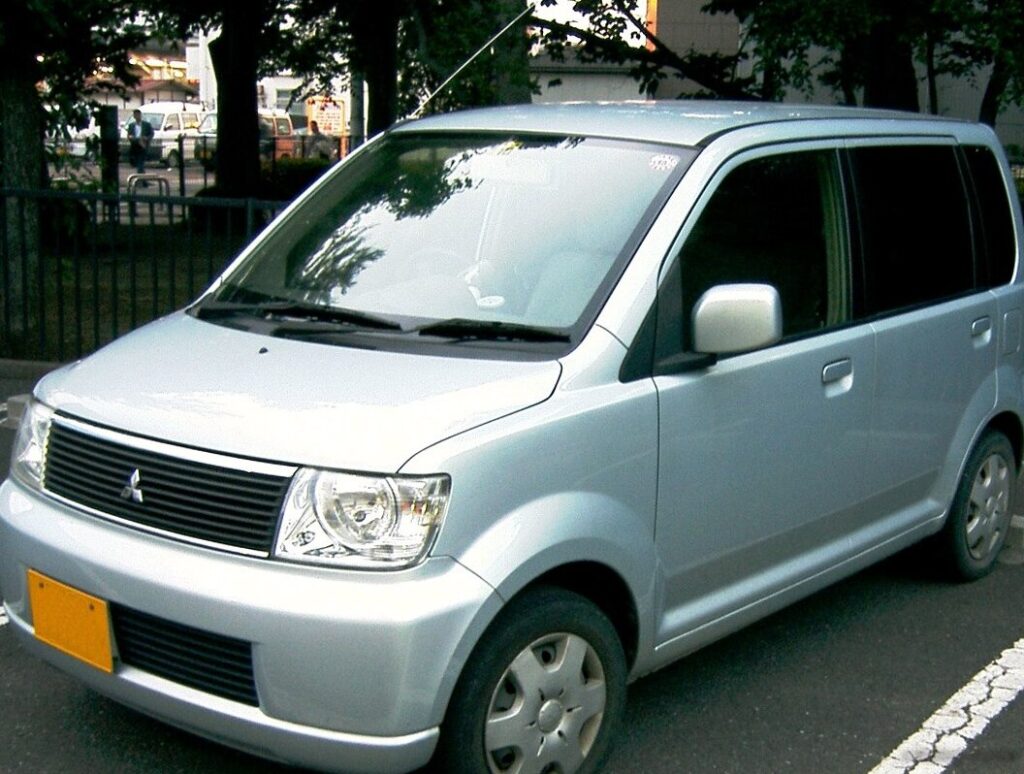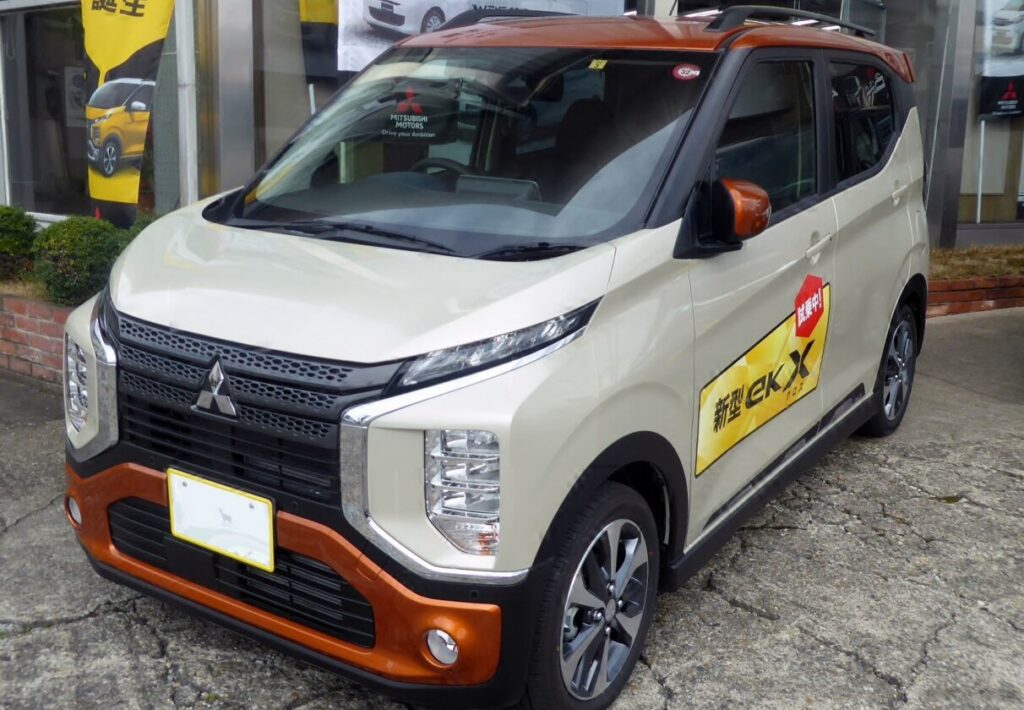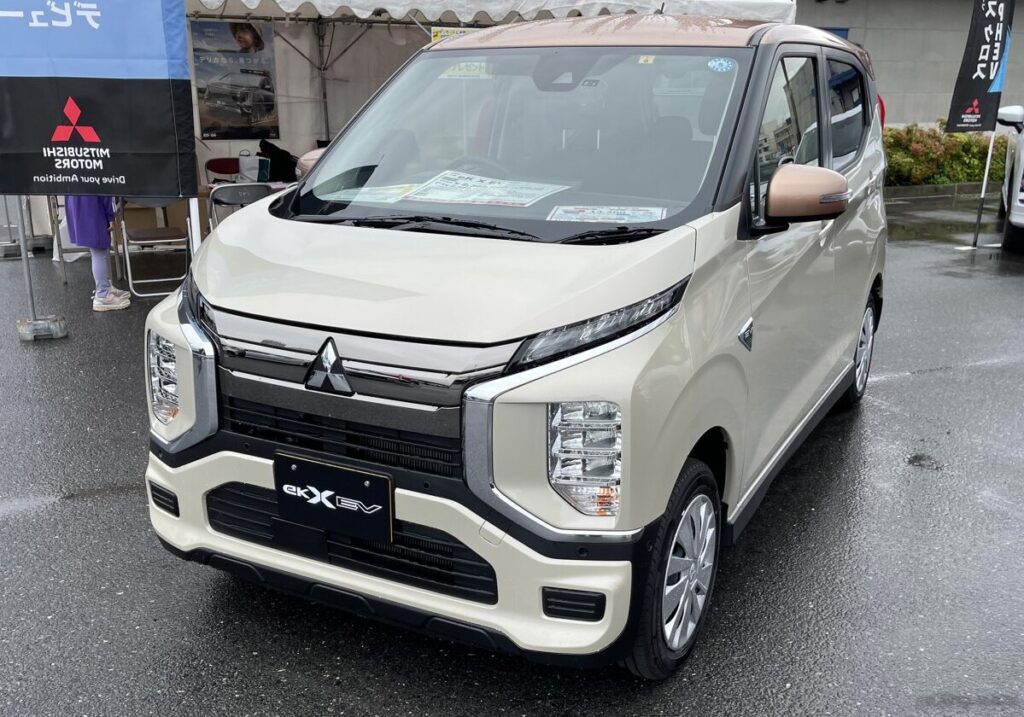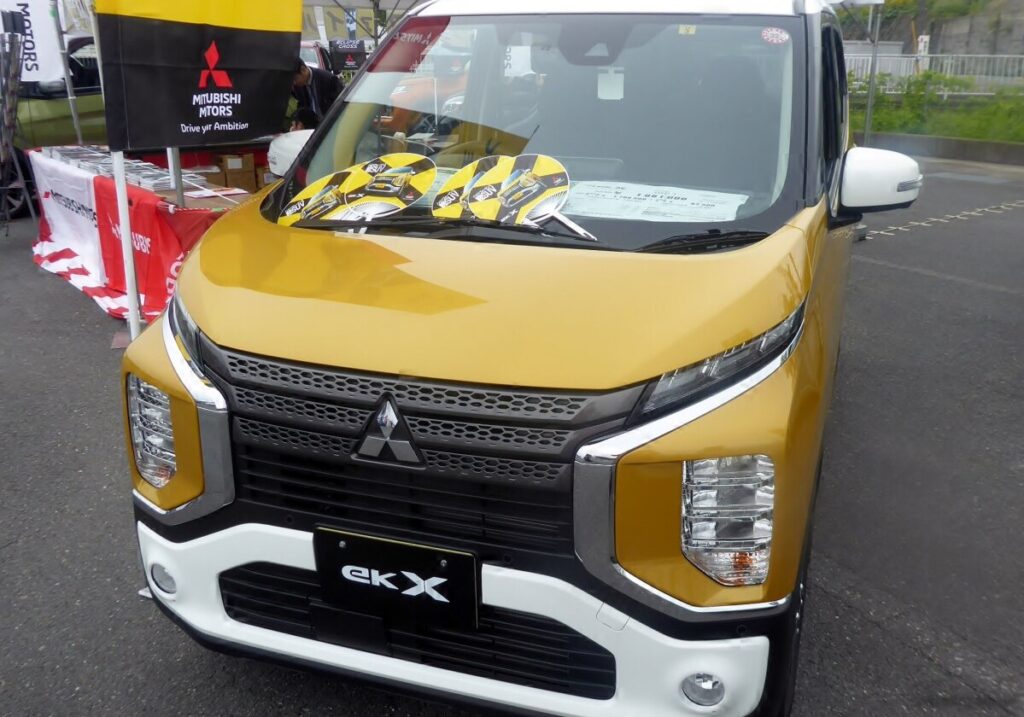
The Mitsubishi eK X 0.7 (52 hp) 4WD Hybrid CVT is a compact, Japanese-market kei car produced by Mitsubishi Motors beginning in 2019. Representing the second generation of the eK X, this variant occupies the entry-level position within the eK lineup, focusing on fuel efficiency and affordability. It’s a significant vehicle in Japan, where kei cars benefit from reduced taxes and insurance due to their diminutive size and engine displacement. The eK X is designed for urban commuting and offers a practical, economical transportation solution. This particular configuration, combining the 659cc engine with a hybrid system, continuously variable transmission (CVT), and all-wheel drive, aims to maximize fuel economy while providing enhanced traction in various weather conditions.
Technical Specifications
| Brand | Mitsubishi |
| Model | eK X |
| Type | 0.7 (52 Hp) 4WD Hybrid CVT |
| Start of production | 2019 |
| Powertrain Architecture | FHEV (Full Hybrid Electric Vehicle) |
| Body type | SUV, Crossover |
| Seats | 4 |
| Doors | 5 |
| Combined fuel consumption (WLTP) | 4.7 l/100 km (50 US mpg, 60.1 UK mpg, 21.3 km/l) |
| Fuel Type | Petrol (Gasoline) |
| Weight-to-power ratio | 17.5 kg/Hp, 57.1 Hp/tonne |
| Weight-to-torque ratio | 15.2 kg/Nm, 65.9 Nm/tonne |
| Battery technology | Lithium-ion (Li-Ion) |
| Battery location | Below the floor |
| Electric motor power | 2.7 Hp @ 1200 rpm |
| Electric motor Torque | 40 Nm @ 100 rpm (29.5 lb.-ft. @ 100 rpm) |
| Electric motor model/code | SM21 |
| Electric motor type | Synchronous |
| Power | 52 Hp @ 6400 rpm |
| Power per litre | 78.9 Hp/l |
| Torque | 60 Nm @ 3600 rpm (44.25 lb.-ft. @ 3600 rpm) |
| Engine layout | Front, Transverse |
| Engine Model/Code | BR06 |
| Engine displacement | 659 cm3 (40.21 cu. in.) |
| Number of cylinders | 3 |
| Engine configuration | Inline |
| Cylinder Bore | 62.7 mm (2.47 in.) |
| Piston Stroke | 71.2 mm (2.8 in.) |
| Compression ratio | 12:1 |
| Number of valves per cylinder | 4 |
| Engine aspiration | Naturally aspirated engine |
| Valvetrain | DOHC, VVT |
| Engine oil capacity | 2.8 l (2.96 US qt | 2.46 UK qt) |
| Coolant | 4 l (4.23 US qt | 3.52 UK qt) |
| Kerb Weight | 910-930 kg (2006.21 – 2050.3 lbs.) |
| Fuel tank capacity | 27 l (7.13 US gal | 5.94 UK gal) |
| Length | 3395 mm (133.66 in.) |
| Width | 1475 mm (58.07 in.) |
| Height | 1670 mm (65.75 in.) |
| Wheelbase | 2495 mm (98.23 in.) |
| Front track | 1300 mm (51.18 in.) |
| Rear track | 1290 mm (50.79 in.) |
| Ride height (ground clearance) | 155 mm (6.1 in.) |
| Minimum turning circle | 9.6 m (31.5 ft.) |
| Drivetrain Architecture | The Internal combustion engine (ICE) and the electric motor permanently drive the front wheels of the vehicle, capable of running in full electric or mixed mode, and if necessary through the electrically or mechanically controlled clutch, the rear wheels are driven. |
| Drive wheel | All wheel drive (4×4) |
| Number of gears and type of gearbox | automatic transmission CVT |
| Front suspension | Independent coil spring |
| Rear suspension | Independent multi-link suspension |
| Front brakes | Ventilated discs |
| Rear brakes | Drum |
| Assisting systems | ABS (Anti-lock braking system) |
| Steering type | Steering rack and pinion |
| Power steering | Electric Steering |
| Tires size | 155/65 R14; 165/55 R15 |
INTRODUCTION
The Mitsubishi eK X 0.7 (52 hp) 4WD Hybrid CVT, launched in 2019, is part of the second generation (launched in 2013, with a major refresh in 2019) of Mitsubishi’s popular kei car series. Built on the HA platform, the eK X aims to provide a blend of practicality, fuel efficiency, and affordability within the constraints of Japan’s kei car regulations. This variant specifically targets buyers seeking all-weather capability with its four-wheel-drive system, combined with the fuel-saving benefits of a hybrid powertrain. It sits at the lower end of the eK X range, offering a more accessible price point compared to higher-trim models with more features and potentially larger engine options.
Powertrain & Engine Architecture
The heart of the eK X 0.7 is the BR06, a 659cc inline-three cylinder naturally aspirated engine. This engine utilizes a double overhead camshaft (DOHC) valvetrain with variable valve timing (VVT) to optimize performance and efficiency. Fuel delivery is managed by a multi-point fuel injection system. The engine produces 52 horsepower at 6400 rpm and 60 Nm (44.25 lb-ft) of torque at 3600 rpm. Complementing the engine is a lithium-ion battery and a small electric motor (SM21) producing 2.7 hp at 1200 rpm and 40 Nm of torque. This configuration operates as a full hybrid electric vehicle (FHEV), allowing for short periods of electric-only driving and assisting the gasoline engine during acceleration. The powertrain is paired with a continuously variable transmission (CVT), chosen for its smooth operation and contribution to fuel economy. The CVT is electronically controlled, optimizing gear ratios for efficiency and responsiveness.
Driving Characteristics
The 0.7-liter engine and CVT combination in the eK X prioritizes fuel economy over outright performance. Acceleration is modest, and the vehicle is best suited for city driving and shorter commutes. The CVT provides smooth, stepless acceleration, but can sometimes feel less responsive than a traditional automatic transmission. The all-wheel-drive system enhances traction, particularly on slippery surfaces, making it a practical choice for regions with inclement weather. The relatively light weight of the vehicle (910-930 kg) helps to mitigate the limited horsepower. While not a sporty vehicle, the eK X offers a comfortable and predictable driving experience, focusing on ease of use and efficiency.
Equipment & Trim Levels
The base eK X 0.7 4WD Hybrid CVT trim typically includes standard features such as air conditioning, power windows, power door locks, and a basic audio system. Safety features include ABS (Anti-lock Braking System) and airbags. Higher trim levels add features like alloy wheels, a touchscreen infotainment system, navigation, and advanced safety technologies like lane departure warning and automatic emergency braking. Interior upholstery is typically cloth, with a functional and durable design. Optional extras could include parking sensors, a rearview camera, and upgraded audio systems.
Chassis & Braking
The eK X utilizes an independent coil spring suspension in the front and an independent multi-link suspension in the rear, providing a comfortable ride quality. The front brakes are ventilated discs, offering adequate stopping power, while the rear brakes are drums, a cost-saving measure common in kei cars. The steering system is a rack and pinion setup with electric power steering, providing light and easy maneuverability. The relatively narrow tires (155/65 R14 or 165/55 R15) contribute to fuel efficiency but offer limited grip compared to larger tires.
Market Reception & Comparison
The Mitsubishi eK X 0.7 4WD Hybrid CVT was well-received in the Japanese market for its fuel efficiency, practicality, and affordability. Critics praised its compact size, making it ideal for navigating crowded city streets. Compared to other eK X variants, such as those with larger engines, the 0.7-liter version offered the best fuel economy but at the expense of performance. Compared to competitors like the Suzuki Wagon R and Daihatsu Move, the eK X offered a competitive package in terms of fuel efficiency, space, and features. The hybrid system gave it an edge in fuel economy compared to non-hybrid kei cars.
Legacy
The Mitsubishi eK X 0.7 4WD Hybrid CVT represents a significant example of Japanese engineering focused on maximizing efficiency and practicality within strict regulatory constraints. While not known for its high performance, the powertrain has proven to be relatively reliable. On the used car market, these models are sought after for their low running costs and ease of maintenance. The eK X continues to be a popular choice for Japanese drivers seeking an economical and convenient urban transportation solution, and the hybrid variant remains a testament to Mitsubishi’s commitment to fuel-efficient technology.