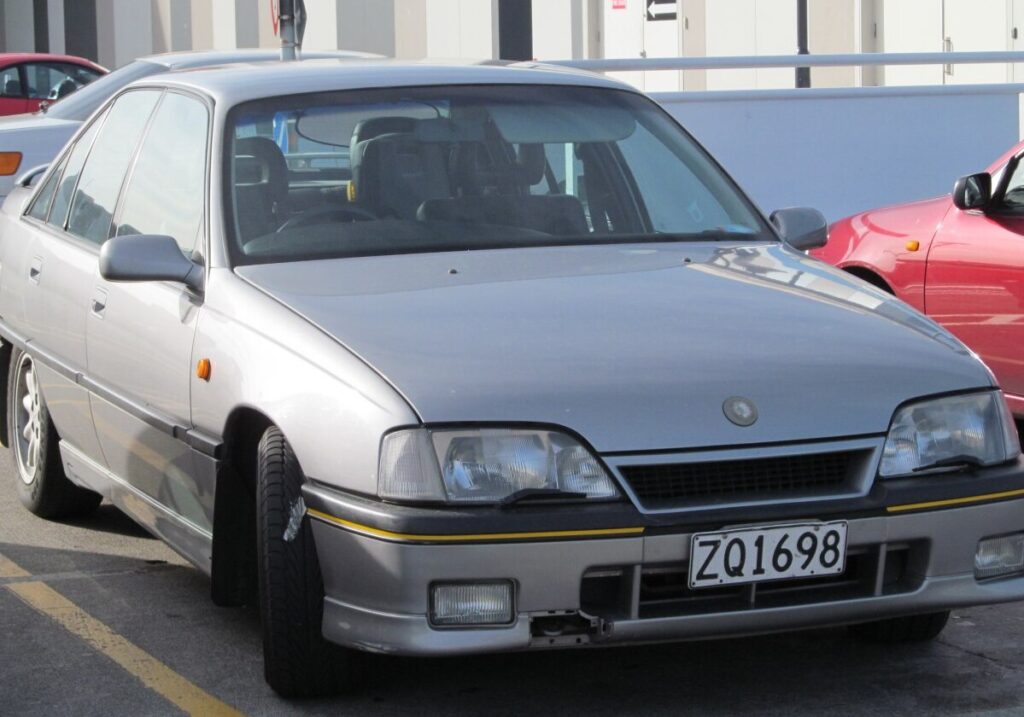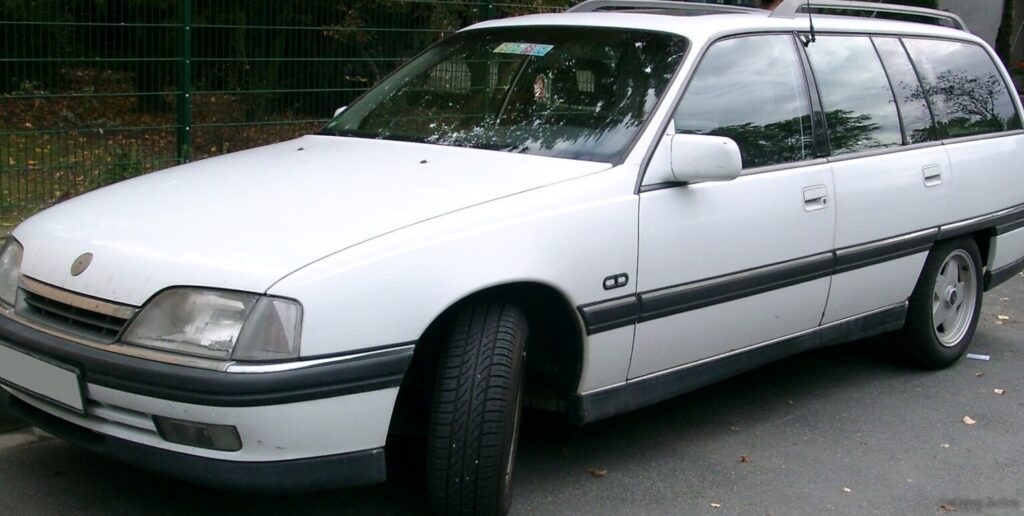
The Opel Omega A Caravan 1.8 S, produced between 1987 and 1989, represented an entry-level offering within the broader Omega A range. Positioned as a practical and affordable family vehicle, it catered to buyers seeking a spacious station wagon (estate) with reasonable performance and fuel economy. This variant, powered by the 1796cc E18NVR engine producing 88 horsepower, served as a stepping stone into the Omega A lineup, offering a more economical alternative to the higher-specification models like the 2.0 and 2.3-liter variants. The Omega A itself was a significant model for Opel, replacing the aging Rekord and Commodore, and aimed to compete with rivals like the Ford Sierra and Volkswagen Passat in the mid-size segment.
Technical Specifications
| Brand | Opel |
| Model | Omega |
| Generation | Omega A Caravan |
| Type (Engine) | 1.8 S (88 Hp) |
| Start of production | 1987 |
| End of production | 1989 |
| Powertrain Architecture | Internal Combustion engine |
| Body type | Station wagon (estate) |
| Seats | 5 |
| Doors | 5 |
| Fuel Type | Petrol (Gasoline) |
| Acceleration 0 – 100 km/h | 15 sec |
| Acceleration 0 – 62 mph | 15 sec |
| Acceleration 0 – 60 mph | 14.3 sec |
| Maximum speed | 170 km/h (105.63 mph) |
| Weight-to-power ratio | 14.1 kg/Hp, 71 Hp/tonne |
| Weight-to-torque ratio | 8.9 kg/Nm, 112.9 Nm/tonne |
| Power | 88 Hp @ 5200 rpm |
| Power per litre | 49 Hp/l |
| Torque | 140 Nm @ 3400 rpm (103.26 lb.-ft. @ 3400 rpm) |
| Maximum engine speed | 6400 rpm |
| Engine Model/Code | E18NVR |
| Engine displacement | 1796 cm3 (109.6 cu. in.) |
| Number of cylinders | 4 |
| Engine configuration | Inline |
| Cylinder Bore | 84.8 mm (3.34 in.) |
| Piston Stroke | 79.5 mm (3.13 in.) |
| Compression ratio | 9.2:1 |
| Number of valves per cylinder | 2 |
| Fuel injection system | Carburettor |
| Engine aspiration | Naturally aspirated engine |
| Valvetrain | SOHC |
| Engine oil capacity | 4.5 l (4.76 US qt | 3.96 UK qt) |
| Coolant | 6.4 l (6.76 US qt | 5.63 UK qt) |
| Kerb Weight | 1240 kg (2733.73 lbs) |
| Max. weight | 1840 kg (4056.51 lbs) |
| Max load | 600 kg (1322.77 lbs) |
| Trunk (boot) space – minimum | 540 l (19.07 cu. ft.) |
| Trunk (boot) space – maximum | 1850 l (65.33 cu. ft.) |
| Fuel tank capacity | 70 l (18.49 US gal | 15.4 UK gal) |
| Permitted trailer load with brakes (12%) | 1840 kg (4056.51 lbs) |
| Permitted trailer load without brakes | 600 kg (1322.77 lbs) |
| Length | 4770 mm (187.8 in.) |
| Width | 1760 mm (69.29 in.) |
| Height | 1480 mm (58.27 in.) |
| Wheelbase | 2730 mm (107.48 in.) |
| Front track | 1450 mm (57.09 in.) |
| Rear (Back) track | 1465 mm (57.68 in.) |
| Minimum turning circle | 10.8 m (35.43 ft.) |
| Drivetrain Architecture | Rear wheel drive |
| Number of gears | 5 gears, manual transmission |
| Front brakes | Ventilated discs |
| Rear brakes | Disc |
Powertrain & Engine Architecture
The heart of the Omega A Caravan 1.8 S was the E18NVR engine, an inline four-cylinder unit displacing 1796cc. This engine utilized a single overhead camshaft (SOHC) valvetrain with two valves per cylinder. Notably, this engine employed a carburetor for fuel delivery, a relatively common feature for the time, but increasingly superseded by fuel injection in more modern vehicles. The carburetor system, while simpler and less expensive, generally offered less precise fuel metering and slightly lower fuel efficiency compared to injection systems. The engine produced 88 horsepower at 5200 rpm and 140 Nm (103.26 lb-ft) of torque at 3400 rpm. The transmission was a five-speed manual gearbox, providing a reasonable spread of ratios for both economy and performance. The rear-wheel drive configuration was standard for the Omega A, contributing to its balanced handling characteristics.
Driving Characteristics
The 1.8-liter engine, coupled with the five-speed manual transmission, provided adequate, though not exhilarating, performance. Acceleration from 0 to 60 mph took approximately 14.3 seconds, and the top speed was around 105.63 mph. Compared to the more powerful 2.0 and 2.3-liter Omega A models, the 1.8 S felt noticeably slower, particularly when fully loaded or tackling inclines. However, the lower engine weight contributed to a more nimble feel in corners. The gear ratios were tuned for a balance between fuel economy and usability, with a relatively long fifth gear for comfortable cruising on highways. The rear-wheel drive layout offered predictable handling, although it lacked the all-weather stability of front-wheel drive vehicles.
Equipment & Trim Levels
The 1.8 S trim level was considered the entry point into the Omega A range. Standard equipment typically included basic cloth upholstery, a simple dashboard layout, and manual windows and door locks. Power steering was often included, but air conditioning and central locking were usually optional extras. The interior was functional and durable, prioritizing practicality over luxury. Optional extras could include upgraded stereo systems, sunroofs, and more comfortable seating. The Caravan (estate) body style itself added to the practicality, offering a generous 540-1850 liter cargo capacity.
Chassis & Braking
The Omega A Caravan featured a conventional chassis layout with independent suspension at the front and a rigid axle suspension at the rear. The front suspension utilized MacPherson struts, while the rear employed a leaf spring setup. Braking was provided by ventilated discs at the front and solid discs at the rear. The braking system was adequate for the vehicle’s weight and performance, but lacked the sophistication of more modern anti-lock braking systems (ABS), which were not standard on the 1.8 S model. Stabilizer bars were fitted to both the front and rear axles to reduce body roll during cornering.
Market Reception & Comparison
The Opel Omega A Caravan 1.8 S was generally well-received as a practical and affordable family vehicle. Critics praised its spacious interior, generous cargo capacity, and comfortable ride. However, the 1.8-liter engine was often criticized for being underpowered, particularly when compared to the more potent engines available in the Omega A range. Fuel economy was reasonable for the time, but not exceptional. Compared to the 2.0 and 2.3-liter models, the 1.8 S offered a lower purchase price but sacrificed performance. The 1.9 TDI diesel variant, introduced later in the Omega A’s lifecycle, provided superior fuel economy but lacked the refinement of the gasoline engines.
Legacy
The Opel Omega A Caravan 1.8 S, while not the most sought-after variant, remains a relatively common sight in the used car market. The E18NVR engine is known for its durability and relative simplicity, making it relatively easy and inexpensive to maintain. However, age-related issues such as corrosion and wear and tear on rubber components are common. The carburetor system can require periodic servicing to ensure optimal performance. Today, these vehicles are often appreciated by enthusiasts for their classic styling, spaciousness, and affordability, representing a practical and reliable option for those seeking a vintage family car.