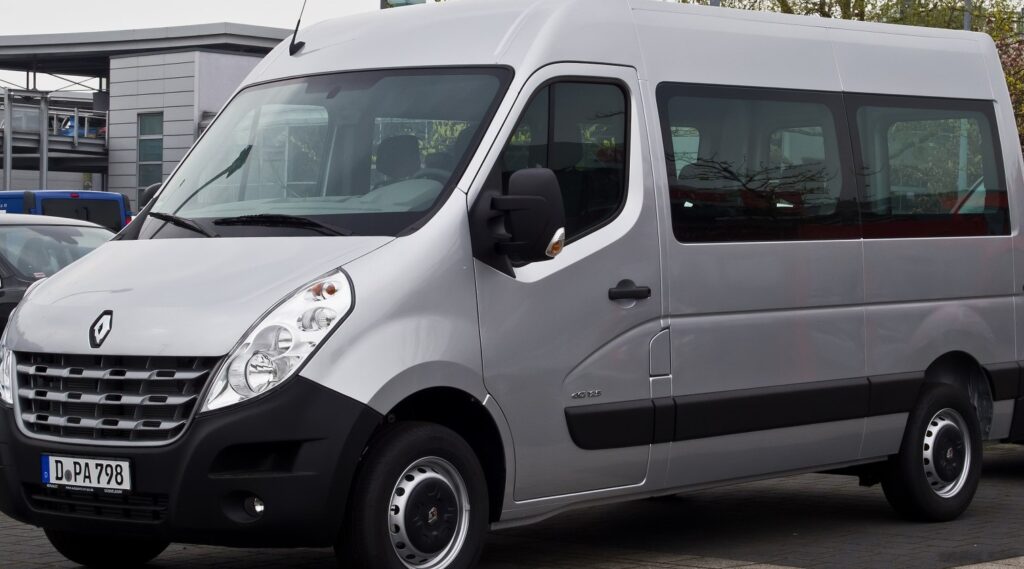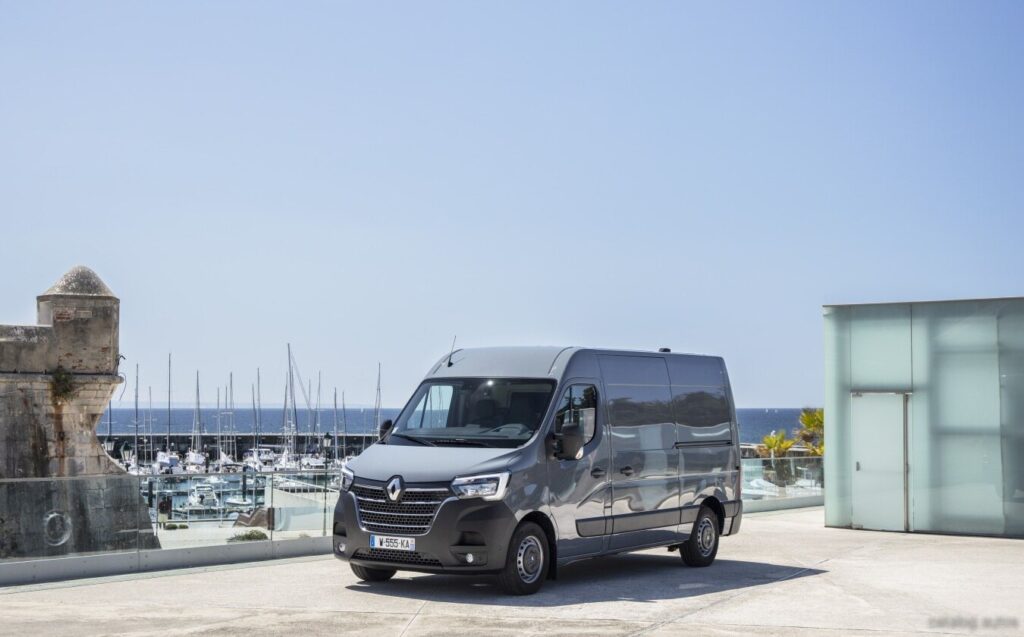
The Renault Master III Phase III, specifically the 2.3 Energy dCi (150 hp) L3H2 panel van introduced in 2019, represents a significant iteration of Renault’s large van offering. Positioned as a workhorse for commercial applications, this variant caters to businesses requiring substantial cargo capacity and reasonable fuel efficiency. The L3H2 designation indicates a long wheelbase and high roof, maximizing interior volume. This model falls within the third generation of the Master (X62/X63 platform), which began production in 2010, with the Phase III update bringing refinements to styling, technology, and powertrain options. It primarily serves the European commercial vehicle market, competing with vans like the Fiat Ducato, Mercedes-Benz Sprinter, and Ford Transit.
Technical Specifications
| Brand | Renault |
| Model | Master |
| Generation | Master III (Phase III, 2019) Panel Van |
| Type (Engine) | 2.3 Energy dCi (150 Hp) L3H2 |
| Start of production | 2019 |
| Powertrain Architecture | Internal Combustion engine |
| Body type | Minivan, MPV |
| Seats | 3 |
| Doors | 4 |
| Combined fuel consumption (WLTP) | 9.3 l/100 km (25.3 US mpg, 30.4 UK mpg, 10.8 km/l) |
| CO2 emissions (WLTP) | 245 g/km |
| Fuel consumption (urban) | 6 l/100 km (39.2 US mpg, 47.1 UK mpg, 16.7 km/l) |
| Fuel consumption (extra urban) | 5.5 l/100 km (42.8 US mpg, 51.4 UK mpg, 18.2 km/l) |
| Fuel consumption (combined) | 5.8 l/100 km (40.6 US mpg, 48.7 UK mpg, 17.2 km/l) |
| CO2 emissions (NEDC) | 154 g/km |
| Fuel Type | Diesel |
| Acceleration 0 – 100 km/h | 12.1 sec |
| Acceleration 0 – 62 mph | 12.1 sec |
| Acceleration 0 – 60 mph | 11.5 sec |
| Maximum speed | 152 km/h (94.45 mph) |
| Emission standard | Euro 6d-Temp |
| Weight-to-power ratio | 13.8 kg/Hp, 72.6 Hp/tonne |
| Weight-to-torque ratio | 5.4 kg/Nm, 186.4 Nm/tonne |
| Power | 150 Hp @ 3500 rpm |
| Torque | 385 Nm @ 1500 rpm (283.96 lb.-ft. @ 1500 rpm) |
| Engine Model/Code | M9T |
| Engine displacement | 2298 cm3 (140.23 cu. in.) |
| Number of cylinders | 4 |
| Engine configuration | Inline |
| Number of valves per cylinder | 4 |
| Fuel injection system | Diesel Commonrail |
| Engine aspiration | Twin-Turbo, Intercooler |
| Kerb Weight | 2066 kg (4554.75 lbs.) |
| Max. weight | 3500 kg (7716.18 lbs.) |
| Max load | 1434 kg (3161.43 lbs.) |
| Trunk (boot) space – maximum | 13000 l (459.09 cu. ft.) |
| Fuel tank capacity | 105 l (27.74 US gal, 23.1 UK gal) |
| AdBlue tank | 28 l (7.4 US gal, 6.16 UK gal) |
| Permitted trailer load (braked) | 2500 kg (5511.56 lbs.) |
| Permitted trailer load (unbraked) | 750 kg (1653.47 lbs.) |
| Length | 6225 mm (245.08 in.) |
| Width | 2070 mm (81.5 in.) |
| Width including mirrors | 2470 mm (97.24 in.) |
| Height | 2549 mm (100.35 in.) |
| Wheelbase | 4332 mm (170.55 in.) |
| Front track | 1750 mm (68.9 in.) |
| Rear track | 1730 mm (68.11 in.) |
| Drivetrain Architecture | Front wheel drive |
| Number of gears | 6 |
| Gearbox type | Manual |
| Front suspension | Independent, McPherson with coil spring and anti-roll bar |
| Rear suspension | Leaf spring |
| Front brakes | Ventilated discs, 302 mm |
| Rear brakes | Disc, 305 mm |
| Tires size | 225/65 R16 |
| Wheel rims size | 16 |
Powertrain & Engine Architecture
The 2.3 Energy dCi engine, identified by the M9T code, is a four-cylinder, inline diesel engine. It utilizes a common rail direct injection system, delivering fuel at extremely high pressure for optimized combustion. A key feature is its twin-turbocharger setup. The first turbocharger is a smaller unit providing boost at low engine speeds, minimizing turbo lag and improving responsiveness during city driving. The second, larger turbocharger takes over at higher RPMs, delivering increased power for highway cruising and load-carrying. An intercooler is employed to cool the compressed intake air, further enhancing performance and efficiency. The engine produces 150 horsepower at 3500 rpm and 385 Nm (284 lb-ft) of torque at 1500 rpm. This engine is paired with a six-speed manual transmission, chosen for its durability and cost-effectiveness in commercial applications. While an automated manual transmission (AMT) was available on some Master variants, the six-speed manual was the more common pairing for this specific power output.
Driving Characteristics
The 150 hp 2.3 dCi engine in the L3H2 Master provides adequate, though not exhilarating, performance. Acceleration from 0-60 mph takes around 11.5 to 12.1 seconds, and top speed is around 94 mph. The focus is on usability and load-hauling capability rather than outright speed. The twin-turbo setup helps mitigate turbo lag, providing a reasonably linear power delivery. The six-speed manual transmission is well-suited to the engine’s characteristics, allowing drivers to select the optimal gear for varying loads and road conditions. Compared to the higher-output 170 hp version of the same engine, this variant offers slightly reduced performance but generally achieves better fuel economy. Compared to the lower-powered 130 hp engine, the 150 hp version provides a noticeable improvement in performance, particularly when fully loaded or climbing hills.
Equipment & Trim Levels
The Master III Phase III L3H2 2.3 dCi 150 typically came with a functional, rather than luxurious, equipment level. Standard features generally included air conditioning, a basic audio system with USB connectivity, electric windows, and central locking. Safety equipment included ABS brakes, Electronic Stability Control (ESC), and driver and passenger airbags. The interior is primarily focused on durability and practicality, with hard-wearing plastics and a functional dashboard layout. Optional extras included a rearview camera, parking sensors, a touchscreen infotainment system with navigation, and various cargo area customization options such as shelving and load securing systems. Trim levels varied by country, but generally, this engine/body combination represented a mid-range offering, bridging the gap between basic work van models and more premium, feature-rich versions.
Chassis & Braking
The Master III utilizes a front-wheel-drive layout. The front suspension consists of independent McPherson struts with a coil spring and anti-roll bar, providing a reasonable level of ride comfort and handling. The rear suspension employs a robust leaf spring setup, designed to handle heavy loads. Braking is provided by ventilated discs on the front wheels and solid discs on the rear. The braking system is adequate for the vehicle’s weight and intended use. The L3H2 variant, due to its increased height, may exhibit slightly more body roll than lower-roofed versions, but the ESC system helps to maintain stability.
Market Reception & Comparison
The Renault Master III Phase III 2.3 dCi 150 was generally well-received by commercial vehicle operators. Critics praised its spacious interior, good fuel economy (around 25.3 US mpg combined), and robust powertrain. However, some noted that the interior was somewhat basic compared to some competitors, and the ride quality could be firm when unladen. Compared to the Mercedes-Benz Sprinter, the Master offered a more affordable price point, but the Sprinter was often considered to have a more refined driving experience and a wider range of available options. Against the Ford Transit, the Master offered comparable cargo capacity and fuel economy, with the Transit often being favored for its broader dealer network in some markets.
Legacy
The M9T engine, while generally reliable, is known to require regular maintenance, particularly regarding the diesel particulate filter (DPF) and turbochargers. Proper servicing, including the use of high-quality oil and regular DPF regeneration, is crucial for long-term durability. In the used market, the Master III Phase III 2.3 dCi 150 represents a good value proposition for businesses seeking a dependable and spacious van. Its relatively simple mechanical design and readily available parts contribute to reasonable maintenance costs. However, potential buyers should carefully inspect the vehicle’s service history and check for any signs of DPF issues or turbocharger wear.