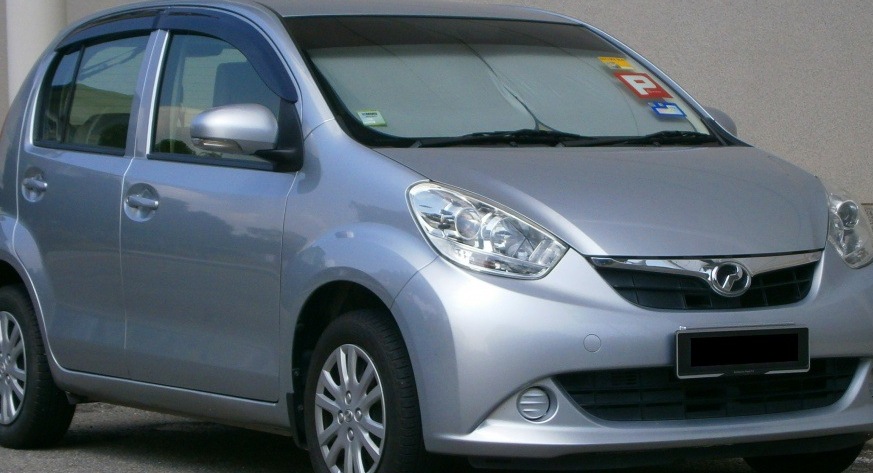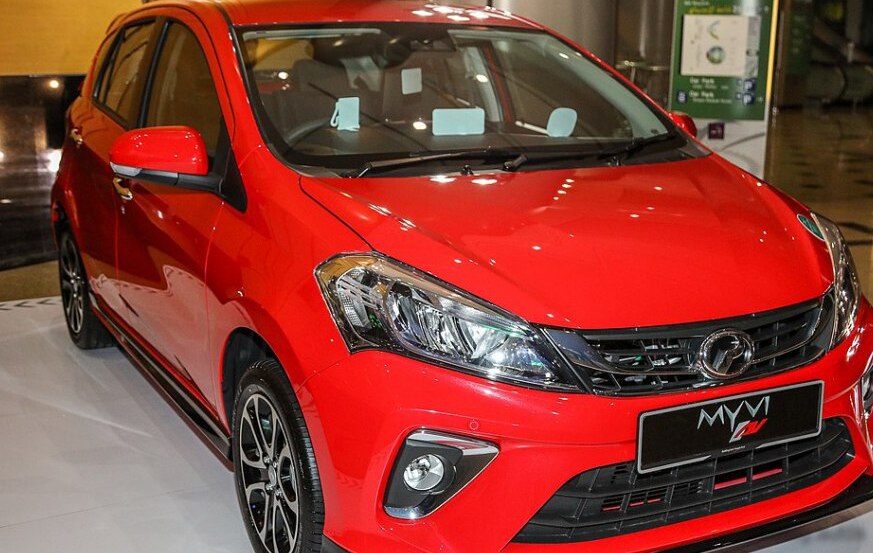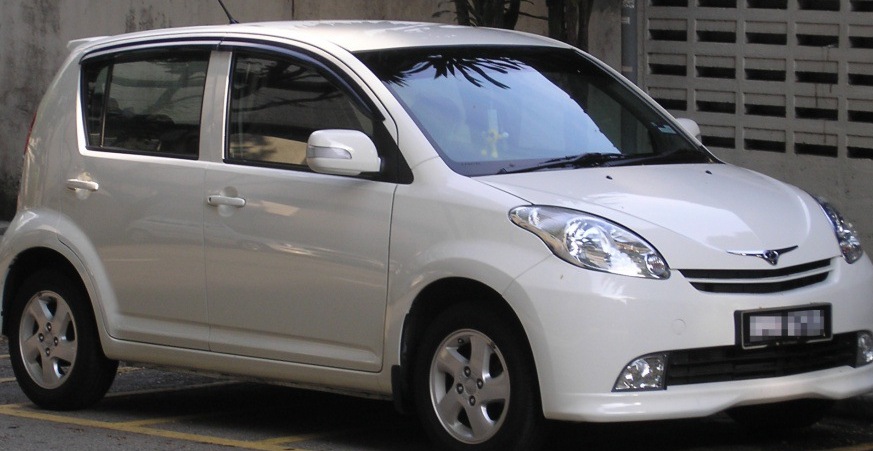
The Perodua Myvi first generation, launched in 2005, represented a pivotal moment for the Malaysian automotive industry. Designed as an affordable and practical city car, the Myvi quickly became a dominant force in its segment, catering to a burgeoning middle class. Produced from 2005 to 2011, the first generation Myvi (internally designated as the M300 series) was based on the Daihatsu Boon platform, a collaboration that allowed Perodua to offer a modern hatchback at a competitive price point. The 1.0-liter variant, producing 58 horsepower, served as the entry-level model, prioritizing fuel efficiency and affordability over outright performance. It was a key player in Perodua’s strategy to provide reliable transportation for the masses.
Technical Specifications
| Brand | Perodua |
| Model | Myvi |
| Generation | Myvi I |
| Type (Engine) | 1.0 (58 Hp) |
| Start of production | 2005 |
| End of production | 2011 |
| Powertrain Architecture | Internal Combustion engine |
| Body type | Hatchback |
| Seats | 5 |
| Doors | 5 |
| Fuel consumption (urban) | 6.1 l/100 km (38.6 US mpg) |
| Fuel consumption (extra urban) | 4.4 l/100 km (53.5 US mpg) |
| Fuel Type | Petrol (Gasoline) |
| Acceleration 0 – 100 km/h | 13.5 sec |
| Acceleration 0 – 62 mph | 13.5 sec |
| Acceleration 0 – 60 mph | 12.8 sec |
| Maximum speed | 160 km/h (99.42 mph) |
| Weight-to-power ratio | 15.3 kg/Hp |
| Weight-to-torque ratio | 10.1 kg/Nm |
| Power | 58 Hp @ 6000 rpm |
| Power per litre | 58.6 Hp/l |
| Torque | 88 Nm @ 3600 rpm (64.91 lb.-ft. @ 3600 rpm) |
| Engine layout | Front, Transverse |
| Engine Model/Code | EJ-VE |
| Engine displacement | 989 cm3 (60.35 cu. in.) |
| Number of cylinders | 3 |
| Engine configuration | Inline |
| Cylinder Bore | 72 mm (2.83 in.) |
| Piston Stroke | 81 mm (3.19 in.) |
| Compression ratio | 10.1:1 |
| Number of valves per cylinder | 4 |
| Fuel injection system | Multi-port manifold injection |
| Engine aspiration | Naturally aspirated engine |
| Valvetrain | DOHC, D-VVT-i |
| Engine oil capacity | 2.3 l (2.43 US qt | 2.02 UK qt) |
| Coolant | 3.2 l (3.38 US qt | 2.82 UK qt) |
| Kerb Weight | 890 kg (1962.11 lbs.) |
| Max. weight | 1390 kg (3064.43 lbs.) |
| Max load | 500 kg (1102.31 lbs.) |
| Trunk (boot) space – minimum | 225 l (7.95 cu. ft.) |
| Trunk (boot) space – maximum | 630 l (22.25 cu. ft.) |
| Fuel tank capacity | 40 l (10.57 US gal | 8.8 UK gal) |
| Length | 3600 mm (141.73 in.) |
| Width | 1655 mm (65.16 in.) |
| Height | 1550 mm (61.02 in.) |
| Wheelbase | 2430 mm (95.67 in.) |
| Front track | 1470 mm (57.87 in.) |
| Rear (Back) track | 1475 mm (58.07 in.) |
| Ride height (ground clearance) | 160 mm (6.3 in.) |
| Drivetrain Architecture | Front wheel drive |
| Drive wheel | Front wheel drive |
| Number of gears and type of gearbox | 5 gears, manual transmission |
| Front brakes | Disc |
| Rear brakes | Drum |
| Assisting systems | ABS (Anti-lock braking system) |
| Steering type | Steering rack and pinion |
| Power steering | Electric Steering |
| Tires size | 155/80 R13 |
| Wheel rims size | 13 |
Powertrain & Engine Architecture
The heart of the Myvi 1.0 was the EJ-VE engine, a 989cc inline-three cylinder petrol engine. This engine, sourced from Daihatsu, was known for its simplicity and fuel efficiency. It featured a multi-point fuel injection system and a double overhead camshaft (DOHC) valvetrain with Daihatsu’s Variable Valve Timing-intelligent (D-VVT-i) technology. D-VVT-i optimized valve timing based on engine speed and load, improving both performance and fuel economy. The engine produced 58 horsepower at 6000 rpm and 88 Nm (64.91 lb-ft) of torque at 3600 rpm. The engine’s compact size and lightweight construction contributed to the Myvi’s nimble handling. The standard transmission was a five-speed manual, although a four-speed automatic was also offered as an option, albeit with a slight reduction in fuel efficiency.
Driving Characteristics
The Myvi 1.0, with its modest power output, was not designed for spirited driving. Acceleration was leisurely, taking approximately 13.5 seconds to reach 62 mph (100 km/h). However, within the urban environment, the Myvi proved to be surprisingly capable. The light steering and compact dimensions made it easy to maneuver through congested city streets. The five-speed manual transmission allowed drivers to keep the engine in its optimal power band, while the optional automatic provided a more relaxed driving experience. Compared to the later 1.3-liter variants, the 1.0-liter model felt noticeably slower, particularly when fully loaded or climbing hills. However, the trade-off was significantly improved fuel economy.
Equipment & Trim Levels
The Myvi 1.0 was typically offered in a basic trim level, focusing on essential features. Standard equipment included power steering, air conditioning, and central locking. The interior was functional and durable, with cloth upholstery and a simple dashboard layout. Optional extras, such as alloy wheels, a CD player, and power windows, were available, but often added to the vehicle’s cost. The interior space was surprisingly generous for a car of its size, offering comfortable seating for five adults. Safety features were relatively basic, typically including dual airbags and an Anti-lock Braking System (ABS).
Chassis & Braking
The Myvi 1.0 utilized a front-engine, front-wheel-drive layout. The suspension consisted of MacPherson struts at the front and a torsion beam axle at the rear. The braking system featured disc brakes on the front wheels and drum brakes on the rear. The suspension was tuned for comfort, providing a relatively smooth ride over uneven surfaces. The relatively light weight of the 1.0-liter model helped to compensate for the less powerful engine, contributing to decent handling characteristics. The electric power steering provided light and easy steering input.
Market Reception & Comparison
The Perodua Myvi 1.0 was widely praised for its affordability, fuel efficiency, and practicality. It quickly became a popular choice among first-time car buyers and families seeking a reliable and economical city car. Critics noted that the performance was somewhat lacking, particularly when compared to the larger-engined variants. However, the Myvi’s low running costs and ease of maintenance made it a compelling proposition. Compared to competitors like the Proton Savvy, the Myvi offered a more refined driving experience and a more modern interior. The 1.3-liter Myvi offered a noticeable performance boost, but at a higher price point.
Legacy
The Perodua Myvi 1.0 remains a common sight on Malaysian roads today. The EJ-VE engine is known for its reliability and durability, although regular maintenance is essential to ensure long-term performance. Parts availability is generally good, and repair costs are relatively low. The first-generation Myvi established Perodua as a major player in the Malaysian automotive market and paved the way for subsequent generations of the Myvi, which continue to be popular choices among Malaysian car buyers. The 1.0-liter variant, while not the most powerful, holds a special place in the Myvi’s history as the affordable and accessible entry point to Perodua ownership.