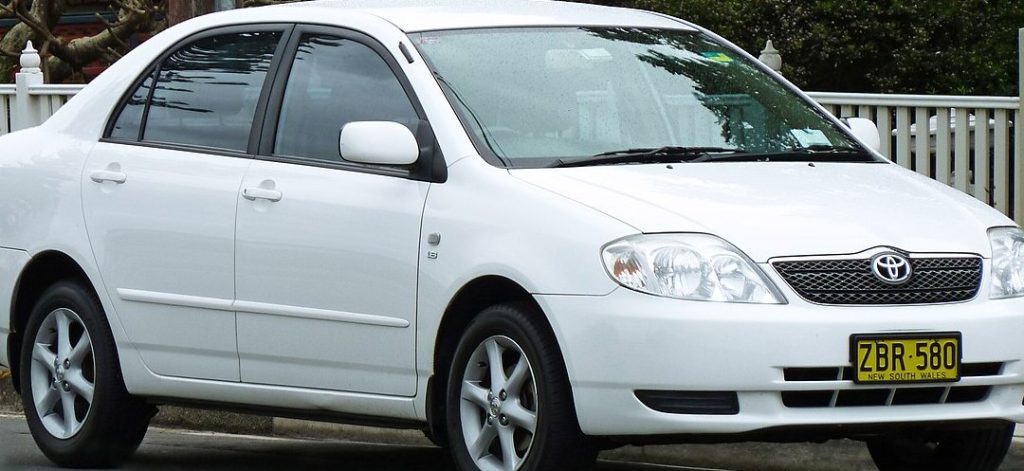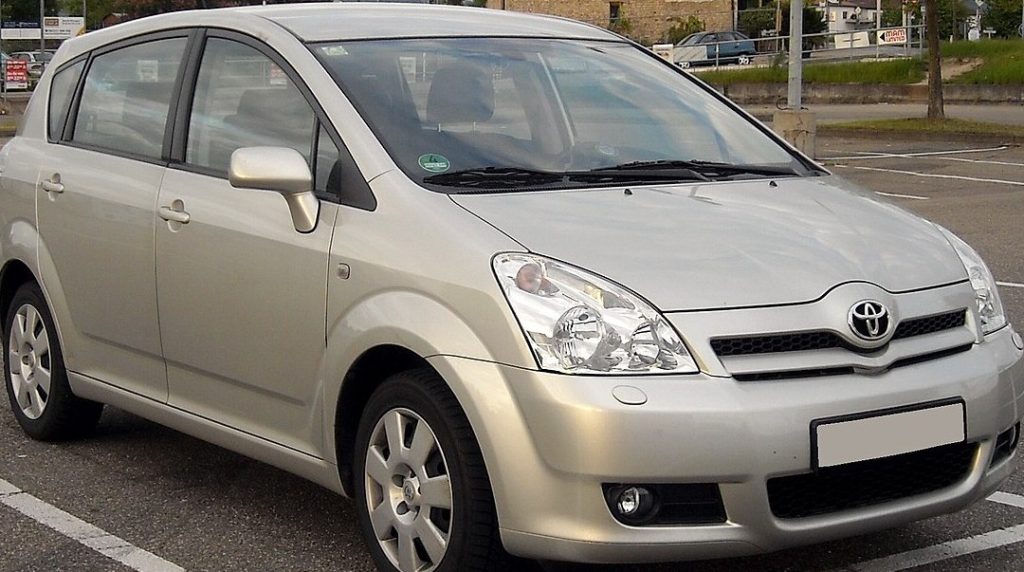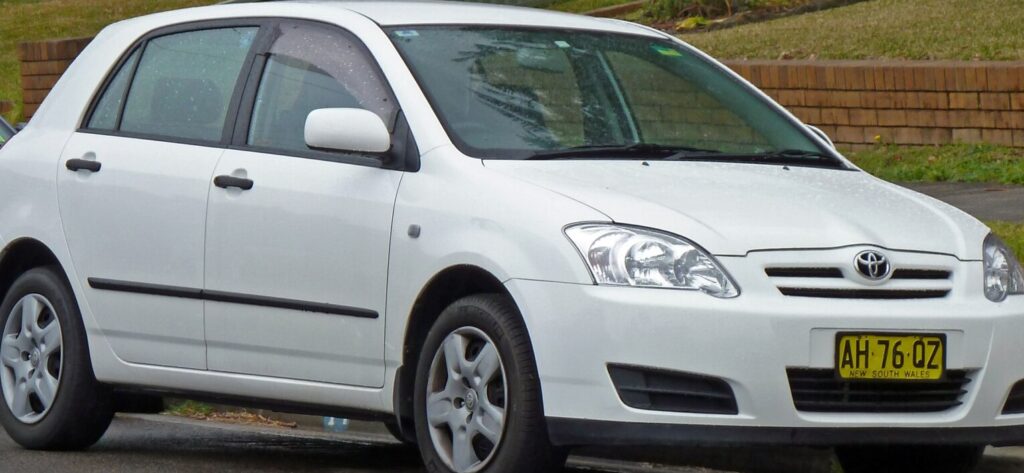
The Toyota Corolla Hatch IX, specifically the 2.0 D-4D variant produced between 2001 and 2006, represented a significant offering in the European and Asian compact hatchback market. Falling under the E120 and E130 chassis codes, this generation of Corolla aimed to blend Toyota’s renowned reliability with a more modern and sporty aesthetic than its predecessors. The 2.0 D-4D, equipped with a diesel engine producing 110 horsepower, occupied a middle ground in the Corolla Hatch IX lineup, positioned as a fuel-efficient and practical option for drivers prioritizing economy and everyday usability over outright performance. It was a key model in Toyota’s strategy to broaden its appeal beyond traditional gasoline-powered vehicles.
Technical Specifications
| Brand | Toyota |
| Model | Corolla |
| Generation | Corolla Hatch IX (E120, E130) |
| Type (Engine) | 2.0 D-4D (110 Hp) |
| Start of production | 2001 |
| End of production | 2006 |
| Powertrain Architecture | Internal Combustion engine |
| Body type | Hatchback |
| Seats | 5 |
| Doors | 3-5 |
| Fuel consumption (urban) | 7.3 l/100 km (32.2 US mpg) |
| Fuel consumption (extra urban) | 4.7 l/100 km (50 US mpg) |
| Fuel Type | Diesel |
| Acceleration 0 – 100 km/h | 10.9 sec |
| Acceleration 0 – 62 mph | 10.9 sec |
| Acceleration 0 – 60 mph | 10.4 sec |
| Maximum speed | 189 km/h (117.44 mph) |
| Weight-to-power ratio | 11.7 kg/Hp |
| Weight-to-torque ratio | 5.2 kg/Nm |
| Power | 110 Hp @ 4000 rpm |
| Torque | 250 Nm @ 2000 rpm (184.39 lb.-ft. @ 2000 rpm) |
| Engine layout | Front, Transverse |
| Engine Model/Code | 1CD-FTV |
| Engine displacement | 1995 cm3 (121.74 cu. in.) |
| Number of cylinders | 4 |
| Engine configuration | Inline |
| Cylinder Bore | 82.2 mm (3.24 in.) |
| Piston Stroke | 94 mm (3.7 in.) |
| Compression ratio | 18.6:1 |
| Number of valves per cylinder | 4 |
| Fuel injection system | Diesel Commonrail |
| Engine aspiration | Turbocharger, Intercooler |
| Valvetrain | OHC |
| Engine oil capacity | 5.9 l (6.23 US qt | 5.19 UK qt) |
| Coolant capacity | 7.6 l (8.03 US qt | 6.69 UK qt) |
| Kerb Weight | 1290 kg (2843.96 lbs.) |
| Max. weight | 1780 kg (3924.23 lbs.) |
| Max load | 490 kg (1080.27 lbs.) |
| Trunk (boot) space – minimum | 289 l (10.21 cu. ft.) |
| Trunk (boot) space – maximum | 960 l (33.9 cu. ft.) |
| Fuel tank capacity | 55 l (14.53 US gal | 12.1 UK gal) |
| Length | 4180 mm (164.57 in.) |
| Width | 1710 mm (67.32 in.) |
| Height | 1475 mm (58.07 in.) |
| Wheelbase | 2600 mm (102.36 in.) |
| Front track | 1490 mm (58.66 in.) |
| Rear track | 1470 mm (57.87 in.) |
| Drivetrain Architecture | Front wheel drive |
| Number of gears | 5 |
| Gearbox type | Manual transmission |
| Front suspension | Spring Strut |
| Rear suspension | Coil spring |
| Front brakes | Ventilated discs |
| Rear brakes | Disc |
| Assisting systems | ABS (Anti-lock braking system) |
| Steering type | Steering rack and pinion |
| Tires size | 195/60 R15 |
INTRODUCTION
The Toyota Corolla Hatch IX 2.0 D-4D, launched in 2001, was a key component of Toyota’s European strategy to offer a compelling diesel-powered hatchback. Built on the E120 (and later E130 after a 2004 facelift) platform, it aimed to provide a practical and economical alternative to gasoline-powered rivals. This model catered to buyers seeking a blend of fuel efficiency, reliability, and a reasonably sized package for urban and long-distance driving. The 2.0 D-4D engine was a significant upgrade over the smaller diesel options available in the Corolla range, offering increased torque and power for improved drivability.
Powertrain & Engine Architecture
At the heart of the 2.0 D-4D Corolla Hatch IX lies the 1CD-FTV engine, a 1.995-liter inline-four cylinder diesel. This engine utilized a common rail direct injection system, delivering fuel directly into the combustion chamber at extremely high pressure for optimized combustion and reduced emissions. The 1CD-FTV was equipped with a turbocharger and intercooler, boosting power output to 110 horsepower and 250 Nm (184 lb-ft) of torque. The engine featured an Overhead Camshaft (OHC) valvetrain with four valves per cylinder. The five-speed manual transmission was the standard offering, providing a balance between fuel economy and driver control. The engine’s design prioritized durability and low maintenance, typical of Toyota’s diesel engines of the era.
Driving Characteristics
The 2.0 D-4D Corolla Hatch IX offered a distinctly different driving experience compared to its gasoline counterparts or higher-performance variants. While not a sports car, the diesel engine’s ample torque – available from as low as 2000 rpm – provided strong acceleration in everyday driving situations. The five-speed manual transmission was well-matched to the engine’s characteristics, allowing for comfortable cruising on highways and responsive performance in urban environments. Compared to the 1.6L gasoline engine, the 2.0 D-4D offered significantly more pulling power, making it better suited for carrying passengers or cargo. However, it lacked the higher-revving nature and quicker response of the gasoline engines. The gear ratios were optimized for fuel efficiency, resulting in a relaxed driving experience at cruising speeds.
Equipment & Trim Levels
The 2.0 D-4D trim level typically included features such as air conditioning, power steering, central locking, and an integrated audio system. Interior upholstery was generally cloth, with options for upgraded materials available. Depending on the market and optional packages, features like alloy wheels, electric windows, and a sunroof could be added. Safety equipment included ABS brakes and driver/passenger airbags as standard. The dashboard layout was functional and straightforward, prioritizing ease of use over stylistic flair. Higher trim levels offered additional features like automatic climate control and upgraded audio systems.
Chassis & Braking
The Corolla Hatch IX 2.0 D-4D utilized a front-wheel-drive layout with a MacPherson strut front suspension and a coil spring rear suspension. This setup provided a comfortable ride quality and predictable handling characteristics. The front brakes were ventilated discs, offering good stopping power, while the rear brakes were solid discs. The steering system employed a rack and pinion setup, providing precise and responsive steering feel. The chassis was designed to balance ride comfort with handling stability, making it suitable for a wide range of driving conditions. The suspension tuning was generally softer, prioritizing comfort over sporty handling.
Market Reception & Comparison
The 2.0 D-4D Corolla Hatch IX was generally well-received by automotive critics for its fuel efficiency, reliability, and practicality. It was often praised for its comfortable ride and spacious interior. However, some critics noted that the engine could be somewhat noisy compared to gasoline alternatives. Compared to other diesel hatchbacks in its class, such as the Volkswagen Golf TDI, the Corolla offered a competitive level of fuel economy and a reputation for exceptional reliability. The Golf TDI often provided a more refined driving experience, but the Corolla’s lower running costs and proven dependability were significant advantages.
Legacy
The 1CD-FTV engine, found in the 2.0 D-4D Corolla Hatch IX, has proven to be remarkably durable and reliable over the long term. While diesel engines are generally more complex than their gasoline counterparts, the 1CD-FTV has a reputation for withstanding high mileage with proper maintenance. Today, these Corollas can still be found on the road, often with significant mileage accumulated. The used car market values these models for their fuel efficiency and dependability, making them a popular choice for budget-conscious buyers. However, potential buyers should be aware of the importance of regular maintenance, including oil changes and filter replacements, to ensure continued reliability. The 2.0 D-4D Corolla Hatch IX remains a testament to Toyota’s commitment to building durable and practical vehicles.