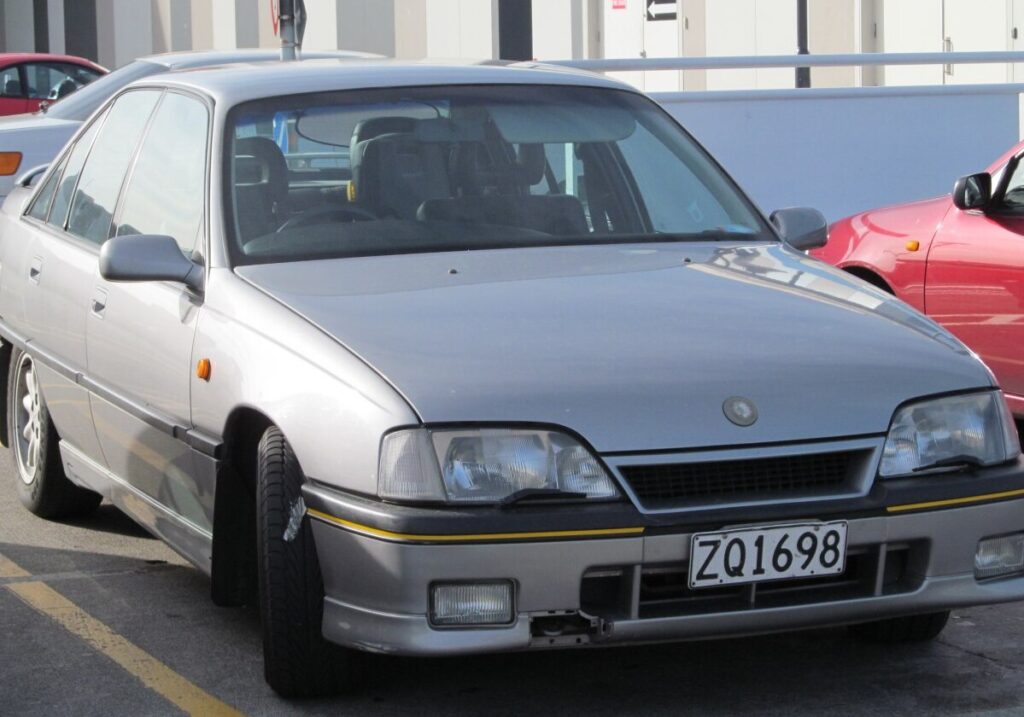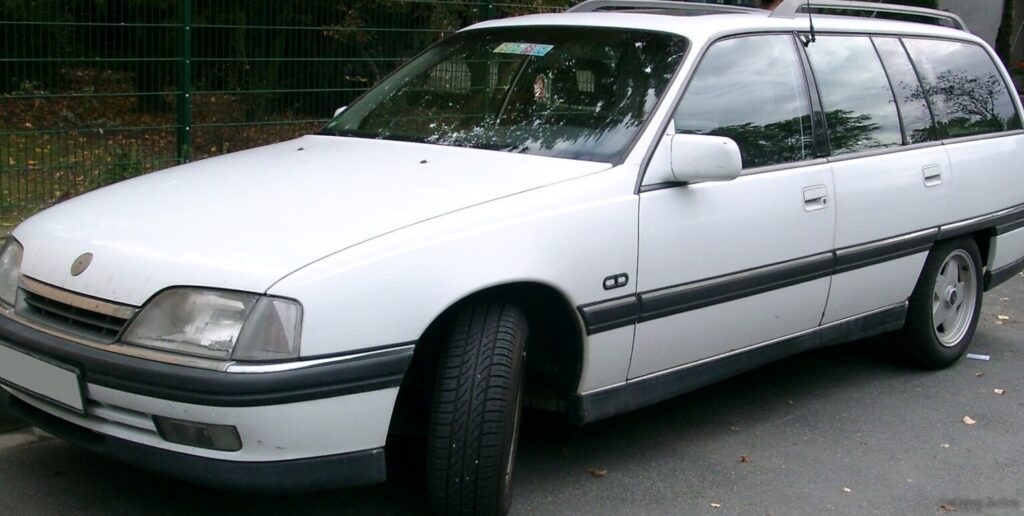
The Opel Omega A Caravan 2.0i, produced from 1986 to 1987, represented a significant offering in the mid-size station wagon segment for Opel, the German automaker. This variant, powered by the 20SE engine, occupied a middle ground within the Omega A range, providing a balance between performance, fuel economy, and practicality. It was part of the first generation (Omega A) of the Omega line, intended as a successor to the Opel Rekord and Commodore, aiming to compete with vehicles like the Ford Granada and Volvo 240. The Caravan body style, Opel’s designation for a station wagon, was particularly popular in Europe for its spaciousness and versatility.
Technical Specifications
| Brand | Opel |
| Model | Omega |
| Generation | Omega A Caravan |
| Type (Engine) | 2.0i (122 Hp) |
| Start of production | 1986 |
| End of production | 1987 |
| Powertrain Architecture | Internal Combustion engine |
| Body type | Station wagon (estate) |
| Seats | 5 |
| Doors | 5 |
| Fuel Type | Petrol (Gasoline) |
| Acceleration 0 – 100 km/h | 11 sec |
| Acceleration 0 – 62 mph | 11 sec |
| Acceleration 0 – 60 mph | 10.5 sec |
| Maximum speed | 190 km/h (118.06 mph) |
| Weight-to-power ratio | 10.7 kg/Hp, 93.3 Hp/tonne |
| Weight-to-torque ratio | 7.5 kg/Nm, 133.9 Nm/tonne |
| Power | 122 Hp @ 5400 rpm |
| Power per litre | 61.1 Hp/l |
| Torque | 175 Nm @ 2600 rpm (129.07 lb.-ft. @ 2600 rpm) |
| Maximum engine speed | 6400 rpm |
| Engine layout | Front, Longitudinal |
| Engine Model/Code | 20SE |
| Engine displacement | 1998 cm3 (121.93 cu. in.) |
| Number of cylinders | 4 |
| Engine configuration | Inline |
| Cylinder Bore | 86 mm (3.39 in.) |
| Piston Stroke | 86 mm (3.39 in.) |
| Compression ratio | 10:1 |
| Number of valves per cylinder | 2 |
| Fuel injection system | Multi-port manifold injection |
| Engine aspiration | Naturally aspirated engine |
| Valvetrain | SOHC |
| Engine oil capacity | 4.5 l (4.76 US qt | 3.96 UK qt) |
| Coolant | 6.4 l (6.76 US qt | 5.63 UK qt) |
| Kerb Weight | 1307 kg (2881.44 lbs.) |
| Max. weight | 1865 kg (4111.62 lbs.) |
| Max load | 558 kg (1230.18 lbs.) |
| Trunk (boot) space – minimum | 540 l (19.07 cu. ft.) |
| Trunk (boot) space – maximum | 1850 l (65.33 cu. ft.) |
| Fuel tank capacity | 70 l (18.49 US gal | 15.4 UK gal) |
| Permitted trailer load with brakes (12%) | 1250 kg (2755.78 lbs.) |
| Permitted trailer load without brakes | 600 kg (1322.77 lbs.) |
| Length | 4770 mm (187.8 in.) |
| Width | 1760 mm (69.29 in.) |
| Height | 1480 mm (58.27 in.) |
| Wheelbase | 2730 mm (107.48 in.) |
| Front track | 1450 mm (57.09 in.) |
| Rear (Back) track | 1465 mm (57.68 in.) |
| Minimum turning circle | 10.8 m (35.43 ft.) |
| Drivetrain Architecture | Rear wheel drive |
| Number of gears and type of gearbox | 5 gears, manual transmission |
| Front brakes | Ventilated discs |
| Rear brakes | Disc |
| Tires size | 185/70 R14 |
| Wheel rims size | 14 |
Powertrain & Engine Architecture
The heart of the Omega A Caravan 2.0i was the 20SE engine, a 1998cc inline-four cylinder unit. This engine featured a single overhead camshaft (SOHC) valvetrain operating two valves per cylinder. It utilized Bosch multi-port fuel injection, a relatively advanced system for its time, contributing to improved fuel efficiency and smoother power delivery compared to earlier carbureted Opel engines. The 20SE was known for its robust construction and relative simplicity, making it reasonably reliable. The engine was mounted longitudinally in the front of the vehicle, driving the rear wheels. The five-speed manual transmission was the standard offering, providing a good balance between performance and economy. The transmission’s gear ratios were tuned for comfortable cruising, reflecting the Omega’s role as a grand touring car.
Driving Characteristics
The 122 horsepower and 175 Nm (129 lb-ft) of torque produced by the 2.0i engine provided adequate, though not exhilarating, performance. Acceleration from 0 to 60 mph took around 10.5 seconds, and the top speed was approximately 118 mph. Compared to the more powerful Omega variants, such as those equipped with the 2.3-liter or 3.0-liter engines, the 2.0i felt noticeably less responsive. However, it offered a more relaxed driving experience, particularly on long journeys. The manual transmission allowed for precise control, and the rear-wheel-drive layout provided a balanced feel. The Caravan’s suspension, tuned for comfort, absorbed bumps well, but body roll was present during cornering. The 2.0i was generally considered a good all-rounder, suitable for everyday driving and family trips.
Equipment & Trim Levels
The Omega A Caravan 2.0i typically came with a reasonable level of standard equipment. This included central locking, power steering, and a basic stereo system. Interior upholstery was typically cloth, with a durable and practical design. Optional extras included electric windows, a sunroof, and upgraded audio systems. The dashboard layout was functional and straightforward, with clearly labeled controls. The Caravan’s interior was spacious, offering ample headroom and legroom for both front and rear passengers. The rear seats could be folded down to increase cargo capacity, making the Caravan a versatile vehicle for carrying large items.
Chassis & Braking
The Omega A Caravan featured a traditional body-on-frame construction, providing a robust and durable chassis. The front suspension utilized independent coil springs and MacPherson struts, while the rear suspension employed a solid axle with coil springs. Braking was handled by ventilated discs at the front and solid discs at the rear. The braking system was adequate for the vehicle’s weight and performance, but lacked the sophistication of more modern systems. Stabilizer bars were fitted to both the front and rear axles to reduce body roll during cornering.
Market Reception & Comparison
The Opel Omega A Caravan 2.0i was generally well-received by automotive critics. It was praised for its spaciousness, comfortable ride, and reasonable fuel economy. However, some critics noted that the 2.0i engine lacked the power to fully exploit the Omega’s chassis. Compared to other trims in the Omega lineup, the 2.0i offered a more affordable entry point, appealing to buyers who prioritized practicality and economy over outright performance. The 2.3-liter and 3.0-liter Omega variants offered significantly more power, but at a higher price point. The 1.8-liter models were even more economical but lacked the refinement of the 2.0i.
Legacy
The Opel Omega A Caravan 2.0i, while not the most powerful or technologically advanced variant of the Omega A, remains a respected classic among Opel enthusiasts. The 20SE engine is known for its durability and relatively simple maintenance requirements. Today, well-maintained examples of the Omega A Caravan 2.0i are becoming increasingly collectible. The car’s spaciousness, comfortable ride, and classic styling continue to appeal to those seeking a practical and stylish classic station wagon. Parts availability can be a challenge, but a dedicated community of Opel owners and specialists exists to support the preservation of these vehicles.