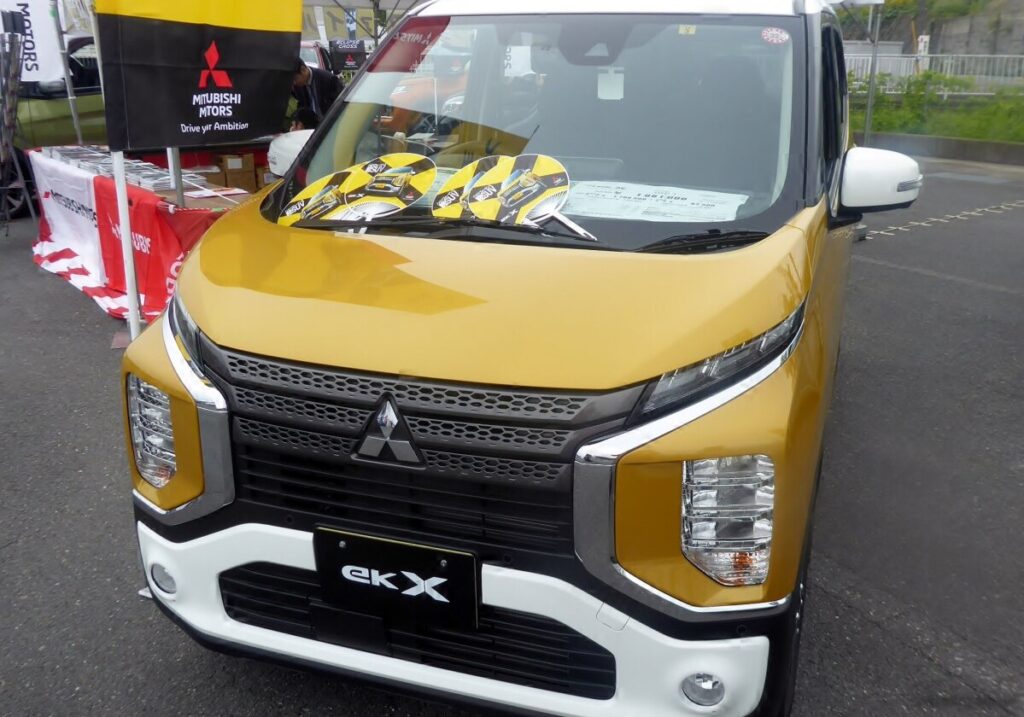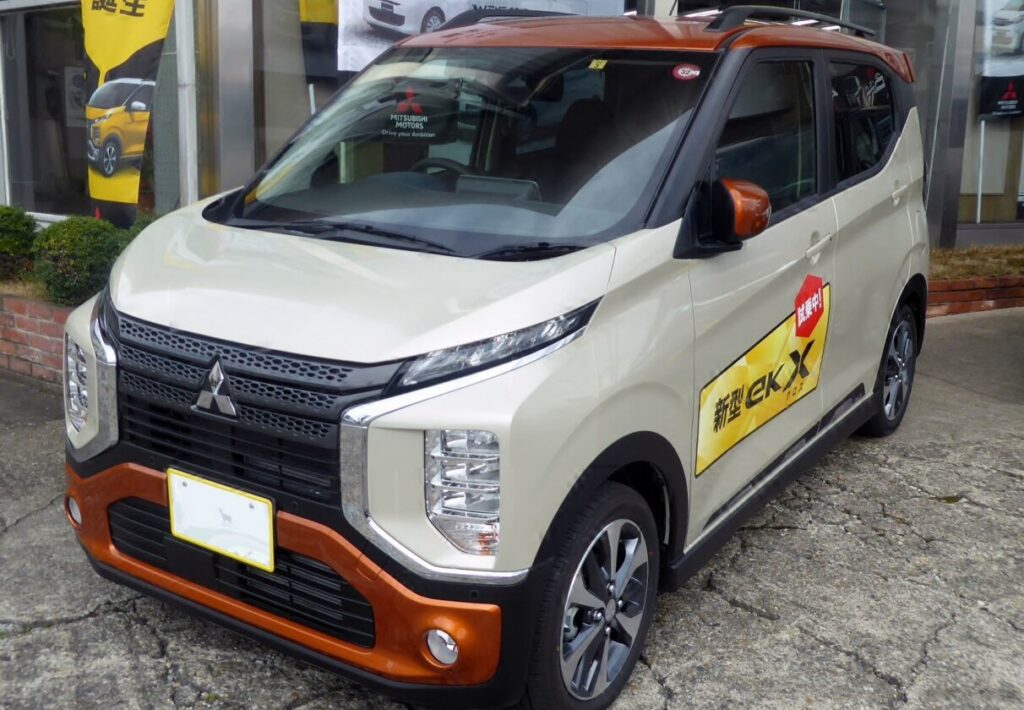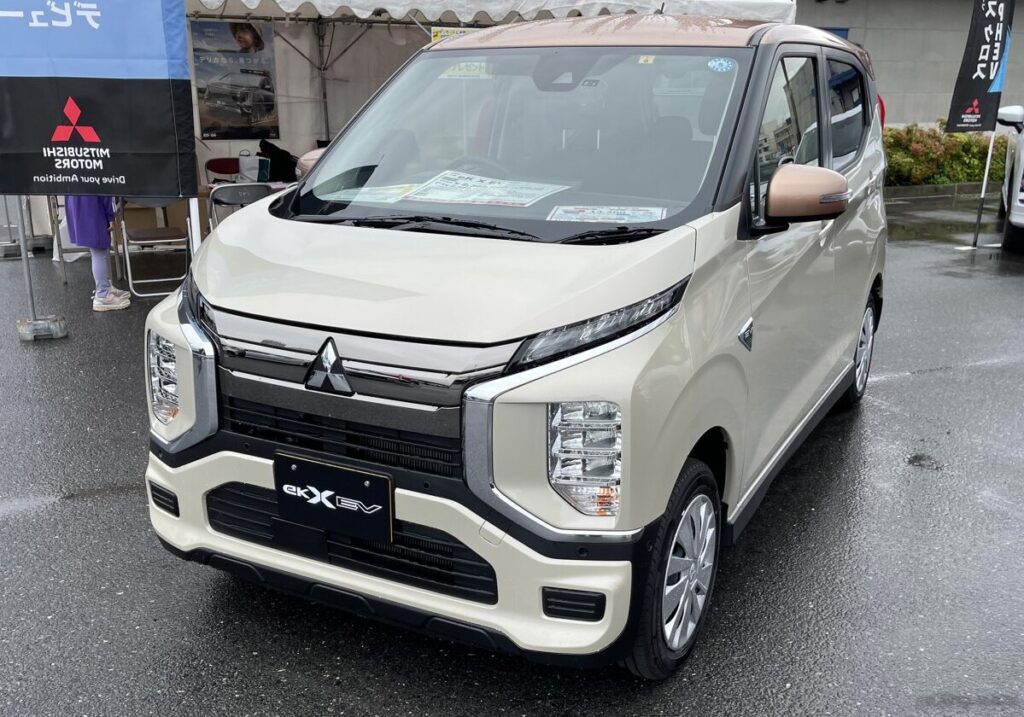
The Mitsubishi eK X EV, specifically the 20 kWh variant producing 64 horsepower, represents Mitsubishi’s entry into the burgeoning kei-car electric vehicle market. Introduced in 2022, this model is primarily targeted at the Japanese domestic market (JDM), where the unique kei-car regulations dictate size and engine displacement limits. The eK X EV is built upon the existing eK X platform, offering a fully electric powertrain as an alternative to the gasoline-powered versions. It’s positioned as an affordable and practical urban mobility solution, emphasizing efficiency and ease of use. This particular 64 hp configuration serves as the base model within the eK X EV lineup.
Technical Specifications
| Brand | Mitsubishi |
| Model | eK X |
| Generation | eK X |
| Type (Engine) | EV 20 kWh (64 Hp) |
| Start of production | 2022 |
| Powertrain Architecture | BEV (Electric Vehicle) |
| Body type | SUV, Crossover |
| Seats | 4 |
| Doors | 5 |
| Fuel Type | Electricity |
| Weight-to-power ratio | 16.9 kg/Hp |
| Hp/tonne | 59.3 Hp/tonne |
| Weight-to-torque ratio | 5.5 kg/Nm |
| Nm/tonne | 180.6 Nm/tonne |
| Gross battery capacity | 20 kWh |
| Battery voltage | 350 V |
| Battery technology | Lithium-ion (Li-Ion) |
| Battery location | Below the floor |
| All-electric range | 180 km (111.85 mi) |
| Average Energy consumption (WLTP) | 12.4 kWh/100 km (19.96 kWh/100 mi) |
| MPGe | 169 |
| km/kWh | 8.1 |
| mi/kWh | 5 |
| Electric motor power | 64 Hp @ 2302-10455 rpm |
| Electric motor Torque | 195 Nm @ 0-2302 rpm (143.82 lb.-ft. @ 0-2302 rpm) |
| Electric motor model/code | MM 48 |
| Electric motor type | Synchronous |
| System power | 64 Hp @ 2302-10455 rpm |
| System torque | 195 Nm @ 0-2302 rpm (143.82 lb.-ft. @ 0-2302 rpm) |
| Kerb Weight | 1080 kg (2380.99 lbs) |
| Length | 3395 mm (133.66 in) |
| Width | 1475 mm (58.07 in) |
| Height | 1655 mm (65.16 in) |
| Wheelbase | 2495 mm (98.23 in) |
| Front track | 1300 mm (51.18 in) |
| Rear track | 1295 mm (50.98 in) |
| Ride height (ground clearance) | 145 mm (5.71 in) |
| Minimum turning circle | 9.6 m (31.5 ft) |
| Drivetrain Architecture | One electric motor drives the front wheels |
| Drive wheel | Front wheel drive |
| Front suspension | Independent coil spring |
| Rear suspension | Independent multi-link suspension |
| Front brakes | Ventilated discs |
| Rear brakes | Drum |
| Assisting systems | ABS (Anti-lock braking system) |
| Steering type | Steering rack and pinion |
| Power steering | Electric Steering |
| Tires size | 155/65 R14; 165/55 R15 |
| Wheel rims size | 4.5J x 14; 4.5J x 15 |
Powertrain & Engine Architecture
The Mitsubishi eK X EV utilizes a fully Battery Electric Vehicle (BEV) powertrain. The heart of the system is a 20 kWh lithium-ion battery pack located under the floor, providing a range of approximately 180 kilometers (112 miles) under WLTP testing. The electric motor, designated MM 48, is a synchronous motor producing 64 horsepower (48 kW) and 195 Nm (144 lb-ft) of torque. Peak torque is available almost instantly, from 0 to 2302 rpm, which is characteristic of electric motors. The motor delivers power to the front wheels. The vehicle employs a single-speed reduction gear, typical of most electric vehicles, eliminating the need for a multi-gear transmission. The battery pack operates at 350 volts.
Driving Characteristics
The 64 hp output and 195 Nm of torque provide adequate, though not exhilarating, performance for urban driving. Acceleration is brisk from a standstill due to the instant torque delivery of the electric motor. However, performance diminishes at higher speeds, particularly when fully loaded. Compared to the gasoline-powered eK X variants, the EV offers a smoother and quieter driving experience. The single-speed transmission simplifies operation, and the regenerative braking system allows for one-pedal driving in certain conditions, enhancing efficiency. The relatively low weight of the vehicle (1080 kg / 2381 lbs) helps to mitigate the limited horsepower.
Equipment & Trim Levels
The base-level eK X EV typically includes standard features such as air conditioning, power windows, power door locks, and a basic audio system. Safety features include ABS (Anti-lock Braking System) and airbags. Higher trim levels, available in the Japanese market, add features like a touchscreen infotainment system, navigation, and advanced driver-assistance systems (ADAS) such as lane departure warning and automatic emergency braking. Interior upholstery is typically cloth, with optional upgrades to synthetic leather available on higher trims. The dashboard layout is functional and straightforward, prioritizing ease of use.
Chassis & Braking
The eK X EV utilizes a front-engine, front-wheel-drive layout. The front suspension consists of independent coil springs, while the rear suspension employs an independent multi-link setup. This configuration aims to provide a comfortable ride and stable handling. The front brakes are ventilated discs, offering adequate stopping power, while the rear brakes are drums, a cost-saving measure common in this vehicle segment. The steering system is a rack and pinion type with electric power assistance, providing light and responsive steering feel. The vehicle rides on either 14-inch or 15-inch wheels, depending on the trim level, with tire sizes of 155/65 R14 or 165/55 R15 respectively.
Market Reception & Comparison
The Mitsubishi eK X EV has been well-received in Japan, particularly among consumers seeking an affordable and environmentally friendly urban commuter vehicle. Critics have praised its practicality, efficiency, and ease of driving. Compared to other kei-car EVs, such as the Suzuki Hustler EV, the eK X EV offers a competitive range and feature set. The gasoline-powered eK X variants offer a lower initial purchase price, but the EV benefits from lower running costs due to the elimination of fuel expenses. The eK X EV’s range is a key consideration for potential buyers, as it may not be suitable for long-distance travel.
Legacy
The Mitsubishi eK X EV represents a significant step for Mitsubishi in its electrification strategy, particularly within the unique constraints of the Japanese kei-car market. While its long-term reliability is still being established, the use of proven lithium-ion battery technology and a relatively simple electric powertrain suggests a reasonable expectation of durability. On the used car market, the eK X EV is expected to hold its value reasonably well, driven by demand for affordable electric vehicles and the growing awareness of environmental concerns. The success of the eK X EV will likely influence Mitsubishi’s future development of electric kei-cars and potentially expand its EV offerings to other markets.