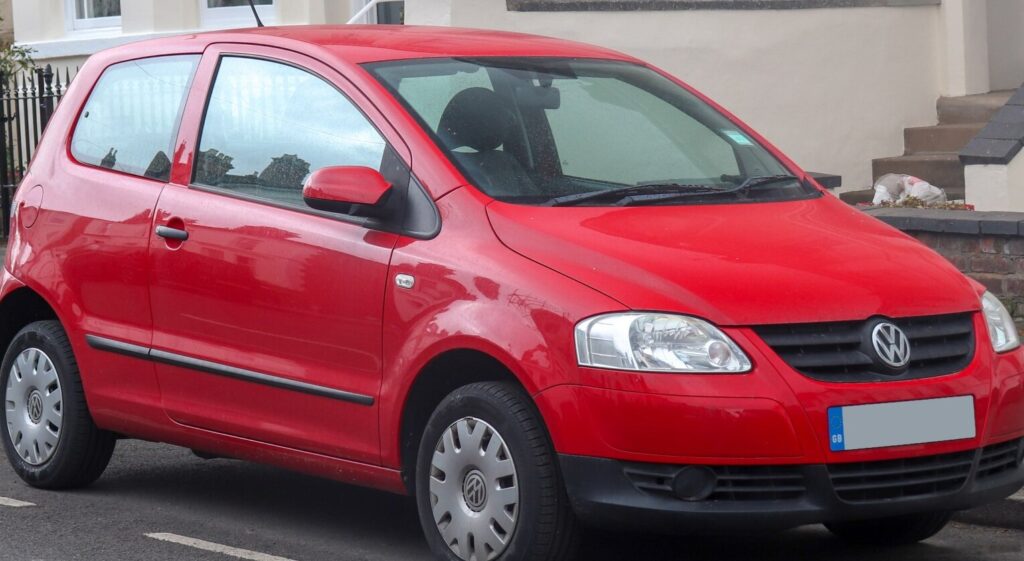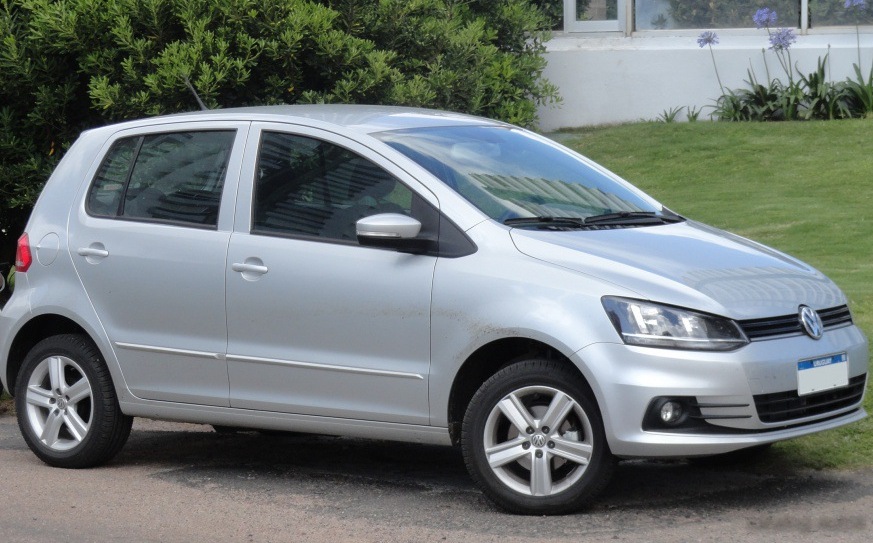
The Volkswagen Fox, specifically the 5-door hatchback variant produced in Latin America and facelifted in 2015, represented a significant entry point into the Volkswagen lineup for budget-conscious buyers. This iteration, powered by a 1.0-liter three-cylinder engine producing 82 horsepower, was positioned as the base model, offering affordability and practicality. Production of this version spanned from 2015 onwards, serving as a key offering in markets where smaller, fuel-efficient vehicles were in high demand. It built upon the foundation of the earlier Fox models, offering a refreshed design and updated features while maintaining the core values of reliability and ease of ownership. This model sat within the broader Fox family, which also included more powerful engine options, but the 1.0L variant was specifically tailored for urban commuting and first-time car owners.
Technical Specifications
| Brand | Volkswagen |
| Model | Fox |
| Generation | Fox 5Door (facelift 2015) Latin America |
| Type (Engine) | 1.0 (82 Hp) |
| Start of production | 2015 |
| Powertrain Architecture | Internal Combustion engine |
| Body type | Hatchback |
| Seats | 5 |
| Doors | 5 |
| Fuel Type | Petrol / Ethanol – E85 |
| Acceleration 0 – 100 km/h | 14.1 sec |
| Acceleration 0 – 62 mph | 14.1 sec |
| Acceleration 0 – 60 mph | 13.4 sec |
| Maximum speed | 163 km/h (101.28 mph) |
| Weight-to-power ratio | 13 kg/Hp, 76.9 Hp/tonne |
| Weight-to-torque ratio | 10.5 kg/Nm, 95.7 Nm/tonne |
| Power | 82 Hp @ 6250 rpm |
| Power per litre | 82.1 Hp/l |
| Torque | 102 Nm @ 3000 rpm (75.23 lb.-ft. @ 3000 rpm) |
| Engine layout | Front, Transverse |
| Engine Model/Code | CSEA |
| Engine displacement | 999 cm3 (60.96 cu. in.) |
| Number of cylinders | 3 |
| Engine configuration | Inline |
| Compression ratio | 11.5:1 |
| Fuel injection system | Multi-port manifold injection |
| Engine aspiration | Naturally aspirated engine |
| Engine oil capacity | 3.3 l (3.49 US qt | 2.9 UK qt) |
| Kerb Weight | 1066 kg (2350.13 lbs) |
| Max. weight | 1480 kg (3262.84 lbs) |
| Max load | 414 kg (912.71 lbs) |
| Fuel tank capacity | 50 l (13.21 US gal | 11 UK gal) |
| Max. roof load | 45 kg (99.21 lbs) |
| Permitted trailer load with brakes (8%) | 200 kg (440.92 lbs) |
| Length | 3867-3868 mm (152.24 – 152.28 in) |
| Width | 1660-1663 mm (65.35 – 65.47 in) |
| Width including mirrors | 1901-1904 mm (74.84 – 74.96 in) |
| Height | 1551-1555 mm (61.06 – 61.22 in) |
| Wheelbase | 2467 mm (97.13 in) |
| Front track | 1416-1432 mm (55.75 – 56.38 in) |
| Rear (Back) track | 1410-1426 mm (55.51 – 56.14 in) |
| Ride height (ground clearance) | 156-161 mm (6.14 – 6.34 in) |
| Minimum turning circle (turning diameter) | 10.9 m (35.76 ft) |
| Drivetrain Architecture | The Internal combustion engine (ICE) drives the front wheels of the vehicle. |
| Drive wheel | Front wheel drive |
| Number of gears and type of gearbox | 5 gears, manual transmission |
| Front brakes | Ventilated discs |
| Rear brakes | Drum |
| Assisting systems | ABS (Anti-lock braking system) |
| Steering type | Steering rack and pinion |
| Power steering | Electric Steering |
| Tires size | 195/65 R15 |
| Wheel rims size | 15 |
Powertrain & Engine Architecture
The heart of this Fox variant is the CSEA engine, a 1.0-liter inline three-cylinder petrol engine. This engine is known for its compact size and relatively simple design, contributing to its affordability and ease of maintenance. The CSEA utilizes a multi-point fuel injection system, delivering fuel directly to the intake ports. The engine’s 11.5:1 compression ratio is relatively high for a naturally aspirated engine, aiding in efficiency but also requiring higher octane fuel in some regions. The engine is paired with a five-speed manual transmission, chosen to maximize fuel economy and keep costs down. While an automatic transmission was offered on other Fox trims, it wasn’t available with the base 1.0L engine. The engine’s design prioritizes fuel efficiency and low-end torque, making it suitable for city driving. It’s a relatively basic engine, lacking features like variable valve timing found in more modern designs.
Driving Characteristics
The 1.0-liter Fox delivers modest performance. Acceleration from 0-60 mph takes approximately 13.4 seconds, and top speed is around 101 mph. The five-speed manual transmission is geared to prioritize fuel economy, meaning the engine needs to be revved to access its limited power. Compared to the more powerful 1.6-liter versions of the Fox, this variant feels significantly slower, particularly when fully loaded or climbing hills. However, the light weight of the vehicle helps to mitigate the lack of power. The gear ratios are spaced to provide reasonable acceleration in lower gears, but the engine quickly runs out of steam at higher speeds. The steering is light and easy, making it well-suited for navigating urban environments. The suspension is tuned for comfort rather than sporty handling.
Equipment & Trim Levels
The base-level 1.0-liter Fox typically came with a fairly basic equipment list. Standard features generally included power steering, air conditioning, and a basic audio system with AM/FM radio and auxiliary input. Safety features included dual front airbags and ABS brakes. Interior upholstery was typically cloth, and the dashboard featured a simple, functional design. Optional extras included power windows, central locking, and a more advanced audio system. The trim level was intentionally kept basic to maintain affordability, appealing to first-time car buyers or those seeking a no-frills transportation solution.
Chassis & Braking
The Fox utilizes a front-wheel-drive chassis with a MacPherson strut front suspension and a torsion beam rear suspension. The rear brakes are drum brakes, a cost-saving measure common in this segment. The front brakes are ventilated discs, providing adequate stopping power for the vehicle’s weight and performance. The suspension is tuned for comfort, providing a relatively smooth ride over uneven surfaces. Stabilizer bars are present, but are relatively thin compared to those found on higher-spec Fox models. The steering is rack and pinion, providing precise and responsive steering feel.
Market Reception & Comparison
The 1.0-liter Fox was generally well-received in Latin American markets as an affordable and practical option. Critics praised its fuel efficiency and low running costs, but noted its lack of power and basic interior. Compared to the 1.6-liter versions of the Fox, the 1.0L offered significantly lower performance but also a lower price point. Fuel economy was a key selling point, with the 1.0L achieving respectable mileage for its class. Reliability was generally good, although the engine’s small displacement meant it was often working near its limits, especially when fully loaded. It competed with other entry-level hatchbacks like the Fiat Palio and Chevrolet Onix.
Legacy
The 1.0-liter Fox has proven to be a relatively reliable and durable vehicle, with many examples still on the road today. The CSEA engine, while not particularly powerful, is known for its longevity and relatively simple maintenance requirements. In the used car market, these Foxes are often sought after by buyers looking for an affordable and economical vehicle. Parts availability is generally good, and repair costs are relatively low. While it may not offer the performance or features of more modern vehicles, the 1.0-liter Fox remains a practical and dependable choice for budget-conscious drivers.