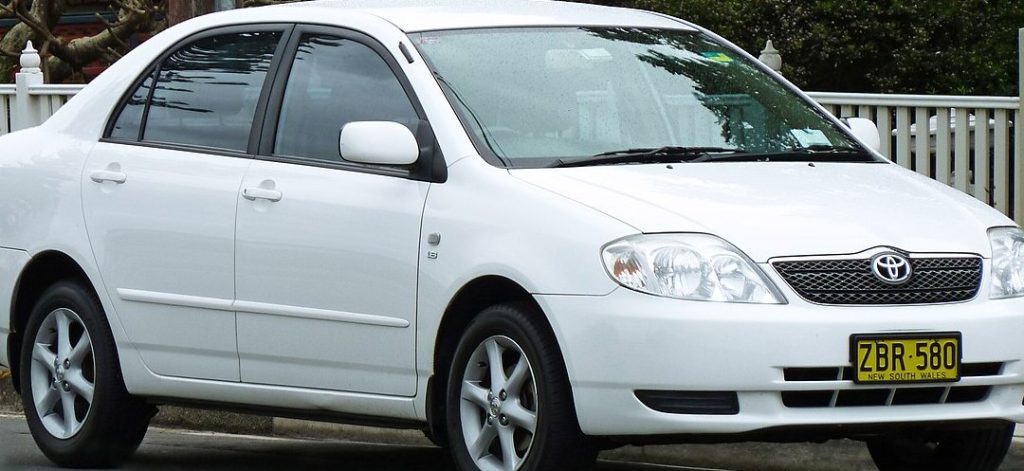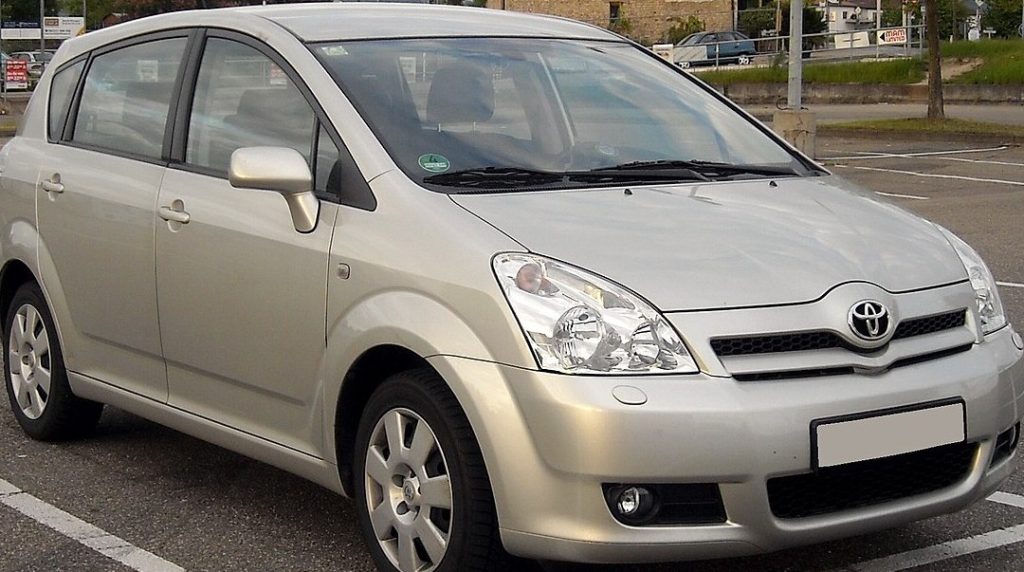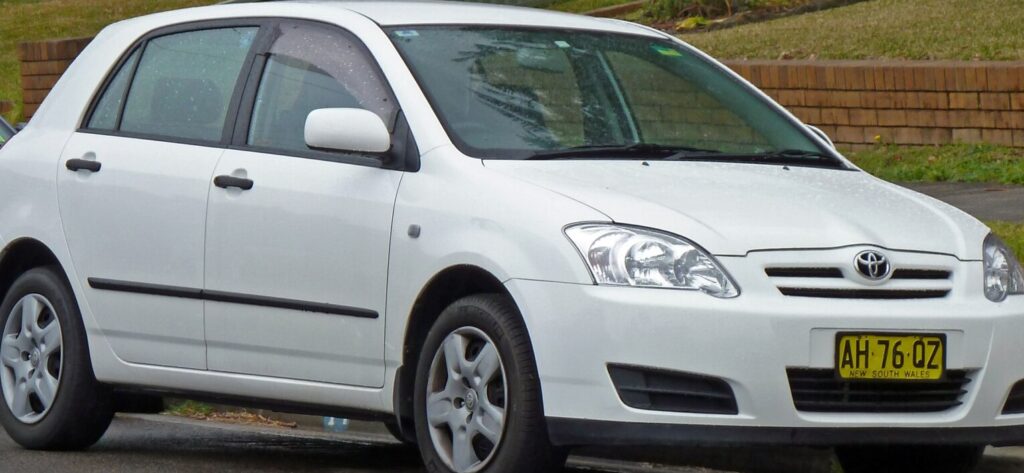
The Toyota Corolla Hatch IX, specifically the 2.0 D-4D variant producing 90 horsepower, was a key offering in Toyota’s European lineup from 2001 to 2006. Falling within the E120 and E130 chassis codes, this generation represented a significant shift for the Corolla, moving towards a more modern and youthful aesthetic compared to its predecessors. The 2.0 D-4D 90 hp model occupied a middle ground in the range, offering a balance between fuel efficiency and reasonable performance, aimed at buyers prioritizing economy and practicality. It was positioned below the more powerful petrol variants and above the lower-displacement diesel options.
Technical Specifications
| Brand | Toyota |
| Model | Corolla |
| Generation | Corolla Hatch IX (E120, E130) |
| Type (Engine) | 2.0 D-4D (90 Hp) |
| Start of production | 2001 |
| End of production | 2006 |
| Powertrain Architecture | Internal Combustion engine |
| Body type | Hatchback |
| Seats | 5 |
| Doors | 3-5 |
| Fuel consumption (urban) | 7.2 l/100 km (32.7 US mpg) |
| Fuel consumption (extra urban) | 4.8 l/100 km (49 US mpg) |
| Fuel Type | Diesel |
| Acceleration 0 – 100 km/h | 12.6 sec |
| Acceleration 0 – 62 mph | 12.6 sec |
| Acceleration 0 – 60 mph | 12 sec |
| Maximum speed | 180 km/h (111.85 mph) |
| Weight-to-power ratio | 14.1 kg/Hp |
| Weight-to-torque ratio | 5.9 kg/Nm |
| Power | 90 Hp @ 4000 rpm |
| Torque | 215 Nm @ 2400 rpm (158.58 lb.-ft. @ 2400 rpm) |
| Engine layout | Front, Transverse |
| Engine Model/Code | 1CD-FTV |
| Engine displacement | 1995 cm3 (121.74 cu. in.) |
| Number of cylinders | 4 |
| Engine configuration | Inline |
| Cylinder Bore | 82.2 mm (3.24 in.) |
| Piston Stroke | 94 mm (3.7 in.) |
| Compression ratio | 18.6:1 |
| Number of valves per cylinder | 4 |
| Fuel injection system | Diesel Commonrail |
| Engine aspiration | Turbocharger, Intercooler |
| Engine oil capacity | 5.9 l (6.23 US qt | 5.19 UK qt) |
| Coolant capacity | 7.6 l (8.03 US qt | 6.69 UK qt) |
| Kerb Weight | 1270 kg (2799.87 lbs.) |
| Max. weight | 1760 kg (3880.14 lbs.) |
| Max load | 490 kg (1080.27 lbs.) |
| Trunk (boot) space – minimum | 289 l (10.21 cu. ft.) |
| Trunk (boot) space – maximum | 960 l (33.9 cu. ft.) |
| Fuel tank capacity | 55 l (14.53 US gal | 12.1 UK gal) |
| Length | 4180 mm (164.57 in.) |
| Width | 1710 mm (67.32 in.) |
| Height | 1475 mm (58.07 in.) |
| Wheelbase | 2600 mm (102.36 in.) |
| Front track | 1490 mm (58.66 in.) |
| Rear track | 1470 mm (57.87 in.) |
| Drivetrain Architecture | Front wheel drive |
| Number of gears | 5 |
| Gearbox type | Manual transmission |
| Front suspension | Spring Strut |
| Rear suspension | Coil spring |
| Front brakes | Ventilated discs |
| Rear brakes | Disc |
| Assisting systems | ABS (Anti-lock braking system) |
| Steering type | Steering rack and pinion |
| Tires size | 175/65 R14 |
Powertrain & Engine Architecture
The heart of this Corolla variant is the 1CD-FTV 2.0-liter inline-four diesel engine. This engine is a common-rail direct injection diesel, meaning fuel is delivered to the cylinders at extremely high pressure via a common rail system, optimizing combustion efficiency and reducing emissions. The 1CD-FTV utilizes a turbocharger with an intercooler to boost power output. The intercooler cools the compressed air from the turbocharger, increasing its density and further improving performance. The engine produces 90 horsepower at 4000 rpm and 215 Nm (158.58 lb-ft) of torque at 2400 rpm. This engine was known for its relatively robust construction and ability to deliver good fuel economy. The five-speed manual transmission was the standard offering, providing a fairly conventional gear ratio spread designed for efficient cruising and adequate acceleration.
Driving Characteristics
The 2.0 D-4D 90 hp Corolla Hatchback offered a practical and economical driving experience. Acceleration was adequate for everyday driving, with a 0-60 mph time of around 12 seconds. However, it wasn’t a particularly sporty vehicle. The engine’s torque peak at 2400 rpm meant that usable power was available from relatively low engine speeds, making it easy to drive in urban environments and on winding roads. Compared to the higher-output petrol versions, the diesel felt less responsive, but it offered significantly better fuel economy. The manual transmission, while not particularly engaging, was smooth and precise. The gear ratios were spaced to prioritize fuel efficiency, meaning that frequent downshifts were required when accelerating quickly.
Equipment & Trim Levels
The 2.0 D-4D 90 hp model typically came with a reasonable level of standard equipment. This included power steering, central locking, electric front windows, and an audio system. Higher trim levels, such as the Sol or GLS, added features like alloy wheels, air conditioning, a multi-function steering wheel, and upgraded interior trim. Interior upholstery was typically cloth, with a relatively simple and functional dashboard layout. Optional extras included a sunroof, rear parking sensors, and a more advanced audio system.
Chassis & Braking
The Corolla Hatch IX utilized a MacPherson strut front suspension and a coil spring rear suspension. This setup provided a comfortable ride quality, although it wasn’t particularly sporty. The front brakes were ventilated discs, while the rear brakes were solid discs. ABS (Anti-lock Braking System) was standard, enhancing safety. The chassis was designed to provide a good balance between handling and ride comfort, prioritizing stability and predictability over outright performance. Stabilizer bars were fitted to both the front and rear axles to reduce body roll during cornering.
Market Reception & Comparison
The 2.0 D-4D 90 hp Corolla Hatchback was generally well-received by critics as a practical and economical choice. It was praised for its fuel efficiency, reliability, and comfortable ride. However, it was criticized for its lack of performance and somewhat uninspiring driving dynamics. Compared to other trims in the Corolla lineup, the 2.0 D-4D offered the best fuel economy, but it was slower than the petrol versions. It competed with other small family hatchbacks, such as the Ford Focus, Volkswagen Golf, and Opel/Vauxhall Astra, offering a compelling alternative for buyers prioritizing economy and reliability.
Legacy
The 1CD-FTV engine, when properly maintained, proved to be a durable and reliable unit. However, like all diesel engines, it was susceptible to issues related to the fuel injection system and turbocharger. The Corolla Hatch IX 2.0 D-4D 90 hp remains a relatively common sight on used car markets today. Its reputation for reliability and fuel efficiency makes it a popular choice for budget-conscious buyers. Parts availability is generally good, and maintenance costs are relatively low. While not a performance icon, this variant represents a solid and dependable option for those seeking a practical and economical hatchback.