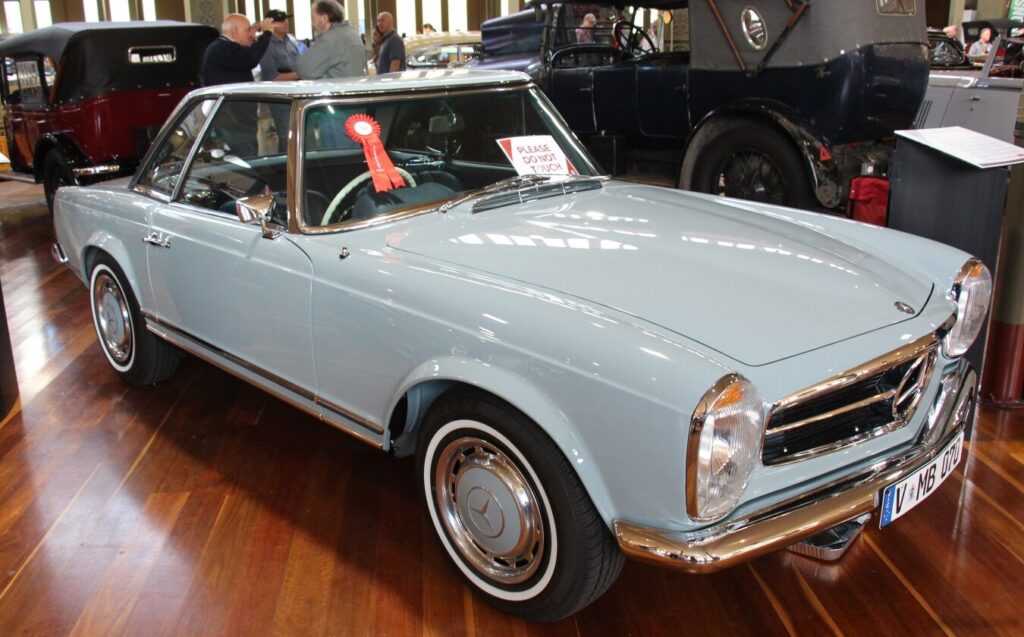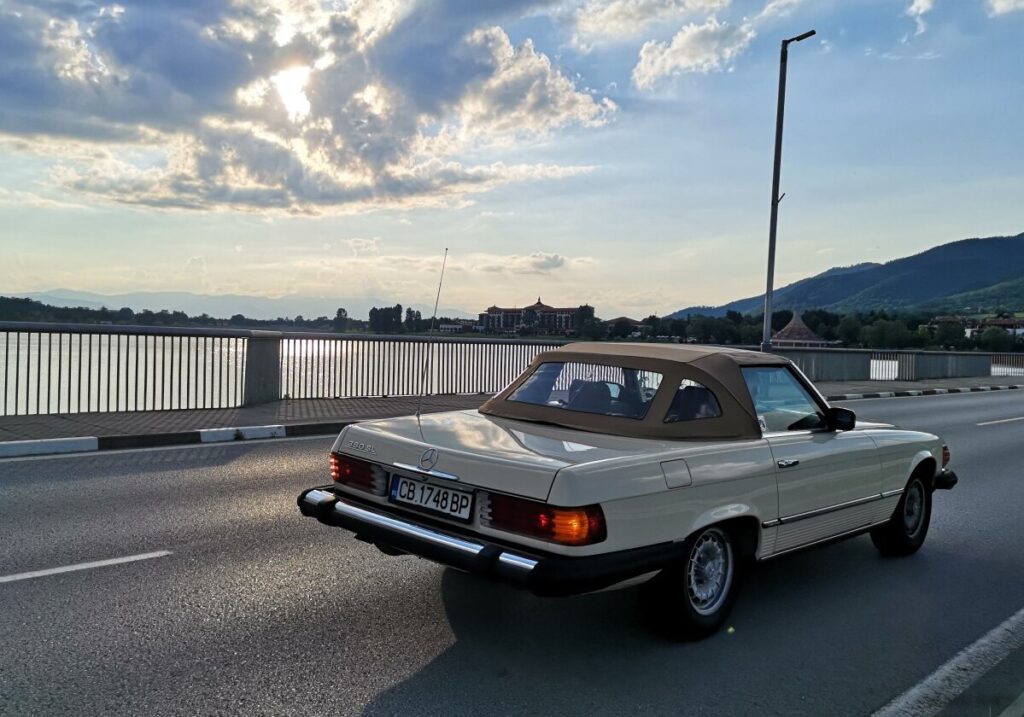
The Mercedes-Benz SL (R107) 280 SL, produced from May 1974 to August 1985, represented a significant evolution of the iconic SL roadster lineage. Positioned as a mid-range offering within the R107 generation – which spanned from the 280 SL to the potent 560 SL – the 280 SL with its 2.8-liter inline-six engine and automatic transmission aimed to balance performance with a more accessible price point and comfortable driving experience. It was a popular choice in both the North American and European markets, offering a blend of luxury, style, and engineering that defined the era. The R107 platform itself was designed to replace the earlier W113 “Pagoda” SL, offering a more modern and refined experience while retaining the classic roadster formula.
Technical Specifications
| Brand | Mercedes-Benz |
| Model | SL |
| Generation | SL (R107) |
| Type (Engine) | 280 SL (185 Hp) Automatic |
| Start of production | May, 1974 |
| End of production | August, 1985 |
| Powertrain Architecture | Internal Combustion engine |
| Body type | Roadster |
| Seats | 2 |
| Doors | 2 |
| Fuel consumption (combined) | 12.5 l/100 km (18.8 US mpg, 22.6 UK mpg, 8 km/l) |
| Fuel Type | Petrol (Gasoline) |
| Acceleration 0 – 100 km/h | 10.1 sec |
| Acceleration 0 – 62 mph | 10.1 sec |
| Acceleration 0 – 60 mph | 9.6 sec |
| Maximum speed | 200 km/h (124.27 mph) |
| Weight-to-power ratio | 8.1 kg/Hp, 123.3 Hp/tonne |
| Weight-to-torque ratio | 6.3 kg/Nm, 160 Nm/tonne |
| Power | 185 Hp @ 6000 rpm |
| Power per litre | 67.4 Hp/l |
| Torque | 240 Nm @ 4500 rpm (177.01 lb.-ft. @ 4500 rpm) |
| Engine layout | Front, Longitudinal |
| Engine Model/Code | M 110 E 28 / 110.982 |
| Engine displacement | 2746 cm3 (167.57 cu. in.) |
| Number of cylinders | 6 |
| Engine configuration | Inline |
| Cylinder Bore | 86 mm (3.39 in.) |
| Piston Stroke | 78.8 mm (3.1 in.) |
| Compression ratio | 9:1 |
| Number of valves per cylinder | 2 |
| Fuel injection system | Multi-port manifold injection |
| Engine aspiration | Naturally aspirated engine |
| Valvetrain | DOHC |
| Engine oil capacity | 6 l (6.34 US qt | 5.28 UK qt) |
| Coolant | 12 l (12.68 US qt | 10.56 UK qt) |
| Kerb Weight | 1500 kg (3306.93 lbs.) |
| Max. weight | 1920 kg (4232.88 lbs.) |
| Max load | 420 kg (925.94 lbs.) |
| Trunk (boot) space – maximum | 261 l (9.22 cu. ft.) |
| Fuel tank capacity | 90 l (23.78 US gal | 19.8 UK gal) |
| Permitted trailer load with brakes (12%) | 1500 kg (3306.93 lbs.) |
| Permitted trailer load without brakes | 750 kg (1653.47 lbs.) |
| Length | 4390 mm (172.83 in.) |
| Width | 1790 mm (70.47 in.) |
| Height | 1300 mm (51.18 in.) |
| Wheelbase | 2460 mm (96.85 in.) |
| Front track | 1452 mm (57.17 in.) |
| Rear (Back) track | 1440 mm (56.69 in.) |
| Minimum turning circle | 10.34 m (33.92 ft.) |
| Drivetrain Architecture | Rear wheel drive |
| Number of gears and type of gearbox | 4 gears, automatic transmission |
| Front suspension | Double wishbone |
| Rear suspension | Trailing arm |
| Front brakes | Ventilated discs, 278 mm |
| Rear brakes | Disc, 279 mm |
| Steering type | Cone worm with recirculation balls |
| Power steering | Hydraulic Steering |
| Tires size | Front wheel tires: 195/75 R14 Rear wheel tires: 195/75 R14 |
| Wheel rims size | Front wheel rims: 6.5J x 14 Rear wheel rims: 6.5J x 14 |
Powertrain & Engine Architecture
The heart of the 280 SL was the M110 E 28 inline-six engine. This 2.8-liter powerplant featured a cast-iron block and an aluminum cylinder head, employing a dual overhead camshaft (DOHC) valvetrain. Bosch K-Jetronic fuel injection was standard, providing precise fuel delivery for improved efficiency and performance. The engine produced 185 horsepower at 6000 rpm and 240 Nm (177 lb-ft) of torque at 4500 rpm. The automatic transmission was a four-speed unit, designed to provide smooth and effortless shifting. This transmission, while reliable, wasn’t known for its particularly quick shifts compared to later automatic designs. The engine code 110.982 specifically identifies this configuration.
Driving Characteristics
The 280 SL Automatic offered a comfortable and refined driving experience. Acceleration to 60 mph took around 9.6 seconds, and top speed was approximately 124 mph. While not a sports car in the modern sense, the 280 SL provided adequate power for comfortable cruising and spirited driving. The automatic transmission, while contributing to ease of use, did slightly diminish the car’s responsiveness compared to the available manual transmission. The gear ratios were optimized for relaxed highway driving, but could feel somewhat sluggish during quick overtaking maneuvers. Compared to the later 300 SL or 560 SL models, the 280 SL offered a more economical and less demanding driving experience.
Equipment & Trim Levels
The 280 SL came reasonably well-equipped as standard. Interior appointments typically included leather upholstery, wood trim, and power windows. Air conditioning was a common option, as was a sunroof. The dashboard layout was functional and elegant, featuring a comprehensive array of gauges. Optional extras included upgraded sound systems, cruise control, and automatic climate control. Trim levels were relatively simple, with most variations stemming from the selection of optional equipment. The interior color schemes were customizable, offering a range of choices to suit individual preferences.
Chassis & Braking
The R107 chassis featured independent suspension all around, with double wishbones at the front and a trailing arm setup at the rear. This configuration provided a comfortable ride and good handling characteristics. Brakes were disc brakes on all four wheels, with ventilated discs at the front for improved cooling. Power-assisted steering was standard, making the car easy to maneuver. The 280 SL’s weight of around 3300 lbs was relatively moderate for a luxury roadster of the era, contributing to its balanced handling. Rear brakes were solid discs, a cost-saving measure compared to the ventilated discs found on higher-spec models.
Market Reception & Comparison
The 280 SL Automatic was generally well-received by automotive critics. It was praised for its comfortable ride, stylish design, and reliable powertrain. However, some critics noted that the automatic transmission detracted from the car’s overall performance potential. Compared to the 300 SL, the 280 SL offered better fuel economy but less power. Compared to the 560 SL, the 280 SL was more affordable and easier to maintain, but lacked the ultimate performance of the larger-displacement V8 engine. The 280 SL struck a balance between luxury, performance, and affordability, making it a popular choice for buyers seeking a classic roadster experience.
Legacy
The Mercedes-Benz R107 280 SL has proven to be a remarkably durable and reliable vehicle. The M110 engine is known for its longevity, and many examples are still on the road today. The automatic transmission, while not the most sophisticated, has also proven to be relatively robust. In the used car market, the 280 SL is highly sought after by collectors and enthusiasts. Its combination of classic styling, comfortable driving experience, and relatively affordable price make it an attractive option for those seeking a vintage Mercedes-Benz roadster. Maintenance costs are generally reasonable, although sourcing parts can sometimes be a challenge. The 280 SL remains a testament to Mercedes-Benz’s engineering prowess and enduring design aesthetic.