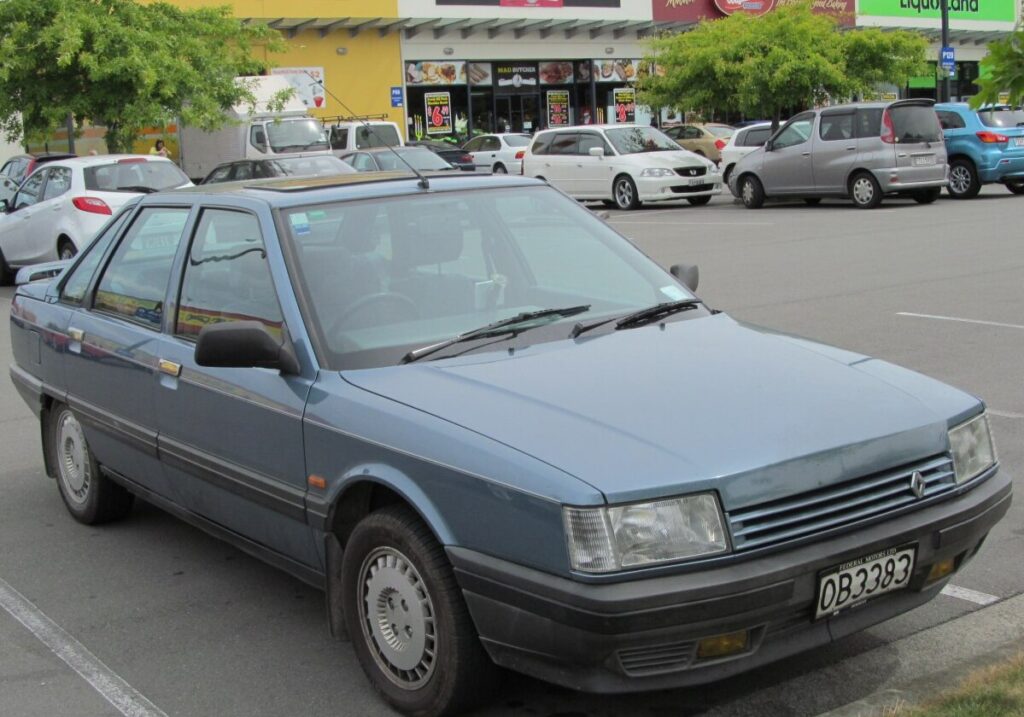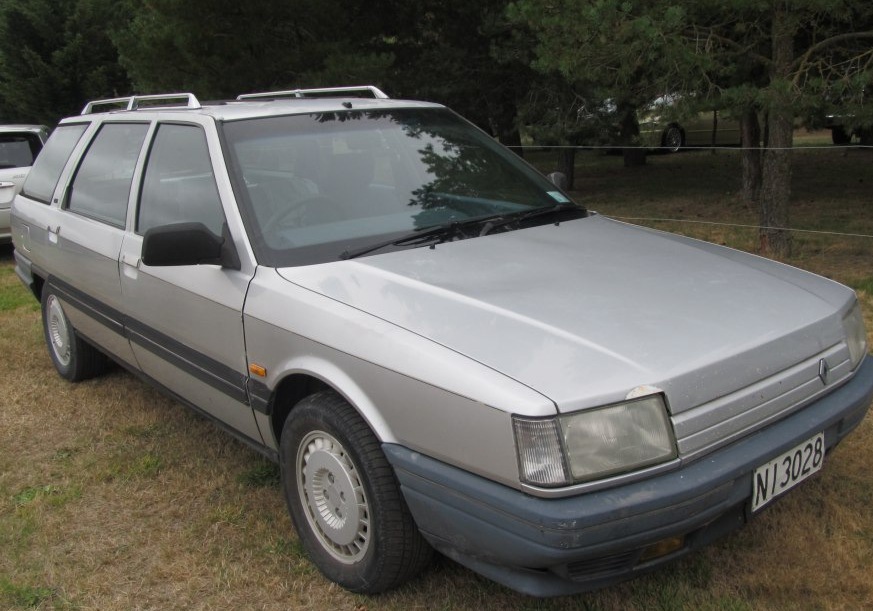
The Renault 21 Combi 2.1 D 4×4, produced between May 1989 and December 1995, represented a niche offering within the broader Renault 21 (K48) range. This variant combined the practicality of the Combi (estate/station wagon) body style with a four-wheel-drive system and a 2.1-liter diesel engine. Positioned as a robust and versatile vehicle, it catered to buyers needing both cargo space and all-weather capability, particularly in rural areas or regions with challenging road conditions. The 21 Combi, in general, was Renault’s competitor to vehicles like the Peugeot 505 Estate and the Citroën BX Estate, offering a more affordable alternative to premium brands.
Technical Specifications
| Brand | Renault |
| Model | 21 |
| Generation | 21 Combi (K48) |
| Type (Engine) | 2.1 D (70 Hp) 4×4 |
| Start of production | May, 1989 |
| End of production | December, 1995 |
| Powertrain Architecture | Internal Combustion engine |
| Body type | Station wagon (estate) |
| Seats | 5 |
| Doors | 5 |
| Fuel consumption (urban) | 8.3 l/100 km (28.3 US mpg, 34 UK mpg, 12 km/l) |
| Fuel consumption (extra urban) | 5.3 l/100 km (44.4 US mpg, 53.3 UK mpg, 18.9 km/l) |
| Fuel consumption (combined) | 7.3 l/100 km (32.2 US mpg, 38.7 UK mpg, 13.7 km/l) |
| Fuel Type | Diesel |
| Acceleration 0 – 100 km/h | 16.1 sec |
| Acceleration 0 – 62 mph | 16.1 sec |
| Acceleration 0 – 60 mph | 15.3 sec |
| Maximum speed | 164 km/h (101.9 mph) |
| Weight-to-power ratio | 18.8 kg/Hp, 53.2 Hp/tonne |
| Weight-to-torque ratio | 9.7 kg/Nm, 103.4 Nm/tonne |
| Power | 70 Hp @ 4500 rpm |
| Power per litre | 33.8 Hp/l |
| Torque | 136 Nm @ 2250 rpm (100.31 lb.-ft. @ 2250 rpm) |
| Engine layout | Front, Transverse |
| Engine Model/Code | J8S |
| Engine displacement | 2068 cm3 (126.2 cu. in.) |
| Number of cylinders | 4 |
| Engine configuration | Inline |
| Cylinder Bore | 86 mm (3.39 in.) |
| Piston Stroke | 89 mm (3.5 in.) |
| Compression ratio | 21.5:1 |
| Number of valves per cylinder | 2 |
| Fuel injection system | Precombustion chamber injection |
| Engine aspiration | Naturally aspirated engine |
| Valvetrain | OHC |
| Engine oil capacity | 6.1 l (6.45 US qt | 5.37 UK qt) |
| Coolant capacity | 7.1 l (7.5 US qt | 6.25 UK qt) |
| Kerb Weight | 1315 kg (2899.08 lbs.) |
| Max. weight | 1835 kg (4045.48 lbs.) |
| Max load | 520 kg (1146.4 lbs.) |
| Trunk (boot) space – minimum | 674 l (23.8 cu. ft.) |
| Trunk (boot) space – maximum | 1694 l (59.82 cu. ft.) |
| Fuel tank capacity | 62 l (16.38 US gal | 13.64 UK gal) |
| Length | 4693 mm (184.76 in.) |
| Width | 1726 mm (67.95 in.) |
| Height | 1450 mm (57.09 in.) |
| Wheelbase | 2809 mm (110.59 in.) |
| Front track | 1454 mm (57.24 in.) |
| Rear track | 1408 mm (55.43 in.) |
| Drive wheel | All wheel drive (4×4) |
| Number of gears | 5 |
| Gearbox type | Manual transmission |
| Front suspension | Spring Strut |
| Rear suspension | Torsion |
| Front brakes | Ventilated discs |
| Rear brakes | Drum |
| Assisting systems | ABS (Anti-lock braking system) |
| Steering type | Steering rack and pinion |
| Power steering | Hydraulic Steering |
| Tires size | 175/65 R14 |
| Wheel rims size | 14 |
Powertrain & Engine Architecture
The Renault 21 Combi 2.1 D 4×4 was powered by the J8S engine, a 2.068-liter inline-four cylinder diesel. This engine utilized precombustion chamber injection, a common diesel technology of the era. This system involved injecting fuel into a precombustion chamber connected to the main cylinder, promoting more complete combustion and reducing engine noise compared to direct injection systems. The engine produced 70 horsepower at 4500 rpm and 136 Nm (100.31 lb-ft) of torque at 2250 rpm. The engine featured an overhead camshaft (OHC) valvetrain with two valves per cylinder. The five-speed manual transmission was the only gearbox option available with this engine and drivetrain combination. The 4×4 system was a relatively simple part-time system, likely engaging the rear wheels via a viscous coupling, providing added traction when needed but not offering the sophisticated torque vectoring found in modern all-wheel-drive systems.
Driving Characteristics
The 2.1 D 4×4 variant of the Renault 21 Combi offered a distinctly different driving experience compared to its gasoline-powered siblings or even the 1.9-liter diesel versions. The 70 horsepower output, while adequate for general driving, resulted in leisurely acceleration – 0-60 mph taking around 15.3 seconds. The focus was on torque delivery, making it suitable for towing or navigating challenging terrain. The manual transmission, while offering more control than an automatic, required frequent shifting to maintain momentum, especially when loaded. The four-wheel-drive system provided enhanced grip on slippery surfaces, but the vehicle’s relatively high weight (1315 kg / 2899 lbs) meant it wasn’t particularly nimble. Compared to the more powerful gasoline engines, the diesel offered significantly better fuel economy, but at the expense of performance.
Equipment & Trim Levels
The Renault 21 Combi 2.1 D 4×4 was typically equipped with a moderate level of standard features. Interior appointments generally included cloth upholstery, a basic dashboard layout, and manual windows and door locks. Air conditioning was often an optional extra, as were features like a sunroof and upgraded audio systems. The 4×4 models often received slightly more robust interior trim to reflect their more utilitarian nature. Safety features were limited by the standards of the time, typically including only a driver’s airbag and ABS (Anti-lock Braking System) as optional equipment.
Chassis & Braking
The Renault 21 Combi 2.1 D 4×4 utilized a relatively conventional chassis design. Front suspension consisted of MacPherson strut springs, while the rear employed a torsion beam setup. This configuration provided a reasonable balance between ride comfort and handling. The braking system featured ventilated discs on the front wheels and drum brakes on the rear. The ABS system, when equipped, helped to improve braking performance and stability, particularly on slippery surfaces. The steering was a rack-and-pinion system with hydraulic power assistance, providing relatively light and precise steering feel.
Market Reception & Comparison
The Renault 21 Combi 2.1 D 4×4 was not a high-volume seller, appealing to a specific segment of the market. Critics generally praised its practicality, fuel economy, and all-weather capability, but noted its lack of outright performance. Compared to the gasoline-powered Renault 21 models, the diesel 4×4 offered significantly better fuel economy but considerably slower acceleration. Against competitors like the Peugeot 505 Estate and Citroën BX Estate, the Renault 21 Combi offered a more affordable entry point, but often lacked the refinement and prestige of those brands. Reliability was generally considered good, although diesel engines of this era could be prone to issues with fuel injection pumps and glow plugs.
Legacy
The Renault 21 Combi 2.1 D 4×4, while not a particularly iconic vehicle, holds a place in automotive history as a practical and versatile estate car. The J8S diesel engine proved to be relatively durable, and well-maintained examples can still be found on the road today. In the used car market, these vehicles are often sought after by enthusiasts looking for a classic French car with unique capabilities. The combination of a spacious interior, all-wheel drive, and fuel-efficient diesel engine makes it a compelling option for those seeking a reliable and capable workhorse. However, finding parts can be increasingly challenging as the vehicle ages, and maintenance requires specialized knowledge.