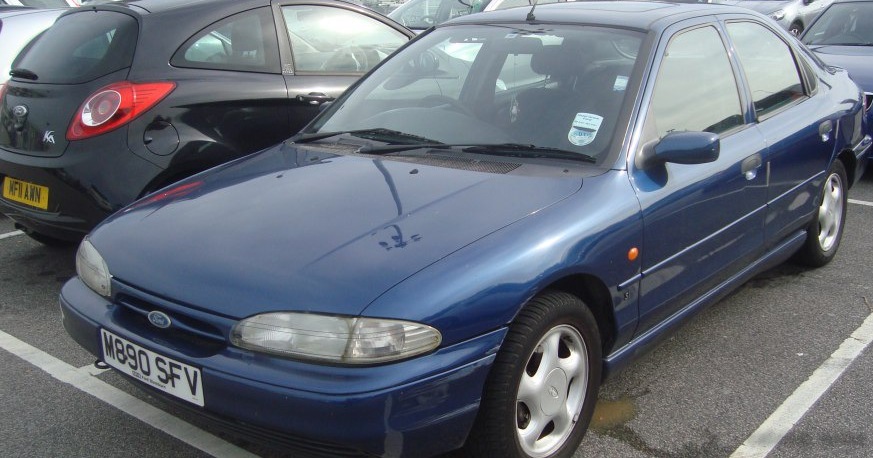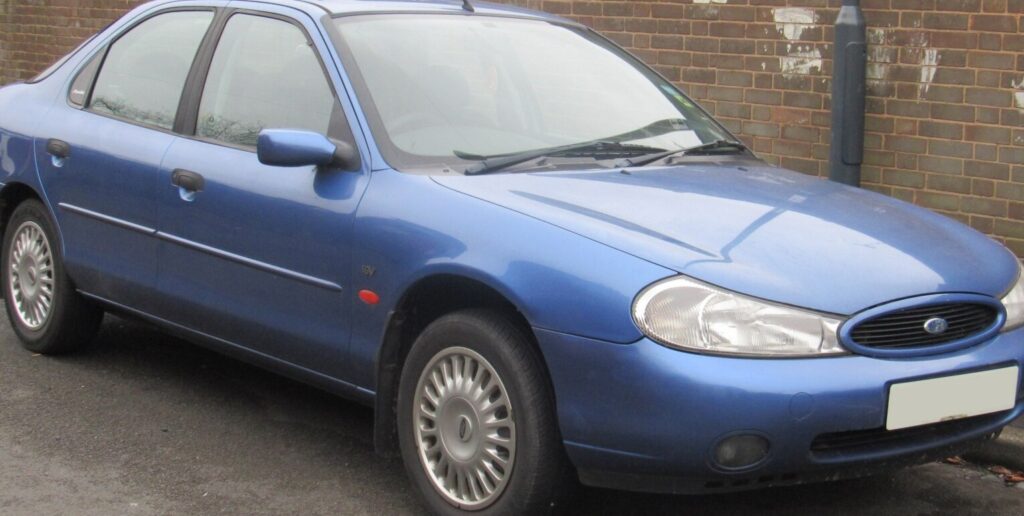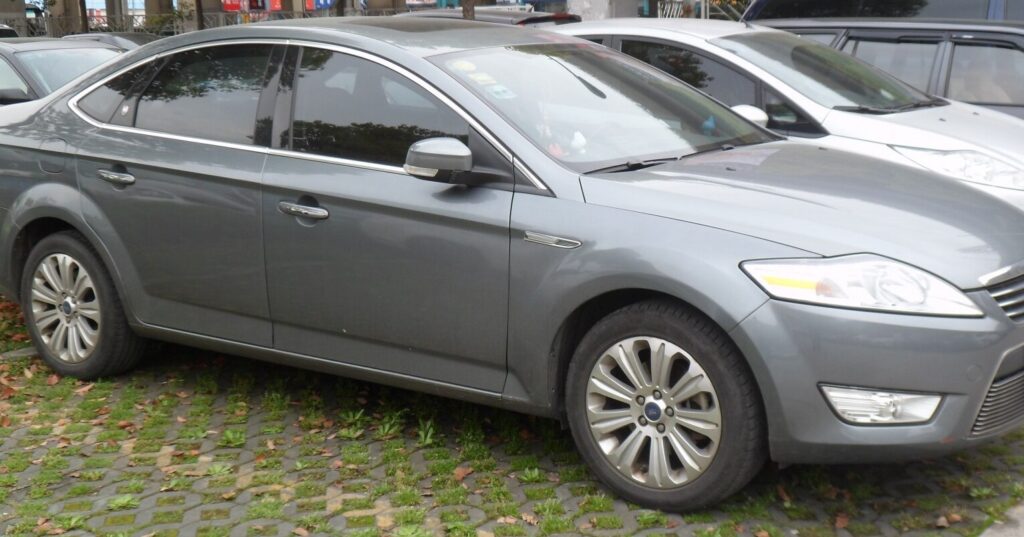
The Ford Mondeo III Sedan 2.0i 16V, produced between 2006 and 2010, represented a significant evolution in Ford’s mid-size family car offering. Part of the third generation Mondeo (internally designated as B5Y), this variant occupied a middle ground in the lineup, offering a balance between performance and affordability. It was primarily aimed at the European market, where the Mondeo competed with rivals like the Volkswagen Passat, Opel Vectra, and Peugeot 407. The 2.0i 16V model was a popular choice for buyers seeking a comfortable and reasonably powerful sedan without the expense of the higher-specification trims.
Technical Specifications
| Brand | Ford |
| Model | Mondeo |
| Generation | Mondeo III Sedan |
| Type (Engine) | 2.0 i 16V (145 Hp) |
| Start of production | 2006 |
| End of production | 2010 |
| Powertrain Architecture | Internal Combustion engine |
| Body type | Sedan |
| Seats | 5 |
| Doors | 4 |
| Fuel consumption (urban) | 11.2 l/100 km (21 US mpg, 25.2 UK mpg) |
| Fuel consumption (extra urban) | 6 l/100 km (39.2 US mpg, 47.1 UK mpg) |
| Fuel consumption (combined) | 7.9 l/100 km (29.8 US mpg, 35.8 UK mpg) |
| Fuel Type | Petrol (Gasoline) |
| Acceleration 0 – 100 km/h | 9.9 sec |
| Acceleration 0 – 62 mph | 9.9 sec |
| Acceleration 0 – 60 mph | 9.4 sec |
| Maximum speed | 210 km/h (130.49 mph) |
| Emission standard | Euro 4 |
| Weight-to-power ratio | 9.7 kg/Hp |
| Weight-to-torque ratio | 7.4 kg/Nm |
| Power | 145 Hp @ 6000 rpm |
| Torque | 190 Nm @ 4500 rpm (140.14 lb.-ft. @ 4500 rpm) |
| Engine layout | Front, Transverse |
| Engine Model/Code | AOBA, TBBA |
| Engine displacement | 1999 cm3 (121.99 cu. in.) |
| Number of cylinders | 4 |
| Engine configuration | Inline |
| Cylinder Bore | 87.5 mm (3.44 in.) |
| Piston Stroke | 83.1 mm (3.27 in.) |
| Compression ratio | 10.8:1 |
| Number of valves per cylinder | 4 |
| Fuel injection system | Multi-port manifold injection |
| Engine aspiration | Naturally aspirated engine |
| Valvetrain | DOHC |
| Engine oil capacity | 4.3 l (4.54 US qt | 3.78 UK qt) |
| Coolant capacity | 6.2 l (6.55 US qt | 5.46 UK qt) |
| Kerb Weight | 1402 kg (3090.88 lbs.) |
| Max. weight | 2090 kg (4607.66 lbs.) |
| Max load | 688 kg (1516.78 lbs.) |
| Trunk (boot) space – minimum | 550 l (19.42 cu. ft.) |
| Fuel tank capacity | 70 l (18.49 US gal | 15.4 UK gal) |
| Length | 4844 mm (190.71 in.) |
| Width | 1886 mm (74.25 in.) |
| Height | 1500 mm (59.06 in.) |
| Wheelbase | 2850 mm (112.2 in.) |
| Front track | 1522 mm (59.92 in.) |
| Rear track | 1537 mm (60.51 in.) |
| Minimum turning circle | 11.1 m (36.42 ft.) |
| Drivetrain Architecture | Front wheel drive |
| Number of gears | 5 |
| Gearbox type | Manual transmission |
| Front suspension | Coil spring |
| Rear suspension | Coil spring |
| Front brakes | Ventilated discs |
| Rear brakes | Disc |
| Assisting systems | ABS (Anti-lock braking system) |
| Steering type | Steering rack and pinion |
| Tires size | 205/55 R16 |
Powertrain & Engine Architecture
The heart of the Mondeo III 2.0i 16V was the Ford Duratec 2.0-liter inline-four cylinder engine. Engine codes AOBA and TBBA were commonly found in this model. This engine featured a double overhead camshaft (DOHC) valvetrain with four valves per cylinder, contributing to its relatively high output for its displacement. Fuel delivery was handled by a multi-port fuel injection system, providing precise fuel metering for improved efficiency and performance. The engine’s 145 horsepower at 6000 rpm and 190 Nm (140 lb-ft) of torque at 4500 rpm were respectable figures for the time, offering adequate power for everyday driving and occasional highway cruising. The engine was transversely mounted in the front of the vehicle, driving the front wheels. The five-speed manual transmission was the standard offering, providing a good balance between fuel economy and driver engagement.
Driving Characteristics
The 2.0i 16V Mondeo offered a comfortable and predictable driving experience. While not a sports sedan, it provided sufficient power for most driving situations. Acceleration from 0-60 mph took around 9.4 seconds, and top speed was rated at 130.49 mph. The five-speed manual transmission allowed drivers to keep the engine in its optimal power band, providing responsive acceleration. Compared to the higher-output 2.5-liter V6 version, the 2.0i felt less powerful, particularly during overtaking maneuvers. However, it offered significantly better fuel economy. The gear ratios were well-chosen for everyday driving, with a relatively tall fifth gear for relaxed highway cruising. The steering was light and precise, making the car easy to maneuver in urban environments.
Equipment & Trim Levels
The 2.0i 16V Mondeo typically came equipped with a reasonable level of standard features. These included power windows, power door locks, air conditioning, and an integrated audio system. Higher trim levels, such as the Ghia, added features like alloy wheels, upgraded upholstery, climate control, and a sunroof. Optional extras included a navigation system, leather seats, and parking sensors. Interior upholstery was typically cloth, although leather was available on higher-spec models. The dashboard layout was functional and ergonomically designed, with easy-to-read gauges and intuitive controls.
Chassis & Braking
The Mondeo III utilized a MacPherson strut front suspension and a multi-link rear suspension, providing a comfortable ride and good handling characteristics. The front brakes were ventilated discs, while the rear brakes were solid discs. Anti-lock Braking System (ABS) was standard, enhancing safety by preventing wheel lockup during hard braking. The suspension was tuned for comfort, but still provided adequate body control during cornering. Stabilizer bars were fitted to both the front and rear axles to reduce body roll.
Market Reception & Comparison
The Ford Mondeo III 2.0i 16V was generally well-received by automotive critics. It was praised for its comfortable ride, spacious interior, and good value for money. However, some critics noted that the engine could feel a bit underpowered, especially when fully loaded. Compared to the 2.5-liter V6 model, the 2.0i offered significantly better fuel economy – around 29.8 US mpg combined – making it a more economical choice for drivers who prioritized fuel efficiency. The 2.0i also proved to be more reliable than some of the more complex engine options in the Mondeo lineup.
Legacy
The Ford Mondeo III 2.0i 16V remains a popular choice in the used car market today. The Duratec 2.0-liter engine is known for its reliability and relatively low maintenance costs. While older examples may require some routine maintenance, such as timing belt replacement, the engine is generally considered to be robust and durable. The Mondeo III’s spacious interior and comfortable ride continue to appeal to buyers seeking a practical and affordable family sedan. Its blend of practicality, reliability, and affordability has cemented its place as a well-regarded mid-size car.