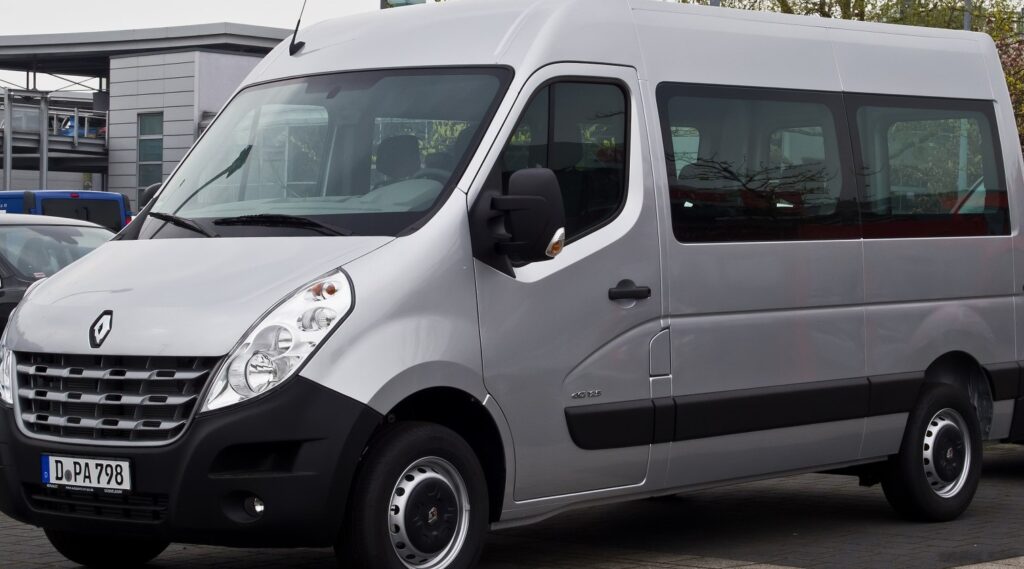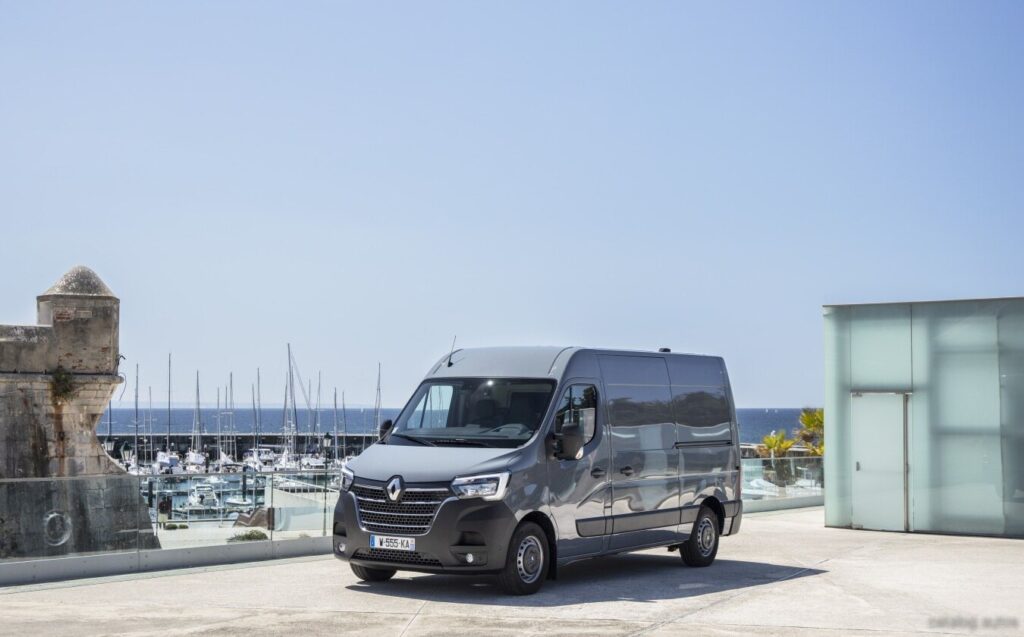
The Renault Master III Phase III, specifically the 2.3 Energy dCi 165 horsepower panel van in L3H3 configuration, represents a significant iteration of Renault’s large van offering, introduced in 2019. This variant is positioned as a workhorse solution for businesses requiring substantial cargo capacity and reasonable fuel efficiency. The Master III, launched initially in 2010, underwent a substantial facelift in 2019 (Phase III) bringing updated styling, improved technology, and enhanced safety features. The L3H3 designation indicates a long wheelbase and high roof, maximizing interior volume. This model primarily serves the European commercial vehicle market, competing with vans like the Fiat Ducato, Mercedes-Benz Sprinter, and Ford Transit.
Technical Specifications
| Brand | Renault |
| Model | Master |
| Generation | Master III (Phase III, 2019) Panel Van |
| Type (Engine) | 2.3 Energy dCi (165 Hp) L3H3 |
| Start of production | 2019 |
| Powertrain Architecture | Internal Combustion engine |
| Body type | Minivan, MPV |
| Seats | 3 |
| Doors | 4 |
| Combined fuel consumption (WLTP) | 8.1 l/100 km (29 US mpg, 34.9 UK mpg, 12.3 km/l) |
| CO2 emissions (WLTP) | 211 g/km |
| Fuel Type | Diesel |
| Maximum speed | 155 km/h (96.31 mph) |
| Emission standard | Euro VI D |
| Weight-to-power ratio | 14 kg/Hp, 71.4 Hp/tonne |
| Weight-to-torque ratio | 6.1 kg/Nm, 164.4 Nm/tonne |
| Power | 165 Hp @ 3500 rpm |
| Power per litre | 71.8 Hp/l |
| Torque | 380 Nm @ 1500 rpm (280.27 lb.-ft. @ 1500 rpm) |
| Engine Model/Code | M9T |
| Engine displacement | 2298 cm3 (140.23 cu. in.) |
| Number of cylinders | 4 |
| Engine configuration | Inline |
| Number of valves per cylinder | 4 |
| Fuel injection system | Diesel Commonrail |
| Engine aspiration | Twin-Turbo, Intercooler |
| Kerb Weight | 2311 kg (5094.88 lbs.) |
| Max. weight | 3500 kg (7716.18 lbs.) |
| Max load | 1189 kg (2621.3 lbs.) |
| Trunk (boot) space – maximum | 14200 l (501.47 cu. ft.) |
| Fuel tank capacity | 105 l (27.74 US gal | 23.1 UK gal) |
| AdBlue tank | 28 l (7.4 US gal | 6.16 UK gal) |
| Permitted trailer load with brakes (12%) | 2500 kg (5511.56 lbs.) |
| Permitted trailer load without brakes | 750 kg (1653.47 lbs.) |
| Length | 6225 mm (245.08 in.) |
| Width | 2070 mm (81.5 in.) |
| Width including mirrors | 2470 mm (97.24 in.) |
| Height | 2815 mm (110.83 in.) |
| Wheelbase | 3682 mm (144.96 in.) |
| Front track | 1750 mm (68.9 in.) |
| Rear (Back) track | 1730 mm (68.11 in.) |
| Front overhang | 869 mm (34.21 in.) |
| Rear overhang | 1674 mm (65.91 in.) |
| Ride height (ground clearance) | 181 mm (7.13 in.) |
| Minimum turning circle (turning diameter) | 16.2 m (53.15 ft.) |
| Drivetrain Architecture | Front wheel drive |
| Number of gears and type of gearbox | 6 gears, manual transmission |
| Front suspension | Independent, type McPherson with coil spring and anti-roll bar |
| Rear suspension | Leaf spring |
| Front brakes | Ventilated discs, 302 mm |
| Rear brakes | Disc, 305 mm |
| Tires size | 235/65 R16 |
| Wheel rims size | 16 |
INTRODUCTION
The Renault Master III Phase III 2.3 Energy dCi 165 L3H3 is a large panel van designed for commercial use. Introduced in 2019 as part of the Master III’s final refresh, it builds upon the foundation laid by the earlier versions, offering a blend of practicality, efficiency, and updated features. The “L3H3” designation is crucial; ‘L3’ signifies a long wheelbase, providing a generous cargo area, while ‘H3’ denotes a high roof, maximizing internal standing height and overall volume. This configuration is particularly popular with businesses needing to transport bulky items or requiring mobile workshops. The 2.3 Energy dCi engine, a staple of the Renault commercial range, provides a balance between power and fuel economy, making it suitable for a wide range of applications.
Powertrain & Engine Architecture
The heart of this Master variant is the Renault M9T 2.3-liter four-cylinder diesel engine. This engine utilizes a common-rail direct injection system, delivering fuel directly into the combustion chamber at extremely high pressure for optimized combustion. A key feature is its twin-turbocharger setup. The smaller turbocharger provides quick response at lower engine speeds, minimizing turbo lag, while the larger turbocharger delivers increased power at higher RPMs. An intercooler is also incorporated to cool the intake air, further enhancing performance and efficiency. The engine produces 165 horsepower at 3500 rpm and 380 Nm (280.27 lb.-ft.) of torque at 1500 rpm. The transmission is a six-speed manual gearbox, chosen for its durability and efficiency in commercial applications. While an automated manual transmission (AMT) was available on some Master III models, the 165 hp version is typically paired with the manual.
Driving Characteristics
The 165 horsepower output, coupled with the six-speed manual transmission, provides adequate performance for most commercial applications. Acceleration is not its strong suit, but the engine delivers strong low-end torque, making it capable of hauling heavy loads. The gear ratios are well-chosen to balance fuel economy and usability. Compared to higher-output versions of the Master III (such as the 170 hp variant), this 165 hp model feels less strained when fully loaded, but naturally lacks the same level of outright speed. The manual transmission allows for greater driver control, particularly when navigating challenging terrain or maneuvering in tight spaces. The ride quality, typical of a large van, is firm, especially when unladen, but the suspension is designed to absorb the shocks of a heavy payload.
Equipment & Trim Levels
The Renault Master III Phase III 2.3 Energy dCi 165 L3H3 is generally offered in a relatively basic trim level, prioritizing functionality over luxury. Standard equipment typically includes a driver’s airbag, ABS brakes, electronic stability control, and a basic audio system with Bluetooth connectivity. The cabin is designed for durability and ease of cleaning, with hard-wearing plastics and vinyl upholstery. Optional extras could include air conditioning, a rear parking sensor, a navigation system, and upgraded seating. The focus is on providing a practical and reliable work environment for the driver.
Chassis & Braking
The Master III utilizes a front-wheel-drive layout, contributing to a lower load floor and improved space utilization. The front suspension employs an independent McPherson strut design with coil springs and an anti-roll bar, providing a reasonable level of comfort and handling. The rear suspension utilizes a leaf spring setup, chosen for its robustness and ability to handle heavy loads. Braking is handled by ventilated discs at the front and solid discs at the rear. The braking system is adequate for the vehicle’s weight and performance, but it’s not particularly sporty. The steering is hydraulic, providing a reasonable level of assistance and feedback.
Market Reception & Comparison
The Renault Master III Phase III 2.3 Energy dCi 165 L3H3 was generally well-received by commercial vehicle operators. Critics praised its spacious interior, fuel efficiency, and robust powertrain. Compared to the higher-powered versions, this 165 hp variant offered a more affordable entry point into the Master III range, making it attractive to smaller businesses. Fuel economy, averaging around 8.1 l/100 km (29 US mpg), was competitive within its segment. Reliability was generally good, although some owners reported issues with the AdBlue system and the diesel particulate filter (DPF). Compared to rivals like the Ford Transit and Mercedes-Benz Sprinter, the Master III offered a compelling combination of value and practicality.
Legacy
The Renault Master III Phase III 2.3 Energy dCi 165 L3H3 remains a popular choice in the used commercial vehicle market. Its robust powertrain and spacious interior make it a practical and reliable workhorse. The M9T engine, while not without its quirks, has proven to be relatively durable when properly maintained. Common maintenance items include regular oil changes, filter replacements, and DPF regeneration. The availability of spare parts is generally good, and the relatively simple mechanical design makes it accessible to a wide range of mechanics. As a used van, it represents a cost-effective solution for businesses needing a large cargo capacity and reasonable running costs.