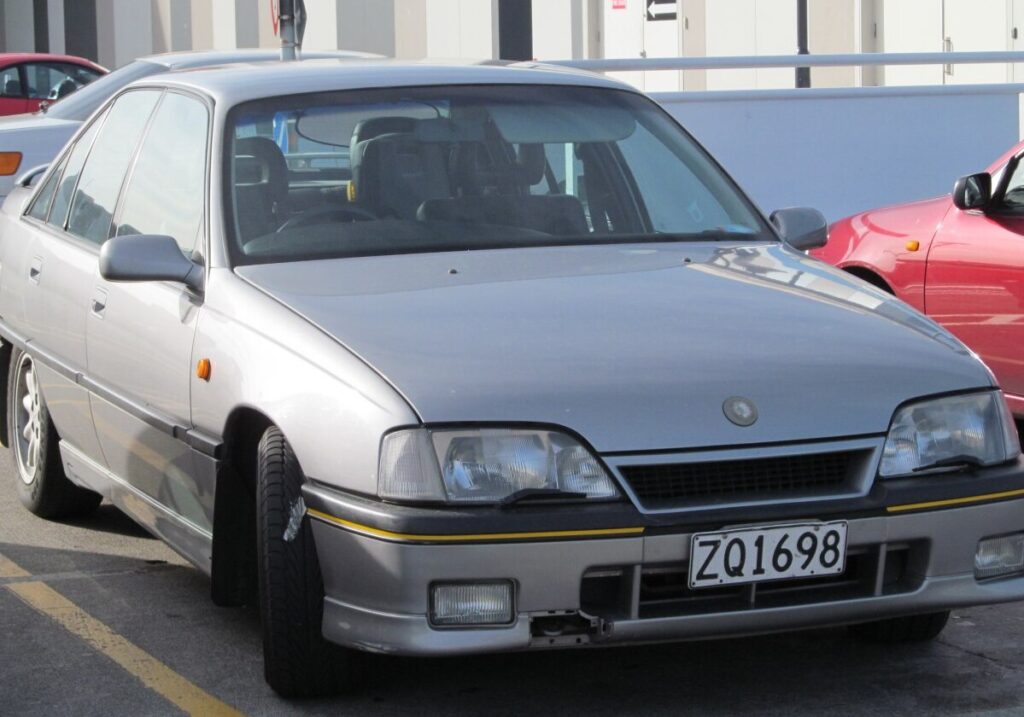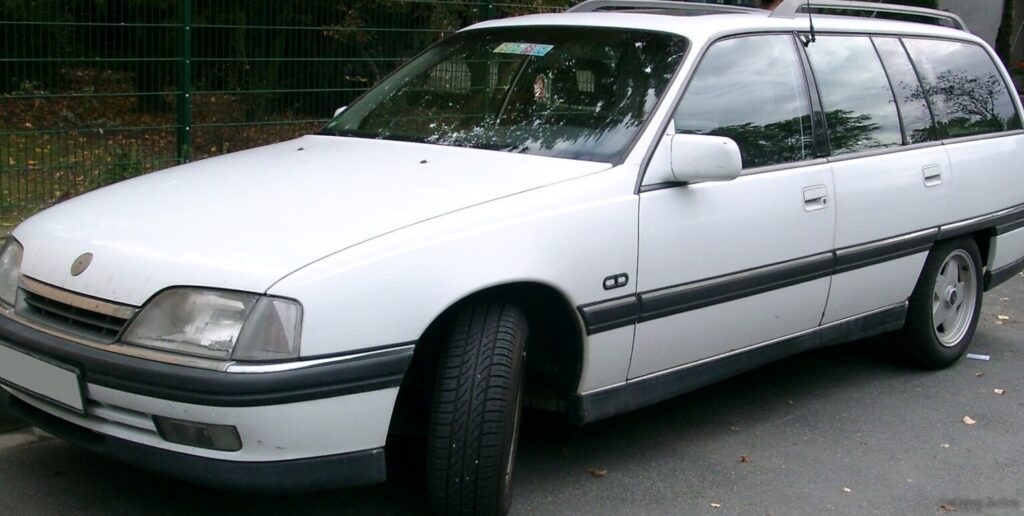
The Opel Omega A Caravan 2.0i CAT (99 hp) was a station wagon produced between July 1990 and 1992. It represented an entry-level offering within the Omega A range, positioned below the more powerful 2.4 and 3.0-liter variants. The Omega A, launched in 1986, was Opel’s flagship model, intended to replace the Rekord and Commodore, and compete with executive cars like the Ford Granada and BMW 5 Series. The Caravan (estate) body style offered increased practicality, appealing to families and those requiring substantial cargo space. This 2.0i CAT model, with its catalytic converter (“CAT” designation), was aimed at buyers seeking a balance of affordability, reasonable performance, and fuel efficiency.
Technical Specifications
| Brand | Opel |
| Model | Omega |
| Generation | Omega A Caravan |
| Type (Engine) | 2.0i CAT (99 Hp) |
| Start of production | July, 1990 |
| End of production | 1992 |
| Powertrain Architecture | Internal Combustion engine |
| Body type | Station wagon (estate) |
| Seats | 5 |
| Doors | 5 |
| Fuel consumption (urban) | 11.5 l/100 km (20.5 US mpg) |
| Fuel consumption (extra urban) | 6.4 l/100 km (36.8 US mpg) |
| Fuel Type | Petrol (Gasoline) |
| Acceleration 0 – 100 km/h | 12.5 sec |
| Acceleration 0 – 62 mph | 12.5 sec |
| Acceleration 0 – 60 mph | 11.9 sec |
| Maximum speed | 187 km/h (116.2 mph) |
| Weight-to-power ratio | 12.8 kg/Hp |
| Weight-to-torque ratio | 7.4 kg/Nm |
| Power | 99 Hp @ 5200 rpm |
| Power per litre | 49.5 Hp/l |
| Torque | 170 Nm @ 2600 rpm (125.39 lb.-ft. @ 2600 rpm) |
| Engine layout | Front, Longitudinal |
| Engine Model/Code | C20NEJ |
| Engine displacement | 1998 cm3 (121.93 cu. in.) |
| Number of cylinders | 4 |
| Engine configuration | Inline |
| Cylinder Bore | 86 mm (3.39 in.) |
| Piston Stroke | 86 mm (3.39 in.) |
| Compression ratio | 9.2:1 |
| Number of valves per cylinder | 2 |
| Fuel injection system | Multi-port manifold injection |
| Engine aspiration | Naturally aspirated engine |
| Engine oil capacity | 4 l (4.23 US qt | 3.52 UK qt) |
| Coolant | 6 l (6.34 US qt | 5.28 UK qt) |
| Kerb Weight | 1265 kg (2788.85 lbs.) |
| Max. weight | 1885 kg (4155.71 lbs.) |
| Max load | 620 kg (1366.87 lbs.) |
| Trunk (boot) space – minimum | 540 l (19.07 cu. ft.) |
| Trunk (boot) space – maximum | 1850 l (65.33 cu. ft.) |
| Fuel tank capacity | 70 l (18.49 US gal | 15.4 UK gal) |
| Length | 4770 mm (187.8 in.) |
| Width | 1760 mm (69.29 in.) |
| Height | 1480 mm (58.27 in.) |
| Wheelbase | 2730 mm (107.48 in.) |
| Front track | 1450 mm (57.09 in.) |
| Rear (Back) track | 1465 mm (57.68 in.) |
| Drivetrain Architecture | The Internal combustion engine (ICE) drives the rear wheels of the vehicle. |
| Drive wheel | Rear wheel drive |
| Number of gears and type of gearbox | 5 gears, manual transmission |
| Front suspension | Spring Strut |
| Rear suspension | Wishbone |
| Front brakes | Ventilated discs |
| Rear brakes | Disc |
| Assisting systems | ABS (Anti-lock braking system) |
| Power steering | Hydraulic Steering |
| Tires size | 195/65R15 |
| Wheel rims size | 7J x 15 |
Powertrain & Engine Architecture
The Omega A Caravan 2.0i CAT was powered by the Opel C20NEJ engine, a 1998cc inline-four cylinder unit. This engine was a member of Opel’s “E” family of engines, known for its durability and relatively simple design. The “NE” designation indicated a version equipped with a catalytic converter to meet increasingly stringent emissions regulations. The C20NEJ featured multi-port fuel injection, providing improved fuel atomization and more precise control over the air-fuel mixture compared to earlier carbureted Opel engines. The engine utilized a single overhead camshaft (SOHC) design with two valves per cylinder. The 5-speed manual transmission was the standard offering, providing a balance between fuel economy and driver control. The engine’s longitudinal mounting allowed for a rear-wheel-drive configuration, a characteristic of the Omega A.
Driving Characteristics
The 99 hp output of the 2.0i CAT engine resulted in a 0-60 mph time of around 11.9 seconds and a top speed of 116 mph. While not particularly sporty, the engine provided adequate power for everyday driving and cruising on highways. The manual transmission allowed for a reasonable degree of driver involvement, but the relatively long gearing emphasized fuel economy over outright acceleration. Compared to the more powerful 2.4 and 3.0-liter Omega A models, the 2.0i felt noticeably less responsive, particularly when fully loaded or climbing hills. However, the lighter weight of the 2.0-liter engine contributed to slightly better handling and fuel efficiency.
Equipment & Trim Levels
The 2.0i CAT typically came with a fairly basic level of equipment, reflecting its position as the entry-level Omega A Caravan. Standard features generally included power steering, central locking, and a basic stereo system. Interior upholstery was typically cloth, and the dashboard featured a functional but somewhat austere design. Optional extras included electric windows, a sunroof, and upgraded audio systems. The trim level was often simply designated as “base” or “L,” with limited opportunities for customization.
Chassis & Braking
The Omega A Caravan featured a MacPherson strut front suspension and a semi-trailing arm rear suspension. This setup provided a comfortable ride, although it wasn’t particularly sporty. The 2.0i CAT models typically used ventilated disc brakes at the front and solid disc brakes at the rear. Anti-lock braking system (ABS) was available as an option, enhancing safety in slippery conditions. The steering was hydraulic power-assisted, making maneuvering at low speeds easier. Stabilizer bars were fitted to both the front and rear axles to reduce body roll during cornering.
Market Reception & Comparison
The Opel Omega A Caravan 2.0i CAT was generally well-received as a practical and affordable family car. Critics praised its spacious interior, comfortable ride, and reasonable fuel economy. However, the engine’s performance was often criticized as being somewhat underwhelming, particularly when compared to competitors like the Ford Granada 2.0i. The 2.0i CAT offered better fuel economy than the larger-engined Omega A models, but at the expense of performance. Reliability was generally good, although the engine’s timing chain was known to be a potential weak point requiring periodic inspection and eventual replacement.
Legacy
The Opel Omega A Caravan 2.0i CAT remains a relatively common sight on European roads today, testament to its durability and practicality. The C20NEJ engine is known for its robustness, and parts availability is generally good. In the used car market, these models are typically affordable and represent a good value for those seeking a spacious and reliable estate car. While not a performance icon, the 2.0i CAT played an important role in establishing the Omega A as a popular choice for families and those needing a versatile vehicle.