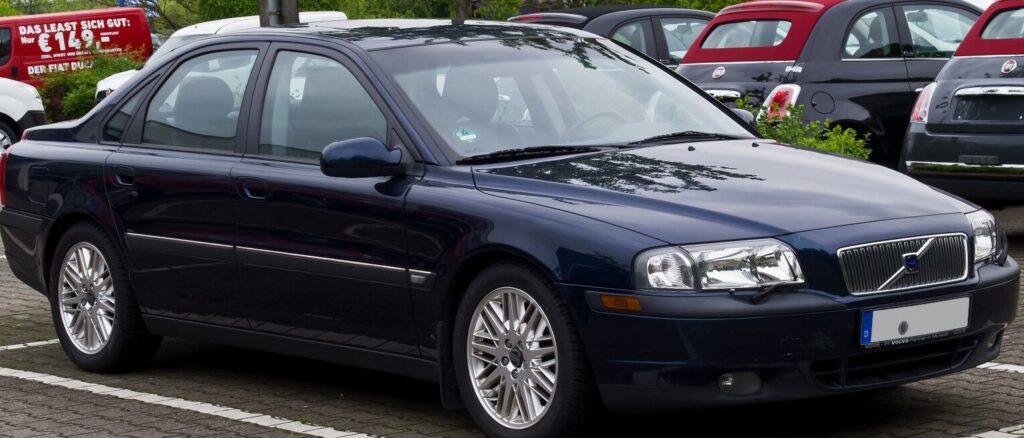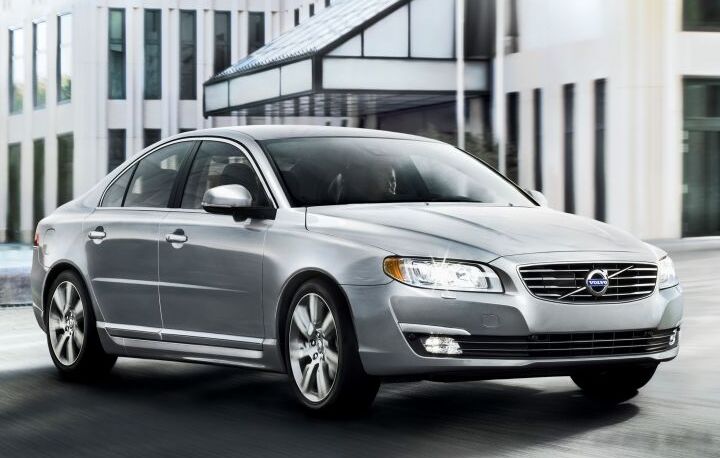
The Volvo S80 II facelift, specifically the 2.0 D4 variant producing 181 horsepower, was a key model in Volvo’s lineup from 2013 to 2016. Positioned as a mid-range offering, it aimed to balance fuel efficiency with acceptable performance for the executive sedan segment. This iteration of the S80, built on the P24 platform, represented a significant refresh of the second-generation model, focusing on exterior styling updates, interior enhancements, and powertrain refinements. The D4 trim was particularly important in European markets, where diesel engines held a substantial share of the premium sedan segment.
Technical Specifications
| Brand | Volvo |
| Model | S80 |
| Generation | S80 II (facelift 2013) |
| Type (Engine) | 2.0 D4 (181 Hp) |
| Start of production | 2013 |
| End of production | 2016 |
| Powertrain Architecture | Internal Combustion engine |
| Body type | Sedan |
| Seats | 5 |
| Doors | 4 |
| Fuel consumption (urban) | 4.5 l/100 km (52.3 US mpg, 62.8 UK mpg, 22.2 km/l) |
| Fuel consumption (extra urban) | 3.7 l/100 km (63.6 US mpg, 76.3 UK mpg, 27 km/l) |
| Fuel consumption (combined) | 4 l/100 km (58.8 US mpg, 70.6 UK mpg, 25 km/l) |
| CO2 emissions | 104 g/km |
| Fuel Type | Diesel |
| Acceleration 0 – 100 km/h | 8.4 sec |
| Acceleration 0 – 62 mph | 8.4 sec |
| Acceleration 0 – 60 mph | 8 sec |
| Maximum speed | 225 km/h (139.81 mph) |
| Emission standard | Euro 5 |
| Weight-to-power ratio | 9 kg/Hp, 111.1 Hp/tonne |
| Weight-to-torque ratio | 4.1 kg/Nm, 245.5 Nm/tonne |
| Power | 181 Hp @ 4250 rpm |
| Torque | 400 Nm @ 1800-2500 rpm (295.02 lb.-ft. @ 1800-2500 rpm) |
| Engine layout | Front, Transverse |
| Engine Model/Code | D4204T5 |
| Engine displacement | 1969 cm3 (120.16 cu. in.) |
| Number of cylinders | 4 |
| Engine configuration | Inline |
| Cylinder Bore | 82 mm (3.23 in.) |
| Piston Stroke | 93.2 mm (3.67 in.) |
| Compression ratio | 15.8:1 |
| Number of valves per cylinder | 4 |
| Fuel injection system | Diesel Commonrail |
| Engine aspiration | Turbocharger, Intercooler |
| Valvetrain | DOHC |
| Engine oil capacity | 5.6 l (5.92 US qt | 4.93 UK qt) |
| Coolant | 8.9 l (9.4 US qt | 7.83 UK qt) |
| Kerb Weight | 1629 kg (3591.33 lbs.) |
| Max. weight | 2090 kg (4607.66 lbs.) |
| Max load | 461 kg (1016.33 lbs.) |
| Trunk (boot) space – minimum | 480 l (16.95 cu. ft.) |
| Fuel tank capacity | 70 l (18.49 US gal | 15.4 UK gal) |
| Length | 4854 mm (191.1 in.) |
| Width | 1907 mm (75.08 in.) |
| Height | 1493 mm (58.78 in.) |
| Wheelbase | 2835 mm (111.61 in.) |
| Front track | 1588-1578 mm (62.52 – 62.13 in.) |
| Rear (Back) track | 1585-1575 mm (62.4 – 62.01 in.) |
| Ride height (ground clearance) | 151 mm (5.94 in.) |
| Minimum turning circle | 11.7 m (38.39 ft.) |
| Drivetrain Architecture | ICE, Front wheel drive |
| Number of gears and type of gearbox | 6 gears, manual transmission |
| Front suspension | Independent, McPherson with coil spring and anti-roll bar |
| Rear suspension | Independent coil spring |
| Front brakes | Ventilated discs |
| Rear brakes | Ventilated discs |
| Assisting systems | ABS (Anti-lock braking system) |
| Steering type | Steering rack and pinion |
Powertrain & Engine Architecture
The heart of the S80 D4 is the Volvo’s D4204T5 2.0-liter inline-four cylinder diesel engine. This engine is a member of Volvo’s modular engine family, designed for flexibility and efficiency. It utilizes a common-rail direct fuel injection system, delivering fuel at extremely high pressure for optimized combustion. The engine is turbocharged with an intercooler, enhancing power output and mitigating turbo lag. The D4204T5 features a double overhead camshaft (DOHC) valvetrain with four valves per cylinder, contributing to its responsive nature. The engine’s 15.8:1 compression ratio is relatively high for a turbocharged diesel, aiding in thermal efficiency. The 6-speed manual transmission was standard, providing a balance between fuel economy and driver engagement. While an automatic transmission was offered in other S80 trims, it wasn’t typically paired with the D4 engine.
Driving Characteristics
The 181 horsepower and 400 Nm (295 lb-ft) of torque produced by the D4 engine provided adequate, though not exhilarating, performance. Acceleration from 0-60 mph took around 8 seconds, making it competitive within its class. The engine’s peak torque, available from 1800-2500 rpm, meant that the S80 D4 felt reasonably responsive in everyday driving situations, offering good pulling power for overtaking maneuvers. Compared to the higher-output D5 variants, the D4 felt less urgent, but it compensated with significantly improved fuel economy. The manual transmission, while engaging, had relatively long throws. The gear ratios were tuned for fuel efficiency, meaning the engine didn’t always feel at its strongest when pushed hard.
Equipment & Trim Levels
The S80 D4 typically came well-equipped, reflecting its position as a premium sedan. Standard features included leather upholstery, automatic climate control, a premium audio system, and a suite of safety features like ABS, traction control, and multiple airbags. Higher trim levels offered options such as a sunroof, navigation system, heated seats, and parking sensors. The interior design was typically Scandinavian, emphasizing clean lines and a minimalist aesthetic. The dashboard layout was straightforward and user-friendly, with logically placed controls.
Chassis & Braking
The S80 II utilized an independent suspension setup at all four corners. The front suspension employed McPherson struts with coil springs and an anti-roll bar, while the rear featured an independent multi-link setup with coil springs. This configuration provided a comfortable ride quality, absorbing bumps and imperfections in the road effectively. Braking duties were handled by ventilated discs on all four wheels, providing ample stopping power. The ABS system helped to maintain control during emergency braking situations. The steering was a rack-and-pinion system, offering precise and predictable handling.
Market Reception & Comparison
The S80 D4 was generally well-received by automotive critics, particularly for its fuel efficiency and comfortable ride. It was often praised as a sensible choice for drivers prioritizing economy and practicality. However, some reviewers noted that the engine lacked the outright performance of its rivals, and the interior, while well-built, felt somewhat dated compared to newer competitors. Compared to the more powerful D5 models, the D4 offered a significant fuel economy advantage, making it a popular choice for high-mileage drivers. Against competitors like the BMW 5 Series and Audi A6, the S80 D4 offered a compelling value proposition, often undercutting them in price while providing a similar level of luxury and refinement.
Legacy
The Volvo S80 D4, while not a performance icon, proved to be a reliable and economical executive sedan. The D4204T5 engine, when properly maintained, is known for its durability. Common issues are typically related to diesel particulate filter (DPF) clogging, particularly on vehicles used primarily for short trips. In the used car market, the S80 D4 represents a relatively affordable entry point into the premium sedan segment. Its fuel efficiency and comfortable ride continue to appeal to buyers seeking a practical and refined vehicle. The S80, in general, is remembered as a comfortable and safe vehicle, representing a high point in Volvo’s traditional sedan offerings before the brand shifted its focus towards SUVs and crossovers.