
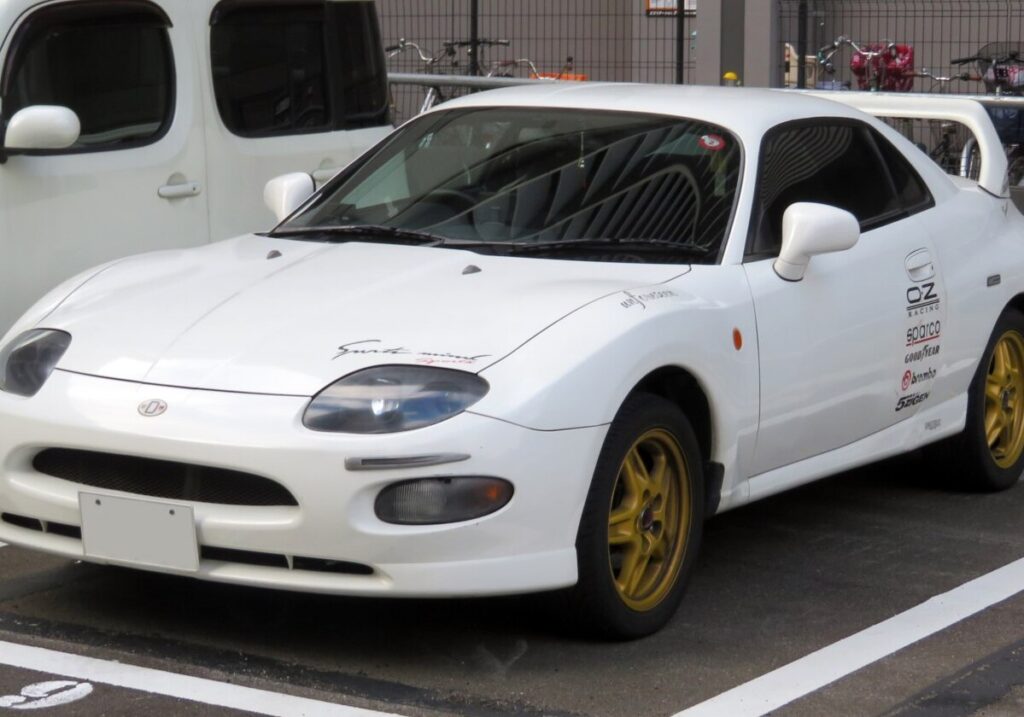
The Mitsubishi FTO, specifically the E-DE3A generation produced between 1994 and 1999, represented Mitsubishi’s foray into the front-wheel-drive coupe market. Positioned as a sporty and stylish alternative to offerings from Honda and Toyota, the FTO aimed to recapture some of the spirit of the earlier Starion and Eclipse models. The 1.8 i 16V GS variant, producing 126 horsepower, served as a mid-range offering within the FTO lineup, bridging the gap between the more economical base models and the higher-performance V6 versions. It was primarily sold in the Japanese domestic market (JDM), with limited grey market imports reaching other regions.
Technical Specifications
| Brand | Mitsubishi |
| Model | FTO |
| Generation | FTO (E-DE3A) |
| Type | 1.8 i 16V GS (126 Hp) |
| Start of production | 1994 |
| End of production | 1999 |
| Powertrain Architecture | Internal Combustion engine |
| Body type | Coupe |
| Seats | 2 |
| Doors | 2 |
| Fuel consumption (combined) | 17.8 l/100 km (13.2 US mpg, 15.9 UK mpg, 5.6 km/l) |
| Maximum speed | 200 km/h (124.27 mph) |
| Weight-to-power ratio | 8.7 kg/Hp, 114.5 Hp/tonne |
| Weight-to-torque ratio | 6.8 kg/Nm, 146.4 Nm/tonne |
| Power | 126 Hp @ 6000 rpm |
| Power per litre | 68.7 Hp/l |
| Torque | 161 Nm @ 4500 rpm (118.75 lb.-ft. @ 4500 rpm) |
| Engine layout | Front, Transverse |
| Engine displacement | 1834 cm3 (111.92 cu. in.) |
| Number of cylinders | 4 |
| Engine configuration | Inline |
| Cylinder Bore | 81 mm (3.19 in.) |
| Piston Stroke | 89 mm (3.5 in.) |
| Compression ratio | 10:1 |
| Number of valves per cylinder | 4 |
| Fuel injection system | Multi-port manifold injection |
| Engine aspiration | Naturally aspirated engine |
| Valvetrain | OHC |
| Kerb Weight | 1100 kg (2425.08 lbs.) |
| Fuel tank capacity | 60 l (15.85 US gal | 13.2 UK gal) |
| Length | 4320 mm (170.08 in.) |
| Width | 1735 mm (68.31 in.) |
| Height | 1300 mm (51.18 in.) |
| Wheelbase | 2500 mm (98.43 in.) |
| Front track | 1560 mm (61.42 in.) |
| Rear track | 1580 mm (62.2 in.) |
| Drivetrain Architecture | Front wheel drive |
| Number of gears and type of gearbox | 5 gears, manual transmission |
| Front suspension | Wishbone |
| Rear suspension | Coil spring |
| Front brakes | Ventilated discs |
| Rear brakes | Disc |
| Assisting systems | ABS (Anti-lock braking system) |
| Steering type | Steering rack and pinion |
| Power steering | Hydraulic Steering |
| Tires size | 185/70 R14 S |
Powertrain & Engine Architecture
The heart of the 1.8 i 16V GS FTO is the 4G93 inline-four cylinder engine. This 1834cc (1.8-liter) engine utilizes a single overhead camshaft (SOHC) valvetrain with four valves per cylinder, contributing to its relatively high output for its displacement. The engine employs multi-point fuel injection, a common feature for the time, ensuring efficient fuel delivery and improved emissions. The 4G93 is a non-interference engine, meaning that even if the timing belt breaks, the pistons will not collide with the valves, reducing the risk of catastrophic engine damage. The engine’s 126 horsepower and 161 Nm (118.75 lb-ft) of torque were respectable figures for a naturally aspirated 1.8-liter engine in the mid-1990s. The FTO GS was equipped with a five-speed manual transmission as standard, providing drivers with direct control over the engine’s power.
Driving Characteristics
The 1.8L FTO GS, with its five-speed manual transmission, offered a reasonably engaging driving experience. While not as overtly sporty as the V6 models, it provided sufficient power for everyday driving and spirited backroad excursions. The gear ratios were well-matched to the engine’s powerband, allowing for brisk acceleration. Compared to the automatic transmission options available on other FTO trims, the manual version felt more responsive and connected to the driver. The 1.8L engine required more frequent downshifts to maintain momentum when tackling hills or overtaking, a noticeable difference compared to the more powerful V6 variants. The front-wheel-drive configuration, while providing good traction in most conditions, could exhibit some torque steer under hard acceleration.
Equipment & Trim Levels
The GS trim level of the FTO 1.8 i 16V typically included features such as power windows, power steering, central locking, and an AM/FM radio with cassette player. Interior upholstery was generally cloth, with a sporty design. Optional extras included air conditioning, alloy wheels (often 15-inch), and a sunroof. The dashboard layout was driver-focused, with clearly marked gauges and easy-to-reach controls. The GS trim aimed to provide a balance between affordability and features, making it an attractive option for buyers seeking a stylish and well-equipped coupe without the higher price tag of the V6 models.
Chassis & Braking
The FTO E-DE3A utilized a front-wheel-drive chassis with independent wishbone suspension at the front and a coil spring setup at the rear. This suspension configuration provided a comfortable ride while maintaining reasonable handling characteristics. The GS trim typically featured ventilated disc brakes at the front and solid disc brakes at the rear, providing adequate stopping power for its weight and performance. Anti-lock braking system (ABS) was standard, enhancing safety by preventing wheel lockup during hard braking. The steering system employed a rack-and-pinion setup with hydraulic power assistance, offering precise steering feel and ease of maneuverability.
Market Reception & Comparison
The Mitsubishi FTO was generally well-received in Japan, praised for its stylish design, comfortable interior, and engaging driving dynamics. However, it faced stiff competition from established rivals such as the Honda Integra and Toyota Celica. Critics noted that the 1.8L engine, while adequate, lacked the outright performance of the V6 options. Fuel economy for the 1.8L variant was reasonable, averaging around 17.8 l/100 km (13.2 US mpg), but was not class-leading. Compared to the V6 models, the 1.8L FTO offered a more affordable entry point into the FTO range, appealing to a broader audience. Reliability was generally good, with the 4G93 engine proving to be a durable and long-lasting unit.
Legacy
Today, the Mitsubishi FTO, particularly the E-DE3A generation, has gained a following among enthusiasts, especially those interested in JDM cars. The 1.8L variants, while not as sought-after as the V6 models, offer a more affordable and accessible entry point into FTO ownership. The 4G93 engine is known for its reliability and relatively simple maintenance requirements. Parts availability can be a challenge outside of Japan, but a growing aftermarket support network is emerging. Well-maintained examples of the FTO 1.8 i 16V GS are becoming increasingly collectible, representing a unique and stylish piece of 1990s Japanese automotive history.
