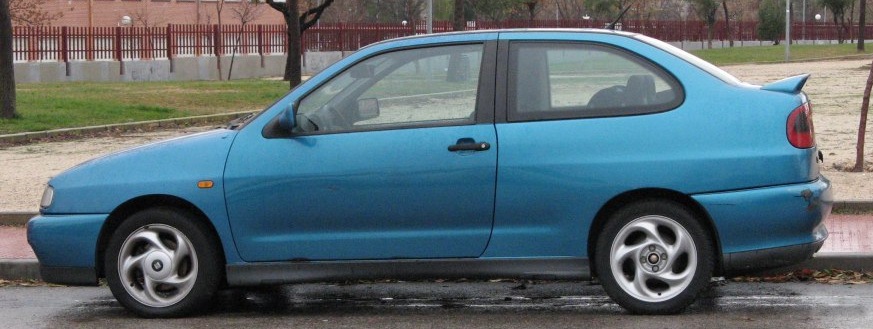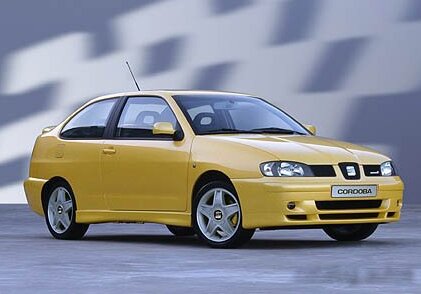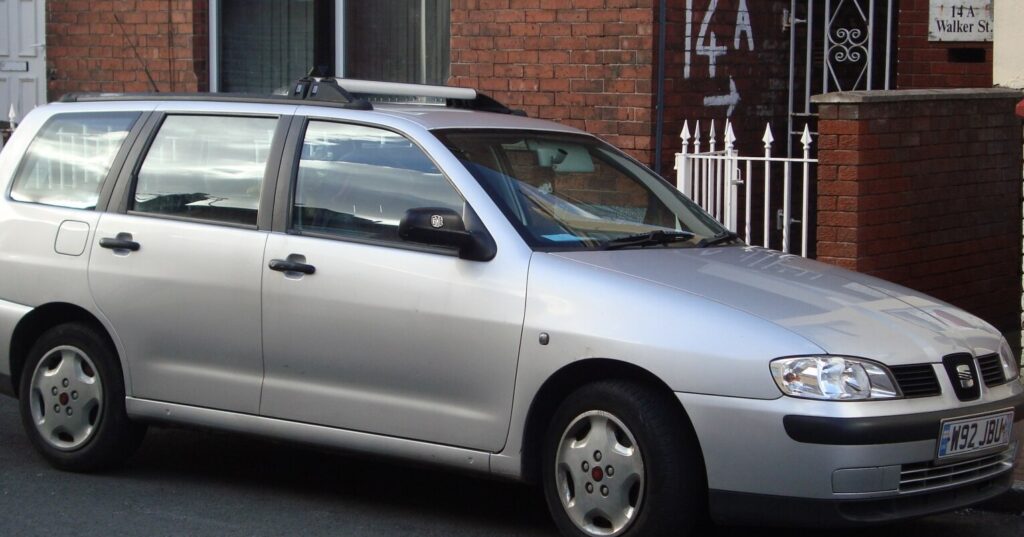
The Seat Cordoba Vario I (facelifted in 1999) 1.9 TDI, producing 110 horsepower, represents a practical and efficient offering within the compact estate car segment. Introduced in March 1999 and continuing through August 2002, this variant occupied a middle ground in the Cordoba Vario lineup, appealing to buyers seeking a balance between fuel economy, cargo capacity, and reasonable performance. It was built on the Volkswagen Group’s 1HX0/A3 platform, shared with models like the Volkswagen Golf, Bora, and Skoda Octavia, benefiting from the platform’s inherent strengths in packaging and engineering. The Vario, meaning ‘estate’ or ‘station wagon’ in Spanish, provided a more versatile alternative to the standard Cordoba hatchback.
Technical Specifications
| Brand | Seat |
| Model | Cordoba |
| Generation | Cordoba Vario I (facelift 1999) |
| Type (Engine) | 1.9 TDI (110 Hp) |
| Start of production | March, 1999 |
| End of production | August, 2002 |
| Powertrain Architecture | Internal Combustion engine |
| Body type | Station wagon (estate) |
| Seats | 5 |
| Doors | 5 |
| Fuel consumption (urban) | 6.6 l/100 km (35.6 US mpg, 42.8 UK mpg, 15.2 km/l) |
| Fuel consumption (extra urban) | 4.1 l/100 km (57.4 US mpg, 68.9 UK mpg, 24.4 km/l) |
| Fuel Type | Diesel |
| Acceleration 0 – 100 km/h | 11 sec |
| Acceleration 0 – 62 mph | 11 sec |
| Acceleration 0 – 60 mph | 10.5 sec |
| Maximum speed | 190 km/h (118.06 mph) |
| Weight-to-power ratio | 10.9 kg/Hp, 91.7 Hp/tonne |
| Weight-to-torque ratio | 5.1 kg/Nm, 195.8 Nm/tonne |
| Power | 110 Hp @ 4150 rpm |
| Power per litre | 58 Hp/l |
| Torque | 235 Nm @ 1900 rpm (173.33 lb.-ft. @ 1900 rpm) |
| Engine layout | Front, Transverse |
| Engine Model/Code | ASV |
| Engine displacement | 1896 cm3 (115.7 cu. in.) |
| Number of cylinders | 4 |
| Engine configuration | Inline |
| Cylinder Bore | 79.5 mm (3.13 in.) |
| Piston Stroke | 95.5 mm (3.76 in.) |
| Compression ratio | 19.5:1 |
| Number of valves per cylinder | 2 |
| Fuel injection system | Direct injection |
| Engine aspiration | Turbocharger, Intercooler |
| Valvetrain | OHC |
| Engine oil capacity | 4.5 l (4.76 US qt | 3.96 UK qt) |
| Coolant | 6.8 l (7.19 US qt | 5.98 UK qt) |
| Kerb Weight | 1200 kg (2645.55 lbs.) |
| Max. weight | 1660 kg (3659.67 lbs.) |
| Max load | 460 kg (1014.13 lbs.) |
| Trunk (boot) space – minimum | 350 l (12.36 cu. ft.) |
| Trunk (boot) space – maximum | 1250 l (44.14 cu. ft.) |
| Fuel tank capacity | 45 l (11.89 US gal | 9.9 UK gal) |
| Length | 4163 mm (163.9 in.) |
| Width | 1640 mm (64.57 in.) |
| Height | 1433 mm (56.42 in.) |
| Wheelbase | 2443 mm (96.18 in.) |
| Front track | 1429 mm (56.26 in.) |
| Rear (Back) track | 1394 mm (54.88 in.) |
| Drivetrain Architecture | The Internal combustion engine (ICE) drives the front wheels of the vehicle. |
| Drive wheel | Front wheel drive |
| Number of gears and type of gearbox | 5 gears, manual transmission |
| Front suspension | Spring Strut |
| Rear suspension | Suspension with traction connecting levers |
| Front brakes | Disc |
| Rear brakes | Disc |
| Assisting systems | ABS (Anti-lock braking system) |
| Steering type | Steering rack and pinion |
| Power steering | Hydraulic Steering |
| Tires size | 185/55 R15 |
Powertrain & Engine Architecture
The heart of the Cordoba Vario 1.9 TDI was the ASV engine code, a 1.9-liter, four-cylinder diesel engine. This engine was a mainstay of the Volkswagen Group’s diesel offerings during the late 1990s and early 2000s. It featured direct injection, a technology that improved fuel efficiency and reduced emissions compared to older indirect injection systems. The ASV utilized a Bosch VE distributor-type fuel injection pump, delivering fuel directly into the cylinders at extremely high pressure. The engine employed an overhead camshaft (OHC) valvetrain with two valves per cylinder. A turbocharger with an intercooler was standard, boosting power output to 110 horsepower and 235 Nm (173 lb-ft) of torque. This torque figure, available from a relatively low 1900 rpm, provided good pulling power for everyday driving and hauling loads. The engine was transversely mounted in the front of the vehicle, driving the front wheels. The five-speed manual transmission was the standard offering, providing a good balance between fuel economy and performance.
Driving Characteristics
The 1.9 TDI engine in the Cordoba Vario offered a practical and economical driving experience. While not a performance-oriented variant, the 110 horsepower and ample torque provided sufficient power for most driving situations. Acceleration to 60 mph took around 10.5 seconds, and the car could reach a top speed of 118 mph. The turbocharger provided a noticeable boost in power during acceleration, but turbo lag was present, particularly at lower engine speeds. The five-speed manual transmission was well-matched to the engine’s characteristics, allowing drivers to keep the engine in its optimal power band. Compared to the more powerful TDI variants (like the 130 hp version), the 110 hp model offered better fuel economy and a more relaxed driving experience. It also felt more manageable for less experienced drivers. Compared to the gasoline-powered Cordoba variants, the TDI offered significantly better fuel economy and torque, but at the expense of some refinement and engine noise.
Equipment & Trim Levels
The Cordoba Vario 1.9 TDI typically came with a reasonable level of standard equipment. This included power steering, central locking, electric front windows, and an anti-lock braking system (ABS). Interior upholstery was typically cloth, with a functional and durable design. The dashboard layout was typical of Volkswagen Group vehicles of the era, with a clear and straightforward instrument cluster. Optional extras included air conditioning, alloy wheels, a radio/cassette player, and upgraded interior trim. The Vario trim level itself signified the estate body style and the increased cargo capacity it offered. It wasn’t necessarily a specific ‘trim’ in the same way as a ‘GLX’ or ‘Sport’ designation, but rather a body style variant.
Chassis & Braking
The Cordoba Vario’s chassis was based on the Volkswagen Group’s A3 platform, providing a solid and stable foundation. The front suspension utilized a MacPherson strut setup, while the rear suspension employed a torsion beam axle. This configuration offered a good balance between ride comfort and handling. The braking system consisted of disc brakes on all four wheels, providing adequate stopping power. ABS was standard, enhancing safety by preventing wheel lockup during hard braking. The steering was a rack-and-pinion system with hydraulic power assistance, offering precise and responsive steering feel.
Market Reception & Comparison
The Seat Cordoba Vario 1.9 TDI was generally well-received by automotive critics as a practical and economical estate car. It was praised for its fuel efficiency, spacious interior, and ample cargo capacity. However, some critics noted that the engine could be somewhat noisy and that the interior trim was not as refined as some of its competitors. Compared to other estate cars in its class, such as the Ford Focus Estate and the Opel/Vauxhall Astra Estate, the Cordoba Vario offered a competitive package in terms of price, fuel economy, and practicality. Its diesel engine provided a significant advantage in terms of fuel costs, making it an attractive option for high-mileage drivers.
Legacy
The 1.9 TDI engine, particularly the ASV code, has proven to be remarkably durable and reliable over the long term. With proper maintenance, these engines can easily exceed 200,000 miles. The Cordoba Vario 1.9 TDI remains a relatively affordable and practical used car today. Its fuel efficiency and spacious interior continue to appeal to buyers seeking a cost-effective and versatile vehicle. However, potential buyers should be aware of the age-related issues common to older vehicles, such as corrosion and wear and tear on suspension components. The ASV engine, while robust, can be susceptible to issues with the fuel injection pump and turbocharger if not properly maintained. Overall, the Cordoba Vario 1.9 TDI represents a solid and dependable choice in the used car market.