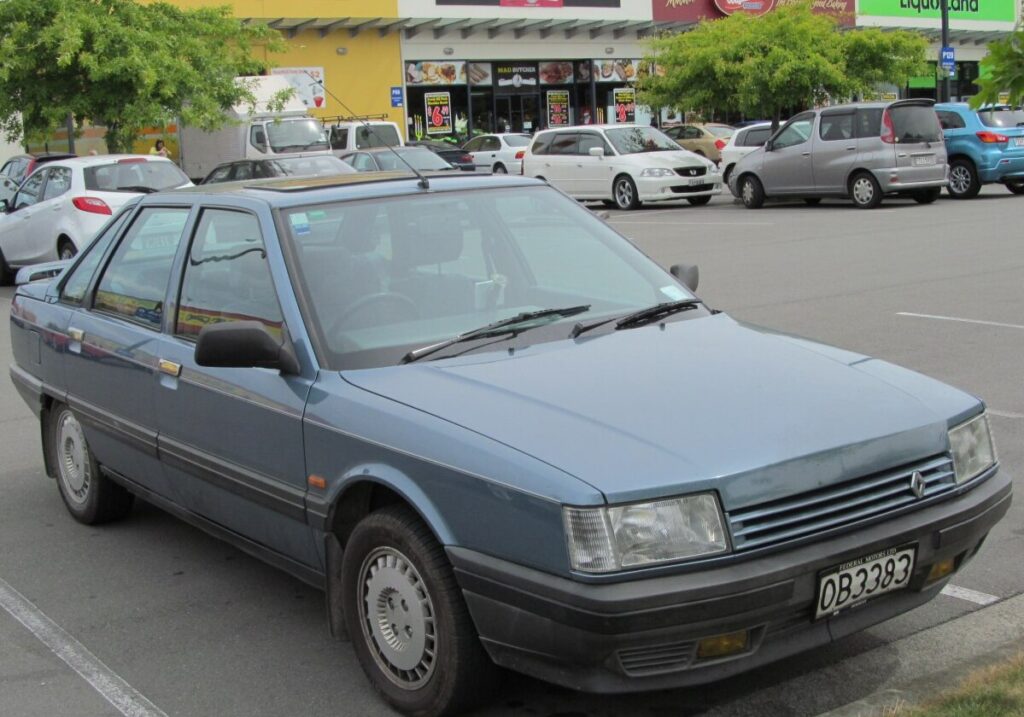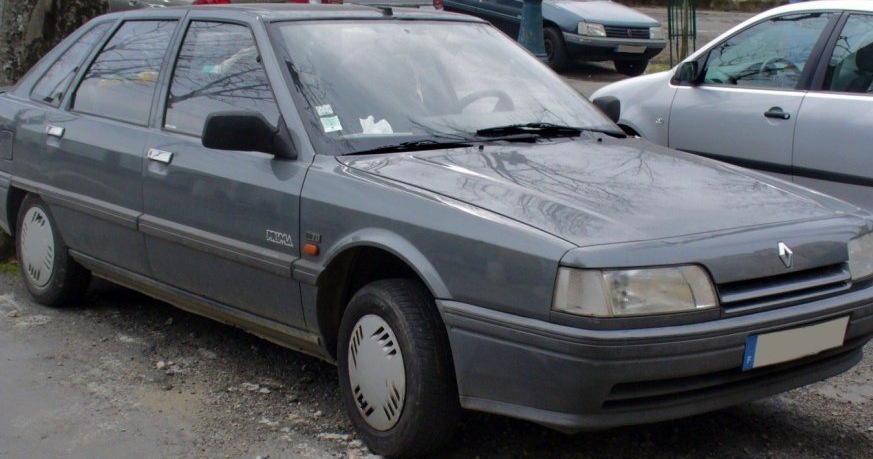
The Renault 21 Hatchback, specifically the 2.0i variant producing 105 horsepower, was a mainstay of the French automaker’s lineup from 1988 to 1994. Positioned as a mid-range offering within the broader 21 series (L48 generation), it aimed to provide a balance of practicality, comfort, and performance for family buyers. The 21 represented Renault’s attempt to create a modern, spacious, and well-equipped family car to compete with offerings from Peugeot, Citroën, and increasingly, German manufacturers. This particular 2.0L engine and five-speed manual transmission combination offered a step up in performance from the base models, while remaining more accessible than the top-of-the-line trims.
Technical Specifications
| Brand | Renault |
| Model | 21 |
| Generation | 21 Hatchback (L48) |
| Type (Engine) | 2.0 i (105 Hp) |
| Start of production | 1988 |
| End of production | 1994 |
| Powertrain Architecture | Internal Combustion engine |
| Body type | Hatchback |
| Seats | 5 |
| Doors | 5 |
| Fuel consumption (urban) | 11.8 l/100 km (19.9 US mpg) |
| Fuel consumption (extra urban) | 6.5 l/100 km (36.2 US mpg) |
| Fuel consumption (combined) | 7.9 l/100 km (29.8 US mpg) |
| Fuel Type | Petrol (Gasoline) |
| Acceleration 0 – 100 km/h | 9.9 sec |
| Acceleration 0 – 62 mph | 9.9 sec |
| Acceleration 0 – 60 mph | 9.4 sec |
| Maximum speed | 195 km/h (121.17 mph) |
| Weight-to-power ratio | 11 kg/Hp |
| Weight-to-torque ratio | 7.1 kg/Nm |
| Power | 105 Hp @ 5250 rpm |
| Torque | 163 Nm @ 2500 rpm (120.22 lb.-ft. @ 2500 rpm) |
| Engine layout | Front, Transverse |
| Engine displacement | 1995 cm3 (121.74 cu. in.) |
| Number of cylinders | 4 |
| Engine configuration | Inline |
| Cylinder Bore | 88 mm (3.46 in.) |
| Piston Stroke | 82 mm (3.23 in.) |
| Compression ratio | 9.5:1 |
| Number of valves per cylinder | 2 |
| Fuel injection system | Multi-port manifold injection |
| Engine aspiration | Naturally aspirated |
| Valvetrain | OHC |
| Kerb Weight | 1160 kg (2557.36 lbs.) |
| Max. weight | 1570 kg (3461.26 lbs.) |
| Max load | 410 kg (903.9 lbs.) |
| Trunk (boot) space – minimum | 420 l (14.83 cu. ft.) |
| Trunk (boot) space – maximum | 1290 l (45.56 cu. ft.) |
| Fuel tank capacity | 66 l (17.44 US gal) |
| Length | 4460 mm (175.59 in.) |
| Width | 1730 mm (68.11 in.) |
| Height | 1415 mm (55.71 in.) |
| Wheelbase | 2660 mm (104.72 in.) |
| Front track | 1430 mm (56.3 in.) |
| Rear track | 1400 mm (55.12 in.) |
| Drivetrain Architecture | Front wheel drive |
| Number of gears | 5 |
| Gearbox type | Manual transmission |
| Front suspension | Spring Strut |
| Rear suspension | Torsion |
| Front brakes | Ventilated discs |
| Rear brakes | Drum |
| Assisting systems | ABS (Anti-lock braking system) |
| Steering type | Steering rack and pinion |
| Power steering | Hydraulic |
| Tires size | 185/65 R14 |
| Wheel rims size | 14 |
Powertrain & Engine Architecture
The heart of the Renault 21 2.0i was the F7R engine, a 1995cc inline-four cylinder powerplant. This engine utilized a single overhead camshaft (OHC) design, operating two valves per cylinder. Fuel delivery was handled by a multi-port fuel injection system, a significant upgrade over the carburetors found in earlier Renault models. The F7R was known for its relatively smooth operation and decent power output for its displacement. The 105 horsepower peak arrived at 5250 rpm, while 163 Nm (120.22 lb-ft) of torque was available at 2500 rpm. This engine was paired exclusively with a five-speed manual transmission in most markets, providing drivers with good control over the engine’s powerband. The transmission itself was a conventional setup, known for its durability but not particularly sporty feel.
Driving Characteristics
The 2.0i Renault 21 offered a noticeable improvement in performance compared to the lower-displacement engines available in the range. Acceleration to 60 mph took around 9.4 seconds, and it could reach a top speed of 195 km/h (121 mph). While not a sports car, the 2.0i provided enough power for comfortable highway cruising and overtaking. The five-speed manual transmission allowed drivers to keep the engine in its optimal power range. Compared to the later 2.0 16V models (with dual overhead cams and more power), the 2.0i felt less responsive at higher engine speeds. However, the simpler engine design and lower state of tune generally translated to better reliability and lower maintenance costs.
Equipment & Trim Levels
The 2.0i trim level of the Renault 21 typically included features such as central locking, electric front windows, and a basic stereo system. Interior upholstery was usually cloth, with a relatively simple dashboard layout. Optional extras included a sunroof, upgraded stereo systems, and alloy wheels. The 21 aimed for a comfortable and practical interior, with a focus on space for passengers and luggage. The hatchback body style provided excellent versatility, with a generous trunk capacity that could be expanded by folding down the rear seats.
Chassis & Braking
The Renault 21 utilized a front-wheel-drive layout with a relatively simple suspension setup. The front suspension consisted of MacPherson struts, while the rear employed a torsion beam axle. This configuration provided a comfortable ride, but wasn’t particularly sporty in handling. Braking duties were handled by ventilated discs at the front and drum brakes at the rear. An anti-lock braking system (ABS) was often included as standard equipment, enhancing safety. The steering was rack and pinion, assisted by hydraulic power steering, providing light and easy steering feel.
Market Reception & Comparison
The Renault 21 2.0i was generally well-received by automotive critics as a practical and comfortable family car. It offered a good balance of performance, fuel economy (around 29.8 US mpg combined), and affordability. Compared to the base models with smaller engines, the 2.0i provided a significant improvement in driving experience. However, it faced stiff competition from rivals such as the Peugeot 405 and Citroën BX, which offered similar levels of practicality and performance. The 2.0i was often seen as a sensible choice for buyers who prioritized comfort and reliability over outright performance.
Legacy
The Renault 21, and particularly the 2.0i variant, has developed a modest following among classic car enthusiasts. The F7R engine is known for its durability and relative simplicity, making it a relatively easy engine to maintain. While not a particularly rare or valuable car, well-maintained examples are becoming increasingly sought after. The 21 represents a significant step forward in Renault’s design and engineering, and it remains a popular choice for those seeking a comfortable and affordable classic family car. Today, finding a pristine example requires dedication, but the 21 2.0i offers a nostalgic glimpse into 1980s and early 1990s French automotive design.