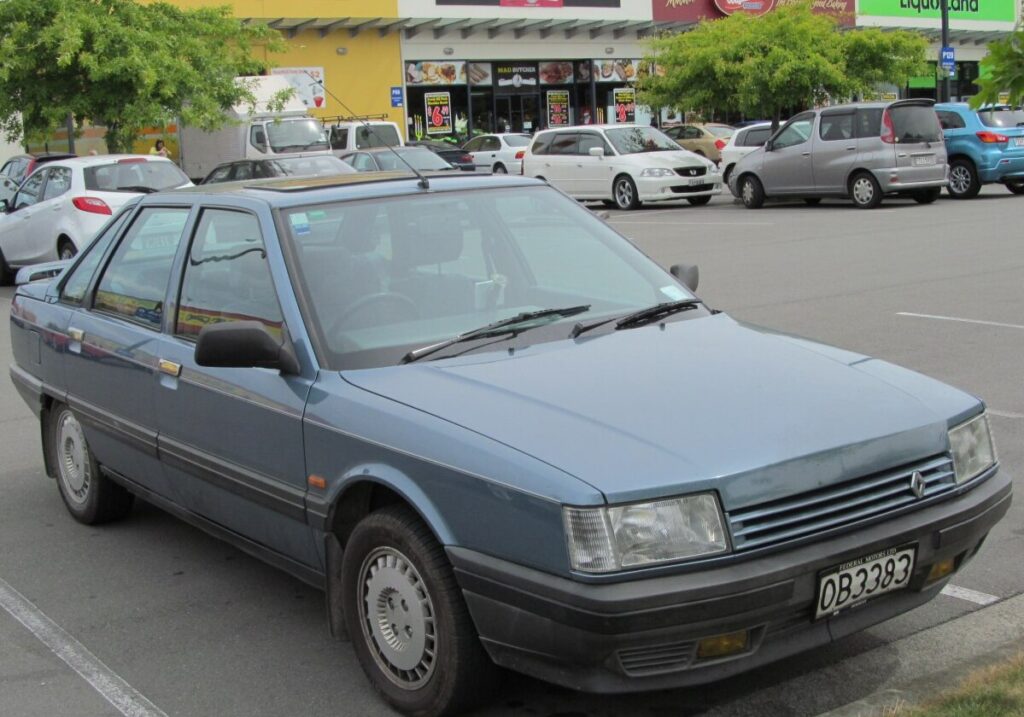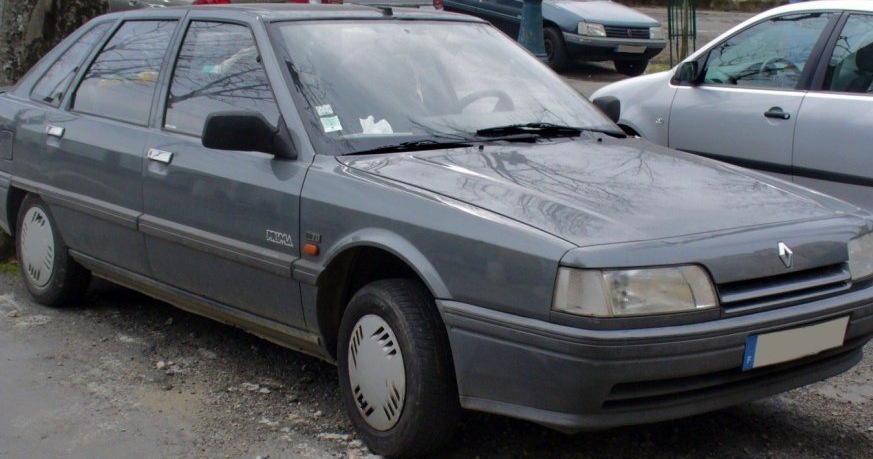
The Renault 21 2.0i Turbo, produced between 1989 and 1994, represented the performance pinnacle of the L48 Renault 21 hatchback range. Positioned as the flagship model, it offered a significant step up in power and driving experience compared to the naturally aspirated versions. The 21, launched in 1986, was Renault’s replacement for the successful Renault 18, aiming to provide a more modern and spacious family car. The L48 hatchback body style, introduced alongside the more traditional saloon, offered practicality and a youthful appeal, particularly in European markets. This 2.0i Turbo variant was aimed at drivers seeking a sporty and capable vehicle, blending everyday usability with respectable performance.
Technical Specifications
| Brand | Renault |
| Model | 21 |
| Generation | 21 Hatchback (L48) |
| Type (Engine) | 2.0 i Turbo (162 Hp) |
| Start of production | 1989 |
| End of production | 1994 |
| Powertrain Architecture | Internal Combustion engine |
| Body type | Hatchback |
| Seats | 5 |
| Doors | 5 |
| Fuel consumption (urban) | 11.3 l/100 km (20.8 US mpg, 25 UK mpg, 8.8 km/l) |
| Fuel consumption (extra urban) | 6.9 l/100 km (34.1 US mpg, 40.9 UK mpg, 14.5 km/l) |
| Fuel consumption (combined) | 8.3 l/100 km (28.3 US mpg, 34 UK mpg, 12 km/l) |
| Fuel Type | Petrol (Gasoline) |
| Acceleration 0 – 100 km/h | 8.1 sec |
| Acceleration 0 – 62 mph | 8.1 sec |
| Acceleration 0 – 60 mph | 7.7 sec |
| Maximum speed | 222 km/h (137.94 mph) |
| Weight-to-power ratio | 7.5 kg/Hp, 132.8 Hp/tonne |
| Weight-to-torque ratio | 4.7 kg/Nm, 213.1 Nm/tonne |
| Power | 162 Hp @ 5500 rpm |
| Power per litre | 81.2 Hp/l |
| Torque | 260 Nm @ 3000 rpm (191.77 lb.-ft. @ 3000 rpm) |
| Engine layout | Front, Transverse |
| Engine Model/Code | J7R 756 |
| Engine displacement | 1995 cm3 (121.74 cu. in.) |
| Number of cylinders | 4 |
| Engine configuration | Inline |
| Cylinder Bore | 88 mm (3.46 in.) |
| Piston Stroke | 82 mm (3.23 in.) |
| Compression ratio | 8.5:1 |
| Number of valves per cylinder | 2 |
| Fuel injection system | Multi-port manifold injection |
| Engine aspiration | Turbocharger |
| Valvetrain | OHC |
| Engine oil capacity | 6.5 l (6.87 US qt | 5.72 UK qt) |
| Coolant capacity | 6.2 l (6.55 US qt | 5.46 UK qt) |
| Kerb Weight | 1220 kg (2689.64 lbs.) |
| Max. weight | 1665 kg (3670.7 lbs.) |
| Max load | 445 kg (981.06 lbs.) |
| Trunk (boot) space – minimum | 420 l (14.83 cu. ft.) |
| Trunk (boot) space – maximum | 1290 l (45.56 cu. ft.) |
| Fuel tank capacity | 66 l (17.44 US gal | 14.52 UK gal) |
| Length | 4460 mm (175.59 in.) |
| Width | 1730 mm (68.11 in.) |
| Height | 1415 mm (55.71 in.) |
| Wheelbase | 2660 mm (104.72 in.) |
| Front track | 1430 mm (56.3 in.) |
| Rear track | 1400 mm (55.12 in.) |
| Drivetrain Architecture | Front wheel drive |
| Number of gears | 5 |
| Gearbox type | Manual transmission |
| Front suspension | Spring Strut |
| Rear suspension | Torsion |
| Front brakes | Ventilated discs |
| Rear brakes | Disc |
| Assisting systems | ABS (Anti-lock braking system) |
| Steering type | Steering rack and pinion |
| Power steering | Hydraulic |
| Tires size | 195/55 R15 |
| Wheel rims size | 15 |
Powertrain & Engine Architecture
The heart of the Renault 21 2.0i Turbo was the J7R 756 engine, a 1995cc inline-four cylinder unit. This engine featured a single overhead camshaft (OHC) valvetrain with two valves per cylinder. Crucially, it was equipped with a Garrett turbocharger and multi-point fuel injection, allowing it to produce 162 horsepower at 5500 rpm and 260 Nm (191.77 lb-ft) of torque at 3000 rpm. The 8.5:1 compression ratio was a compromise between performance and reliability, typical for a turbocharged engine of the era. The engine’s transverse mounting and front-wheel-drive configuration were standard for Renault at the time. The five-speed manual transmission was the only gearbox option offered with this engine, designed to handle the increased power output.
Driving Characteristics
The 2.0i Turbo offered a noticeably more engaging driving experience than the lower-spec Renault 21 models. Acceleration to 60 mph took approximately 7.7 seconds, and it could reach a top speed of 137.94 mph. The turbocharger provided a surge of power in the mid-range, making overtaking and highway cruising effortless. While not as refined as some contemporary German rivals, the Renault 21 Turbo offered a good balance of performance and practicality. The five-speed gearbox was well-matched to the engine’s powerband, although some drivers found the shift action to be slightly notchy. Compared to the naturally aspirated 1.7L and 2.0L versions, the Turbo offered a significant performance advantage, but at the cost of slightly increased fuel consumption.
Equipment & Trim Levels
The 2.0i Turbo typically came with a higher level of standard equipment than other Renault 21 variants. This included central locking, electric windows, power steering, and an upgraded interior trim. Upholstery was usually a cloth or velour material, with options for leather available. Optional extras included a sunroof, alloy wheels, and a more sophisticated stereo system. The dashboard layout was typical of Renault in the late 1980s and early 1990s, featuring a functional but somewhat dated design. Air conditioning was often included as standard or a popular option.
Chassis & Braking
The Renault 21 2.0i Turbo utilized a relatively simple suspension setup, with a spring strut arrangement at the front and a torsion beam at the rear. The front brakes were ventilated discs, providing good stopping power, while the rear brakes were solid discs. ABS (Anti-lock Braking System) was standard, enhancing safety. The chassis was reinforced compared to the lower-spec models to cope with the increased power output. The steering was rack and pinion with hydraulic assistance, offering a reasonable level of precision and feedback.
Market Reception & Comparison
The Renault 21 2.0i Turbo was generally well-received by automotive critics, who praised its performance and practicality. However, some reviewers noted that the interior quality was not as high as that of some German competitors. Fuel economy was reasonable for a turbocharged engine of the time, averaging around 28.3 US mpg in combined driving. Compared to the naturally aspirated 2.0L model, the Turbo offered a significant performance boost, but it was also more expensive to purchase and maintain. The 1.7L models were positioned as the entry-level options, while the 2.0i Turbo catered to drivers seeking a more sporty and engaging experience.
Legacy
The Renault 21 2.0i Turbo remains a popular choice among classic car enthusiasts. The J7R engine, while not without its quirks, is generally considered to be reliable if properly maintained. Turbocharger failure and oil leaks are common issues to watch out for. Today, well-maintained examples are becoming increasingly rare and are sought after by collectors. The Renault 21 2.0i Turbo represents a significant chapter in Renault’s history, showcasing the company’s ability to produce a capable and enjoyable family car with a sporty edge. Its blend of performance, practicality, and affordability made it a popular choice in its day, and it continues to hold a special place in the hearts of many car enthusiasts.