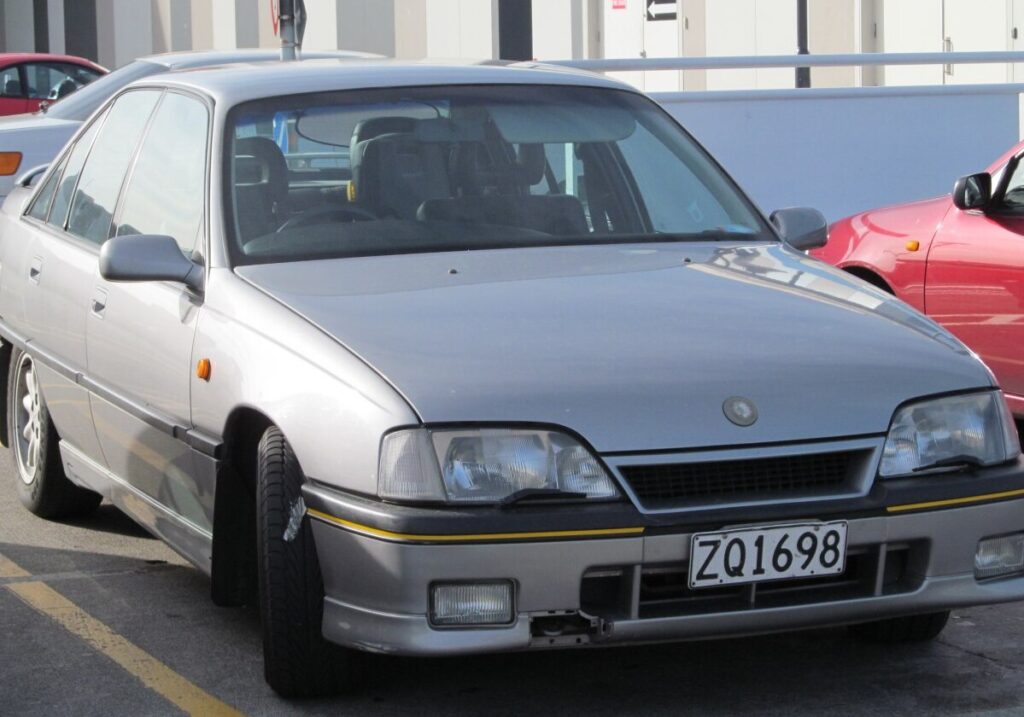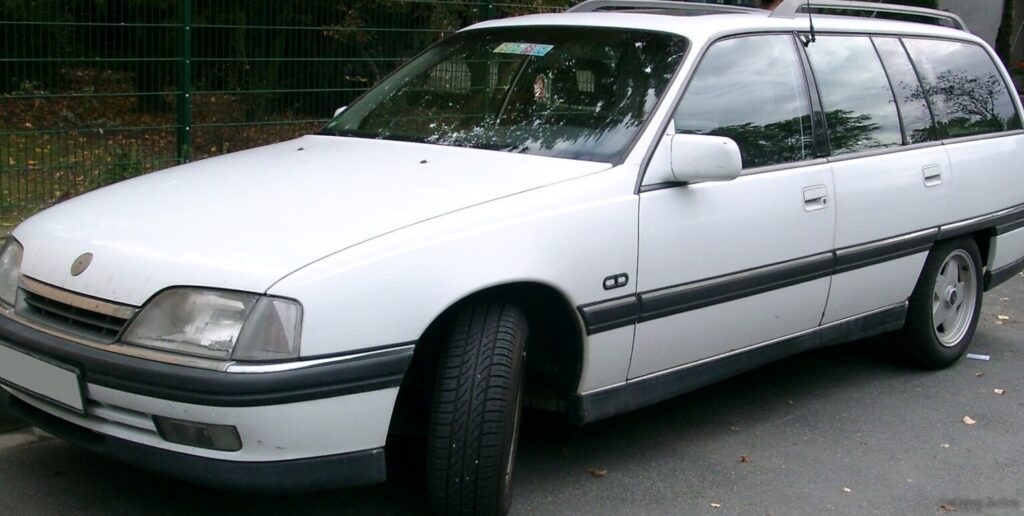
The Opel Omega A Caravan 2.4i CAT, produced between 1988 and 1993, represented a significant offering in the mid-size station wagon segment, particularly within Europe. Positioned as a more upscale and spacious alternative to the Opel Ascona and later the Vectra, the Omega A aimed to provide comfort, practicality, and a degree of performance for families and business users alike. The “Caravan” designation signified the estate (station wagon) body style, a popular choice in European markets. This 2.4-liter variant, equipped with a catalytic converter (“CAT”), was a mid-range offering within the Omega A lineup, slotting between the smaller displacement engines and the more powerful 3.0-liter six-cylinder models.
Technical Specifications
| Brand | Opel |
| Model | Omega |
| Generation | Omega A Caravan |
| Type (Engine) | 2.4i CAT (125 Hp) |
| Start of production | 1988 |
| End of production | 1993 |
| Powertrain Architecture | Internal Combustion engine |
| Body type | Station wagon (estate) |
| Seats | 5 |
| Doors | 5 |
| Fuel consumption (urban) | 12.8 l/100 km (18.4 US mpg, 22.1 UK mpg, 7.8 km/l) |
| Fuel consumption (extra urban) | 7.1 l/100 km (33.1 US mpg, 39.8 UK mpg, 14.1 km/l) |
| Fuel consumption (combined) | 8.8 l/100 km (26.7 US mpg, 32.1 UK mpg, 11.4 km/l) |
| Fuel Type | Petrol (Gasoline) |
| Acceleration 0 – 100 km/h | 12 sec |
| Acceleration 0 – 62 mph | 12 sec |
| Acceleration 0 – 60 mph | 11.4 sec |
| Maximum speed | 192 km/h (119.3 mph) |
| Weight-to-power ratio | 10.6 kg/Hp, 94.7 Hp/tonne |
| Weight-to-torque ratio | 6.8 kg/Nm, 147.7 Nm/tonne |
| Power | 125 Hp @ 4800 rpm |
| Power per litre | 51.9 Hp/l |
| Torque | 195 Nm @ 2400 rpm (143.82 lb.-ft. @ 2400 rpm) |
| Engine layout | Front, Longitudinal |
| Engine Model/Code | C24NE |
| Engine displacement | 2410 cm3 (147.07 cu. in.) |
| Number of cylinders | 4 |
| Engine configuration | Inline |
| Cylinder Bore | 95 mm (3.74 in.) |
| Piston Stroke | 85 mm (3.35 in.) |
| Compression ratio | 9.2:1 |
| Number of valves per cylinder | 2 |
| Fuel injection system | Multi-port manifold injection |
| Engine aspiration | Naturally aspirated |
| Engine oil capacity | 4.5 l (4.76 US qt | 3.96 UK qt) |
| Coolant capacity | 7.8 l (8.24 US qt | 6.86 UK qt) |
| Kerb Weight | 1320 kg (2910.1 lbs.) |
| Max. weight | 1950 kg (4299.01 lbs.) |
| Max load | 630 kg (1388.91 lbs.) |
| Trunk (boot) space – minimum | 520 l (18.36 cu. ft.) |
| Trunk (boot) space – maximum | 1850 l (65.33 cu. ft.) |
| Fuel tank capacity | 70 l (18.49 US gal | 15.4 UK gal) |
| Length | 4770 mm (187.8 in.) |
| Width | 1760 mm (69.29 in.) |
| Height | 1480 mm (58.27 in.) |
| Wheelbase | 2730 mm (107.48 in.) |
| Front track | 1460 mm (57.48 in.) |
| Rear track | 1475 mm (58.07 in.) |
| Drivetrain Architecture | Rear wheel drive |
| Number of gears | 5 gears, manual transmission |
| Front suspension | Spring Strut |
| Rear suspension | Wishbone |
| Front brakes | Ventilated discs |
| Rear brakes | Disc |
| Assisting systems | ABS (Anti-lock braking system), Hydraulic Steering |
| Tires size | 195/65 R15 |
| Wheel rims size | 6J x 15 |
Powertrain & Engine Architecture
The heart of the Omega A Caravan 2.4i CAT was the C24NE engine, a 2.4-liter inline-four cylinder gasoline engine. This engine was a development of Opel’s earlier four-cylinder designs, featuring a cast iron block and an aluminum cylinder head. It utilized a Bosch Motronic fuel injection system, a multi-port system that delivered fuel directly to each intake port, improving efficiency and reducing emissions. The engine employed a single overhead camshaft (SOHC) design with two valves per cylinder. The catalytic converter, denoted by the “CAT” in the model name, was a crucial component in reducing harmful exhaust emissions, meeting increasingly stringent European regulations. The engine was mounted longitudinally in the front of the vehicle, driving the rear wheels. The standard transmission for this variant was a five-speed manual gearbox, although a four-speed automatic transmission was also available as an option. The automatic transmission, while offering convenience, typically resulted in slightly reduced fuel economy and acceleration compared to the manual.
Driving Characteristics
The 2.4i CAT offered a balance between performance and economy. With 125 horsepower and 195 Nm (144 lb-ft) of torque, it wasn’t a particularly sporty vehicle, but it provided adequate power for everyday driving and comfortable cruising on the Autobahn. Acceleration from 0 to 60 mph took around 11.4 seconds, and the top speed was approximately 119 mph. The rear-wheel-drive configuration provided a balanced feel, although it wasn’t as forgiving in slippery conditions as front-wheel-drive cars. The five-speed manual transmission allowed drivers to keep the engine in its optimal power band, while the optional automatic transmission offered smoother shifts but at the expense of some responsiveness. Compared to the higher-output 3.0-liter inline-six engine, the 2.4i felt noticeably less powerful, but it was also lighter and more fuel-efficient.
Equipment & Trim Levels
The Omega A Caravan 2.4i CAT typically came with a reasonable level of standard equipment. This included power steering, central locking, electric windows, and an adjustable steering column. Interior upholstery was typically cloth, with options for upgraded velour or leather. Dashboard design was functional and straightforward, reflecting the car’s focus on practicality. Optional extras included air conditioning, a sunroof, and upgraded audio systems. Trim levels varied depending on the market, but generally, the 2.4i CAT was positioned as a mid-range offering, providing a good balance of features and affordability.
Chassis & Braking
The Omega A Caravan featured a relatively conventional chassis design. The front suspension utilized MacPherson struts, while the rear suspension employed a semi-independent twist beam setup. This configuration provided a comfortable ride, although it wasn’t particularly sporty. Brakes were disc brakes all around, with ventilated discs on the front wheels for improved cooling. An Anti-lock Braking System (ABS) was available as an option, enhancing safety by preventing wheel lockup during hard braking. The car’s weight, around 1320 kg (2910 lbs), contributed to its stable handling characteristics.
Market Reception & Comparison
The Opel Omega A Caravan 2.4i CAT was generally well-received by automotive critics. It was praised for its spacious interior, comfortable ride, and practical estate car body style. However, some critics noted that the 2.4-liter engine lacked the refinement and performance of the larger six-cylinder engines. Fuel economy was considered reasonable for the time, but not exceptional. Compared to rivals such as the Ford Mondeo Estate and the Volkswagen Passat Variant, the Omega A offered a more luxurious feel and a larger cargo capacity. The 2.4i CAT represented a good value proposition for buyers seeking a spacious and comfortable family car.
Legacy
The Opel Omega A Caravan 2.4i CAT, while not a particularly rare or collectible car today, remains a popular choice among enthusiasts seeking a classic European estate car. The C24NE engine is known for its reliability and durability, although regular maintenance is essential. Parts availability is generally good, although some components may be becoming increasingly difficult to find. The Omega A Caravan’s spacious interior and practical design continue to appeal to buyers looking for a comfortable and versatile vehicle. In the used car market, well-maintained examples of the 2.4i CAT can still command reasonable prices, reflecting their enduring appeal and practicality.