
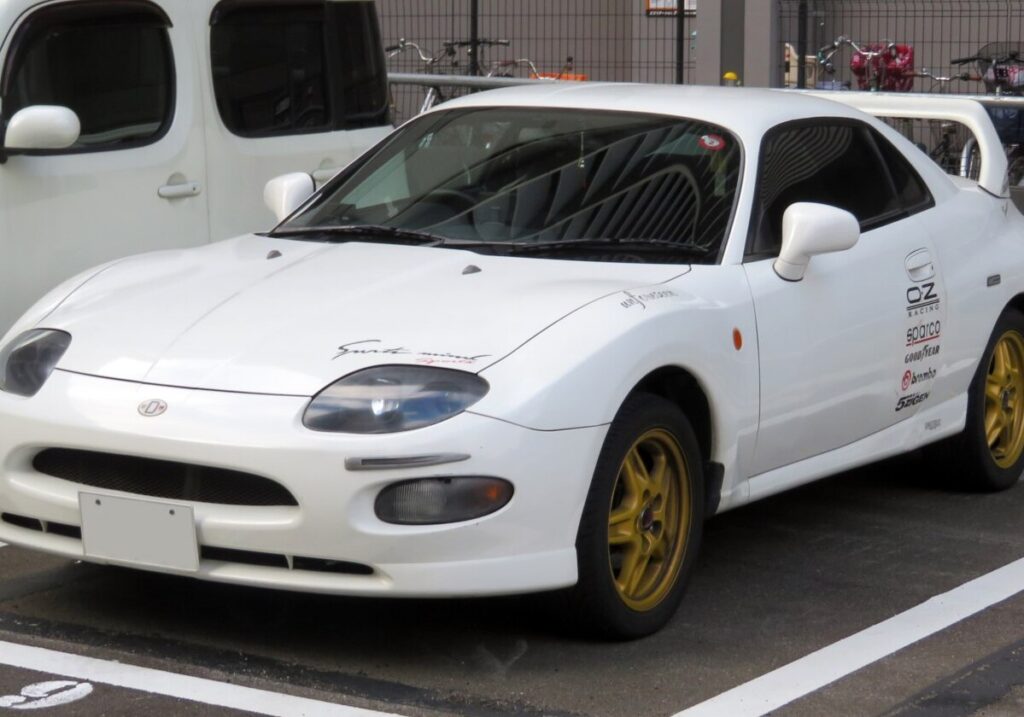
The Mitsubishi FTO, specifically the E-DE3A generation produced between 1994 and 1999, represented Mitsubishi’s foray into the front-wheel-drive, sporty coupe market. Positioned as a more affordable and accessible alternative to rivals like the Honda Prelude and Toyota Celica, the FTO aimed to deliver a blend of style, performance, and comfort. The 2.0 i V6 24V GR variant, equipped with the 6A13 engine producing 170 horsepower, sat at the top of the FTO range, offering the most potent engine option. It was primarily sold in the Japanese domestic market (JDM), with limited grey market imports reaching other regions.
Technical Specifications
| Brand | Mitsubishi |
| Model | FTO |
| Generation | FTO (E-DE3A) |
| Type (Engine) | 2.0 i V6 24V GR (170 Hp) |
| Start of production | 1994 |
| End of production | 1999 |
| Powertrain Architecture | Internal Combustion engine |
| Body type | Coupe |
| Seats | 2 |
| Doors | 2 |
| Fuel consumption (combined) | 16.6 l/100 km (14.2 US mpg, 17 UK mpg, 6 km/l) |
| Maximum speed | 220 km/h (136.7 mph) |
| Weight-to-power ratio | 6.8 kg/Hp, 147.8 Hp/tonne |
| Weight-to-torque ratio | 6.2 kg/Nm, 161.7 Nm/tonne |
| Power | 170 Hp @ 7000 rpm |
| Power per litre | 85.1 Hp/l |
| Torque | 186 Nm @ 4000 rpm (137.19 lb.-ft. @ 4000 rpm) |
| Engine layout | Front, Transverse |
| Engine displacement | 1998 cm3 (121.93 cu. in.) |
| Number of cylinders | 6 |
| Engine configuration | V-engine |
| Cylinder Bore | 78.4 mm (3.09 in.) |
| Piston Stroke | 69 mm (2.72 in.) |
| Compression ratio | 10:1 |
| Number of valves per cylinder | 4 |
| Fuel injection system | Multi-port manifold injection |
| Engine aspiration | Naturally aspirated engine |
| Valvetrain | DOHC |
| Kerb Weight | 1150 kg (2535.32 lbs.) |
| Fuel tank capacity | 60 l (15.85 US gal, 13.2 UK gal) |
| Length | 4320 mm (170.08 in.) |
| Width | 1735 mm (68.31 in.) |
| Height | 1300 mm (51.18 in.) |
| Wheelbase | 2500 mm (98.43 in.) |
| Front track | 1560 mm (61.42 in.) |
| Rear track | 1580 mm (62.2 in.) |
| Drivetrain | Front wheel drive |
| Number of gears & gearbox type | 5 gears, manual transmission |
| Front suspension | Wishbone |
| Rear suspension | Coil spring |
| Front brakes | Ventilated discs |
| Rear brakes | Disc |
| Assisting systems | ABS (Anti-lock braking system) |
| Steering type | Steering rack and pinion |
| Power steering | Hydraulic Steering |
| Tires size | 195/60 R15 H |
Powertrain & Engine Architecture
The heart of the FTO 2.0 i V6 GR is the 6A13 engine, a 2.0-liter, naturally aspirated V6. This engine utilizes a double overhead camshaft (DOHC) valvetrain with four valves per cylinder, contributing to its relatively high specific output. The 6A13 employs multi-port fuel injection, delivering fuel directly to each intake port for optimized combustion. The engine’s 60-degree V-angle provides a good balance between smoothness and compactness. The 5-speed manual transmission was the only gearbox option for this top-spec model, designed to handle the engine’s 186 Nm (137.19 lb-ft) of torque. The transmission featured a relatively short throw, enhancing the sporty driving experience.
Driving Characteristics
The FTO 2.0 i V6 GR offered a noticeably more engaging driving experience than the lower-spec models. The 170 horsepower engine provided brisk acceleration, allowing for a 0-60 mph time in the low 7-second range. The front-wheel-drive configuration, while not ideal for ultimate handling, was well-managed by the FTO’s chassis. The suspension, featuring wishbone front suspension and coil springs in the rear, provided a comfortable ride without sacrificing too much handling precision. The manual transmission’s gear ratios were well-matched to the engine’s powerband, allowing for spirited driving on winding roads. Compared to the 1.8L models, the V6 offered a significant power boost, but also a slightly heavier front end, requiring more deliberate steering inputs.
Equipment & Trim Levels
The 2.0 i V6 GR trim was the most comprehensively equipped FTO variant. Standard features included power windows, power steering, central locking, and an upgraded audio system. The interior typically featured sport seats upholstered in a combination of cloth and leather. Optional extras included a sunroof, upgraded alloy wheels, and a more sophisticated sound system. The dashboard layout was driver-focused, with clearly marked gauges and intuitive controls. The GR trim also featured unique exterior styling cues, such as a rear spoiler and distinctive alloy wheel designs.
Chassis & Braking
The FTO’s chassis was designed to provide a balance between rigidity and weight. The use of high-strength steel in key areas contributed to its structural integrity. The front suspension utilized a wishbone design, offering good control over wheel movement. The rear suspension employed coil springs, providing a comfortable ride. The braking system consisted of ventilated discs at the front and solid discs at the rear, providing adequate stopping power for the car’s weight and performance. An Anti-lock Braking System (ABS) was standard, enhancing safety during emergency braking situations.
Market Reception & Comparison
The Mitsubishi FTO was generally well-received in Japan, praised for its stylish design, comfortable interior, and engaging driving dynamics. The 2.0 i V6 GR variant was particularly appreciated for its strong performance. However, the FTO faced stiff competition from established rivals like the Honda Prelude and Toyota Celica. Critics noted that the FTO’s front-wheel-drive configuration limited its handling potential compared to rear-wheel-drive competitors. Fuel economy, at 16.6 l/100 km, was also considered average for its class. Compared to the lower-spec 1.8L FTO models, the V6 offered a significant performance upgrade, but at a higher price point and with slightly increased running costs.
Legacy
The Mitsubishi FTO, while not a massive sales success outside of Japan, has gained a cult following among enthusiasts. The 2.0 i V6 GR variant is particularly sought after due to its potent engine and well-equipped specification. The 6A13 engine is known for its reliability, although regular maintenance is essential to prevent issues. Today, well-maintained examples of the FTO 2.0 i V6 GR are becoming increasingly collectible, particularly those with low mileage and original features. The car represents a unique chapter in Mitsubishi’s history, showcasing the company’s ability to produce stylish and engaging sports coupes. Finding parts can sometimes be a challenge, as the FTO was not widely sold outside of Japan, but a dedicated aftermarket and online communities provide support for owners.
