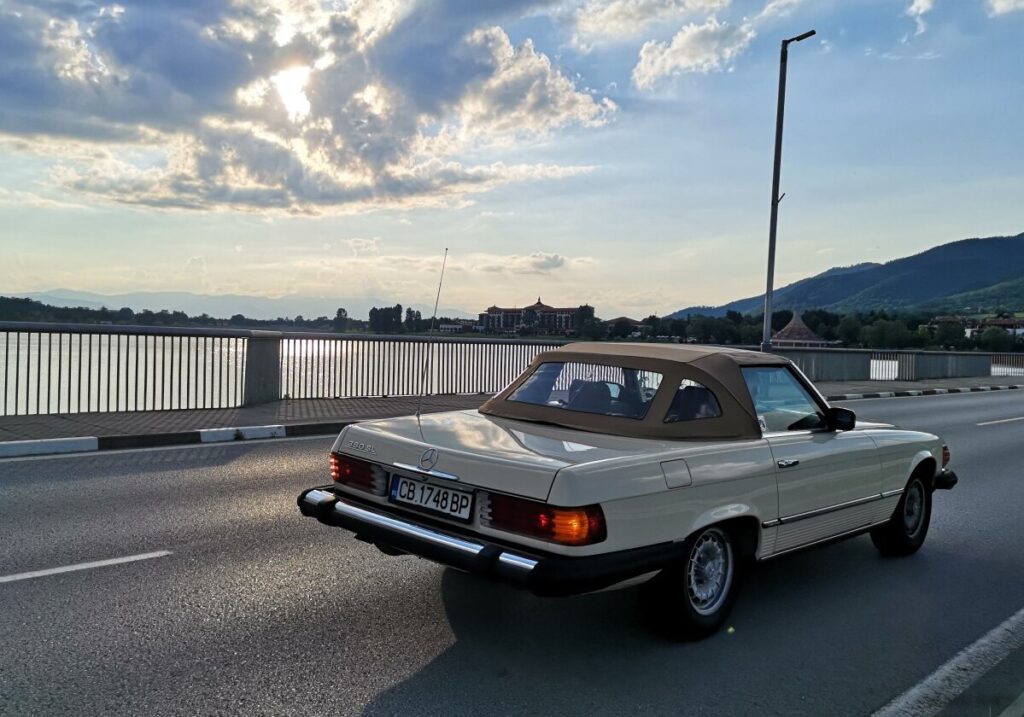
The Mercedes-Benz R107 generation SL, produced from 1971 to 1989, represented a significant evolution for the iconic SL roadster. The 450 SL, introduced in 1973 and continuing through 1980, was a cornerstone of this generation, offering a blend of luxury, performance, and the robust reliability expected of a Mercedes-Benz. This variant, powered by the 4.5-liter V8 engine and paired with a three-speed automatic transmission, occupied a premium position within the R107 lineup, appealing to buyers seeking a comfortable and capable grand tourer. It was a direct successor to the earlier 280 SL and paved the way for the later, more fuel-injected models.
Technical Specifications
| Brand | Mercedes-Benz |
| Model | SL |
| Generation | SL (R107) |
| Type (Engine) | 450 SL V8 (225 Hp) Automatic |
| Start of production | 1973 |
| End of production | 1980 |
| Powertrain Architecture | Internal Combustion engine |
| Body type | Roadster |
| Seats | 2 |
| Doors | 2 |
| Fuel consumption (combined) | 14.5 l/100 km (16.2 US mpg, 19.5 UK mpg, 6.9 km/l) |
| Fuel Type | Petrol (Gasoline) |
| Acceleration 0 – 100 km/h | 8.8 sec |
| Acceleration 0 – 62 mph | 8.8 sec |
| Acceleration 0 – 60 mph | 8.4 sec |
| Maximum speed | 215 km/h (133.59 mph) |
| Weight-to-power ratio | 7 kg/Hp, 142 Hp/tonne |
| Weight-to-torque ratio | 4.2 kg/Nm, 238.5 Nm/tonne |
| Power | 225 Hp @ 5000 rpm |
| Power per litre | 49.8 Hp/l |
| Torque | 378 Nm @ 3000 rpm (278.8 lb.-ft. @ 3000 rpm) |
| Engine layout | Front, Longitudinal |
| Engine Model/Code | M 117.982 |
| Engine displacement | 4520 cm3 (275.83 cu. in.) |
| Number of cylinders | 8 |
| Engine configuration | V-engine |
| Cylinder Bore | 92 mm (3.62 in.) |
| Piston Stroke | 85 mm (3.35 in.) |
| Compression ratio | 8.8:1 |
| Number of valves per cylinder | 2 |
| Fuel injection system | Multi-port manifold injection |
| Engine aspiration | Naturally aspirated engine |
| Valvetrain | SOHC |
| Engine oil capacity | 8 l (8.45 US qt | 7.04 UK qt) |
| Coolant capacity | 15 l (15.85 US qt | 13.2 UK qt) |
| Kerb Weight | 1585 kg (3494.33 lbs.) |
| Max. weight | 2015 kg (4442.31 lbs.) |
| Max load | 430 kg (947.99 lbs.) |
| Trunk (boot) space – maximum | 252 l (8.9 cu. ft.) |
| Fuel tank capacity | 90 l (23.78 US gal | 19.8 UK gal) |
| Permitted trailer load with brakes (12%) | 1200 kg (2645.55 lbs.) |
| Permitted trailer load without brakes | 750 kg (1653.47 lbs.) |
| Length | 4370 mm (172.05 in.) |
| Width | 1790 mm (70.47 in.) |
| Height | 1300 mm (51.18 in.) |
| Wheelbase | 2455 mm (96.65 in.) |
| Front track | 1452 mm (57.17 in.) |
| Rear (Back) track | 1440 mm (56.69 in.) |
| Minimum turning circle | 10.34 m (33.92 ft.) |
| Drivetrain Architecture | Rear wheel drive |
| Number of gears and type of gearbox | 3 gears, automatic transmission |
| Front suspension | Coil spring, Double wishbone |
| Rear suspension | Threaded twist beam, Transverse stabilizer, Coil spring |
| Front brakes | Ventilated discs, 278 mm |
| Rear brakes | Disc, 279 mm |
| Steering type | Cone worm with recirculation balls |
| Power steering | Hydraulic Steering |
| Tires size | Front: 205/70 VR14, Rear: 205/70 VR14 |
| Wheel rims size | Front: 6.5J x 14, Rear: 6.5J x 14 |
Powertrain & Engine Architecture
The heart of the 450 SL is the M117.982 4.5-liter V8 engine. This engine, a naturally aspirated, overhead camshaft (SOHC) design, featured a cast iron block and aluminum cylinder heads. It utilized Bosch K-Jetronic mechanical fuel injection, a system known for its reliability and consistent fuel delivery, though less sophisticated than later electronic systems. The engine produced 225 horsepower at 5000 rpm and 278.8 lb-ft of torque at 3000 rpm. The three-speed automatic transmission, a robust unit for its time, was designed to provide smooth and comfortable shifts, prioritizing a relaxed driving experience over outright performance. This transmission was not known for its efficiency by modern standards, contributing to the car’s relatively high fuel consumption.
Driving Characteristics
The 450 SL Automatic offered a distinctly different driving experience compared to its manual transmission counterparts or the later, more powerful 450 SL models. The automatic transmission, while providing ease of use, resulted in slightly slower acceleration – 0-60 mph in around 8.4-8.8 seconds. The gear ratios were optimized for cruising, making it a comfortable highway companion. However, it lacked the responsiveness and driver engagement of the manual versions. The torque converter smoothed out power delivery, making the engine feel less eager to rev. The car’s weight, around 3,500 pounds, was noticeable, particularly during spirited driving. The focus was clearly on comfortable, refined touring rather than sporty handling.
Equipment & Trim Levels
The 450 SL came reasonably well-equipped as standard. Interior appointments included leatherette upholstery (genuine leather was an option), wood trim on the dashboard and center console, and power windows. Air conditioning was a common option, almost essential for comfortable operation in warmer climates. Other available options included a sunroof, power steering (standard in many markets), and a premium sound system. The dashboard layout was functional and elegant, typical of Mercedes-Benz design of the era. Trim levels were relatively simple; options were generally added individually rather than packaged into distinct tiers.
Chassis & Braking
The R107 SL utilized a robust chassis with independent suspension all around. The front suspension featured coil springs and double wishbones, while the rear employed a threaded twist beam axle with coil springs and a transverse stabilizer bar. This setup provided a comfortable ride, though handling was not as sharp as some contemporary sports cars. Braking was initially equipped with ventilated discs at the front and solid discs at the rear. Power-assisted steering was standard in many markets, making the car relatively easy to maneuver. The tires were typically 205/70 VR14, providing adequate grip for the car’s performance capabilities.
Market Reception & Comparison
The 450 SL Automatic was generally well-received by critics and buyers alike. It was praised for its comfortable ride, luxurious interior, and reliable engine. However, some reviewers noted the relatively high fuel consumption and the lack of sporty handling compared to other roadsters. Compared to the earlier 280 SL, the 450 SL offered significantly more power and performance. Later models, such as the 450 SL with fuel injection, offered improved fuel economy and slightly increased power. The automatic transmission was a popular choice, particularly among buyers who prioritized ease of use over outright performance.
Legacy
The 450 SL remains a popular classic car today, prized for its elegant styling and robust engineering. The M117 V8 engine is known for its durability and relatively simple maintenance requirements, although parts availability can sometimes be a challenge. The automatic transmission, while not as desirable as the manual version among enthusiasts, is generally reliable if properly maintained. Well-maintained examples command respectable prices in the used car market, reflecting the car’s enduring appeal and status as a symbol of 1970s luxury. The R107 generation SL, and the 450 SL in particular, helped solidify Mercedes-Benz’s reputation for building high-quality, long-lasting automobiles.