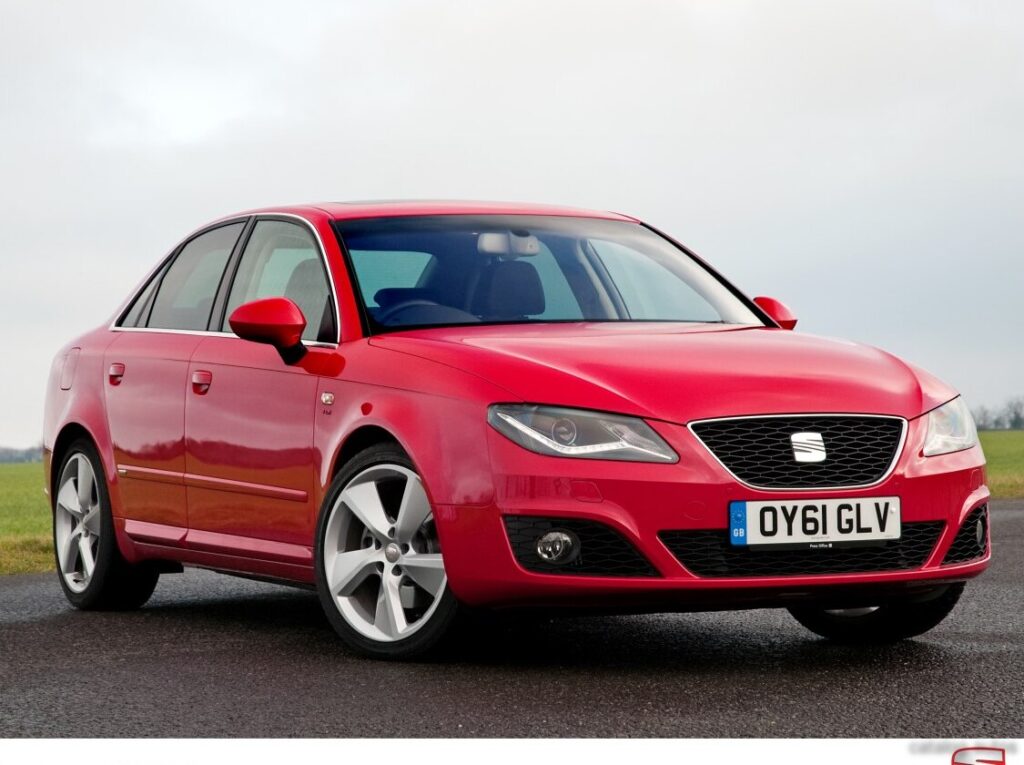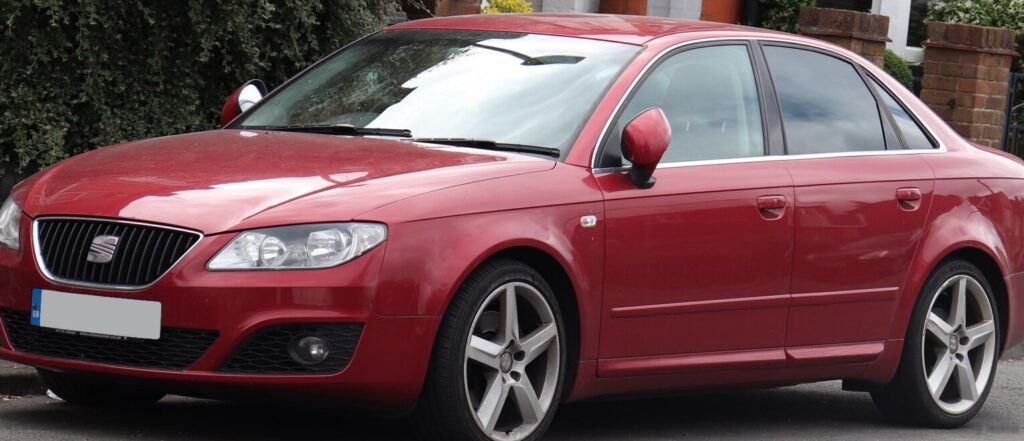
The Seat Exeo 1.8 TSI (120 hp) was a mid-size executive car produced by the Spanish manufacturer Seat between May 2010 and September 2011. Positioned as an entry-level offering within the Exeo range, it aimed to provide a more affordable and fuel-efficient option compared to the higher-powered TSI variants and the diesel-fueled TDI models. The Exeo itself was a significant vehicle for Seat, representing their first foray into the D-segment, and was based heavily on the previous-generation Audi A4 (B7 platform – 1HX0/A3). This 1.8 TSI variant, equipped with an automatic transmission, was primarily targeted at buyers seeking a comfortable and economical saloon for daily commuting and longer journeys.
Technical Specifications
| Brand | Seat |
| Model | Exeo |
| Generation | Exeo |
| Type (Engine) | 1.8 TSI (120 Hp) |
| Start of production | May, 2010 |
| End of production | September, 2011 |
| Powertrain Architecture | Internal Combustion engine |
| Body type | Sedan |
| Seats | 5 |
| Doors | 4 |
| Fuel consumption (urban) | 10.2 l/100 km (23.1 US mpg, 27.7 UK mpg, 9.8 km/l) |
| Fuel consumption (extra urban) | 5.6 l/100 km (42 US mpg, 50.4 UK mpg, 17.9 km/l) |
| Fuel consumption (combined) | 7.3 l/100 km (32.2 US mpg, 38.7 UK mpg, 13.7 km/l) |
| CO2 emissions | 169 g/km |
| Fuel Type | Petrol (Gasoline) |
| Acceleration 0 – 100 km/h | 10.6 sec |
| Acceleration 0 – 62 mph | 10.6 sec |
| Acceleration 0 – 60 mph | 10.1 sec |
| Maximum speed | 202 km/h (125.52 mph) |
| Emission standard | Euro 5 |
| Weight-to-power ratio | 11.8 kg/Hp, 85.1 Hp/tonne |
| Weight-to-torque ratio | 6.1 kg/Nm, 163.1 Nm/tonne |
| Power | 120 Hp @ 3650-6200 rpm |
| Power per litre | 66.7 Hp/l |
| Torque | 230 Nm @ 1500-3650 rpm (169.64 lb.-ft. @ 1500-3650 rpm) |
| Engine layout | Front, Longitudinal |
| Engine Model/Code | EA888 / CDHA |
| Engine displacement | 1798 cm3 (109.72 cu. in.) |
| Number of cylinders | 4 |
| Engine configuration | Inline |
| Cylinder Bore | 82.5 mm (3.25 in.) |
| Piston Stroke | 84.2 mm (3.31 in.) |
| Compression ratio | 9.6:1 |
| Number of valves per cylinder | 4 |
| Fuel injection system | Direct injection |
| Engine aspiration | Turbocharger, Intercooler |
| Valvetrain | DOHC |
| Engine oil capacity | 4.6 l (4.86 US qt | 4.05 UK qt) |
| Kerb Weight | 1410 kg (3108.52 lbs.) |
| Max. weight | 1970 kg (4343.11 lbs.) |
| Max load | 560 kg (1234.59 lbs.) |
| Trunk (boot) space – minimum | 460 l (16.24 cu. ft.) |
| Fuel tank capacity | 70 l (18.49 US gal | 15.4 UK gal) |
| Max. roof load | 75 kg (165.35 lbs.) |
| Permitted trailer load with brakes (12%) | 1300 kg (2866.01 lbs.) |
| Permitted trailer load without brakes | 740 kg (1631.42 lbs.) |
| Permitted towbar download | 75 kg (165.35 lbs.) |
| Length | 4661 mm (183.5 in.) |
| Width | 1772 mm (69.76 in.) |
| Height | 1430 mm (56.3 in.) |
| Wheelbase | 2642 mm (104.02 in.) |
| Front track | 1522 mm (59.92 in.) |
| Rear (Back) track | 1523 mm (59.96 in.) |
| Front overhang | 976 mm (38.43 in.) |
| Rear overhang | 1043 mm (41.06 in.) |
| Minimum turning circle (turning diameter) | 11.2 m (36.75 ft.) |
| Drivetrain Architecture | The Internal combustion engine (ICE) drives the front wheels of the vehicle. |
| Drive wheel | Front wheel drive |
| Number of gears and type of gearbox | 6 gears, manual transmission |
| Front suspension | Independent multi-link suspension, Transverse stabilizer |
| Rear suspension | Independent on trapezoidal lever, Transverse stabilizer |
| Front brakes | Ventilated discs, 288×25 mm |
| Rear brakes | Disc, 245×10 mm |
| Assisting systems | ABS (Anti-lock braking system) |
| Steering type | Steering rack and pinion |
| Power steering | Hydraulic Steering |
| Tires size | 205/55 R16; 225/40 R17 |
| Wheel rims size | 7J x 16; 7.5J x 17 |
Powertrain & Engine Architecture
The Seat Exeo 1.8 TSI utilized the EA888 engine family, specifically the CDHA code. This 1.8-liter, inline-four cylinder engine featured direct fuel injection and a turbocharger with an intercooler. Direct injection allowed for precise fuel delivery, improving efficiency and reducing emissions. The turbocharger boosted power output, providing a noticeable increase in performance over naturally aspirated engines. The engine’s DOHC (Dual Overhead Camshaft) valvetrain, with four valves per cylinder, further enhanced its breathing and overall efficiency. The engine produced 120 horsepower at 3650-6200 rpm and 230 Nm (169.64 lb-ft) of torque between 1500-3650 rpm. The automatic transmission used was typically a six-speed torque converter automatic, chosen for its smoothness and ease of use, although a six-speed manual was also available.
Driving Characteristics
The 1.8 TSI automatic Exeo offered a comfortable and refined driving experience. While not particularly sporty, it provided adequate performance for everyday driving. Acceleration from 0-60 mph took around 10.1 seconds, and the top speed was 125.52 mph. The automatic transmission, while smooth, wasn’t as responsive as the manual gearbox, and could sometimes feel hesitant during quick overtaking maneuvers. The gear ratios were tuned for fuel efficiency rather than outright performance. Compared to the more powerful 2.0 TSI variants, the 1.8 TSI felt noticeably less eager, but it offered a significant improvement in fuel economy. The longitudinal engine layout contributed to a balanced weight distribution, aiding in handling.
Equipment & Trim Levels
The 1.8 TSI typically came with a reasonable level of standard equipment. This included air conditioning, electric front windows, central locking, and an audio system with MP3 compatibility. Higher trim levels, such as the Sport and Stylance, added features like alloy wheels, climate control, cruise control, and a multi-function steering wheel. Interior upholstery was generally cloth, with leather options available as an extra. Dashboard design was functional and relatively understated, reflecting the car’s executive positioning. Optional extras included a navigation system, parking sensors, and a sunroof.
Chassis & Braking
The Exeo’s chassis was derived from the Audi A4, providing a solid and well-engineered foundation. The front suspension utilized an independent multi-link setup with a transverse stabilizer, while the rear suspension employed an independent setup on trapezoidal levers, also with a stabilizer bar. This configuration delivered a comfortable ride and good handling characteristics. Braking was handled by ventilated discs at the front and solid discs at the rear, equipped with ABS (Anti-lock Braking System). The braking system was generally effective, providing adequate stopping power for the car’s weight and performance.
Market Reception & Comparison
The Seat Exeo 1.8 TSI automatic was generally well-received by critics as a sensible and practical choice within the executive car segment. It was praised for its comfortable ride, good fuel economy (around 32.2 US mpg combined), and reasonable price point. However, it was often criticized for lacking the dynamic flair of some of its rivals, such as the BMW 3 Series or the Audi A4. Compared to the 2.0 TSI Exeo, the 1.8 TSI offered lower running costs but sacrificed performance. The 1.8 TSI was also a more affordable alternative to the diesel-powered TDI models, appealing to buyers who preferred petrol engines.
Legacy
The Seat Exeo, despite its relatively short production run, established Seat as a credible player in the executive car market. The 1.8 TSI engine, part of the widely used EA888 family, proved to be generally reliable, although regular maintenance is crucial. The automatic transmission, if properly serviced, also demonstrated good longevity. On the used car market, the Exeo 1.8 TSI represents a relatively affordable and well-equipped option for buyers seeking a comfortable and practical saloon. Its build quality, derived from the Audi A4 platform, contributes to its enduring appeal. However, potential buyers should be aware of the importance of checking for regular maintenance records and addressing any potential issues with the turbocharger or fuel injection system.