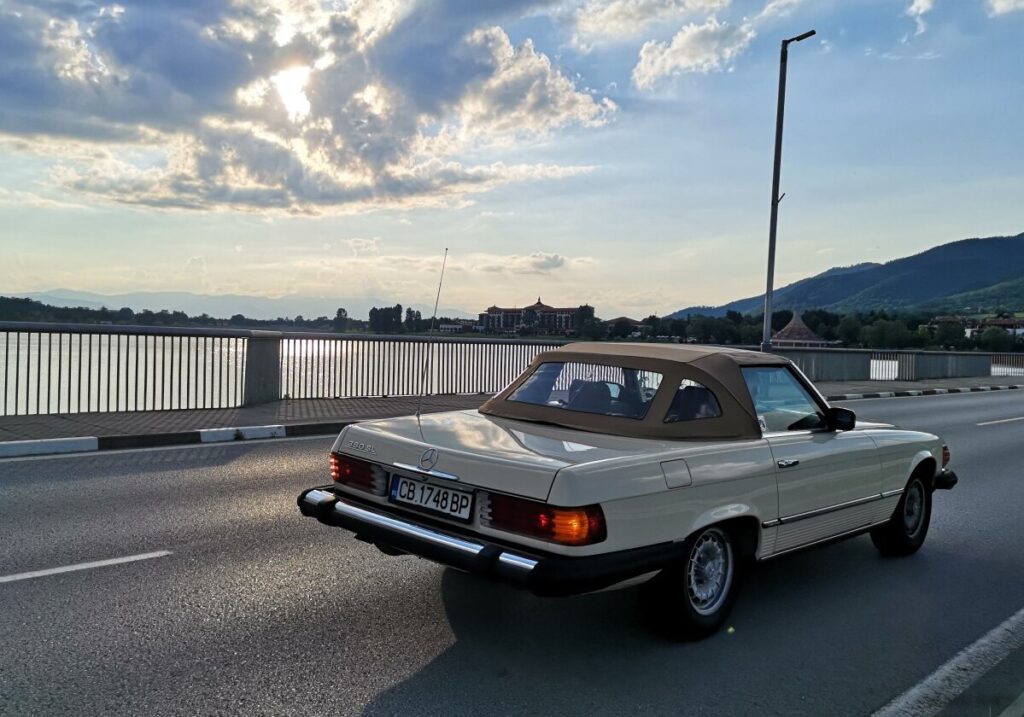
The Mercedes-Benz SL (R107) 500 SL V8 Automatic, produced between October 1981 and September 1985, represented the pinnacle of performance within the R107 generation of the iconic SL roadster. Positioned as the flagship model, it offered a substantial step up in power and refinement compared to the 380 SL and 450 SL variants. The R107 series, manufactured from 1971 to 1989, was designed as a successor to the W113 “Pagoda” SL, aiming to blend luxury, performance, and modern safety features. The 500 SL, with its larger displacement V8 engine, catered to buyers seeking a grand touring experience with effortless cruising capability and strong acceleration. It was primarily marketed towards affluent buyers in North America and Europe who desired a sophisticated and powerful open-top vehicle.
| Brand | Mercedes-Benz |
| Model | SL |
| Generation | SL (R107) |
| Type (Engine) | 500 SL V8 (231 Hp) Automatic |
| Start of production | October, 1981 |
| End of production | September, 1985 |
| Powertrain Architecture | Internal Combustion engine |
| Body type | Roadster |
| Seats | 2 |
| Doors | 2 |
| Fuel consumption (urban) | 15.6 l/100 km (15.1 US mpg, 18.1 UK mpg, 6.4 km/l) |
| Fuel consumption (extra urban) | 9.4 l/100 km (25 US mpg, 30.1 UK mpg, 10.6 km/l) |
| Fuel Type | Petrol (Gasoline) |
| Acceleration 0 – 100 km/h | 8.1 sec |
| Acceleration 0 – 62 mph | 8.1 sec |
| Acceleration 0 – 60 mph | 7.7 sec |
| Maximum speed | 220 km/h (136.7 mph) |
| Weight-to-power ratio | 6.7 kg/Hp, 150 Hp/tonne |
| Weight-to-torque ratio | 3.8 kg/Nm, 262.3 Nm/tonne |
| Power | 231 Hp @ 4750 rpm |
| Power per litre | 46.5 Hp/l |
| Torque | 404 Nm @ 3000 rpm (297.98 lb.-ft. @ 3000 rpm) |
| Engine layout | Front, Longitudinal |
| Engine Model/Code | M 117 E 50 / 117.960 |
| Engine displacement | 4973 cm3 (303.47 cu. in.) |
| Number of cylinders | 8 |
| Engine configuration | V-engine |
| Cylinder Bore | 96.5 mm (3.8 in.) |
| Piston Stroke | 85 mm (3.35 in.) |
| Compression ratio | 9.2:1 |
| Number of valves per cylinder | 2 |
| Fuel injection system | Multi-port manifold injection |
| Engine aspiration | Naturally aspirated engine |
| Valvetrain | SOHC |
| Engine oil capacity | 8 l (8.45 US qt | 7.04 UK qt) |
| Coolant | 13.5 l (14.27 US qt | 11.88 UK qt) |
| Kerb Weight | 1540 kg (3395.12 lbs.) |
| Max. weight | 1960 kg (4321.06 lbs.) |
| Max load | 420 kg (925.94 lbs.) |
| Fuel tank capacity | 85 l (22.45 US gal | 18.7 UK gal) |
| Length | 4390 mm (172.83 in.) |
| Width | 1790 mm (70.47 in.) |
| Height | 1300 mm (51.18 in.) |
| Wheelbase | 2455 mm (96.65 in.) |
| Front track | 1452 mm (57.17 in.) |
| Rear (Back) track | 1440 mm (56.69 in.) |
| Drivetrain Architecture | The Internal combustion engine (ICE) drives the rear wheels of the vehicle. |
| Drive wheel | Rear wheel drive |
| Number of gears and type of gearbox | 4 gears, automatic transmission |
| Front suspension | Double wishbone |
| Rear suspension | Threaded twist beam |
| Front brakes | Ventilated discs |
| Rear brakes | Disc |
| Steering type | Cone worm with recirculation balls |
| Power steering | Hydraulic Steering |
| Tires size | Front wheel tires: 205/70 R14Rear wheel tires: 205/70 R14 |
| Wheel rims size | Front wheel rims: 6.5J x 14Rear wheel rims: 6.5J x 14 |
Powertrain & Engine Architecture
The heart of the 500 SL was the M117 E 50 engine, a 4.97-liter (303.47 cubic inches) naturally aspirated V8. This engine, part of Mercedes-Benz’s renowned M117 family, featured a cast-iron block and aluminum cylinder heads. It employed a single overhead camshaft (SOHC) valvetrain with two valves per cylinder. Fuel delivery was handled by a Bosch K-Jetronic multi-port fuel injection system, known for its reliability and precise metering. The engine produced 231 horsepower at 4750 rpm and 298 lb-ft of torque at 3000 rpm. The automatic transmission was a four-speed unit, designed to provide smooth and comfortable shifts, prioritizing a relaxed driving experience over outright performance. This transmission was specifically tuned to handle the higher torque output of the 5.0-liter V8.
Driving Characteristics
The 500 SL Automatic offered a distinctly different driving experience compared to the lighter and more nimble 380 SL or the fuel-efficient 300 SD diesel. While not a sports car in the modern sense, the 500 SL delivered strong and effortless acceleration. The 0-60 mph sprint took approximately 7.7 seconds, and it could reach a top speed of 136.7 mph. The automatic transmission, while smooth, did result in some power loss compared to the available manual transmission in other R107 models. Gear ratios were optimized for cruising, making long highway journeys a pleasure. The car felt substantial and planted on the road, providing a secure and comfortable ride. However, its weight and size meant it wasn’t as agile in tight corners as its smaller siblings.
Equipment & Trim Levels
The 500 SL came standard with a generous array of features, reflecting its position as the premium model. Leather upholstery was standard, along with power windows, central locking, and a high-quality sound system. Air conditioning was also a standard feature, essential for comfortable open-top motoring. Optional extras included a sunroof, heated seats, and upgraded audio systems. Interior trim options typically included a variety of leather colors and wood veneers. The dashboard layout was classic Mercedes-Benz, with a focus on functionality and understated elegance.
Chassis & Braking
The R107 chassis featured independent suspension all around, with double wishbones at the front and a threaded twist beam rear axle. This setup provided a comfortable ride and good handling characteristics. The 500 SL, due to its increased weight, benefited from slightly stiffer spring rates and dampers compared to the lower-powered models. Braking was accomplished via ventilated discs at the front and solid discs at the rear. Hydraulic power steering was standard, making maneuvering at low speeds relatively easy. The tires were typically 205/70 R14, providing a good balance of grip and ride comfort.
Market Reception & Comparison
The 500 SL was generally well-received by automotive critics, who praised its powerful engine, comfortable ride, and luxurious interior. However, some criticized its weight and relatively high price. Compared to the 380 SL, the 500 SL offered a significant performance boost, but at a higher cost and with slightly worse fuel economy. The 500 SL was also more expensive to maintain than the 380 SL, due to the complexity of the V8 engine and fuel injection system. Against competitors like the Jaguar XJS, the 500 SL was often seen as being more reliable and better built, although the Jaguar offered a more sporting driving experience.
Legacy
The M117 engine, found in the 500 SL, is known for its durability and longevity. With proper maintenance, these engines can reliably exceed 200,000 miles. The R107 500 SL has become a sought-after classic car, appreciated for its timeless design, robust engineering, and comfortable driving experience. Values have been steadily increasing in recent years, particularly for well-maintained examples. While the K-Jetronic fuel injection system can require specialized knowledge for repairs, parts availability is generally good. The 500 SL Automatic remains a testament to Mercedes-Benz’s commitment to building high-quality, luxurious grand tourers.