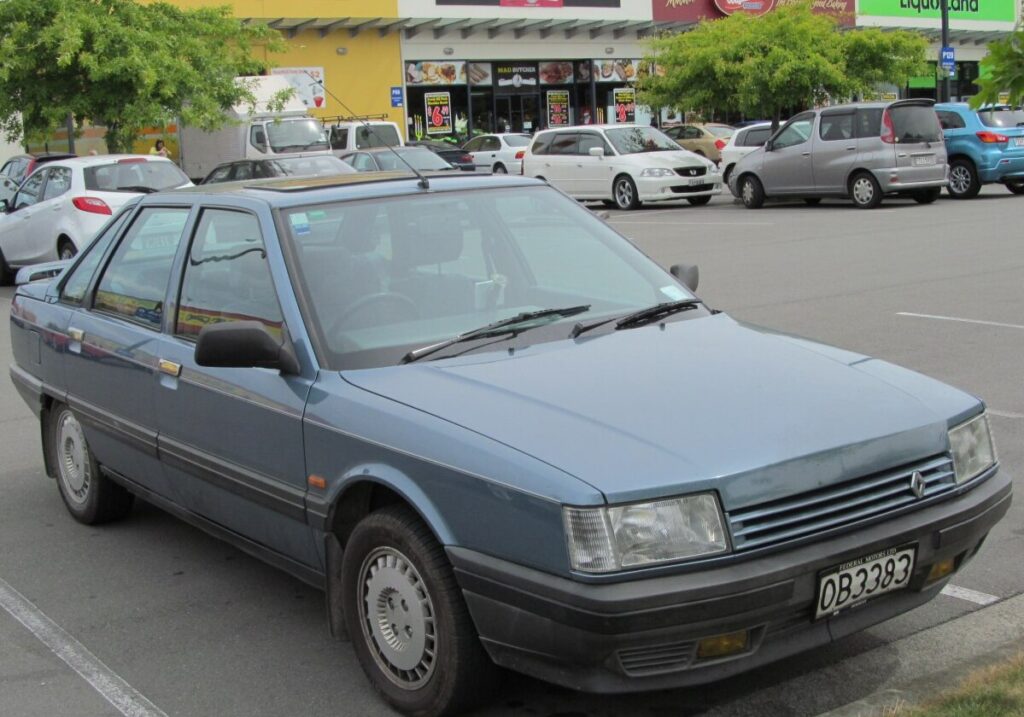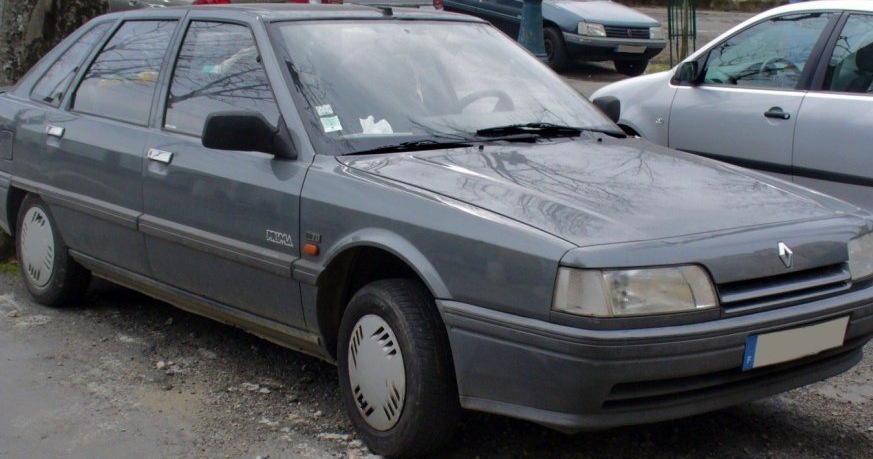
The Renault 21 Hatchback, specifically the 2.1 TD variant producing 88 horsepower, was a significant offering in the European market from 1989 to 1994. Positioned as a practical and economical choice within the broader Renault 21 range (which included gasoline engines and different trim levels), the 2.1 TD aimed to provide a balance of fuel efficiency and usable performance for family transportation. It was part of the L48 generation, representing a mid-cycle refresh of the original Renault 21 design, and built upon the success of its predecessor, the Renault 18. This model competed with other mainstream European hatchbacks like the Peugeot 305, Citroën BX, and Ford Escort.
Technical Specifications
| Brand | Renault |
| Model | 21 |
| Generation | 21 Hatchback (L48) |
| Type (Engine) | 2.1 TD (88 Hp) |
| Start of production | 1989 |
| End of production | 1994 |
| Powertrain Architecture | Internal Combustion engine |
| Body type | Hatchback |
| Seats | 5 |
| Doors | 5 |
| Fuel consumption (urban) | 8.3 l/100 km (28.3 US mpg, 34 UK mpg, 12 km/l) |
| Fuel consumption (extra urban) | 5.1 l/100 km (46.1 US mpg, 55.4 UK mpg, 19.6 km/l) |
| Fuel consumption (combined) | 6.9 l/100 km (34.1 US mpg, 40.9 UK mpg, 14.5 km/l) |
| Fuel Type | Diesel |
| Acceleration 0 – 100 km/h | 11.8 sec |
| Acceleration 0 – 62 mph | 11.8 sec |
| Acceleration 0 – 60 mph | 11.2 sec |
| Maximum speed | 177 km/h (109.98 mph) |
| Weight-to-power ratio | 13.1 kg/Hp |
| Weight-to-torque ratio | 6.3 kg/Nm |
| Power | 88 Hp @ 4250 rpm |
| Power per litre | 42.6 Hp/l |
| Torque | 184 Nm @ 2000 rpm (135.71 lb.-ft. @ 2000 rpm) |
| Engine layout | Front, Transverse |
| Engine Model/Code | J8S |
| Engine displacement | 2068 cm3 (126.2 cu. in.) |
| Number of cylinders | 4 |
| Engine configuration | Inline |
| Cylinder Bore | 86 mm (3.39 in.) |
| Piston Stroke | 89 mm (3.5 in.) |
| Compression ratio | 21:1 |
| Number of valves per cylinder | 2 |
| Fuel injection system | Precombustion chamber injection |
| Engine aspiration | Turbocharger |
| Valvetrain | OHC |
| Engine oil capacity | 6.1 l (6.45 US qt | 5.37 UK qt) |
| Coolant capacity | 7.2 l (7.61 US qt | 6.34 UK qt) |
| Kerb Weight | 1155 kg (2546.34 lbs.) |
| Max. weight | 1645 kg (3626.6 lbs.) |
| Max load | 490 kg (1080.27 lbs.) |
| Trunk (boot) space – minimum | 420 l (14.83 cu. ft.) |
| Trunk (boot) space – maximum | 1290 l (45.56 cu. ft.) |
| Fuel tank capacity | 66 l (17.44 US gal | 14.52 UK gal) |
| Length | 4460 mm (175.59 in.) |
| Width | 1730 mm (68.11 in.) |
| Height | 1415 mm (55.71 in.) |
| Wheelbase | 2600 mm (102.36 in.) |
| Front track | 1430 mm (56.3 in.) |
| Rear track | 1400 mm (55.12 in.) |
| Drivetrain Architecture | Front wheel drive |
| Number of gears | 5 |
| Gearbox type | Manual transmission |
| Front suspension | Spring Strut |
| Rear suspension | Torsion |
| Front brakes | Ventilated discs |
| Rear brakes | Drum |
| Assisting systems | ABS (Anti-lock braking system) |
| Steering type | Steering rack and pinion |
| Power steering | Hydraulic |
| Tires size | 185/70 R13 |
| Wheel rims size | 13 |
INTRODUCTION
The Renault 21 2.1 TD, produced between 1989 and 1994, represented a diesel-powered option within the L48 series of the Renault 21. This hatchback variant was designed to appeal to buyers seeking fuel economy and practicality, particularly those covering long distances. The 2.1 TD sat in a middle ground within the 21 lineup, offering more performance than the base gasoline models but remaining more affordable than the higher-specification versions. It was a common sight on European roads, valued for its comfortable ride and relatively spacious interior.
Powertrain & Engine Architecture
The heart of the Renault 21 2.1 TD is the J8S engine, a 2.1-liter inline-four cylinder diesel. This engine utilizes precombustion chamber injection, a system common in European diesels of the era. This system involves injecting fuel into a small precombustion chamber connected to the main cylinder, promoting more complete combustion and reducing noise. The engine is turbocharged, boosting power output to 88 horsepower at 4250 rpm and 184 Nm (135.71 lb-ft) of torque at 2000 rpm. The five-speed manual transmission was standard, chosen for its efficiency and driver control. The transmission’s gear ratios were geared towards maximizing fuel economy and providing adequate acceleration for everyday driving. The engine’s overhead camshaft (OHC) valvetrain design contributed to its relatively smooth operation for a diesel engine of its time.
Driving Characteristics
The Renault 21 2.1 TD, with its 88 hp and manual transmission, offered a driving experience focused on practicality rather than outright performance. Acceleration to 60 mph took around 11.2 seconds, and top speed was approximately 109.98 mph. While not particularly quick, the engine’s strong low-end torque made it well-suited for overtaking and navigating hilly terrain. The gear ratios were spaced to prioritize fuel efficiency, meaning the engine often needed to be revved to access its full power. Compared to the gasoline-powered Renault 21 variants, the 2.1 TD offered significantly better fuel economy, but at the expense of responsiveness. The manual transmission provided a more engaging driving experience than the optional automatic available on some other 21 models.
Equipment & Trim Levels
The Renault 21 2.1 TD typically came with a reasonable level of standard equipment. Interior features included cloth upholstery, a basic dashboard layout with analog gauges, and manual windows and door locks. Power steering was standard, making the car easier to maneuver at low speeds. Optional extras included a sunroof, upgraded audio system, and central locking. Trim levels varied depending on the market, but generally, the 2.1 TD was positioned as a mid-range offering, bridging the gap between the basic models and the more luxurious versions with features like leather seats and air conditioning.
Chassis & Braking
The Renault 21 2.1 TD utilized a relatively simple chassis design. Front suspension consisted of MacPherson strut springs, while the rear employed a torsion beam setup. This configuration provided a comfortable ride, although it wasn’t particularly sporty. Braking was handled by ventilated discs at the front and drum brakes at the rear. ABS (Anti-lock Braking System) was available as an option, enhancing safety by preventing wheel lockup during hard braking. The steering system was a rack and pinion setup with hydraulic assistance, providing precise and responsive steering feel.
Market Reception & Comparison
The Renault 21 2.1 TD was generally well-received in the European market as a practical and economical family car. Critics praised its fuel efficiency and comfortable ride, but noted its lack of outright performance. Compared to the gasoline-powered Renault 21 models, the 2.1 TD offered significantly better fuel economy, making it a popular choice for high-mileage drivers. However, the diesel engine was noticeably louder and less refined than its gasoline counterparts. Against competitors like the Peugeot 305 and Citroën BX diesels, the Renault 21 2.1 TD offered a competitive combination of fuel economy, practicality, and comfort.
Legacy
The Renault 21 2.1 TD powertrain has proven to be relatively durable over the long term, with many examples still on the road today. The J8S engine, while not known for being particularly high-tech, is generally reliable if properly maintained. Common issues include wear and tear on the turbocharger and fuel injection system. In the used car market, the Renault 21 2.1 TD remains an affordable and practical option for those seeking a classic European hatchback. Its fuel efficiency and simple mechanical design make it an appealing choice for enthusiasts and budget-conscious buyers alike. However, finding parts can sometimes be challenging, as the car is now over three decades old.