
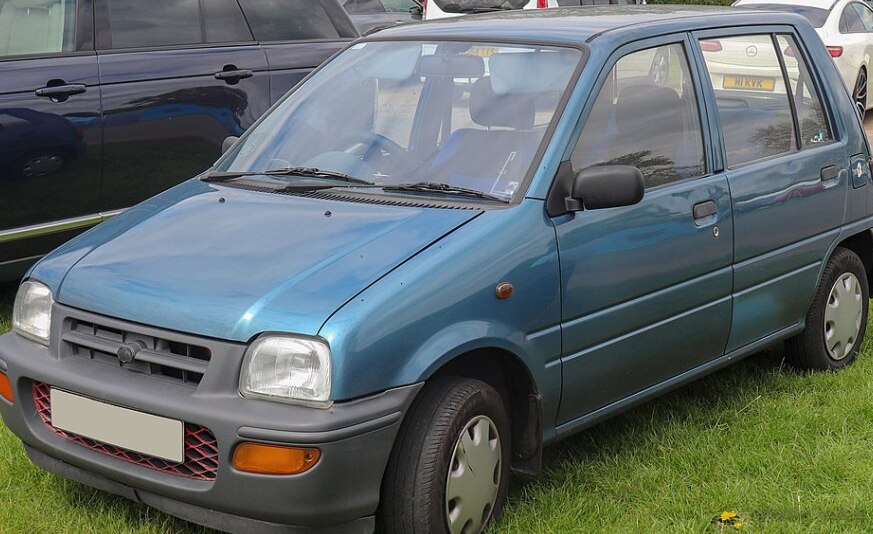
The Perodua Nippa 0.7, producing 31 horsepower, was a city car manufactured by the Malaysian automaker Perodua between 1994 and 2009. It represented a significant step for Perodua, being one of their earliest models and aimed squarely at providing affordable, basic transportation for the burgeoning Malaysian middle class. The Nippa was based on the Daihatsu Mira, a relationship common in Perodua’s early years, and occupied the entry-level position in Perodua’s lineup. It was a five-door hatchback designed to maximize interior space within a small footprint, making it ideal for navigating congested urban environments.
Technical Specifications
| Brand | Perodua |
| Model | Nippa |
| Generation | Nippa |
| Type (Engine) | 0.7 (31 Hp) |
| Start of production | 1994 |
| End of production | 2009 |
| Powertrain Architecture | Internal Combustion engine |
| Body type | Hatchback |
| Seats | 5 |
| Doors | 5 |
| Fuel consumption (urban) | 5.6 l/100 km (42 US mpg, 50.4 UK mpg, 17.9 km/l) |
| Fuel consumption (extra urban) | 3.7 l/100 km (63.6 US mpg, 76.3 UK mpg, 27 km/l) |
| Fuel consumption (combined) | 4.4 l/100 km (53.5 US mpg, 64.2 UK mpg, 22.7 km/l) |
| Fuel Type | Petrol (Gasoline) |
| Acceleration 0 – 100 km/h | 16 sec |
| Acceleration 0 – 62 mph | 16 sec |
| Acceleration 0 – 60 mph | 15.2 sec |
| Maximum speed | 132 km/h (82.02 mph) |
| Weight-to-power ratio | 21 kg/Hp, 47.7 Hp/tonne |
| Weight-to-torque ratio | 13.3 kg/Nm, 75.4 Nm/tonne |
| Power | 31 Hp @ 6400 rpm |
| Power per litre | 47 Hp/l |
| Torque | 49 Nm @ 4000 rpm (36.14 lb.-ft. @ 4000 rpm) |
| Engine layout | Front, Transverse |
| Engine Model/Code | EF-EL |
| Engine displacement | 659 cm3 (40.21 cu. in.) |
| Number of cylinders | 3 |
| Engine configuration | Inline |
| Cylinder Bore | 68 mm (2.68 in.) |
| Piston Stroke | 60.5 mm (2.38 in.) |
| Compression ratio | 9.5:1 |
| Number of valves per cylinder | 2 |
| Fuel injection system | Carburettor |
| Engine aspiration | Naturally aspirated engine |
| Valvetrain | SOHC |
| Engine oil capacity | 2.48 l (2.62 US qt | 2.18 UK qt) |
| Coolant capacity | 3.3 l (3.49 US qt | 2.9 UK qt) |
| Kerb Weight | 650 kg (1433 lbs.) |
| Trunk (boot) space (minimum) | 190 l (6.71 cu. ft.) |
| Fuel tank capacity | 32 l (8.45 US gal | 7.04 UK gal) |
| Length | 3395 mm (133.66 in.) |
| Width | 1395 mm (54.92 in.) |
| Height | 1410 mm (55.51 in.) |
| Wheelbase | 2280 mm (89.76 in.) |
| Front track | 1215 mm (47.83 in.) |
| Rear track | 1205 mm (47.44 in.) |
| Minimum turning circle | 8.8 m (28.87 ft.) |
| Drivetrain Architecture | Front wheel drive |
| Number of gears and type of gearbox | 5 gears, manual transmission |
| Front suspension | Independent, type McPherson with coil spring and anti-roll bar |
| Rear suspension | Independent coil spring |
| Front brakes | Disc |
| Rear brakes | Drum |
| Assisting systems | ABS (Anti-lock braking system) |
| Steering type | Steering rack and pinion |
| Tires size | 145/70 R12 |
| Wheel rims size | 12 |
Powertrain & Engine Architecture
The Nippa 0.7 was powered by the EF-EL engine, a 659cc inline three-cylinder petrol engine. This engine, sourced from Daihatsu, was known for its simplicity and fuel efficiency rather than outright performance. It utilized a single overhead camshaft (SOHC) valvetrain with two valves per cylinder. Crucially, the Nippa 0.7 employed a carburettor fuel injection system, a technology becoming increasingly outdated in the 1990s but contributing to its low cost. The engine produced 31 horsepower at 6400 rpm and 49 Nm (36.14 lb-ft) of torque at 4000 rpm. The engine was transversely mounted, driving the front wheels through a five-speed manual transmission. The relatively low compression ratio of 9.5:1 was typical for engines of this era designed to run on readily available fuel qualities.
Driving Characteristics
The Nippa 0.7’s driving experience was defined by its modest power output. Acceleration was slow, taking approximately 16 seconds to reach 100 km/h (62 mph). Its top speed was around 132 km/h (82 mph). The five-speed manual transmission helped to keep the engine in its optimal power band, but spirited driving required frequent gear changes. Compared to potential future variants with larger engines, the 0.7 prioritized fuel economy and ease of driving in congested urban areas over performance. The gear ratios were tuned for maximizing fuel efficiency, resulting in a somewhat sluggish feel at higher speeds. The light weight of the vehicle (650 kg or 1433 lbs) did help to mitigate the lack of power to some extent.
Equipment & Trim Levels
The Nippa 0.7 was deliberately kept basic in terms of equipment to maintain its affordability. Standard features typically included cloth upholstery, a simple dashboard layout, and manual windows and door locks. Air conditioning was often an optional extra. The interior was designed for practicality rather than luxury, with durable materials used throughout. Trim levels were minimal, with most Nippa 0.7s being essentially identical in terms of standard features. Optional extras, beyond air conditioning, were limited to items like a basic radio/cassette player.
Chassis & Braking
The Nippa 0.7 featured a relatively simple chassis design. The front suspension utilized an independent McPherson strut setup with coil springs and an anti-roll bar, while the rear suspension employed an independent coil spring arrangement. Braking was provided by disc brakes on the front wheels and drum brakes on the rear. An Anti-lock Braking System (ABS) was included as a safety feature. The steering was a rack and pinion system, providing reasonable maneuverability. The relatively narrow tires (145/70 R12) contributed to fuel efficiency but offered limited grip.
Market Reception & Comparison
The Perodua Nippa 0.7 was well-received in Malaysia as an affordable and reliable city car. Critics praised its fuel efficiency and ease of parking, but noted its lack of power and basic interior. Compared to other vehicles in its class, such as the Proton Saga, the Nippa offered better fuel economy and a more compact size, but at the expense of interior space and performance. Its reliability was generally considered good, although the carburettor fuel system required more frequent maintenance than modern fuel injection systems. The Nippa 0.7 was primarily targeted at first-time car buyers, students, and families needing a small, economical vehicle for urban commuting.
Legacy
The Perodua Nippa 0.7 played a crucial role in establishing Perodua as a major player in the Malaysian automotive market. While no longer in production, the Nippa remains a common sight on Malaysian roads, testament to its durability and affordability. The EF-EL engine, while simple, proved to be relatively reliable, and parts availability remains reasonable. In the used car market, the Nippa 0.7 is valued for its low running costs and ease of maintenance, making it a popular choice for budget-conscious buyers. It represents a significant piece of Malaysian automotive history, symbolizing the country’s early efforts to develop a domestic car industry.
