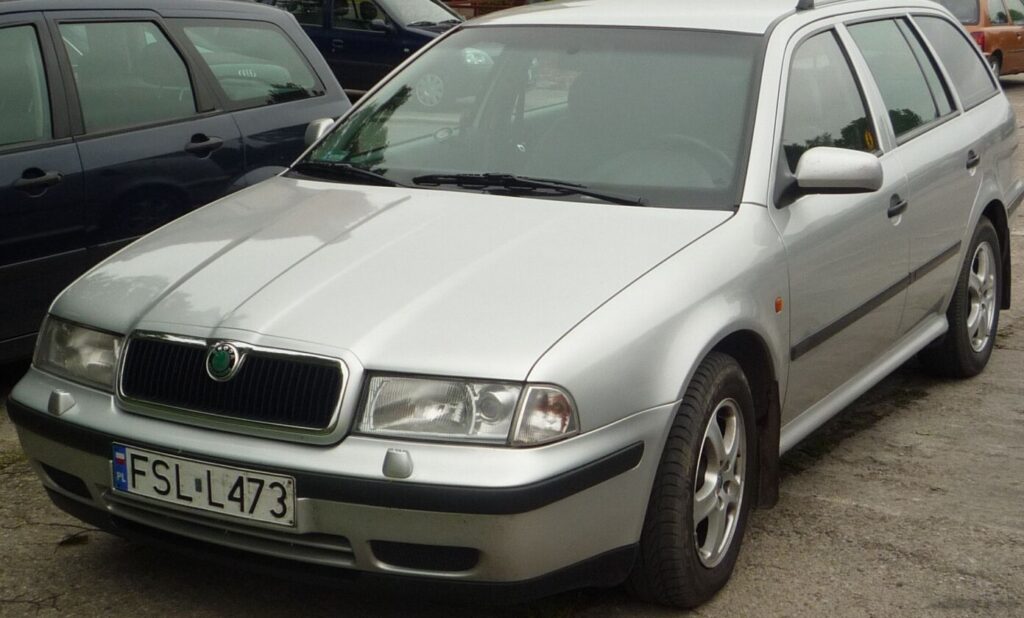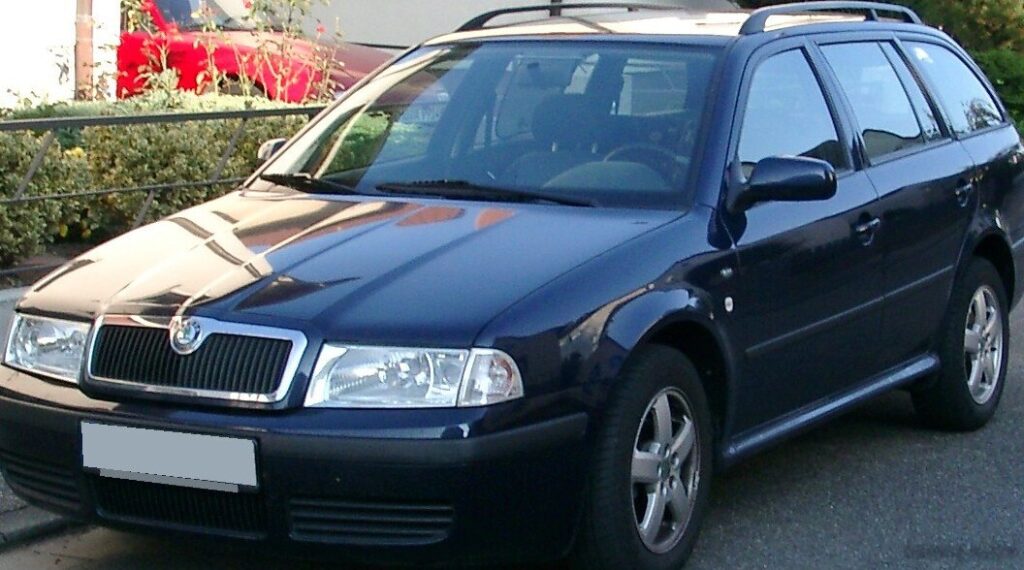
The Skoda Octavia I Combi Tour, specifically the facelifted version produced from 2000 to 2006, represented a significant step forward for the Czech automaker under Volkswagen Group ownership. This variant, equipped with a 1.9 TDI 100 horsepower engine and a six-speed manual transmission coupled with a four-wheel-drive system, occupied a crucial middle ground in the Octavia lineup. It aimed to provide a balance of fuel efficiency, practicality, and all-weather capability, appealing to families and drivers needing a versatile vehicle. The Octavia Combi Tour, based on the Volkswagen Group’s A4 platform (internally designated 1HX0), was a direct competitor to vehicles like the Ford Focus Estate and Opel/Vauxhall Astra Estate.
Technical Specifications
| Brand | Skoda |
| Model | Octavia |
| Generation | Octavia I Combi Tour (facelift 2000) |
| Type (Engine) | 1.9 TDI (100 Hp) 4×4 |
| Start of production | August, 2000 |
| End of production | January, 2006 |
| Powertrain Architecture | Internal Combustion engine |
| Body type | Station wagon (estate) |
| Seats | 5 |
| Doors | 5 |
| Fuel consumption (combined) | 6.2 l/100 km (37.9 US mpg, 45.6 UK mpg, 16.1 km/l) |
| Fuel Type | Diesel |
| Acceleration 0 – 100 km/h | 13.4 sec |
| Acceleration 0 – 62 mph | 13.4 sec |
| Acceleration 0 – 60 mph | 12.7 sec |
| Maximum speed | 184 km/h (114.33 mph) |
| Weight-to-power ratio | 14.8 kg/Hp, 67.8 Hp/tonne |
| Weight-to-torque ratio | 6.1 kg/Nm, 162.7 Nm/tonne |
| Power | 100 Hp @ 4000 rpm |
| Power per litre | 52.7 Hp/l |
| Torque | 240 Nm @ 1800 rpm (177.01 lb.-ft. @ 1800 rpm) |
| Engine layout | Front, Transverse |
| Engine Model/Code | ATD |
| Engine displacement | 1896 cm3 (115.7 cu. in.) |
| Number of cylinders | 4 |
| Engine configuration | Inline |
| Cylinder Bore | 79.5 mm (3.13 in.) |
| Piston Stroke | 95.5 mm (3.76 in.) |
| Compression ratio | 19:1 |
| Number of valves per cylinder | 2 |
| Fuel injection system | Pump-nozzle (Unit Injector) |
| Engine aspiration | Turbocharger, Intercooler |
| Valvetrain | OHC |
| Engine oil capacity | 4.3 l (4.54 US qt | 3.78 UK qt) |
| Coolant | 5 l (5.28 US qt | 4.4 UK qt) |
| Kerb Weight | 1475 kg (3251.82 lbs.) |
| Max. weight | 1950 kg (4299.01 lbs.) |
| Max load | 475 kg (1047.2 lbs.) |
| Trunk (boot) space – minimum | 448 l (15.82 cu. ft.) |
| Trunk (boot) space – maximum | 1412 l (49.86 cu. ft.) |
| Fuel tank capacity | 65 l (17.17 US gal | 14.3 UK gal) |
| Length | 4513 mm (177.68 in.) |
| Width | 1731 mm (68.15 in.) |
| Height | 1481 mm (58.31 in.) |
| Wheelbase | 2518 mm (99.13 in.) |
| Front track | 1516 mm (59.69 in.) |
| Rear (Back) track | 1487 mm (58.54 in.) |
| Drive wheel | All wheel drive (4×4) |
| Number of gears and type of gearbox | 6 gears, manual transmission |
| Front suspension | Wishbone |
| Rear suspension | Coil spring |
| Front brakes | Ventilated discs |
| Rear brakes | Disc |
| Assisting systems | ABS (Anti-lock braking system) |
| Steering type | Steering rack and pinion |
| Power steering | Hydraulic Steering |
| Tires size | 195/65 R15 |
| Wheel rims size | 15 |
Powertrain & Engine Architecture
The heart of this Octavia variant is the 1.9-liter, four-cylinder diesel engine, identified by the engine code ATD. This engine is a direct injection diesel, utilizing the pump-nozzle (Unit Injector) technology developed by Bosch. This system delivers highly pressurized fuel directly into the combustion chamber, improving combustion efficiency and reducing emissions compared to older indirect injection systems. The engine features an overhead camshaft (OHC) valvetrain with two valves per cylinder. A turbocharger with an intercooler is employed to boost power output, providing 100 horsepower at 4000 rpm and a substantial 240 Nm (177 lb-ft) of torque at a low 1800 rpm. The six-speed manual transmission was a key feature, offering a wider range of gears for improved fuel economy and more precise control. The transmission’s ratios were tuned to maximize the engine’s torque, providing good acceleration in everyday driving situations.
Driving Characteristics
The 1.9 TDI 4×4 Octavia Combi Tour offered a practical and capable driving experience. While not a performance-oriented model, the engine’s strong low-end torque made it feel responsive in most driving scenarios. The six-speed gearbox allowed drivers to keep the engine in its optimal power band, even when fully loaded or tackling inclines. Compared to the more powerful 1.8T petrol versions, the TDI offered significantly better fuel economy. Against other TDI variants, like the 110 hp version, the 100 hp model provided a slightly more economical option, though with a modest reduction in outright performance. The all-wheel-drive system provided enhanced traction, particularly beneficial in slippery conditions, making it a reliable choice for drivers in regions with inclement weather.
Equipment & Trim Levels
The 1.9 TDI 4×4 Combi Tour typically came with a reasonable level of standard equipment. This included power windows, central locking, an adjustable steering column, and basic audio system. Interior upholstery was generally cloth, with options for upgraded materials available. Depending on the market and optional packages, features like alloy wheels, air conditioning, a sunroof, and upgraded audio systems could be added. The dashboard layout was functional and straightforward, typical of Skoda’s design philosophy at the time. Safety features included ABS brakes and driver/passenger airbags.
Chassis & Braking
The Octavia Combi Tour utilized a robust chassis with a wishbone front suspension and a coil spring rear suspension. The suspension was tuned for comfort and stability, providing a reasonably smooth ride even on uneven surfaces. The 4×4 system employed a viscous coupling to distribute power between the front and rear axles as needed. Braking duties were handled by ventilated discs at the front and solid discs at the rear. The ABS system helped to maintain steering control during hard braking.
Market Reception & Comparison
The Skoda Octavia I Combi Tour 1.9 TDI 4×4 was well-received in European markets as a practical and economical estate car. Critics praised its spacious interior, large cargo capacity, and fuel efficiency. The all-wheel-drive system was seen as a valuable asset for drivers in regions with challenging weather conditions. Compared to competitors like the Ford Focus Estate and Opel/Vauxhall Astra Estate, the Octavia offered a compelling combination of value, practicality, and reliability. While the 1.8T petrol versions offered more performance, the TDI 4×4 appealed to drivers prioritizing fuel economy and all-weather capability.
Legacy
The 1.9 TDI engine, particularly the ATD variant, proved to be remarkably durable and reliable. Properly maintained examples of the Octavia Combi Tour 1.9 TDI 4×4 continue to be found on the used car market today, often with high mileage. The engine’s robust construction and relatively simple design contribute to its longevity. While modern diesel engines offer more refinement and lower emissions, the 1.9 TDI remains a popular choice for those seeking a dependable and economical estate car. The Octavia Combi Tour, in general, helped establish Skoda as a mainstream brand in Europe, known for its value-for-money and practicality.