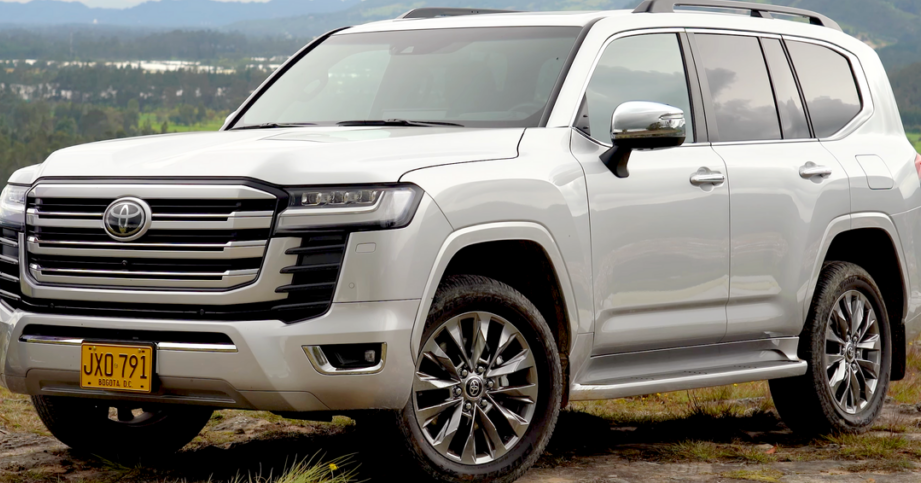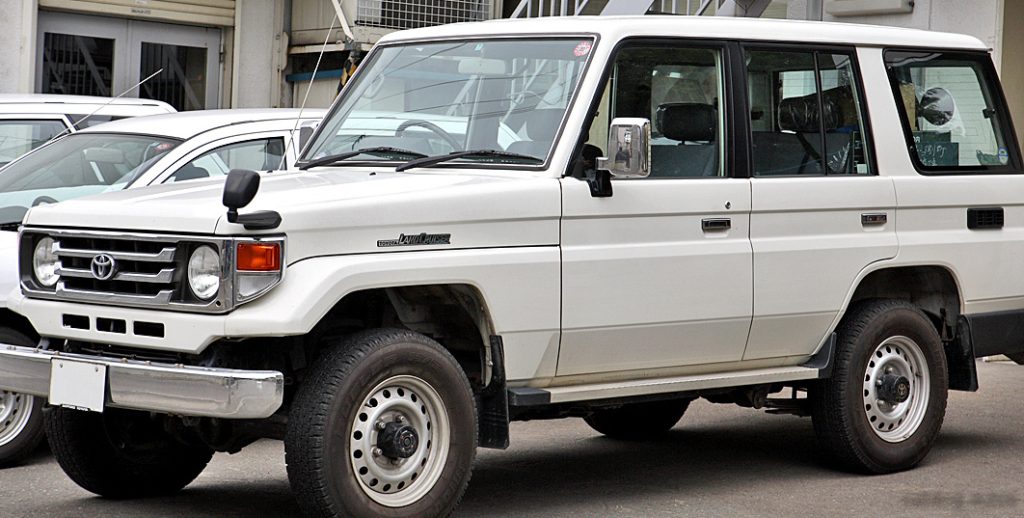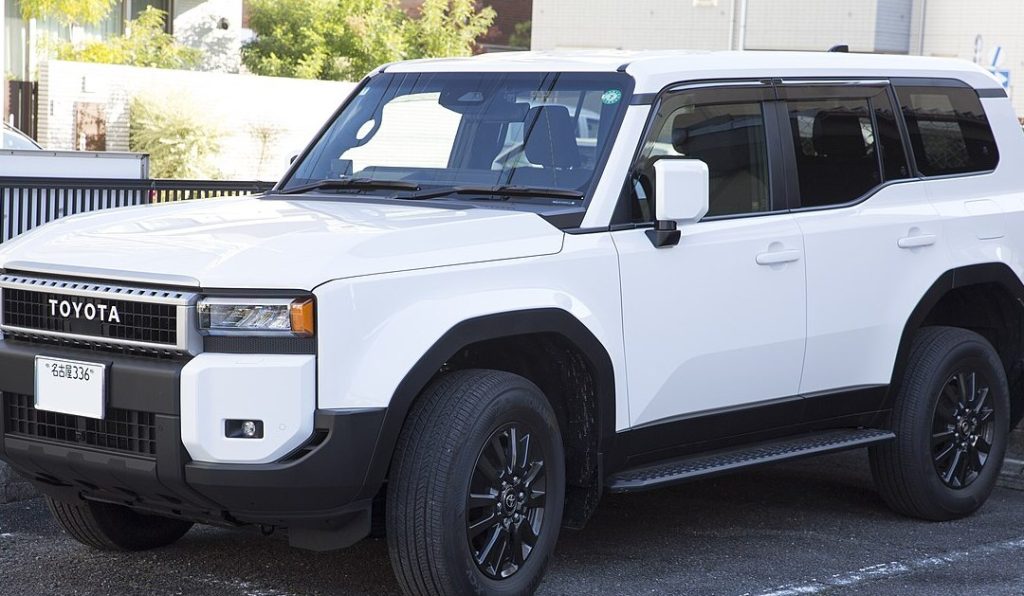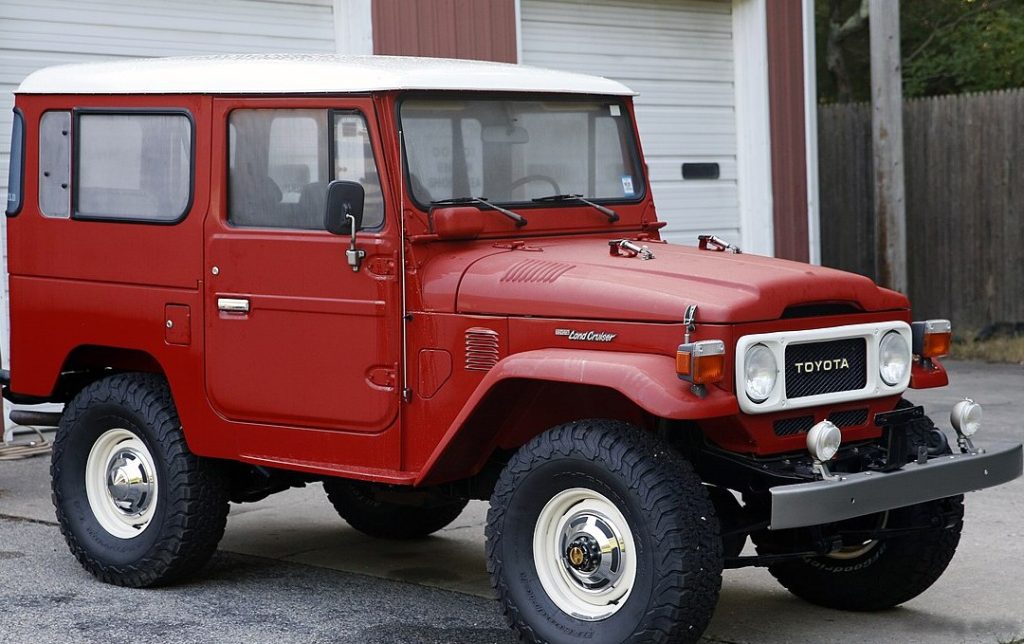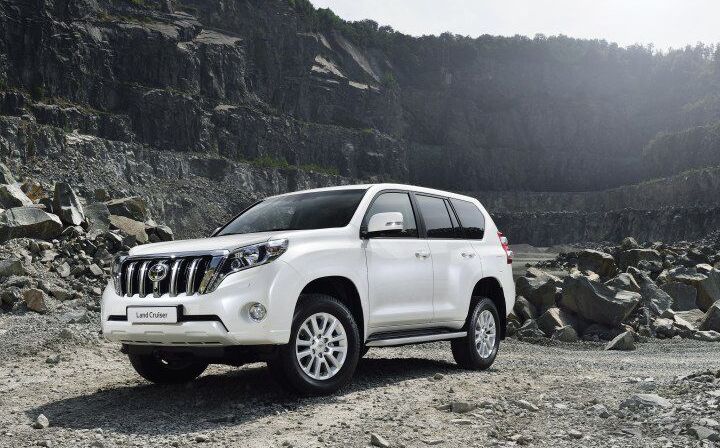
The Toyota Land Cruiser Prado J150, specifically the facelifted version produced from 2013 onwards, represents a significant evolution of Toyota’s renowned off-road capability combined with increasing levels of on-road refinement. The 2.8 D-4D variant, introduced in 2015 and continuing through 2017 in many markets, offered a compelling blend of fuel efficiency and torque for a full-size SUV. This five-door model, available with five or seven seats, was primarily aimed at buyers seeking a robust and reliable vehicle for both family transport and occasional off-road adventures. It occupied a mid-range position within the Prado lineup, offering a step up in performance and features compared to the base models while remaining more accessible than the top-of-the-line trims.
Technical Specifications
| Brand | Toyota |
| Model | Land Cruiser Prado |
| Generation | Land Cruiser Prado (J150, facelift 2013) 5-door |
| Type (Engine) | 2.8 D-4D (177 Hp) AWD Automatic |
| Start of production | 2015 |
| End of production | 2017 |
| Powertrain Architecture | Internal Combustion engine |
| Body type | SUV |
| Seats | 5-7 |
| Doors | 5 |
| Fuel consumption (urban) | 9.2 l/100 km (25.6 US mpg) |
| Fuel consumption (extra urban) | 6.3 l/100 km (37.3 US mpg) |
| Fuel consumption (combined) | 7.4 l/100 km (31.8 US mpg) |
| CO2 emissions | 194 g/km |
| Fuel Type | Diesel |
| Acceleration 0 – 100 km/h | 12.7 sec |
| Acceleration 0 – 62 mph | 12.7 sec |
| Acceleration 0 – 60 mph | 12.1 sec |
| Maximum speed | 175 km/h (108.74 mph) |
| Emission standard | Euro 6 |
| Weight-to-power ratio | 12 kg/Hp |
| Weight-to-torque ratio | 4.7 kg/Nm |
| Power | 177 Hp @ 3400 rpm |
| Torque | 450 Nm @ 1600-2400 rpm (331.9 lb.-ft. @ 1600-2400 rpm) |
| Engine layout | Front, Transverse |
| Engine Model/Code | 1GD-FTV |
| Engine displacement | 2755 cm3 (168.12 cu. in.) |
| Number of cylinders | 4 |
| Engine configuration | Inline |
| Number of valves per cylinder | 4 |
| Fuel injection system | Diesel Commonrail |
| Engine aspiration | Turbocharger, Intercooler |
| Valvetrain | DOHC |
| Engine oil capacity | 7.7 l (8.14 US qt | 6.78 UK qt) |
| Coolant capacity | 10 l (10.57 US qt | 8.8 UK qt) |
| Kerb Weight | 2120-2385 kg (4673.8 – 5258.02 lbs.) |
| Max. weight | 2990 kg (6591.82 lbs.) |
| Max load | 605-870 kg (1333.8 – 1918.02 lbs.) |
| Trunk (boot) space – minimum | 640 l (22.6 cu. ft.) |
| Trunk (boot) space – maximum | 1150 l (40.61 cu. ft.) |
| Fuel tank capacity | 87 l (22.98 US gal | 19.14 UK gal) |
| Permitted trailer load with brakes (12%) | 3000 kg (6613.87 lbs.) |
| Permitted trailer load without brakes | 750 kg (1653.47 lbs.) |
| Length | 4780 mm (188.19 in.) |
| Width | 1885 mm (74.21 in.) |
| Height | 1890 mm (74.41 in.) |
| Wheelbase | 2790 mm (109.84 in.) |
| Front track | 1585 mm (62.4 in.) |
| Rear track | 1585 mm (62.4 in.) |
| Ride height (ground clearance) | 220 mm (8.66 in.) |
| Minimum turning circle | 11.8 m (38.71 ft.) |
| Front suspension | Double wishbone |
| Rear suspension | Dependent, multi-link spring with telescopic shock absorbers |
| Front brakes | Ventilated discs |
| Rear brakes | Disc |
| Steering type | Steering rack and pinion |
| Power steering | Electric |
| Tires size | 265/65 R17; 265/60 R18 |
| Wheel rims size | 7.5J x 17; 7.5J x 18 |
INTRODUCTION
The 2.8 D-4D Prado, launched in 2015 as part of the J150 facelift, represented a key offering in Toyota’s global SUV strategy. Building upon the already robust foundation of the J150 series, the facelift brought updated styling, improved interior appointments, and crucially, the introduction of the 1GD-FTV engine. This engine was designed to offer a balance between performance, fuel economy, and reduced emissions, aligning with increasingly stringent environmental regulations. The Prado, in its various iterations, has long been a mainstay in markets outside of North America, prized for its durability, off-road prowess, and comfortable ride. The 2.8 D-4D automatic variant aimed to broaden the Prado’s appeal to families and drivers prioritizing ease of use and efficiency.
Powertrain & Engine Architecture
The heart of this Prado variant is the 1GD-FTV 2.8-liter inline-four diesel engine. This engine is a member of Toyota’s GD series, known for its robust construction and advanced technologies. It features a turbocharger with an intercooler, boosting power and torque while improving efficiency. The engine utilizes a common-rail direct injection system, delivering fuel directly into the cylinders at extremely high pressure for optimized combustion. The 1GD-FTV also incorporates a Diesel Particulate Filter (DPF) to reduce particulate matter emissions, meeting Euro 6 standards. The engine’s DOHC (Double Overhead Camshaft) valvetrain, with four valves per cylinder, further enhances breathing and performance. Paired with the engine is a six-speed automatic transmission, providing smooth and convenient gear changes. This transmission was chosen for its balance of efficiency and responsiveness, catering to a wider range of driving conditions.
Driving Characteristics
The 177 horsepower and 331.9 lb.-ft. of torque produced by the 2.8 D-4D engine provide adequate, though not exhilarating, performance for the Prado. Acceleration from 0-60 mph takes around 12.1 seconds, and top speed is limited to 108.74 mph. The engine’s strength lies in its low-end and mid-range torque, making it well-suited for towing and off-road driving. The automatic transmission is generally smooth and responsive, although it can sometimes feel hesitant during quick overtaking maneuvers. Compared to higher-output Prado variants, such as those equipped with larger engines, the 2.8 D-4D feels less powerful, particularly when fully loaded. However, it offers a more relaxed and fuel-efficient driving experience. The six-speed automatic’s gear ratios are tuned for a balance of fuel economy and usability, prioritizing comfortable cruising over outright performance.
Equipment & Trim Levels
The 2.8 D-4D Prado typically came equipped with a respectable level of standard features. These generally included air conditioning, power windows and locks, a touchscreen infotainment system with Bluetooth connectivity, and alloy wheels. Higher trim levels added features such as leather upholstery, heated front seats, a sunroof, and a more advanced navigation system. Safety features were also comprehensive, including ABS (Anti-lock Braking System), multiple airbags, and stability control. Optional extras often included a rear-view camera, parking sensors, and a premium audio system. Interior upholstery varied depending on the trim level, ranging from cloth to leather. Dashboard configurations were generally consistent across the range, with a focus on functionality and durability.
Chassis & Braking
The Prado J150 utilizes a body-on-frame construction, providing excellent strength and durability, particularly for off-road use. The suspension system consists of double wishbones at the front and a dependent, multi-link spring setup with telescopic shock absorbers at the rear. This configuration provides a comfortable ride on paved roads while maintaining good off-road capability. Braking duties are handled by ventilated discs at the front and solid discs at the rear. The Prado’s robust chassis and braking system are well-matched to its weight and intended use. Stabilizer bars are fitted to both the front and rear axles to reduce body roll during cornering.
Market Reception & Comparison
The 2.8 D-4D Prado was generally well-received by automotive critics, who praised its reliability, comfort, and off-road capability. However, some reviewers noted that the engine lacked the outright power of larger alternatives. Fuel economy was a strong point, with combined figures around 31.8 US mpg being competitive for a vehicle of its size and weight. Compared to other Prado trims, the 2.8 D-4D offered a more affordable entry point into the Prado range, making it attractive to budget-conscious buyers. Its fuel efficiency also made it a popular choice for those covering long distances.
Legacy
The 1GD-FTV engine has proven to be a remarkably reliable powertrain, and the 2.8 D-4D Prado continues to hold its value in the used car market. Its reputation for durability and off-road capability ensures continued demand. While maintenance costs can be higher than those of some competitors, the Prado’s longevity and robust construction often offset these expenses. The 2.8 D-4D variant remains a popular choice for those seeking a dependable and capable SUV that can handle a variety of terrains and conditions.