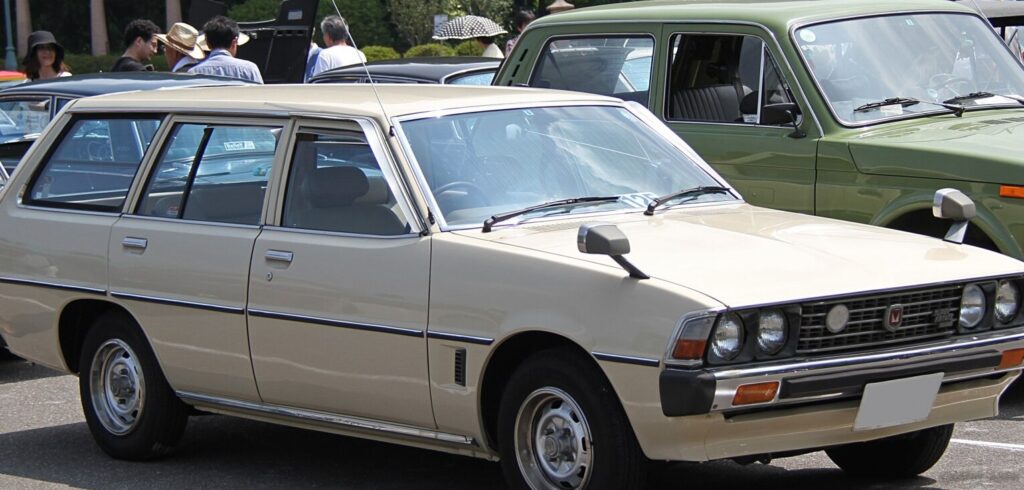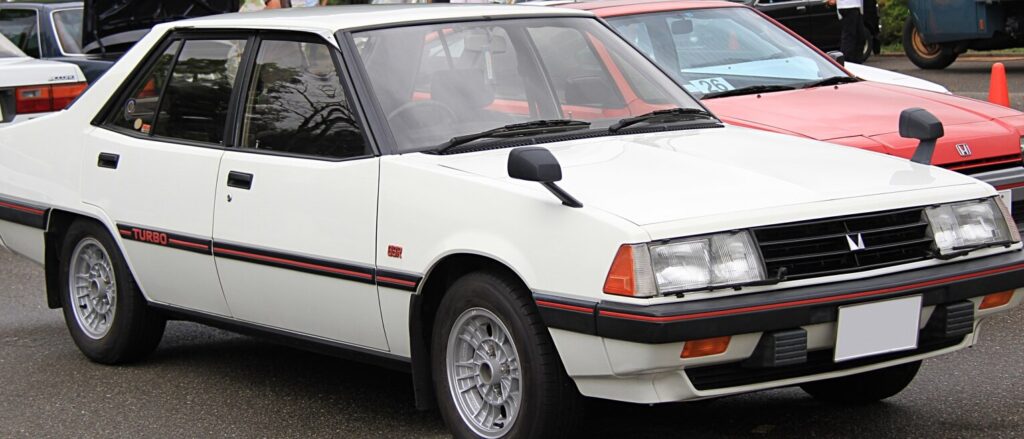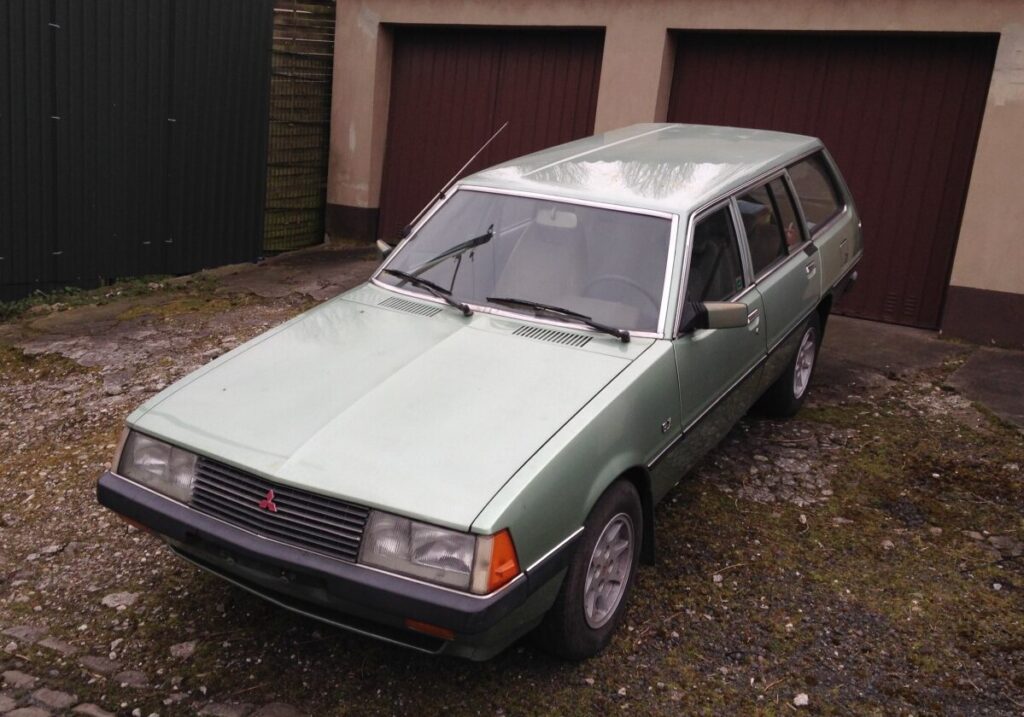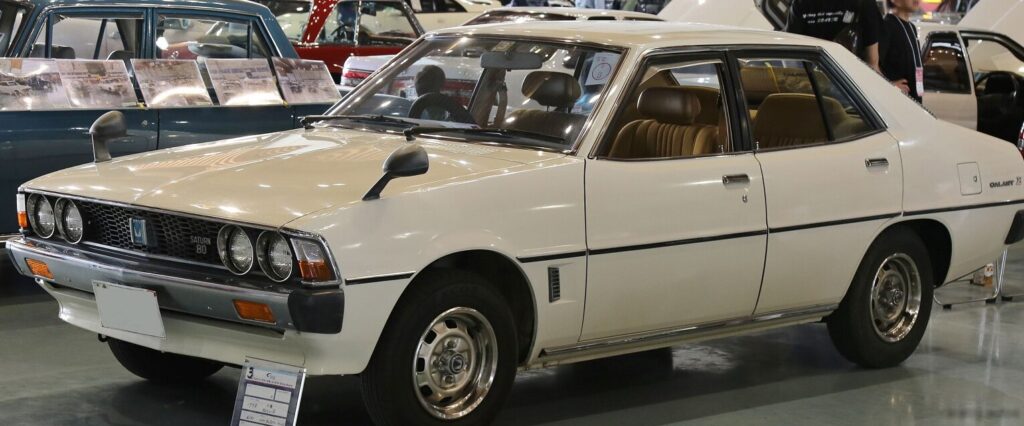
The Mitsubishi Galant III 2.0 GLX, produced between 1976 and 1980, represents a significant evolution in Mitsubishi’s mid-size sedan offerings. Falling within the broader Galant III generation (A110 series), this variant occupied a middle ground in the lineup, offering a balance between affordability and a reasonably refined driving experience. The Galant III was a crucial model for Mitsubishi as it aimed to expand its presence in international markets, particularly in Australia and parts of Europe, while solidifying its position within Japan. This 2.0 GLX trim, with its 86 horsepower engine, was designed to appeal to buyers seeking a comfortable and reliable family sedan.
Technical Specifications
| Brand | Mitsubishi |
| Model | Galant |
| Generation | Galant III (A110 Series) |
| Type | 2.0 GLX (86 Hp) |
| Production Years | 1976 – 1980 |
| Body Type | Sedan |
| Engine Type | Internal Combustion Engine, Petrol (Gasoline) |
| Engine Displacement | 1995 cc (2.0 Liters) |
| Power Output | 86 hp (64 kW) |
| Engine Aspiration | Naturally Aspirated |
| Fuel System | Carbureted |
| Transmission | 3-Speed Automatic |
| Drivetrain | Rear-Wheel Drive |
| Curb Weight | Approximately 1,280 kg (2,822 lbs) |
Powertrain & Engine Architecture
The heart of the Galant III 2.0 GLX is the 4G32 engine, a 1,995 cc inline-four cylinder gasoline engine. This engine is a naturally aspirated design, relying on a single overhead camshaft (SOHC) valvetrain to control the intake and exhaust valves. The 4G32 utilizes a cast iron block and an aluminum cylinder head, a common construction for engines of this era. Fuel delivery is managed by a single, down-draft carburetor, a relatively simple system compared to the fuel injection systems that would become prevalent in later decades. The carburetor’s tuning was critical for achieving optimal performance and fuel economy. The 86 horsepower output is achieved at approximately 5,200 rpm, while peak torque of around 128 lb-ft (174 Nm) is delivered at 3,000 rpm. Paired with this engine is a three-speed automatic transmission, providing relatively smooth, though not particularly quick, gear changes. This transmission was chosen to enhance the car’s comfort and ease of driving, appealing to a broader audience than a manual transmission might.
Driving Characteristics
The Galant III 2.0 GLX with the automatic transmission offers a comfortable, if somewhat leisurely, driving experience. Acceleration is adequate for everyday driving, but it’s not a particularly sporty vehicle. The three-speed automatic transmission has relatively widely spaced gear ratios, which contributes to a noticeable drop in engine speed during shifts. This can result in a slight hesitation when accelerating, particularly when overtaking. Compared to the manual transmission versions of the 2.0 GLX, the automatic variant sacrifices some responsiveness for convenience. The rear-wheel-drive layout provides a balanced feel, but the suspension, while adequate, is tuned more for comfort than handling precision. Steering is relatively light, making it easy to maneuver in urban environments, but it lacks the feedback desired by more enthusiastic drivers. The overall driving experience is best described as refined and predictable, making it a suitable choice for family transportation.
Equipment & Trim Levels
The 2.0 GLX trim level represented a step up in terms of features and comfort compared to the base Galant III models. Standard equipment typically included cloth upholstery, a basic AM/FM radio, and a heater/defroster system. The GLX also featured more extensive interior trim and exterior brightwork, such as chrome bumpers and window surrounds. Optional extras available for the 2.0 GLX included air conditioning, a more advanced radio with cassette player, and power windows. The interior design was functional and straightforward, with a focus on durability and ease of use. The dashboard layout was relatively simple, with clearly labeled controls. The seats offered reasonable comfort for long journeys, and the cabin provided adequate space for passengers and luggage.
Chassis & Braking
The Galant III utilizes a conventional body-on-frame construction, which was common for sedans of this era. The suspension consists of independent front suspension with MacPherson struts and a live rear axle with leaf springs. This setup provides a comfortable ride, but it’s not particularly sophisticated in terms of handling. The braking system features drum brakes on all four wheels, which were standard for cars in this price range during the 1970s. While adequate for normal driving conditions, the drum brakes lack the stopping power and fade resistance of disc brakes. The steering system is a recirculating ball type, which provides light steering effort but limited feedback. Stabilizer bars were not typically included as standard equipment on the 2.0 GLX, further emphasizing the car’s focus on comfort rather than performance.
Market Reception & Comparison
The Mitsubishi Galant III 2.0 GLX was generally well-received by critics as a practical and reliable family sedan. It offered a good value for money, providing a comfortable ride and a reasonably spacious interior at a competitive price point. However, its performance was often criticized as being somewhat lackluster, particularly when compared to other cars in its class with more powerful engines. Compared to the higher-spec Galant models, such as those equipped with larger engines or manual transmissions, the 2.0 GLX automatic offered a more relaxed driving experience but sacrificed some performance. Fuel economy was considered average for the time, with figures typically ranging from 18 to 22 mpg (miles per gallon) in real-world driving conditions. Reliability was a strong point for the Galant III, and the 4G32 engine proved to be durable and relatively easy to maintain.
Legacy
The Mitsubishi Galant III 2.0 GLX, while not a particularly groundbreaking vehicle, played an important role in establishing Mitsubishi as a credible player in the global automotive market. The 4G32 engine, in particular, proved to be a reliable and long-lasting powerplant. Today, the Galant III is considered a classic car, and well-maintained examples are sought after by enthusiasts. The 2.0 GLX automatic variant, while not the most desirable trim level, remains a relatively affordable entry point into the world of classic Mitsubishi ownership. Parts availability can be a challenge, but many components are still available through specialist suppliers or can be sourced from other Mitsubishi models of the same era. The Galant III’s simple mechanical design makes it relatively easy to maintain and repair, appealing to owners who enjoy working on their own vehicles. Its enduring appeal lies in its blend of practicality, reliability, and understated style.