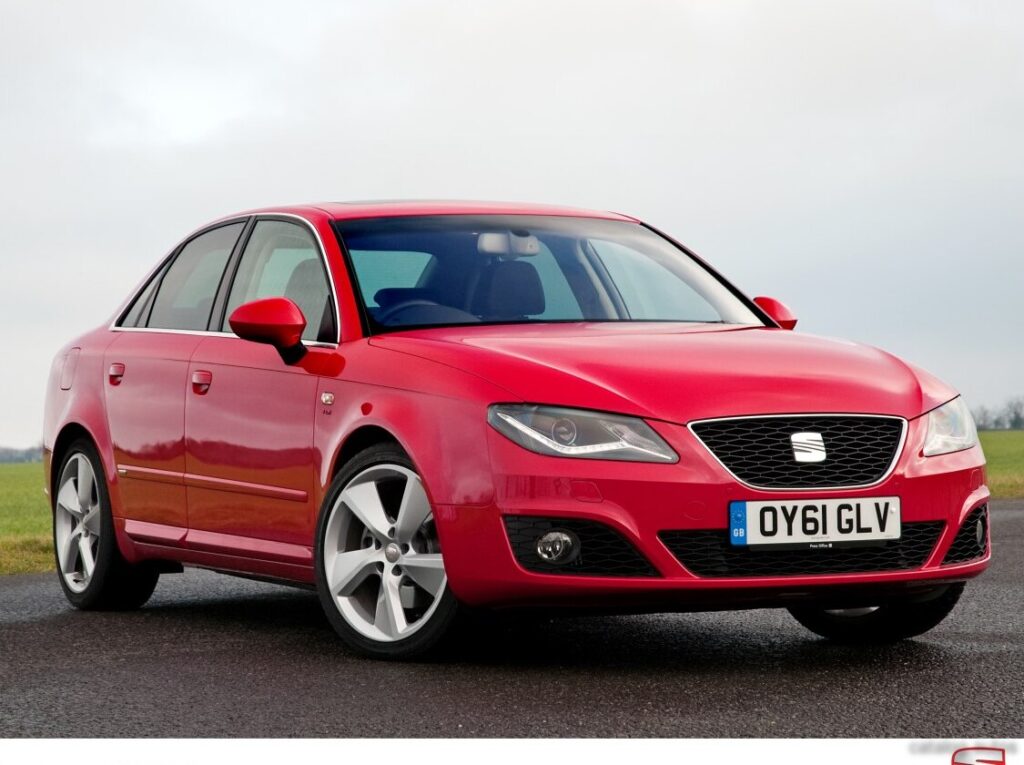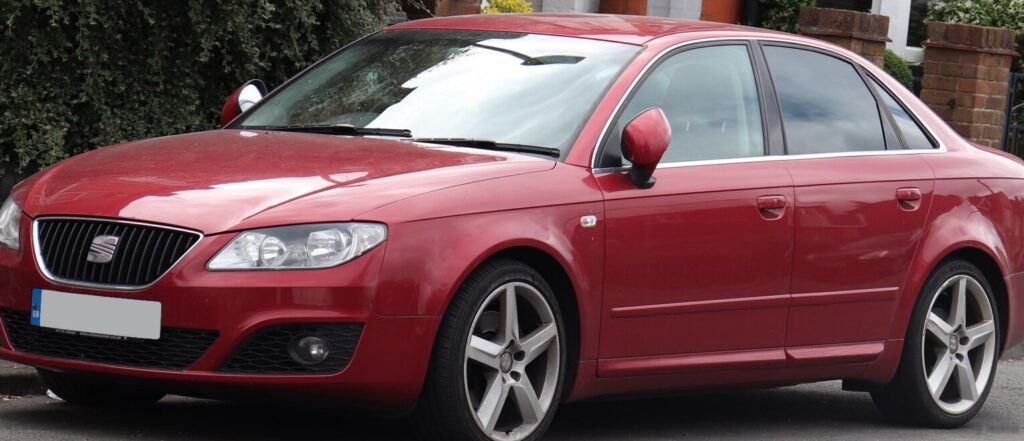
The SEAT Exeo 2.0 TDI CR (120 hp) DPF was a diesel-powered variant of the Exeo, a mid-size executive car produced by the Spanish manufacturer SEAT between 2009 and 2011. Positioned as a more economical option within the Exeo range, it aimed to provide a balance between fuel efficiency and acceptable performance for everyday driving. The Exeo itself was a significant model for SEAT, representing their entry into a more competitive segment previously dominated by German manufacturers. It was based heavily on the outgoing Audi B7 platform, a result of SEAT’s ownership under the Volkswagen Group.
Technical Specifications
| Brand | Seat |
| Model | Exeo |
| Generation | Exeo |
| Type (Engine) | 2.0 TDI CR (120 Hp) DPF |
| Start of production | July, 2009 |
| End of production | September, 2011 |
| Powertrain Architecture | Internal Combustion engine |
| Body type | Sedan |
| Seats | 5 |
| Doors | 4 |
| Fuel consumption (urban) | 7.1 l/100 km (33.1 US mpg, 39.8 UK mpg, 14.1 km/l) |
| Fuel consumption (extra urban) | 4.1 l/100 km (57.4 US mpg, 68.9 UK mpg, 24.4 km/l) |
| Fuel consumption (combined) | 5.2 l/100 km (45.2 US mpg, 54.3 UK mpg, 19.2 km/l) |
| Fuel Type | Diesel |
| Acceleration 0 – 100 km/h | 10.5 sec |
| Acceleration 0 – 62 mph | 10.5 sec |
| Acceleration 0 – 60 mph | 10 sec |
| Maximum speed | 204 km/h (126.76 mph) |
| Emission standard | Euro 5 |
| Weight-to-power ratio | 12.5 kg/Hp, 79.7 Hp/tonne |
| Weight-to-torque ratio | 5.2 kg/Nm, 192.7 Nm/tonne |
| Power | 120 Hp @ 4000 rpm |
| Power per litre | 61 Hp/l |
| Torque | 290 Nm @ 1750-2500 rpm (213.89 lb.-ft. @ 1750-2500 rpm) |
| Engine layout | Front, Longitudinal |
| Engine Model/Code | CAGC |
| Engine displacement | 1968 cm3 (120.09 cu. in.) |
| Number of cylinders | 4 |
| Engine configuration | Inline |
| Cylinder Bore | 81 mm (3.19 in.) |
| Piston Stroke | 95.5 mm (3.76 in.) |
| Compression ratio | 16.5:1 |
| Number of valves per cylinder | 4 |
| Fuel injection system | Diesel Commonrail |
| Engine aspiration | Turbocharger, Intercooler |
| Engine oil capacity | 4.3 l (4.54 US qt | 3.78 UK qt) |
| Coolant | 8 l (8.45 US qt | 7.04 UK qt) |
| Kerb Weight | 1505 kg (3317.96 lbs.) |
| Max. weight | 1990 kg (4387.2 lbs.) |
| Max load | 485 kg (1069.24 lbs.) |
| Trunk (boot) space – minimum | 460 l (16.24 cu. ft.) |
| Fuel tank capacity | 70 l (18.49 US gal | 15.4 UK gal) |
| Length | 4661 mm (183.5 in.) |
| Width | 1772 mm (69.76 in.) |
| Height | 1430 mm (56.3 in.) |
| Wheelbase | 2642 mm (104.02 in.) |
| Front track | 1522 mm (59.92 in.) |
| Rear (Back) track | 1523 mm (59.96 in.) |
| Minimum turning circle | 11.2 m (36.75 ft.) |
| Drivetrain Architecture | The Internal combustion engine (ICE) drives the front wheels of the vehicle. |
| Drive wheel | Front wheel drive |
| Number of gears and type of gearbox | 6 gears, manual transmission |
| Front suspension | Independent multi-link suspension |
| Rear suspension | Independent on trapezoidal lever |
| Front brakes | Ventilated discs |
| Rear brakes | Disc |
| Assisting systems | ABS (Anti-lock braking system) |
| Steering type | Steering rack and pinion |
| Power steering | Electric Steering |
| Tires size | 205/55 R16 |
| Wheel rims size | 7J x 16 |
INTRODUCTION
The SEAT Exeo 2.0 TDI CR (120 hp) DPF, produced from 2009 to 2011, represented a key offering in SEAT’s lineup during that period. It was built on the Volkswagen Group’s B7 platform, shared with the Audi A4 and previous generation VW Passat. This platform provided a solid foundation for a comfortable and relatively refined driving experience. The 2.0 TDI CR engine, equipped with a Diesel Particulate Filter (DPF) to meet Euro 5 emissions standards, was a common choice for European buyers seeking fuel economy and lower running costs. This variant was generally considered an entry-level to mid-range option within the Exeo range, appealing to drivers prioritizing practicality and efficiency over outright performance.
Powertrain & Engine Architecture
The heart of the Exeo 2.0 TDI CR was the CAGC engine code, a 1968cc inline-four cylinder diesel engine. This engine utilized common rail direct injection, a technology that allowed for precise fuel delivery and improved combustion efficiency. The common rail system, operating at extremely high pressures, atomized the fuel into a fine mist, resulting in cleaner burning and increased power output. A turbocharger with an intercooler was employed to further enhance performance by forcing more air into the cylinders. The engine featured four valves per cylinder, contributing to improved breathing and overall efficiency. The DPF was a crucial component, trapping soot particles from the exhaust to reduce harmful emissions. The 6-speed manual transmission was the standard offering, providing a good balance between fuel economy and driver control. The engine produced 120 horsepower at 4000 rpm and 290 Nm (213.89 lb-ft) of torque between 1750 and 2500 rpm.
Driving Characteristics
The 2.0 TDI CR (120 hp) variant of the Exeo offered a competent, if not particularly exciting, driving experience. The 120 horsepower output, while adequate for everyday driving, wasn’t overwhelming. Acceleration from 0-60 mph took around 10 seconds, and top speed was limited to 126.76 mph. The engine’s strong low-end torque, however, made it feel more responsive in real-world situations, particularly when overtaking or climbing hills. The 6-speed manual transmission allowed drivers to keep the engine in its optimal power band. Compared to the more powerful 2.0 TDI variants (typically 170 hp), this version felt noticeably slower, but it offered significantly better fuel economy. The Exeo’s suspension, derived from the Audi A4, provided a comfortable ride, absorbing bumps and imperfections in the road effectively. Steering was precise and well-weighted, contributing to a confident feel behind the wheel.
Equipment & Trim Levels
The Exeo 2.0 TDI CR (120 hp) DPF typically came with a reasonable level of standard equipment. This included air conditioning, electric front windows, central locking, and an audio system with CD player. Safety features such as ABS, traction control, and front airbags were also standard. Higher trim levels, such as the Sport or Stylance, added features like alloy wheels, climate control, rear parking sensors, and upgraded upholstery. Optional extras included a sunroof, leather seats, and a navigation system. Interior upholstery was typically cloth, although leather was available as an upgrade. The dashboard layout was functional and well-designed, with clear instrumentation and logically placed controls.
Chassis & Braking
The Exeo’s chassis was based on the Audi B7 platform, featuring independent multi-link suspension at the front and an independent trapezoidal lever suspension at the rear. This setup provided a good balance between ride comfort and handling. The front brakes were ventilated discs, offering good stopping power, while the rear brakes were solid discs. ABS (Anti-lock Braking System) was standard, enhancing safety during emergency braking. The Exeo’s steering utilized an electric power steering system, providing a light and responsive feel. The car’s weight distribution was relatively balanced, contributing to stable handling characteristics.
Market Reception & Comparison
The SEAT Exeo 2.0 TDI CR (120 hp) DPF was generally well-received by automotive critics as a practical and economical choice. It was praised for its comfortable ride, refined interior, and fuel efficiency. However, some critics noted that the 120 hp engine felt underpowered, particularly when the car was fully loaded. Compared to other trims in the Exeo lineup, such as the 2.0 TDI 170 hp, this variant offered lower running costs but sacrificed performance. Against competitors like the Ford Mondeo and Vauxhall/Opel Insignia, the Exeo offered a more premium feel and a more refined driving experience, but it was often more expensive.
Legacy
The SEAT Exeo, and specifically the 2.0 TDI CR (120 hp) DPF variant, has proven to be a relatively reliable car in the used car market. The 2.0 TDI engine is known for its durability, although the DPF can be a potential source of problems if not properly maintained. Regular servicing and the use of high-quality diesel fuel are essential to ensure the longevity of the engine and DPF. Today, the Exeo represents a good value proposition for buyers seeking a comfortable and economical mid-size executive car. Its relatively low purchase price and good fuel economy make it an attractive option for those on a budget. However, potential buyers should be aware of the potential for DPF issues and ensure that the car has been well-maintained.