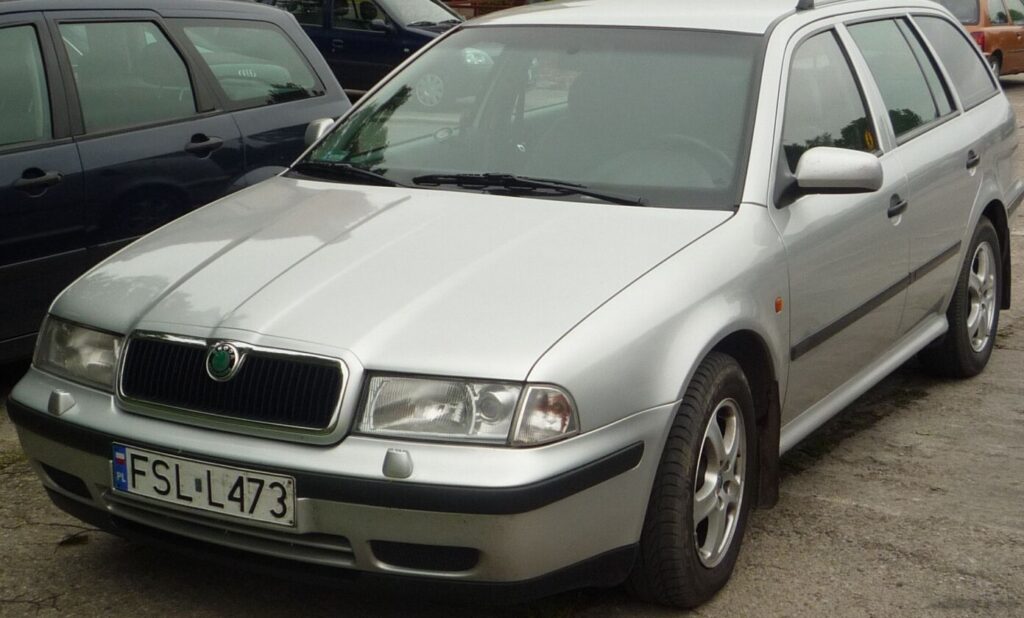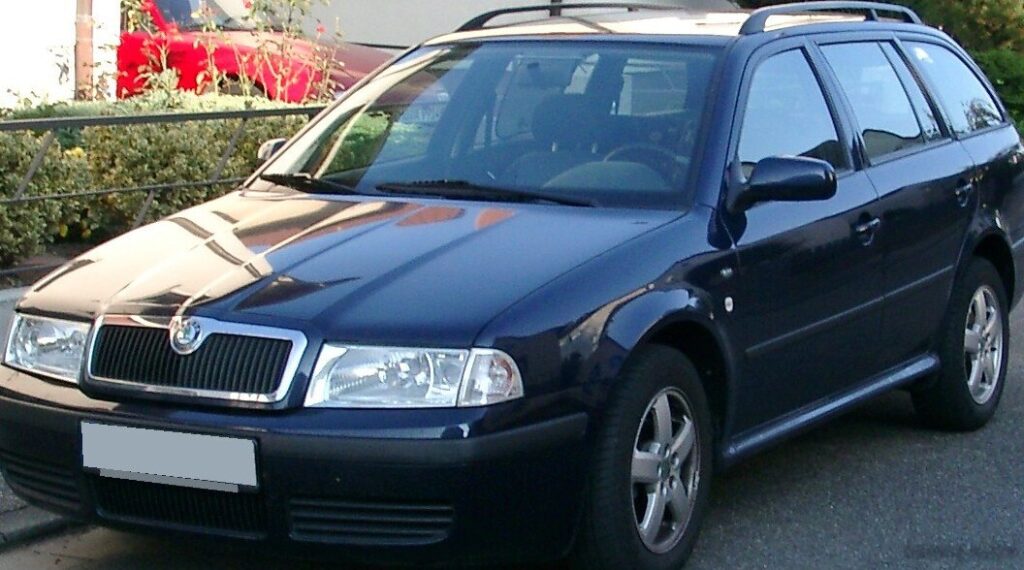
The Skoda Octavia I Combi Tour, specifically the 1.9 TDI variant produced from 2002 to 2004, represents a significant iteration of Skoda’s popular compact estate car. This model, part of the facelifted first-generation Octavia (designated 1HX0/A3), offered a compelling blend of practicality, fuel efficiency, and performance, particularly within the European market. Positioned as a mid-range offering, it catered to buyers seeking a spacious and economical vehicle capable of long-distance travel and everyday utility. The “Combi Tour” designation signified the estate body style, offering increased cargo capacity compared to the hatchback version.
Technical Specifications
| Brand | Skoda |
| Model | Octavia |
| Generation | Octavia I Combi Tour (facelift 2000) |
| Type (Engine) | 1.9 TDI (130 Hp) |
| Start of production | 2002 |
| End of production | 2004 |
| Powertrain Architecture | Internal Combustion engine |
| Body type | Station wagon (estate) |
| Seats | 5 |
| Doors | 5 |
| Fuel consumption (urban) | 7.2 l/100 km (32.7 US mpg, 39.2 UK mpg, 13.9 km/l) |
| Fuel consumption (extra urban) | 4.6 l/100 km (51.1 US mpg, 61.4 UK mpg, 21.7 km/l) |
| Fuel consumption (combined) | 5.5 l/100 km (42.8 US mpg, 51.4 UK mpg, 18.2 km/l) |
| CO2 emissions | 149 g/km |
| Fuel Type | Diesel |
| Acceleration 0 – 100 km/h | 9.8 sec |
| Acceleration 0 – 62 mph | 9.8 sec |
| Acceleration 0 – 60 mph | 9.3 sec |
| Maximum speed | 207 km/h (128.62 mph) |
| Emission standard | Euro 3 |
| Weight-to-power ratio | 10.1 kg/Hp |
| Weight-to-torque ratio | 4.2 kg/Nm |
| Power | 130 Hp @ 4000 rpm |
| Torque | 310 Nm @ 1900 rpm (228.64 lb.-ft. @ 1900 rpm) |
| Engine layout | Front, Transverse |
| Engine Model/Code | ASZ |
| Engine displacement | 1896 cm3 (115.7 cu. in.) |
| Number of cylinders | 4 |
| Engine configuration | Inline |
| Cylinder Bore | 79.5 mm (3.13 in.) |
| Piston Stroke | 95.5 mm (3.76 in.) |
| Compression ratio | 19:1 |
| Number of valves per cylinder | 2 |
| Fuel injection system | Pump-nozzle (Unit Injector) |
| Engine aspiration | Turbocharger, Intercooler |
| Valvetrain | SOHC |
| Engine oil capacity | 4.3 l (4.54 US qt, 3.78 UK qt) |
| Coolant capacity | 6.3 l (6.66 US qt, 5.54 UK qt) |
| Kerb Weight | 1310 kg (2888.06 lbs.) |
| Max. weight | 1900 kg (4188.78 lbs.) |
| Max load | 590 kg (1300.73 lbs.) |
| Trunk (boot) space – minimum | 548 l (19.35 cu. ft.) |
| Trunk (boot) space – maximum | 1512 l (53.4 cu. ft.) |
| Fuel tank capacity | 55 l (14.53 US gal, 12.1 UK gal) |
| Max. roof load | 75 kg (165.35 lbs.) |
| Permitted trailer load (braked) | 1300 kg (2866.01 lbs.) |
| Permitted trailer load (unbraked) | 500 kg (1102.31 lbs.) |
| Permitted towbar download | 60 kg (132.28 lbs.) |
| Length | 4513 mm (177.68 in.) |
| Width | 1731 mm (68.15 in.) |
| Width including mirrors | 1985 mm (78.15 in.) |
| Height | 1457 mm (57.36 in.) |
| Wheelbase | 2512 mm (98.9 in.) |
| Front track | 1513 mm (59.57 in.) |
| Rear track | 1494 mm (58.82 in.) |
| Front overhang | 916 mm (36.06 in.) |
| Rear overhang | 1085 mm (42.72 in.) |
| Ride height (ground clearance) | 134 mm (5.28 in.) |
| Drag coefficient (Cd) | 0.31 |
| Minimum turning circle | 10.8 m (35.43 ft.) |
| Approach angle | 15° |
| Departure angle | 12° |
| Drivetrain | Front wheel drive |
| Number of gears | 6 |
| Gearbox type | Manual transmission |
| Front suspension | Independent, McPherson with coil spring and anti-roll bar |
| Rear suspension | Transverse stabilizer, Coil spring, Torsion |
| Front brakes | Ventilated discs |
| Rear brakes | Disc |
| Assisting systems | ABS (Anti-lock braking system) |
| Steering type | Steering rack and pinion |
| Power steering | Hydraulic |
| Tires size | 195/65 R15 |
| Wheel rims size | 6J x 15 |
Powertrain & Engine Architecture
The heart of the Octavia Combi Tour 1.9 TDI was the ASZ engine code, a 1.9-liter inline-four cylinder diesel engine. This engine was a mainstay of the Volkswagen Group’s diesel offerings during the early 2000s. It featured a cast iron block and an aluminum cylinder head, employing a single overhead camshaft (SOHC) valvetrain operating two valves per cylinder. The ASZ engine utilized a pump-nozzle (unit injector) fuel injection system, a technology known for its precise fuel delivery and contribution to improved combustion efficiency. A turbocharger with an intercooler was employed to boost power output and enhance torque across a wider RPM range. The engine’s 19:1 compression ratio was typical for direct injection diesels of the era. The 130 horsepower and 310 Nm (228.64 lb-ft) of torque were substantial for a vehicle of this class, providing brisk acceleration and strong pulling power. The engine was transversely mounted in the front of the vehicle, driving the front wheels.
Driving Characteristics
The 1.9 TDI 130 hp engine, paired with a six-speed manual transmission, delivered a balanced driving experience. While not overtly sporty, it offered ample power for everyday driving and comfortable highway cruising. Acceleration from 0-60 mph took approximately 9.3 seconds, and the top speed was around 128.62 mph. The engine’s peak torque, available from a low 1900 rpm, meant that strong acceleration was readily accessible without needing to rev the engine excessively. The six-speed gearbox allowed for efficient cruising at highway speeds, keeping engine noise and fuel consumption in check. Compared to the lower-powered 1.9 TDI variants (typically 90 or 105 hp), the 130 hp version offered a noticeable improvement in performance, particularly when fully loaded or tackling inclines. It wasn’t as quick as the petrol-powered Octavia variants, such as those with the 1.8T engine, but it provided significantly better fuel economy.
Equipment & Trim Levels
The Octavia Combi Tour 1.9 TDI 130 hp typically came equipped with a reasonable level of standard features. These included central locking, electric front windows, power steering, an adjustable steering column, and an immobilizer. Interior upholstery was generally cloth, with options for upgraded materials available. Air conditioning was often included, but not always standard. Optional extras could include alloy wheels, a CD stereo system, rear electric windows, and a sunroof. Trim levels varied slightly depending on the market, but generally, this variant occupied a mid-range position in the Octavia lineup, offering a good balance of features and affordability.
Chassis & Braking
The Octavia Combi Tour utilized an independent McPherson strut front suspension and a torsion beam rear suspension. This setup provided a comfortable ride quality, suitable for both urban and long-distance driving. The front suspension incorporated a stabilizer bar to reduce body roll during cornering. Braking was handled by ventilated discs on the front wheels and solid discs on the rear. Anti-lock Braking System (ABS) was standard, enhancing braking performance and stability. The chassis was designed to accommodate the increased weight of the estate body style and the relatively powerful diesel engine.
Market Reception & Comparison
The Skoda Octavia Combi Tour 1.9 TDI 130 hp was well-received by automotive critics and buyers alike. It was praised for its spacious interior, large cargo capacity, fuel efficiency, and strong performance. Compared to other estate cars in its class, the Octavia offered a compelling value proposition, providing a generous amount of space and practicality for a relatively affordable price. The 1.9 TDI engine was known for its reliability and longevity, making it a popular choice for fleet operators and private buyers. Fuel economy was a significant selling point, with combined fuel consumption figures around 5.5 l/100 km (42.8 US mpg). Compared to the lower-powered TDI variants, the 130 hp version offered a worthwhile performance upgrade without significantly compromising fuel economy.
Legacy
The Skoda Octavia I Combi Tour 1.9 TDI 130 hp remains a popular choice in the used car market today. The ASZ engine is known for its durability, and well-maintained examples can still provide reliable service. However, potential buyers should be aware of common diesel engine issues, such as injector problems and turbocharger wear. The Octavia’s spacious interior and practical estate body style continue to appeal to buyers seeking a versatile and economical vehicle. The model helped solidify Skoda’s reputation as a manufacturer of well-built, reliable, and value-for-money cars, paving the way for the brand’s continued success in the European and global markets.