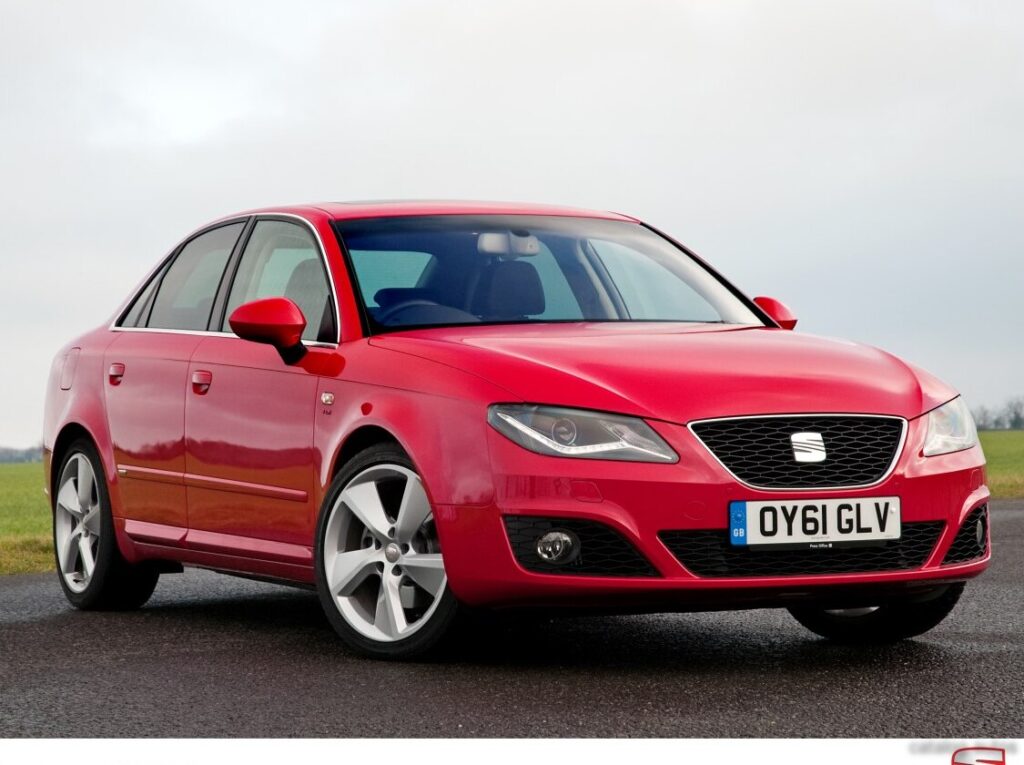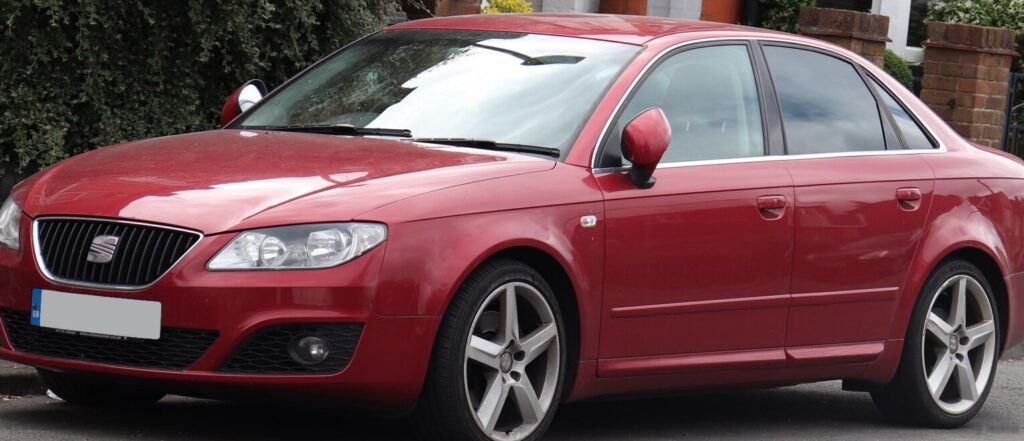
The Seat Exeo 2.0 TSI, produced between June 2009 and September 2011, represented a significant step forward for the Spanish automaker, offering a blend of performance and refinement in the mid-size executive car segment. Based heavily on the outgoing Audi B7 A4 platform – a result of SEAT’s ownership under the Volkswagen Group – the Exeo aimed to provide a more sophisticated alternative to SEAT’s traditionally budget-focused offerings. The 2.0 TSI variant, boasting 200 horsepower, occupied a prominent position in the Exeo lineup, serving as a performance-oriented option appealing to drivers seeking a more engaging driving experience. It was offered exclusively as a four-door sedan, targeting a market segment dominated by established German and British brands.
Technical Specifications
| Brand | Seat |
| Model | Exeo |
| Generation | Exeo |
| Type (Engine) | 2.0 TSI (200 Hp) |
| Start of production | June, 2009 |
| End of production | September, 2011 |
| Powertrain Architecture | Internal Combustion engine |
| Body type | Sedan |
| Seats | 5 |
| Doors | 4 |
| Fuel consumption (economy) – urban | 10.9 l/100 km (21.6 US mpg) |
| Fuel consumption (economy) – extra urban | 5.8 l/100 km (40.6 US mpg) |
| Fuel consumption (economy) – combined | 7.7 l/100 km (30.5 US mpg) |
| Fuel Type | Petrol (Gasoline) |
| Acceleration 0 – 100 km/h | 7.3 sec |
| Acceleration 0 – 62 mph | 7.3 sec |
| Acceleration 0 – 60 mph | 6.9 sec |
| Maximum speed | 241 km/h (149.75 mph) |
| Emission standard | Euro 5 |
| Weight-to-power ratio | 7.2 kg/Hp |
| Weight-to-torque ratio | 5.1 kg/Nm |
| Power | 200 Hp @ 5700 rpm |
| Torque | 280 Nm @ 3500 rpm (206.52 lb.-ft. @ 3500 rpm) |
| Engine layout | Front, Longitudinal |
| Engine Model/Code | BWE |
| Engine displacement | 1984 cm3 (121.07 cu. in.) |
| Number of cylinders | 4 |
| Engine configuration | Inline |
| Cylinder Bore | 82.5 mm (3.25 in.) |
| Piston Stroke | 92.8 mm (3.65 in.) |
| Compression ratio | 10.3:1 |
| Number of valves per cylinder | 4 |
| Fuel injection system | Direct injection |
| Engine aspiration | Turbocharger, Intercooler |
| Engine oil capacity | 4.5 l (4.76 US qt | 3.96 UK qt) |
| Coolant | 8 l (8.45 US qt | 7.04 UK qt) |
| Kerb Weight | 1430 kg (3152.61 lbs.) |
| Max. weight | 1990 kg (4387.2 lbs.) |
| Max load | 560 kg (1234.59 lbs.) |
| Trunk (boot) space – minimum | 460 l (16.24 cu. ft.) |
| Fuel tank capacity | 70 l (18.49 US gal | 15.4 UK gal) |
| Length | 4661 mm (183.5 in.) |
| Width | 1772 mm (69.76 in.) |
| Height | 1430 mm (56.3 in.) |
| Wheelbase | 2642 mm (104.02 in.) |
| Front track | 1522 mm (59.92 in.) |
| Rear (Back) track | 1523 mm (59.96 in.) |
| Minimum turning circle | 11.2 m (36.75 ft.) |
| Drivetrain Architecture | The Internal combustion engine (ICE) drives the front wheels of the vehicle. |
| Drive wheel | Front wheel drive |
| Number of gears and type of gearbox | 6 gears, manual transmission |
| Front suspension | Independent, type McPherson with coil spring and anti-roll bar |
| Front brakes | Ventilated discs |
| Rear brakes | Disc |
| Assisting systems | ABS (Anti-lock braking system) |
| Steering type | Steering rack and pinion |
| Power steering | Hydraulic Steering |
| Tires size | 205/55 R16; 225/45 R17; 225/40 R18 |
| Wheel rims size | 7J x 16 ET45; 7.5J x 17 ET42; 8J x 18 ET42 |
Powertrain & Engine Architecture
At the heart of the Exeo 2.0 TSI lay the BWE engine code, a 1.984-liter inline-four cylinder gasoline engine. This engine was a member of the Volkswagen Group’s EA888 family, known for its robust design and tunability. The BWE featured direct fuel injection (FSI), a technology that allowed for precise fuel delivery and improved combustion efficiency. A single turbocharger, coupled with an intercooler, provided forced induction, boosting power output to 200 horsepower and 280 Nm (206.52 lb-ft) of torque. The engine’s longitudinal mounting and front-wheel-drive configuration were inherited from the Audi A4 platform. The standard transmission for the 2.0 TSI was a six-speed manual gearbox, offering precise shifts and a direct connection to the engine. A six-speed automatic transmission was also available, though it slightly impacted acceleration and fuel economy.
Driving Characteristics
The Exeo 2.0 TSI delivered a noticeably more spirited driving experience compared to lower-powered variants. The turbocharger provided a surge of power in the mid-range, making overtaking maneuvers effortless. While not a sports car, the Exeo offered a good balance between comfort and performance. The six-speed manual transmission allowed drivers to fully exploit the engine’s powerband, while the automatic transmission provided convenience in urban driving. The steering was precise, and the suspension, while tuned for comfort, offered reasonable body control. Compared to the 1.6-liter models, the 2.0 TSI felt significantly more responsive, and while it didn’t match the outright performance of the later 2.0 TDI variants, it offered a more refined and engaging driving experience.
Equipment & Trim Levels
The 2.0 TSI typically came equipped with a generous level of standard features. These included air conditioning, power windows, central locking, and an audio system with CD player. Higher trim levels, such as the Sport and Stylance, added features like alloy wheels, a multi-function steering wheel, cruise control, and upgraded upholstery. Optional extras included a sunroof, leather seats, a navigation system, and parking sensors. Interior materials were generally of good quality, reflecting the Exeo’s positioning as a more premium offering from SEAT. The dashboard layout was functional and well-organized, though it retained some of the Audi A4’s somewhat dated design elements.
Chassis & Braking
The Exeo’s chassis was largely derived from the Audi B7 A4, featuring independent suspension at the front (McPherson struts) and a multi-link setup at the rear. The 2.0 TSI models typically featured larger brakes than the base models, with ventilated discs at the front and solid discs at the rear. Anti-lock braking system (ABS) was standard. The suspension was tuned to provide a comfortable ride, but it also offered decent handling characteristics. Stabilizer bars were fitted front and rear to reduce body roll during cornering. The Exeo’s steering was hydraulic, providing a more natural feel compared to some of the electrically assisted systems found in contemporary vehicles.
Market Reception & Comparison
The Seat Exeo 2.0 TSI received generally positive reviews from automotive critics. It was praised for its comfortable ride, refined engine, and generous equipment levels. However, some critics noted that its styling was somewhat conservative and that it lacked the brand cachet of its German rivals. Compared to the 1.6-liter and 2.0 TDI variants, the 2.0 TSI offered superior performance but at the cost of slightly higher fuel consumption. The 2.0 TDI, with its greater torque and fuel efficiency, proved to be a more popular choice in many European markets. Against competitors like the Ford Mondeo, Volkswagen Passat, and Opel/Vauxhall Insignia, the Exeo offered a compelling package, particularly for buyers seeking a stylish and well-equipped sedan.
Legacy
The Seat Exeo, despite its relatively short production run, remains a well-regarded vehicle among enthusiasts. The 2.0 TSI engine, in particular, is known for its reliability and tunability. Used examples are readily available, and well-maintained models can provide years of reliable service. The Exeo’s robust construction and use of proven Volkswagen Group components contribute to its longevity. While it may not have achieved the sales success of some of its rivals, the Exeo represents a significant milestone in SEAT’s history, demonstrating the brand’s ability to produce a genuinely competitive executive car.