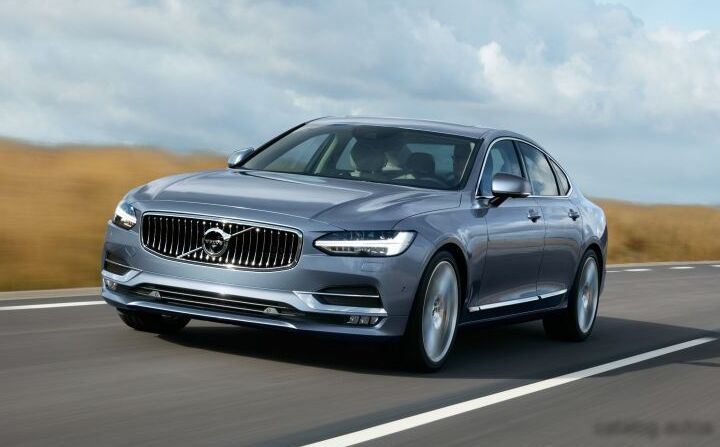
The Volvo S90 2.0 D3 Automatic, produced between 2016 and 2018, represented an entry point into Volvo’s premium large sedan lineup. Part of the second generation S90 (introduced in 2016 and built on the Scalable Product Architecture – SPA platform, also known as the 1HX0 chassis code), this variant offered a balance of fuel efficiency and comfortable cruising, aimed at buyers prioritizing economy over outright performance. It served as a key model in European markets, where diesel engines remained popular, and offered a more accessible price point compared to the higher-powered D4 and D5 models. The D3 trim was not widely available in the North American market, where Volvo focused on gasoline and hybrid powertrains for the S90.
Technical Specifications
| Brand | Volvo |
| Model | S90 |
| Generation | S90 (2016) |
| Type (Engine) | 2.0 D3 (150 Hp) Automatic |
| Start of production | 2016 |
| End of production | 2018 |
| Powertrain Architecture | Internal Combustion engine |
| Body type | Sedan |
| Seats | 5 |
| Doors | 4 |
| Fuel consumption (urban) | 5.2 l/100 km (45.2 US mpg, 54.3 UK mpg, 19.2 km/l) |
| Fuel consumption (extra urban) | 4.0 l/100 km (58.8 US mpg, 70.6 UK mpg, 25 km/l) |
| Fuel consumption (combined) | 4.4 l/100 km (53.5 US mpg, 64.2 UK mpg, 22.7 km/l) |
| CO2 emissions | 115 g/km |
| Fuel Type | Diesel |
| Acceleration 0 – 100 km/h | 9.9 sec |
| Acceleration 0 – 62 mph | 9.9 sec |
| Acceleration 0 – 60 mph | 9.4 sec |
| Maximum speed | 205 km/h (127.38 mph) |
| Power | 150 Hp @ 3750 rpm |
| Torque | 320 Nm @ 1740-3000 rpm (236.02 lb.-ft. @ 1740-3000 rpm) |
| Maximum engine speed | 4500 rpm |
| Engine layout | Front, Transverse |
| Engine Model/Code | D4204T9 |
| Engine displacement | 1969 cm3 (120.16 cu. in.) |
| Number of cylinders | 4 |
| Engine configuration | Inline |
| Cylinder Bore | 82 mm (3.23 in.) |
| Piston Stroke | 93.2 mm (3.67 in.) |
| Compression ratio | 16:1 |
| Number of valves per cylinder | 4 |
| Fuel injection system | Diesel Commonrail |
| Engine aspiration | Turbocharger, Intercooler |
| Valvetrain | DOHC |
| Engine oil capacity | 5.2 l (5.49 US qt | 4.58 UK qt) |
| Trunk (boot) space (minimum) | 500 l (17.66 cu. ft.) |
| Fuel tank capacity | 55 l (14.53 US gal | 12.1 UK gal) |
| Max. roof load | 100 kg (220.46 lbs.) |
| Permitted trailer load (braked) | 1800 kg (3968.32 lbs.) |
| Permitted trailer load (unbraked) | 750 kg (1653.47 lbs.) |
| Length | 4963 mm (195.39 in.) |
| Width | 1879 mm (73.98 in.) |
| Width with mirrors folded | 1895 mm (74.61 in.) |
| Width including mirrors | 2019 mm (79.49 in.) |
| Height | 1443 mm (56.81 in.) |
| Wheelbase | 2941 mm (115.79 in.) |
| Front track | 1617-1628 mm (63.66 – 64.09 in.) |
| Rear track | 1618-1629 mm (63.7 – 64.13 in.) |
| Ride height (ground clearance) | 152 mm (5.98 in.) |
| Drag coefficient (Cd) | 0.26-0.29 |
| Minimum turning circle | 12.1 m (39.7 ft.) |
| Drivetrain Architecture | Front wheel drive |
| Number of gears | 6 |
| Gearbox type | Automatic transmission |
| Front suspension | Double wishbone |
| Rear suspension | Independent multi-link with stabilizer |
| Front brakes | Ventilated discs |
| Rear brakes | Disc |
| Steering type | Steering rack and pinion |
| Power steering | Electric |
| Tire size | 225/55 R17; 245/45 R18 |
| Wheel rim size | 17; 18 |
Powertrain & Engine Architecture
The S90 D3 utilized Volvo’s D4204T9 engine, a 2.0-liter inline-four cylinder diesel. This engine is part of Volvo’s Drive-E family of modular engines, designed for flexibility and efficiency. The D3 variant featured a single turbocharger and a common-rail direct fuel injection system, delivering 150 horsepower and 320 Nm (236 lb-ft) of torque. The engine incorporated a diesel particulate filter (DPF) to meet stringent Euro 6 emissions standards. Paired with this engine was an Aisin-sourced six-speed automatic transmission, known for its smooth operation and reliability. This transmission was chosen for its balance of efficiency and comfort, rather than outright sportiness. The engine’s relatively low redline of 4500 rpm reflected its focus on fuel economy and torque delivery.
Driving Characteristics
The S90 D3 Automatic offered a comfortable and refined driving experience. Acceleration from 0-60 mph took approximately 9.4 seconds, making it adequate for everyday driving but not particularly sporty. The automatic transmission provided smooth gear changes, prioritizing comfort over rapid shifts. The engine’s peak torque was available from 1740-3000 rpm, providing good responsiveness in typical driving situations. Compared to the more powerful D4 and D5 variants, the D3 felt noticeably less energetic, especially during overtaking maneuvers. The gear ratios were tuned for fuel efficiency, meaning the engine could feel slightly strained when climbing hills or carrying a full load. The front-wheel-drive configuration contributed to predictable handling, but lacked the all-weather capability of the optional all-wheel-drive system available on higher-trim models.
Equipment & Trim Levels
The S90 D3 Automatic typically came well-equipped, reflecting Volvo’s emphasis on safety and comfort. Standard features included leather upholstery, automatic climate control, a 9-inch touchscreen infotainment system with Apple CarPlay and Android Auto compatibility, and a suite of safety technologies such as City Safety (automatic emergency braking), lane keeping assist, and adaptive cruise control. Optional extras included a premium sound system by Bowers & Wilkins, a panoramic sunroof, and heated/ventilated front seats. Trim levels varied by market, but generally offered progressive upgrades in terms of interior materials and exterior styling. The D3 often served as the base trim, with the D4 and D5 offering more luxurious appointments and additional features.
Chassis & Braking
The S90 D3 featured a double wishbone front suspension and an independent multi-link rear suspension, providing a comfortable ride quality. Stabilizer bars were fitted to both axles to reduce body roll during cornering. The braking system consisted of ventilated discs at the front and solid discs at the rear. Anti-lock braking system (ABS) and electronic brake-force distribution (EBD) were standard features. The suspension was tuned for comfort, prioritizing ride quality over sharp handling. The relatively modest power output of the D3 engine meant that the braking system was generally adequate for everyday use.
Market Reception & Comparison
The S90 D3 Automatic was generally well-received by automotive critics, who praised its comfortable ride, refined interior, and fuel efficiency. However, some reviewers noted its lack of outright performance compared to its rivals. Compared to the D4 and D5 variants, the D3 offered a more affordable entry point into the S90 range, but at the expense of performance and some features. Fuel economy was a key selling point, with the D3 achieving combined fuel consumption figures of around 53.5 US mpg. Reliability was generally good, although diesel particulate filters could require occasional maintenance.
Legacy
The Volvo S90 D3 Automatic remains a relatively common sight on European roads. The D4204T9 engine has proven to be reasonably durable, although regular maintenance is essential, particularly regarding the DPF. In the used car market, the D3 represents a good value proposition for buyers seeking a comfortable and fuel-efficient large sedan. While not as sought-after as the higher-powered variants, the D3 offers a practical and refined driving experience, making it a viable option for those prioritizing economy and comfort over performance.