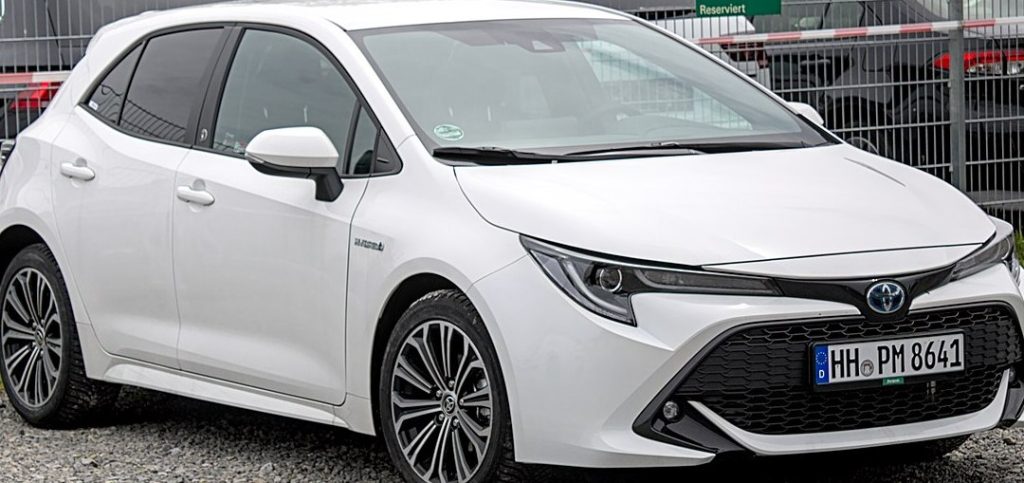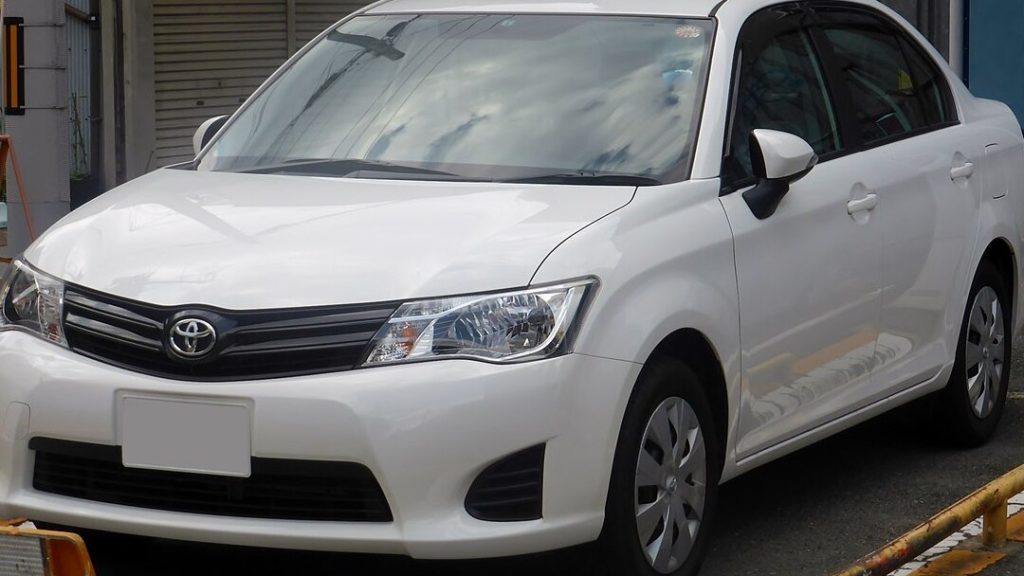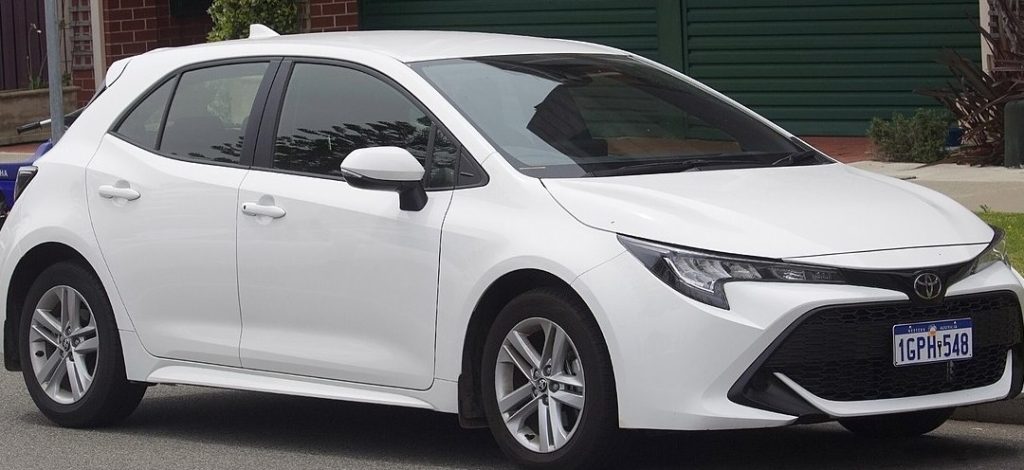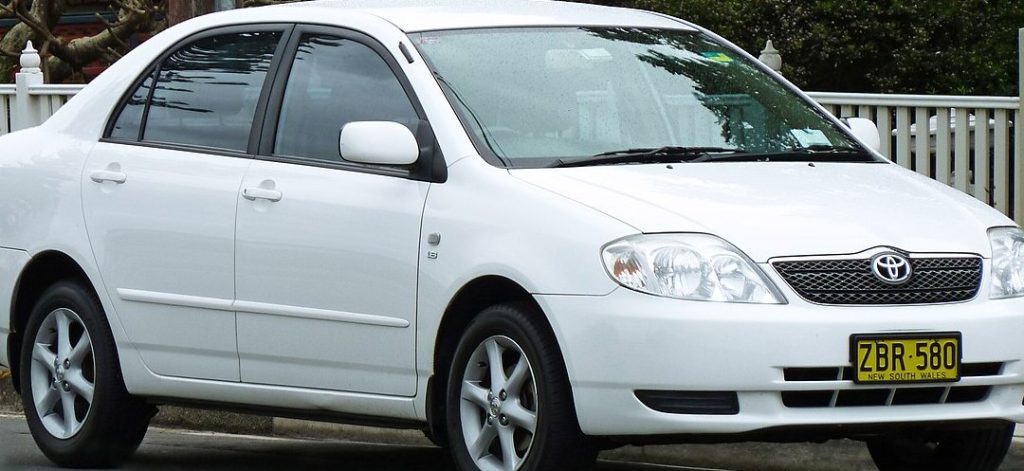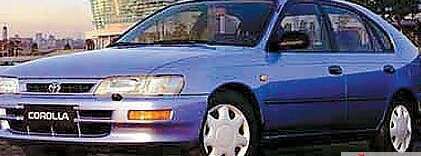
The Toyota Corolla E100, produced from 1992 to 1995, represented the seventh generation of Toyota’s globally successful Corolla line. Within this generation, the 1.3 i XLi variant occupied an entry-level position, offering a balance of affordability and practicality for the European and Asian markets. This model was designed to appeal to buyers seeking economical transportation with the added convenience of a hatchback body style. The E100 series was a significant step forward for Toyota, incorporating improved styling, safety features, and a more refined driving experience compared to its predecessor. The 1.3 i XLi, with its 88 horsepower engine, was a popular choice for first-time car buyers and those prioritizing fuel efficiency.
Technical Specifications
| Brand | Toyota |
| Model | Corolla |
| Generation | Corolla Hatch VII (E100) |
| Type (Engine) | 1.3 i XLi (88 Hp) |
| Start of production | 1992 |
| End of production | 1995 |
| Powertrain Architecture | Internal Combustion engine |
| Body type | Hatchback |
| Seats | 5 |
| Doors | 5 |
| Fuel consumption (combined) | 6.7 l/100 km (35.1 US mpg, 42.2 UK mpg, 14.9 km/l) |
| Fuel Type | Petrol (Gasoline) |
| Acceleration 0 – 100 km/h | 11.5 sec |
| Acceleration 0 – 62 mph | 11.5 sec |
| Acceleration 0 – 60 mph | 10.9 sec |
| Maximum speed | 175 km/h (108.74 mph) |
| Weight-to-power ratio | 11.9 kg/Hp, 83.8 Hp/tonne |
| Weight-to-torque ratio | 8.5 kg/Nm, 117.1 Nm/tonne |
| Power | 88 Hp @ 6000 rpm |
| Power per litre | 67.7 Hp/l |
| Torque | 123 Nm @ 4400 rpm (90.72 lb.-ft. @ 4400 rpm) |
| Engine layout | Front, Transverse |
| Engine Model/Code | 2E-E |
| Engine displacement | 1299 cm3 (79.27 cu. in.) |
| Number of cylinders | 4 |
| Engine configuration | Inline |
| Cylinder Bore | 75 mm (2.95 in.) |
| Piston Stroke | 73.5 mm (2.89 in.) |
| Compression ratio | 10.5:1 |
| Number of valves per cylinder | 4 |
| Fuel injection system | Multi-port manifold injection |
| Engine aspiration | Naturally aspirated engine |
| Valvetrain | DOHC |
| Engine oil capacity | 3.2 l (3.38 US qt | 2.82 UK qt) |
| Coolant | 5 l (5.28 US qt | 4.4 UK qt) |
| Kerb Weight | 1050 kg (2314.85 lbs.) |
| Max. weight | 1555 kg (3428.19 lbs.) |
| Max load | 505 kg (1113.33 lbs.) |
| Trunk (boot) space – minimum | 400 l (14.13 cu. ft.) |
| Trunk (boot) space – maximum | 845 l (29.84 cu. ft.) |
| Fuel tank capacity | 50 l (13.21 US gal | 11 UK gal) |
| Length | 4295 mm (169.09 in.) |
| Width | 1685 mm (66.34 in.) |
| Height | 1375 mm (54.13 in.) |
| Wheelbase | 2465 mm (97.05 in.) |
| Front track | 1460 mm (57.48 in.) |
| Rear (Back) track | 1450 mm (57.09 in.) |
| Drivetrain Architecture | The Internal combustion engine (ICE) drives the front wheels of the vehicle. |
| Drive wheel | Front wheel drive |
| Number of gears and type of gearbox | 5 gears, manual transmission |
| Front suspension | Spring Strut |
| Rear suspension | Spring Strut |
| Front brakes | Ventilated discs |
| Rear brakes | Drum |
| Assisting systems | ABS (Anti-lock braking system) |
| Steering type | Steering rack and pinion |
| Power steering | Hydraulic Steering |
| Tires size | 165/70 R14 T |
Powertrain & Engine Architecture
The heart of the 1.3 i XLi was the 2E-E engine, a 1.3-liter inline-four cylinder gasoline engine. This engine was a staple in Toyota’s lineup during the early 1990s, known for its reliability and fuel efficiency. The 2E-E featured a double overhead camshaft (DOHC) valvetrain, operating four valves per cylinder, which helped to improve breathing and overall performance. Fuel delivery was handled by a multi-port fuel injection system, providing precise fuel metering for optimal combustion. The engine produced 88 horsepower at 6000 rpm and 123 Nm (90.72 lb-ft) of torque at 4400 rpm. This power was transmitted to the front wheels through a five-speed manual transmission, the standard configuration for this trim level. The engine’s relatively simple design contributed to its longevity and ease of maintenance.
Driving Characteristics
The 1.3 i XLi, with its 88 horsepower and five-speed manual transmission, offered adequate, though not exhilarating, performance. Acceleration from 0 to 60 mph took approximately 10.9 seconds, and the top speed was around 108.74 mph. The engine felt responsive enough for everyday driving, but lacked the punch of larger-displacement engines offered in the Corolla range. The five-speed gearbox was well-matched to the engine’s characteristics, allowing drivers to keep the engine in its optimal power band. Compared to higher-spec Corollas with larger engines, the 1.3 i XLi prioritized fuel economy over outright speed. The steering was light and precise, making it easy to maneuver in urban environments. The suspension provided a comfortable ride, absorbing bumps and imperfections in the road surface effectively.
Equipment & Trim Levels
The 1.3 i XLi trim level represented a step up from the base Corolla models, offering a reasonable level of standard equipment. Interior features typically included cloth upholstery, a basic stereo system, and manual windows and door locks. Power steering was standard, enhancing the driving experience. The dashboard layout was functional and straightforward, with clearly labeled controls. Optional extras available for the 1.3 i XLi included air conditioning, upgraded stereo systems, and alloy wheels. The XLi designation indicated a slightly more refined interior finish compared to the base models.
Chassis & Braking
The Corolla E100 utilized a front-engine, front-wheel-drive layout. The suspension consisted of MacPherson strut coil springs in the front and a torsion beam setup in the rear. This configuration provided a good balance of ride comfort and handling. Braking duties were handled by ventilated discs in the front and drum brakes in the rear. An Anti-lock Braking System (ABS) was included as standard equipment, enhancing safety by preventing wheel lockup during hard braking. The chassis was relatively lightweight, contributing to the car’s fuel efficiency and agility.
Market Reception & Comparison
The 1.3 i XLi was generally well-received by automotive critics as a practical and economical choice. It was praised for its reliability, fuel efficiency, and ease of driving. However, some critics noted that the engine lacked power, particularly when fully loaded or driving uphill. Compared to other trims in the Corolla lineup, such as the 1.6-liter models, the 1.3 i XLi offered lower running costs but sacrificed performance. Its fuel economy of around 35.1 US mpg was a significant selling point, making it an attractive option for budget-conscious buyers. The 1.3 i XLi competed with other small hatchbacks in the European and Asian markets, such as the Volkswagen Polo and the Ford Fiesta.
Legacy
The Toyota Corolla E100 1.3 i XLi has proven to be a remarkably durable and reliable vehicle. Many examples are still on the road today, a testament to Toyota’s engineering quality. The 2E-E engine is known for its longevity and relatively low maintenance costs. In the used car market, these Corollas are often sought after by buyers looking for affordable and dependable transportation. While not a performance icon, the 1.3 i XLi holds a significant place in automotive history as a representative of Toyota’s commitment to building practical, reliable, and fuel-efficient vehicles.