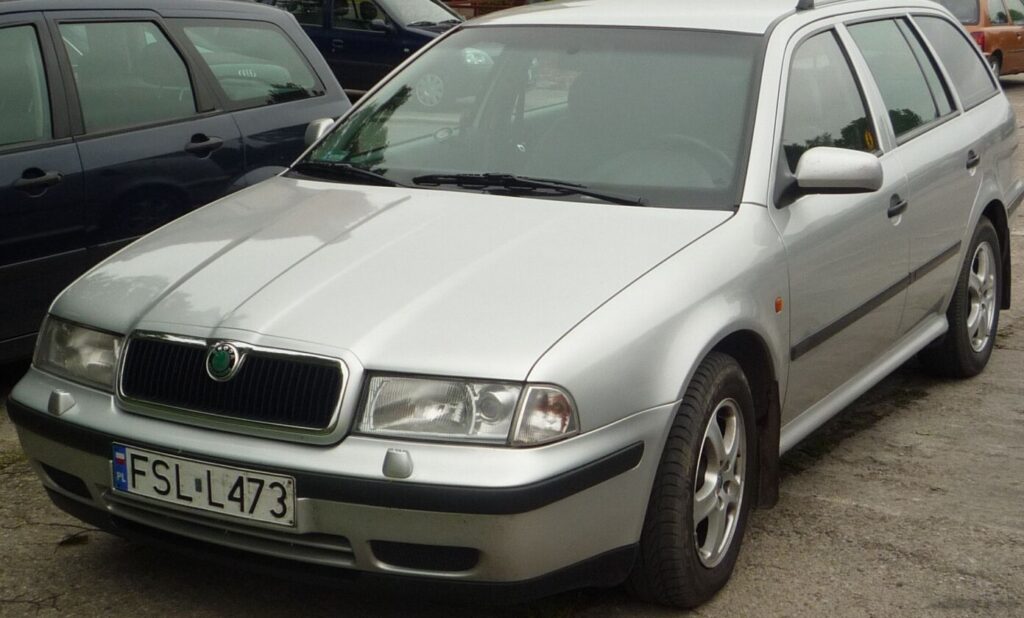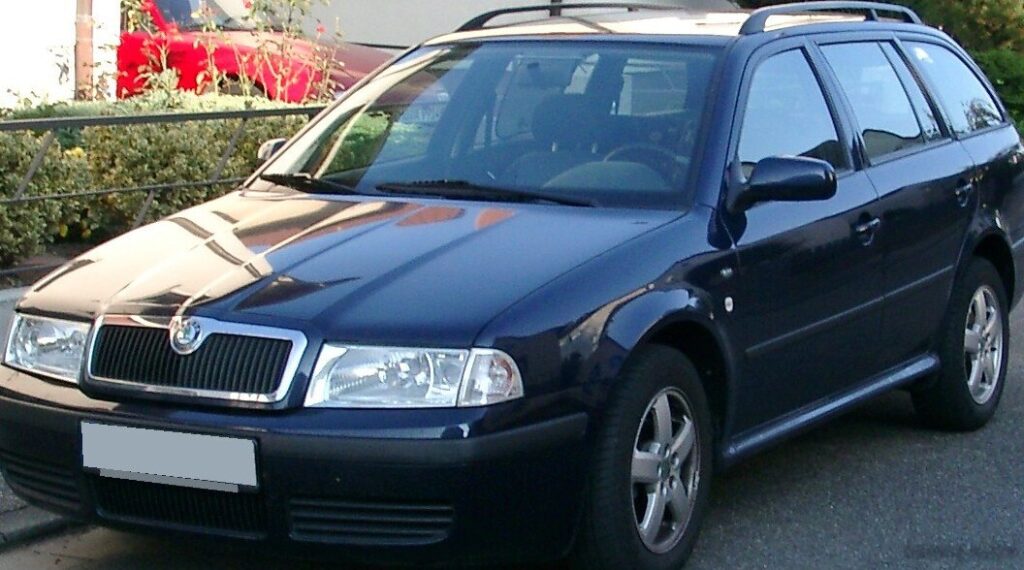
The Skoda Octavia I Combi Tour, specifically the 2.0 (115 hp) 4×4 variant produced from 2000 to 2010, represents a significant offering in Skoda’s lineup during that period. This model, part of the facelifted first-generation Octavia (designated 1HX0/A3), aimed to provide a practical and affordable all-wheel-drive station wagon option for European families and those needing a versatile vehicle. It slotted into the Octavia range as a mid-to-upper trim level, offering enhanced capability compared to front-wheel-drive models while remaining more accessible than the higher-performance variants.
Technical Specifications
| Brand | Skoda |
| Model | Octavia |
| Generation | Octavia I Combi Tour (facelift 2000) |
| Type (Engine) | 2.0 (115 Hp) 4×4 |
| Start of production | 2000 year |
| End of production | 2010 year |
| Powertrain Architecture | Internal Combustion engine |
| Body type | Station wagon (estate) |
| Seats | 5 |
| Doors | 5 |
| Fuel consumption (economy) – urban | 11.7 l/100 km (20.1 US mpg, 24.1 UK mpg, 8.5 km/l) |
| Fuel consumption (economy) – extra urban | 7 l/100 km (33.6 US mpg, 40.4 UK mpg, 14.3 km/l) |
| Fuel consumption (economy) – combined | 8.7 l/100 km (27 US mpg, 32.5 UK mpg, 11.5 km/l) |
| Fuel Type | Petrol (Gasoline) |
| Acceleration 0 – 100 km/h | 11.8 sec |
| Acceleration 0 – 62 mph | 11.8 sec |
| Acceleration 0 – 60 mph | 11.2 sec |
| Maximum speed | 193 km/h (119.92 mph) |
| Weight-to-power ratio | 12.6 kg/Hp, 79.3 Hp/tonne |
| Weight-to-torque ratio | 8.5 kg/Nm, 117.2 Nm/tonne |
| Power | 115 Hp @ 5400 rpm |
| Power per litre | 58 Hp/l |
| Torque | 170 Nm @ 2400 rpm (125.39 lb.-ft. @ 2400 rpm) |
| Engine layout | Front, Transverse |
| Engine Model/Code | AEG, APK, AQY, AZH, AZJ |
| Engine displacement | 1984 cm3 (121.07 cu. in.) |
| Number of cylinders | 4 |
| Engine configuration | Inline |
| Cylinder Bore | 82.5 mm (3.25 in.) |
| Piston Stroke | 92.8 mm (3.65 in.) |
| Compression ratio | 10.5:1 |
| Number of valves per cylinder | 2 |
| Fuel injection system | Multi-port manifold injection |
| Engine aspiration | Naturally aspirated engine |
| Valvetrain | OHC |
| Engine oil capacity | 4 l (4.23 US qt | 3.52 UK qt) |
| Coolant | 6.5 l (6.87 US qt | 5.72 UK qt) |
| Kerb Weight | 1450 kg (3196.7 lbs.) |
| Max. weight | 1925 kg (4243.9 lbs.) |
| Max load | 475 kg (1047.2 lbs.) |
| Trunk (boot) space – minimum | 448 l (15.82 cu. ft.) |
| Trunk (boot) space – maximum | 1412 l (49.86 cu. ft.) |
| Fuel tank capacity | 55 l (14.53 US gal | 12.1 UK gal) |
| Length | 4513 mm (177.68 in.) |
| Width | 1731 mm (68.15 in.) |
| Height | 1481 mm (58.31 in.) |
| Wheelbase | 2518 mm (99.13 in.) |
| Front track | 1516 mm (59.69 in.) |
| Rear (Back) track | 1486 mm (58.5 in.) |
| Drive wheel | All wheel drive (4×4) |
| Number of gears and type of gearbox | 5 gears, manual transmission |
| Front suspension | Wishbone |
| Rear suspension | Coil spring |
| Front brakes | Ventilated discs |
| Rear brakes | Disc |
| Assisting systems | ABS (Anti-lock braking system) |
| Steering type | Steering rack and pinion |
| Power steering | Hydraulic Steering |
| Tires size | 195/65 R15 |
Powertrain & Engine Architecture
The heart of the Octavia Combi Tour 2.0 4×4 is the 1984cc inline-four cylinder petrol engine. This engine, identified by codes such as AEG, APK, AQY, AZH, and AZJ, is a naturally aspirated unit featuring a single overhead camshaft (OHC) and two valves per cylinder. It utilizes a multi-port fuel injection system, a common setup for engines of this era, providing adequate fuel delivery for its power output. The engine’s 10.5:1 compression ratio contributes to its efficiency and performance. The 115 horsepower peak is achieved at 5400 rpm, while the 170 Nm (125 lb-ft) of torque is available at 2400 rpm. This torque curve provides reasonable pulling power for everyday driving. The engine is transversely mounted in the front of the vehicle. The 4×4 system utilizes a viscous coupling to distribute power between the front and rear axles, providing all-weather traction without a dedicated transfer case.
Driving Characteristics
The 2.0-liter, 115 hp engine paired with a five-speed manual transmission delivers a respectable, though not exhilarating, driving experience. Acceleration from 0 to 60 mph takes around 11.2 seconds, and the top speed is approximately 119.92 mph. Compared to the more powerful variants, such as those with the 1.8T turbo engine, this version feels less responsive. However, it offers a smoother and more predictable power delivery, making it well-suited for everyday commuting and long journeys. The all-wheel-drive system provides enhanced stability and grip, particularly on slippery surfaces. The gear ratios are tuned for a balance between fuel economy and usability, with fifth gear being geared for comfortable highway cruising. The manual transmission provides a direct connection to the engine, allowing for greater control.
Equipment & Trim Levels
The Octavia Combi Tour 2.0 4×4 typically came equipped with a reasonable level of standard features. These included power windows, central locking, an adjustable steering column, and ABS brakes. Interior upholstery was generally cloth, with options for upgraded materials available. Depending on the specific market and optional packages, features like air conditioning, alloy wheels, a radio/cassette player (later upgraded to CD players), and even rudimentary navigation systems could be added. The trim level generally sat in the mid-range of the Octavia lineup, offering a step up from the base models in terms of features and capability.
Chassis & Braking
The Octavia Combi Tour utilizes a front wishbone suspension and a rear coil spring setup. This configuration provides a comfortable ride quality while maintaining reasonable handling characteristics. The all-wheel-drive system adds weight, which slightly impacts handling agility compared to front-wheel-drive models. The braking system consists of ventilated discs on the front wheels and solid discs on the rear. ABS (Anti-lock Braking System) is standard, enhancing braking performance and safety. The hydraulic power steering provides a light and responsive feel.
Market Reception & Comparison
The Octavia Combi Tour 2.0 4×4 was generally well-received by automotive critics as a practical and capable family vehicle. It was praised for its spacious interior, large cargo area, and all-weather traction. However, some reviewers noted that the engine lacked the punch of the turbocharged options. Fuel economy was considered average for its class. Compared to the 1.8T variants, the 2.0 4×4 offered a more affordable entry point to all-wheel-drive ownership, but at the expense of performance. Compared to the diesel models (like the 1.9 TDI), it offered a smoother and quieter driving experience, but with lower fuel economy.
Legacy
The Skoda Octavia I Combi Tour 2.0 4×4 has proven to be a relatively reliable vehicle, with the 2.0-liter engine being known for its durability. Common maintenance items include regular oil changes, timing belt replacements (critical for this engine), and inspection of the cooling system. In the used car market today, these Octavias are often sought after by those looking for an affordable and practical all-wheel-drive station wagon. While not a performance icon, it remains a solid and dependable choice for those prioritizing functionality and value. Parts availability is generally good, and the relatively simple mechanical design makes it accessible for DIY repairs.