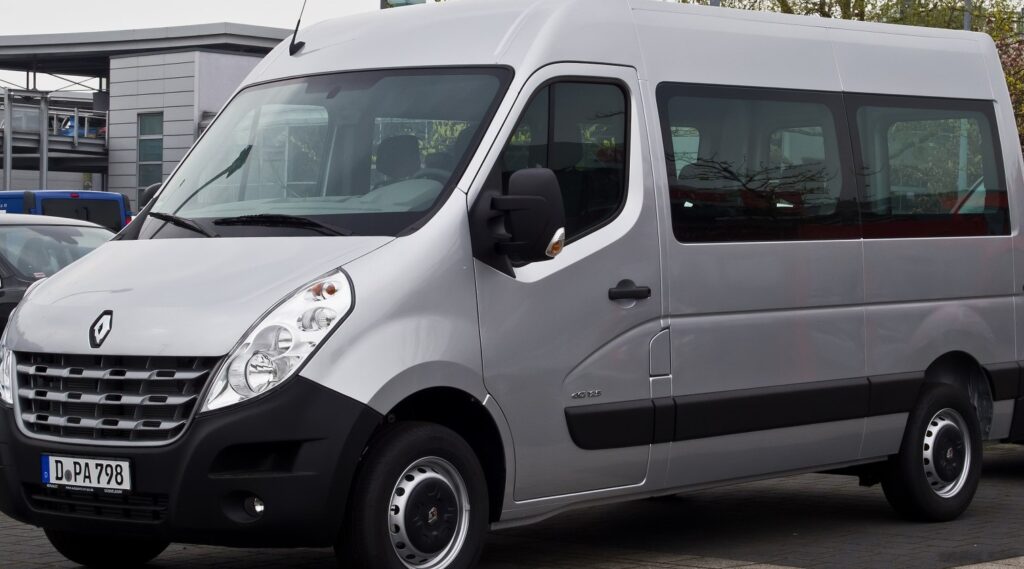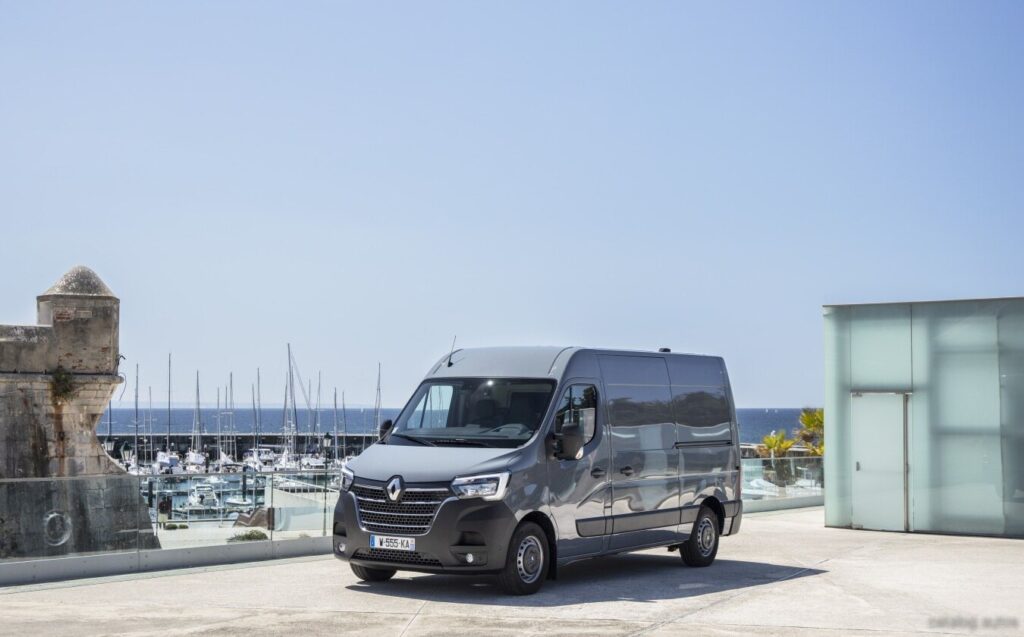
The Renault Master III Phase III (2019) Panel Van, specifically the 33 kWh (76 horsepower) L1H1 Direct Drive variant, represents Renault’s entry into the burgeoning electric commercial vehicle market. Introduced as part of the Phase III refresh of the third-generation Master, this model aimed to provide a zero-emission solution for urban delivery and logistics, particularly within European cities increasingly focused on reducing air pollution. Production began in 2019, and it slots into the Master lineup as the base-level electric offering, designed for businesses prioritizing environmental responsibility and short-to-medium range applications. The L1H1 designation refers to the vehicle’s body length and roof height – a relatively compact configuration within the broader Master range.
Technical Specifications
| Brand | Renault |
| Model | Master |
| Generation | Master III (Phase III, 2019) Panel Van |
| Type (Engine) | 33 kWh (76 Hp) L1H1 Direct Drive |
| Start of production | 2019 |
| Powertrain Architecture | BEV (Electric Vehicle) |
| Body type | Minivan, MPV |
| Seats | 2-3 |
| Doors | 4 |
| Fuel Type | Electricity |
| Maximum speed | 100 km/h (62.14 mph) |
| Emission standard | EURO 6 |
| Weight-to-power ratio | 26.6 kg/Hp, 37.6 Hp/tonne |
| Gross battery capacity | 33 kWh |
| All-electric range | 124 km (77.05 mi) |
| Electric motor power | 76 Hp |
| Electric motor Torque | 225 Nm (165.95 lb.-ft.) |
| System power | 76 Hp |
| Kerb Weight | 2022 kg (4457.75 lbs.) |
| Max. weight | 3100 kg (6834.33 lbs.) |
| Max load | 1078 kg (2376.58 lbs.) |
| Trunk (boot) space – maximum | 8000 l (282.52 cu. ft.) |
| Length | 5075 mm (199.8 in.) |
| Width | 2070 mm (81.5 in.) |
| Width including mirrors | 2470 mm (97.24 in.) |
| Height | 2307 mm (90.83 in.) |
| Wheelbase | 3182 mm (125.28 in.) |
| Front track | 1750 mm (68.9 in.) |
| Rear (Back) track | 1730 mm (68.11 in.) |
| Front overhang | 869 mm (34.21 in.) |
| Rear overhang | 1024 mm (40.31 in.) |
| Ride height (ground clearance) | 182 mm (7.17 in.) |
| Minimum turning circle (turning diameter) | 12.5 m (41.01 ft.) |
| Drivetrain Architecture | One electric motor drives the front wheels. |
| Drive wheel | Front wheel drive |
| Number of gears and type of gearbox | 1 gears, automatic transmission Direct Drive |
| Front brakes | Disc, 305×12 mm |
| Rear brakes | Disc, 302×28 mm |
| Tires size | 215/65 R16C |
| Wheel rims size | 16 |
Powertrain & Engine Architecture
The Renault Master III 33 kWh utilizes a fully electric powertrain. At its heart is a single electric motor producing 76 horsepower and 225 Nm (165.95 lb.-ft.) of torque. This motor is directly coupled to the front wheels via a single-speed “Direct Drive” transmission – essentially a reduction gear, eliminating the need for traditional multi-gear setups found in internal combustion engine vehicles. The 33 kWh battery pack, composed of lithium-ion cells, is mounted under the vehicle floor, contributing to a lower center of gravity. The charging system supports both AC and DC charging, allowing for flexibility in refueling options. The vehicle’s electronic control unit (ECU) manages the power delivery, regenerative braking, and overall system efficiency. The direct drive system simplifies the powertrain, reducing mechanical losses and contributing to the vehicle’s overall efficiency, albeit at the expense of outright acceleration.
Driving Characteristics
The 76 horsepower output and single-speed transmission result in a driving experience geared towards practicality rather than performance. Acceleration is modest, particularly when fully loaded. The immediate torque delivery characteristic of electric motors provides adequate responsiveness for urban driving, but overtaking maneuvers require careful planning. The Direct Drive transmission means there’s no gear shifting, offering a smooth and linear power delivery. The limited range of 124 km (77.05 miles) necessitates careful route planning and is best suited for short-haul deliveries or inner-city operations. Compared to the diesel-powered Master variants, the electric version offers a quieter and smoother ride, with the absence of engine noise and vibrations. However, the reduced power output and range are noticeable differences.
Equipment & Trim Levels
The 33 kWh L1H1 Master typically came with a functional, rather than luxurious, standard equipment list. Essential features included a driver’s airbag, ABS brakes, and basic infotainment system with Bluetooth connectivity. The cabin typically featured durable, easy-to-clean plastic trim and cloth upholstery. Optional extras included air conditioning, a rearview camera, parking sensors, and upgraded infotainment systems with navigation. The focus was on providing a practical and cost-effective work vehicle, so creature comforts were often kept to a minimum. Trim levels were generally limited, with the emphasis on providing a base level of functionality for commercial operators.
Chassis & Braking
The Master III utilizes a front-wheel-drive chassis with independent suspension at the front and a leaf spring suspension at the rear. The front brakes are disc brakes (305x12mm), while the rear brakes are also disc brakes (302x28mm). This configuration is typical for light commercial vehicles in this weight class. Stabilizer bars are fitted to both the front and rear axles to reduce body roll during cornering. The suspension is tuned for a balance between ride comfort and load-carrying capacity. The relatively low weight of the battery pack compared to a diesel engine contributes to a slightly lower center of gravity, improving handling stability.
Market Reception & Comparison
The Renault Master Electric received generally positive reviews for its practicality and zero-emission capabilities. Critics praised its quiet operation and smooth driving experience, but noted the limited range as a potential drawback for some applications. Compared to the diesel-powered Master variants, the electric version offered lower running costs due to reduced fuel and maintenance expenses. However, the higher initial purchase price was a significant barrier to entry for some businesses. Compared to competitors like the Fiat Ducato Electric and Peugeot Boxer Electric, the Master Electric offered a competitive range and payload capacity, but often lagged behind in terms of available technology and features.
Legacy
The Renault Master III Electric, including the 33 kWh variant, played a crucial role in establishing Renault as a key player in the electric commercial vehicle segment. While the 33 kWh version has been superseded by models with larger battery packs and increased range, it remains a viable option in the used market for businesses with short-range delivery needs. The powertrain, while relatively simple, has proven to be reasonably reliable, with reports of few major issues. The vehicle’s contribution lies in paving the way for wider adoption of electric vans and demonstrating the feasibility of zero-emission logistics solutions. As urban emission zones become more prevalent, the demand for vehicles like the Master Electric is likely to increase, ensuring its continued relevance in the years to come.