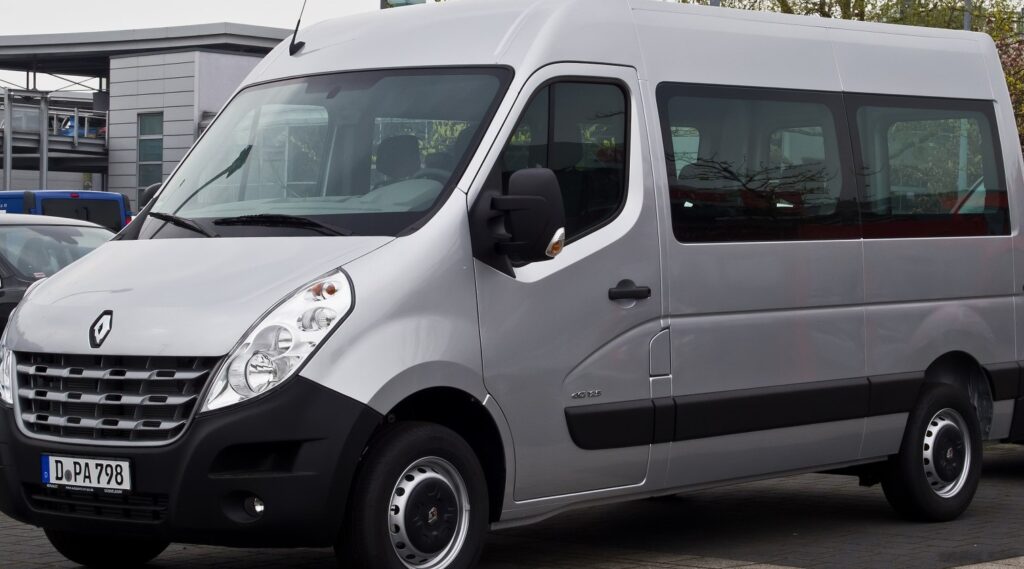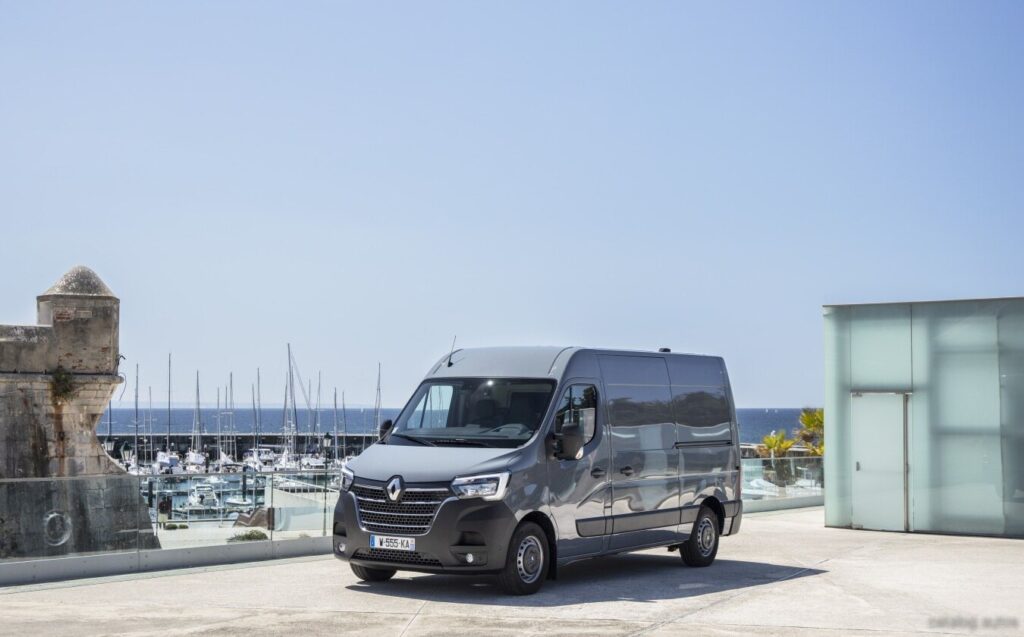
The Renault Master III Phase III (2019) Panel Van, specifically the 33 kWh (76 hp) L2H2 Direct Drive variant, represents Renault’s entry into the burgeoning electric commercial vehicle market. Introduced in 2019 as part of the broader Master III refresh, this model aimed to provide a zero-emission solution for last-mile delivery and urban transport. The L2H2 designation refers to the van’s body length and roof height, indicating a medium-length wheelbase and a high roof. This particular configuration was positioned as a practical and economical option for businesses seeking to reduce their carbon footprint without sacrificing cargo capacity.
The powertrain of the 33 kWh Master is entirely electric, utilizing a single electric motor driving the front wheels. This configuration differs significantly from the diesel-powered versions of the Master III. The electric motor produces 76 horsepower and 225 Nm (165.95 lb-ft) of torque. Power is delivered through a single-speed, direct drive automatic transmission, simplifying operation and maximizing efficiency. The 33 kWh battery pack provides a real-world all-electric range of approximately 124 km (77.05 miles), making it suitable for shorter delivery routes and urban environments. The vehicle adheres to the EURO 6 emission standard, though as a fully electric vehicle, it produces zero tailpipe emissions.
Driving the 33 kWh Master is characterized by its smooth and quiet operation, typical of electric vehicles. Acceleration is modest, reflecting the 76 hp output, but the instant torque delivery of the electric motor provides adequate performance for city driving and moderate loads. The direct drive transmission contributes to a seamless driving experience, lacking the gear changes found in conventional automatic transmissions. Compared to the diesel-powered Master variants, the electric version offers a significantly different driving experience, prioritizing quietness and ease of use over outright speed and towing capacity. The weight-to-power ratio is 27.6 kg/hp, and 36.3 hp/tonne.
The 33 kWh L2H2 Master Panel Van typically came equipped with a functional, work-oriented interior. Standard features included a driver and optional dual passenger seat configuration, basic infotainment system, and essential safety equipment. Interior trim was durable and designed for practicality rather than luxury. Optional extras included features like parking sensors, a rearview camera, and upgraded infotainment systems with navigation. The focus was on providing a comfortable and efficient workspace for drivers.
The chassis of the electric Master utilizes a similar suspension setup to its diesel counterparts, featuring a MacPherson strut front suspension and a leaf spring rear suspension. Braking is handled by disc brakes on all four wheels, with 305x12mm discs at the front and 302x28mm discs at the rear. The van rides on 215/65 R16C tires mounted on 16-inch steel wheels. The suspension is tuned to balance ride comfort with load-carrying capability, and the braking system is adequate for the vehicle’s weight and performance.
Initial reception to the 33 kWh Master was generally positive, with critics praising its zero-emission credentials and suitability for urban delivery applications. However, the limited range of 124 km was a common point of criticism, particularly for businesses requiring longer routes. Fuel economy, expressed as energy consumption, was a key selling point, offering significantly lower running costs compared to diesel equivalents. Reliability reports have been relatively limited due to the relatively recent introduction of the electric Master, but early indications suggest that the powertrain is robust and dependable. Compared to the 1.3L and 2.3L diesel versions, the electric Master offered a quieter, cleaner, and more environmentally friendly alternative, albeit with a reduced range and payload capacity.
| Maximum speed | 100 km/h (62.14 mph) |
| Gross battery capacity | 33 kWh |
| All-electric range | 124 km (77.05 mi) |
| Electric motor power | 76 Hp |
| Electric motor Torque | 225 Nm (165.95 lb.-ft.) |
| Kerb Weight | 2094 kg (4616.48 lbs.) |
| Max. weight | 3100 kg (6834.33 lbs.) |
| Max load | 1006 kg (2217.85 lbs.) |
| Trunk (boot) space – maximum | 10800 l (381.4 cu. ft.) |
| Length | 5575 mm (219.49 in.) |
| Width | 2070 mm (81.5 in.) |
| Width including mirrors | 2470 mm (97.24 in.) |
| Height | 2499 mm (98.39 in.) |
| Wheelbase | 3682 mm (144.96 in.) |
| Drive wheel | Front wheel drive |
| Number of gears and type of gearbox | 1 gears, automatic transmission Direct Drive |
The Renault Master III 33 kWh electric panel van occupies a unique position in the used commercial vehicle market. As businesses increasingly adopt electric fleets, demand for these early electric vans is expected to grow. While the limited range may restrict its appeal to certain applications, its affordability and zero-emission operation make it an attractive option for urban delivery services and environmentally conscious businesses. The longevity of the battery pack remains a key consideration for potential buyers, but Renault’s battery warranty and the increasing availability of battery refurbishment services offer some reassurance. The 33 kWh Master represents a significant step in Renault’s transition towards a more sustainable commercial vehicle lineup.