
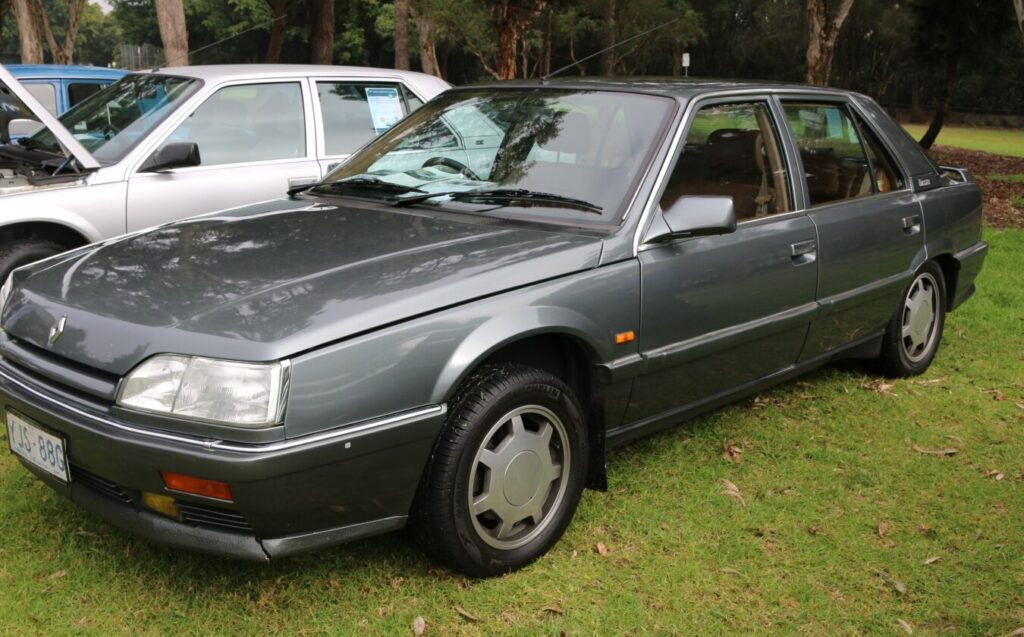
The Renault 25 (B29) 2.1 Diesel, designated internally as B296, was a variant of the Renault 25 large family car produced between 1984 and 1989. Positioned as the entry-level model in the 25 range, it offered a more economical alternative to the gasoline-powered versions, targeting buyers prioritizing fuel efficiency and lower running costs. The B29 series Renault 25 represented Renault’s attempt to compete in the executive car segment, offering a spacious interior and a relatively modern design for its time. The 2.1 Diesel model was particularly significant as it broadened the appeal of the 25 to a wider audience, including those who covered high annual mileages.
The B296 variant was powered by a 2.1-liter naturally aspirated diesel engine, identified by engine codes J8S-G.706 and J8S-H.708. This engine was an inline-four cylinder unit, utilizing indirect injection. Unlike many contemporary diesel engines, it did not employ turbocharging, resulting in a modest power output. The fuel injection system was a mechanical, inline pump design, typical for diesel engines of that era. The engine featured a single overhead camshaft (SOHC) valvetrain operating two valves per cylinder. The engine was coupled to a four-speed automatic transmission, a relatively uncommon feature for diesel-powered cars in the mid-1980s, and a key selling point for buyers seeking convenience. The automatic transmission was designed to provide smooth, if not particularly rapid, gear changes, prioritizing comfort over performance.
Driving the 2.1 Diesel automatic Renault 25 was characterized by relaxed, unhurried progress. With a peak output of 63 horsepower, acceleration was modest, and overtaking required careful planning. The automatic transmission, while convenient, contributed to a noticeable delay in response compared to the available manual transmission options in other 25 models. Gear ratios were optimized for fuel economy rather than outright performance. The engine delivered its peak torque at relatively low engine speeds, providing adequate pulling power for cruising on motorways, but struggled when faced with steep inclines or a fully loaded vehicle. Compared to the 2.0-liter gasoline engines available in the Renault 25, the diesel offered significantly less power but substantially better fuel economy.
The B296 2.1 Diesel typically came with a fairly basic level of equipment, reflecting its position as the entry-level model. Standard features generally included cloth upholstery, a basic instrument panel, and manual windows. Air conditioning and central locking were often optional extras. Interior trim was functional and durable, prioritizing practicality over luxury. Dashboard configuration was consistent across the 25 range, featuring a straightforward layout with clearly marked gauges. Optional extras included a sunroof, upgraded audio systems, and metallic paint finishes. The overall interior ambiance was typical of European cars of the period – functional and well-built, but lacking the lavish appointments found in some of its German competitors.
The Renault 25 B296 utilized a conventional chassis layout with independent front suspension and a torsion beam rear axle. Front suspension consisted of MacPherson struts with anti-roll bar, while the rear employed a simple, yet effective, torsion beam setup. Braking was typically accomplished with disc brakes on the front wheels and drum brakes on the rear. The braking system was hydraulically assisted, providing adequate stopping power for normal driving conditions. Stabilizer bars were fitted to both the front and rear axles to reduce body roll during cornering. The suspension setup was tuned for comfort, providing a relatively smooth ride quality, although it could feel somewhat wallowy when pushed hard.
Contemporary reviews of the Renault 25 2.1 Diesel automatic generally praised its fuel economy and comfortable ride, but criticized its lack of performance. It was seen as a sensible and practical choice for those prioritizing economy over excitement. Compared to the gasoline-powered Renault 25 models, the diesel offered significantly better fuel consumption, making it an attractive option for high-mileage drivers. However, the diesel engine was noticeably noisier and less refined than its gasoline counterparts. Reliability was generally good, although the mechanical fuel injection system required periodic maintenance. The automatic transmission, while convenient, was sometimes criticized for its sluggishness.
| Brand | Renault |
| Model | 25 |
| Generation | 25 (B29) |
| Type (Engine) | 2.1 Diesel (B296) (63 Hp) |
| Start of production | 1984 |
| End of production | 1989 |
| Powertrain Architecture | Internal Combustion engine |
| Body type | Hatchback |
| Seats | 5 |
| Doors | 5 |
| Fuel Type | Diesel |
| Power | 63 Hp |
| Engine Model/Code | J8S-G.706, J8S-H.708 |
| Engine aspiration | Naturally aspirated engine |
| Engine oil capacity | 6 l (6.34 US qt | 5.28 UK qt) |
| Coolant capacity | 7.5 l (7.93 US qt | 6.6 UK qt) |
| Fuel tank capacity | 67 l (17.7 US gal | 14.74 UK gal) |
Today, the Renault 25 2.1 Diesel (B296) is a relatively rare sight. The diesel engine, while robust, is showing its age, and parts availability can be challenging. The automatic transmission, if neglected, can be prone to issues. However, well-maintained examples are sought after by enthusiasts and collectors, particularly those interested in preserving a piece of 1980s French automotive history. The 2.1 Diesel powertrain, while not known for its performance, is generally considered reliable and durable, making it a viable option for those seeking a classic car with relatively low running costs. Its legacy lies in offering an economical and practical alternative within the Renault 25 range, broadening the car’s appeal to a wider range of buyers.
