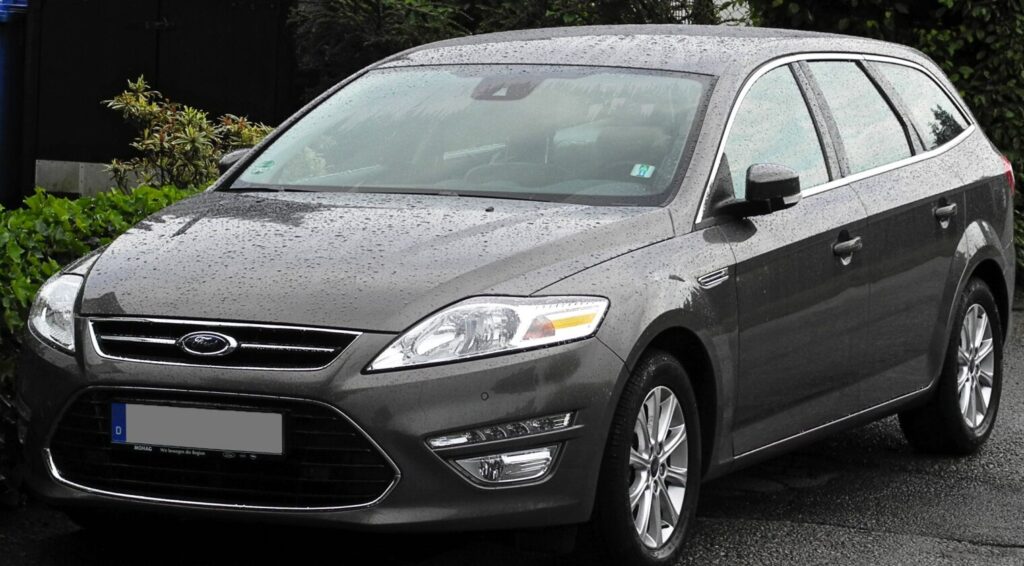
The Ford Mondeo III Wagon, specifically the facelifted version introduced in December 2010 and continuing through August 2014, represented a significant update to Ford’s mid-size family car. Among the engine options available, the 1.6 EcoBoost variant producing 160 horsepower became a popular choice, particularly in European markets. This version occupied a middle ground in the Mondeo lineup, offering a balance between performance, fuel efficiency, and affordability. It sat below the more powerful 2.0-liter EcoBoost and diesel options, and above the base 1.6-liter naturally aspirated engine.
The 1.6 EcoBoost engine, designated with the JTBB engine code, was a key component of Ford’s efforts to downsize and turbocharge its engines for improved efficiency. This 1596cc inline-four cylinder engine featured direct fuel injection and a single turbocharger with an intercooler. The direct injection system allowed for precise fuel delivery, optimizing combustion and contributing to both power and economy. The engine utilized a four-valve-per-cylinder configuration, enhancing breathing and overall performance. The engine’s oil capacity was 4.7 liters (4.97 US quarts / 4.14 UK quarts) and required a specific oil specification, while the cooling system held 6.5 liters (6.87 US quarts / 5.72 UK quarts). A Start & Stop system was included as standard, further enhancing fuel savings during urban driving.
In real-world driving, the 160 hp 1.6 EcoBoost Mondeo Wagon provided adequate performance for everyday use. Acceleration from 0 to 62 mph (0-100 km/h) took approximately 9.6 seconds, and it could reach a top speed of 129.87 mph (209 km/h). While not as quick as the higher-powered versions, the turbocharger provided a noticeable boost in torque, making overtaking maneuvers relatively effortless. The engine delivered its peak torque of 240 Nm (177.01 lb-ft) between 1600 and 4000 rpm, offering a broad and usable powerband. The six-speed manual transmission allowed drivers to effectively manage the engine’s power, although an automatic transmission was also available as an option.
The 1.6 EcoBoost Mondeo Wagon typically came equipped with a reasonable level of standard features. Interior appointments included comfortable cloth upholstery, a functional dashboard layout, and air conditioning. Depending on the trim level (often designated as LX, Zetec, or Titanium), additional features such as alloy wheels, a CD/radio system with auxiliary input, electric windows, and power-adjustable mirrors were available. Optional extras included a navigation system, leather upholstery, heated front seats, and a panoramic sunroof. The wagon body style offered a generous amount of cargo space, ranging from 489 liters (17.27 cu ft) with the rear seats up to 1680 liters (59.33 cu ft) with the seats folded down.
The Mondeo Wagon’s chassis featured independent suspension on both the front and rear axles. The front suspension utilized a McPherson strut design with a coil spring and anti-roll bar, while the rear employed a multi-link setup, also with a stabilizer bar. This configuration provided a comfortable ride and competent handling. Braking duties were handled by ventilated discs on the front wheels and solid discs on the rear. Anti-lock Braking System (ABS) was standard, enhancing safety during emergency braking situations. The steering system was an electric power-assisted rack and pinion setup, offering precise control and ease of maneuverability.
Critics generally viewed the 1.6 EcoBoost Mondeo Wagon favorably, praising its blend of performance and fuel economy. The engine was considered responsive and refined, and the wagon body style offered practicality and versatility. Fuel economy figures, according to the NEDC testing cycle, were around 36.8 US mpg (44.1 UK mpg / 6.4 l/100 km) combined. Compared to the 2.0-liter EcoBoost, the 1.6 offered slightly lower performance but significantly better fuel efficiency. The 1.6 EcoBoost also proved to be more reliable than some of the earlier diesel variants, avoiding some of the common issues associated with diesel particulate filters.
| Brand | Ford |
| Model | Mondeo |
| Generation | Mondeo III Wagon (facelift 2010) |
| Type (Engine) | 1.6 EcoBoost (160 Hp) |
| Start of production | December, 2010 |
| End of production | August, 2014 |
| Powertrain Architecture | Internal Combustion engine |
| Body type | Station wagon (estate) |
| Seats | 5 |
| Doors | 5 |
| Fuel consumption (urban) | 8.2 l/100 km (28.7 US mpg) |
| Fuel consumption (extra urban) | 5.4 l/100 km (43.6 US mpg) |
| Fuel consumption (combined) | 6.4 l/100 km (36.8 US mpg) |
| CO2 emissions | 149 g/km |
| Fuel Type | Petrol (Gasoline) |
| Acceleration 0 – 100 km/h | 9.6 sec |
| Acceleration 0 – 62 mph | 9.6 sec |
| Acceleration 0 – 60 mph | 9.1 sec |
| Maximum speed | 209 km/h (129.87 mph) |
| Emission standard | Euro 5 |
| Weight-to-power ratio | 8.9 kg/Hp |
| Weight-to-torque ratio | 5.9 kg/Nm |
| Power | 160 Hp @ 5700 rpm |
| Torque | 240 Nm @ 1600-4000 rpm (177.01 lb.-ft.) |
| Engine layout | Front, Transverse |
| Engine Model/Code | JTBB |
| Engine displacement | 1596 cm3 (97.39 cu. in.) |
| Number of cylinders | 4 |
| Engine configuration | Inline |
| Fuel injection system | Direct injection |
| Engine oil capacity | 4.7 l (4.97 US qt | 4.14 UK qt) |
| Coolant capacity | 6.5 l (6.87 US qt | 5.72 UK qt) |
| Kerb Weight | 1426 kg (3143.79 lbs) |
| Max. weight | 2200 kg (4850.17 lbs) |
| Trunk (boot) space – minimum | 489 l (17.27 cu. ft) |
| Trunk (boot) space – maximum | 1680 l (59.33 cu. ft) |
| Fuel tank capacity | 70 l (18.49 US gal | 15.4 UK gal) |
| Number of gears | 6 |
Today, the 1.6 EcoBoost Mondeo Wagon remains a relatively affordable and practical used car option. The engine, while not known for being exceptionally long-lived, generally proves reliable with regular maintenance. Common issues can include carbon buildup on the intake valves, which can affect performance, and potential turbocharger wear. However, these issues are often manageable with preventative maintenance and careful driving. The Mondeo’s spacious interior, comfortable ride, and good fuel economy continue to make it a popular choice for families and those needing a versatile vehicle.