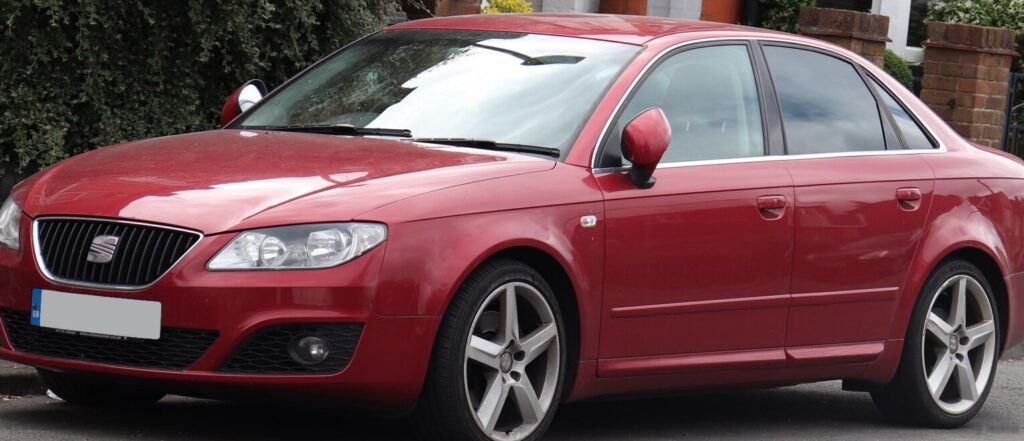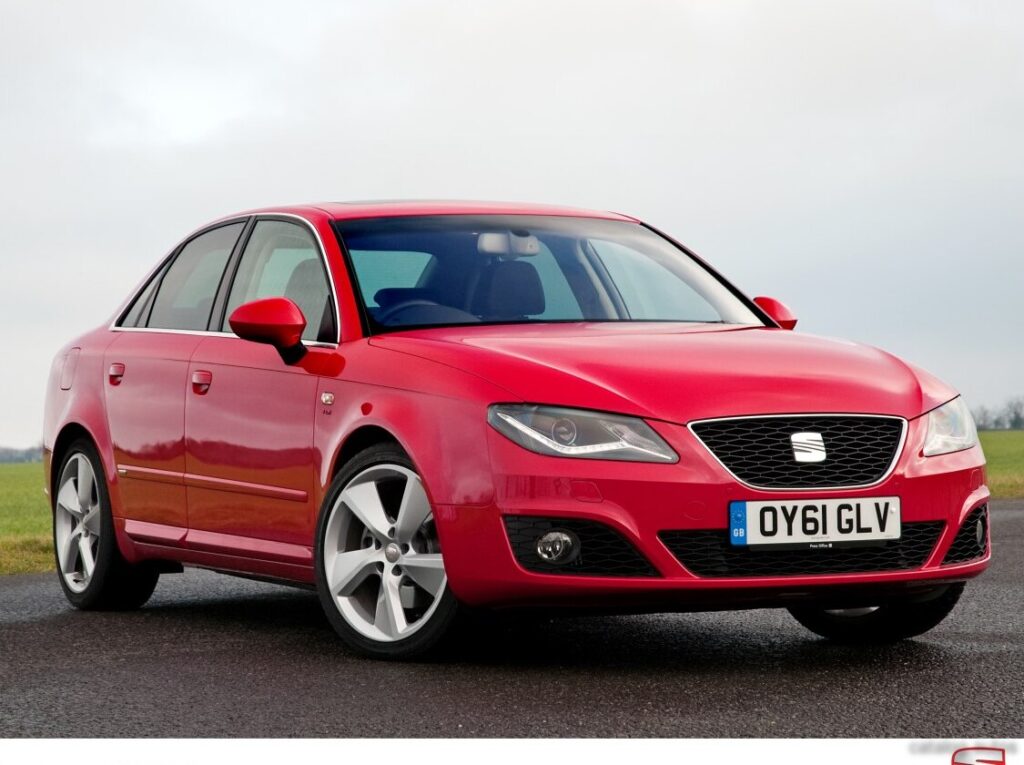
The Seat Exeo 1.8 TSI (160 hp) represents a mid-range offering within the Exeo lineup, a large family car produced by the Spanish manufacturer Seat between 2008 and 2013. The facelifted version, introduced in September 2011 and continuing through May 2013, brought styling updates and refinements to the original model. Positioned as a more accessible alternative to the higher-performance trims, the 1.8 TSI aimed to balance fuel efficiency with adequate power for everyday driving. The Exeo itself was based on the B7 generation Audi A4, a result of Seat’s ownership under the Volkswagen Group, sharing its platform (1HX0/A3) and many mechanical components.
At the heart of the Exeo 1.8 TSI lies the EA888 series 1.8-liter inline-four cylinder gasoline engine, specifically the CDHB engine code. This engine utilizes direct fuel injection (FSI) and is turbocharged with an intercooler, allowing it to produce 160 horsepower at 4500-6200 rpm and 250 Nm (184.39 lb-ft) of torque between 1500-4500 rpm. The engine features a double overhead camshaft (DOHC) valvetrain with four valves per cylinder. The engine’s design prioritizes a broad torque curve for responsive acceleration. The Exeo 1.8 TSI was primarily offered with a six-speed automatic transmission, although a six-speed manual was also available in some markets. The automatic transmission was chosen to provide a comfortable and convenient driving experience, appealing to a wider range of buyers.
In real-world driving, the 1.8 TSI automatic Exeo delivered a respectable, if not exhilarating, performance. Acceleration from 0 to 100 km/h (0-62 mph) took approximately 8.6 seconds, while 0-60 mph was achieved in around 8.2 seconds. The automatic transmission, while smooth, wasn’t particularly quick to downshift, meaning overtaking maneuvers required some planning. Compared to the more powerful 2.0 TSI variants, the 1.8 TSI felt noticeably less potent, but it offered a more relaxed and fuel-efficient driving experience. The gear ratios were tuned for a balance between acceleration and highway cruising, with a focus on maximizing fuel economy.
The Exeo 1.8 TSI typically came equipped with a reasonable level of standard features. Interior appointments included cloth upholstery, air conditioning, a basic audio system, and electric front windows. Higher trim levels offered options such as leather upholstery, a more advanced infotainment system, parking sensors, and alloy wheels. The dashboard layout was functional and straightforward, reflecting the car’s origins as a practical family sedan. Optional extras included a sunroof, heated seats, and a navigation system. The Exeo aimed to provide a comfortable and well-equipped interior without the premium price tag of its Audi A4 counterpart.
The Exeo 1.8 TSI utilized an independent multi-link suspension at the front and an independent trapezoidal lever suspension at the rear, both incorporating a transverse stabilizer bar. This setup provided a comfortable ride quality and decent handling characteristics. Braking duties were handled by ventilated discs at the front (312×25 mm) and solid discs at the rear (255×12 mm). Anti-lock Braking System (ABS) was standard. The suspension was tuned to prioritize comfort over outright sportiness, making it well-suited for long journeys. The car’s kerb weight of 1420 kg (3130.56 lbs) influenced the suspension setup, requiring a balance between ride comfort and handling stability.
Critics generally viewed the Exeo 1.8 TSI as a competent and practical family car, but not a particularly exciting one. It was praised for its comfortable ride, spacious interior, and reasonable fuel economy – achieving around 7.3 l/100 km (32.2 US mpg) on a combined cycle. However, it was often criticized for its somewhat bland styling and lack of dynamic flair compared to some of its rivals. Compared to the 2.0 TSI models, the 1.8 TSI offered better fuel economy but significantly less performance. Reliability was generally good, benefiting from the shared components with the Audi A4, although some owners reported minor issues with the electronic systems.
| Engine Model/Code | EA888 / CDHB |
| Engine displacement | 1798 cm3 (109.72 cu. in.) |
| Number of cylinders | 4 |
| Engine configuration | Inline |
| Cylinder Bore | 82.5 mm (3.25 in.) |
| Piston Stroke | 84.2 mm (3.31 in.) |
| Compression ratio | 9.6:1 |
| Fuel injection system | Direct injection |
| Engine aspiration | Turbocharger, Intercooler |
| Power | 160 Hp @ 4500-6200 rpm |
| Torque | 250 Nm @ 1500-4500 rpm (184.39 lb.-ft.) |
| Fuel consumption (urban) | 10.2 l/100 km (23.1 US mpg) |
| Fuel consumption (extra urban) | 5.6 l/100 km (42 US mpg) |
| Fuel consumption (combined) | 7.3 l/100 km (32.2 US mpg) |
| CO2 emissions | 169 g/km |
| Acceleration 0-100 km/h | 8.6 sec |
| Maximum speed | 225 km/h (139.81 mph) |
| Kerb Weight | 1420 kg (3130.56 lbs.) |
| Fuel tank capacity | 70 l (18.49 US gal) |
| Trunk (boot) space (minimum) | 460 l (16.24 cu. ft.) |
| Trunk (boot) space (maximum) | 833 l (29.42 cu. ft.) |
Today, the Seat Exeo 1.8 TSI represents a relatively affordable and practical used car option. The EA888 engine is known for its durability, although regular maintenance is crucial. Common issues include oil leaks and occasional problems with the turbocharger. The automatic transmission, if properly maintained, is generally reliable. The Exeo’s relatively understated styling and comfortable ride continue to appeal to buyers seeking a spacious and dependable family sedan, making it a viable alternative to more mainstream competitors.