
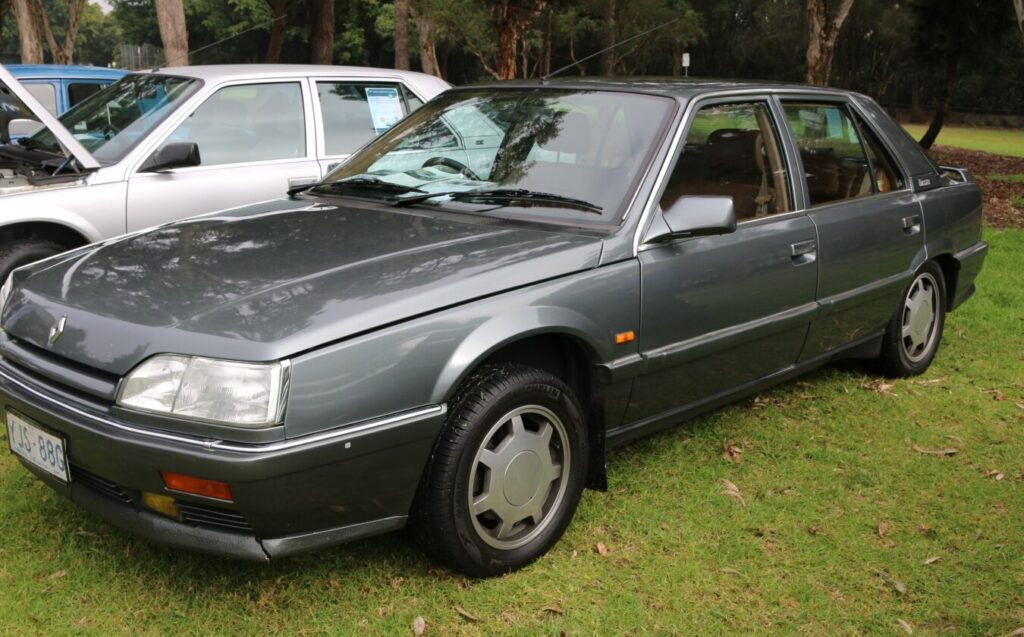
The Renault 25 (B29) 2.1 TD, producing 85 horsepower, was a diesel-powered variant of the executive-class Renault 25, manufactured between 1984 and 1992. Positioned as the fuel-efficient option within the 25 lineup, it catered to drivers prioritizing economy and long-distance comfort over outright performance. The B29 generation Renault 25, launched in 1984, represented a significant step upmarket for Renault, aiming to compete with vehicles like the Peugeot 505 and Ford Granada. The 2.1 TD model offered a practical alternative to the gasoline-powered engines, particularly in European markets where diesel fuel was more affordable and readily available.
The heart of the Renault 25 2.1 TD is its inline four-cylinder diesel engine, designated J8S-G.706 or J8S-H.708. This 2068cc (126.2 cubic inch) engine utilizes precombustion chamber injection, a system common in European diesels of the era. This system involves a small precombustion chamber connected to the main cylinder, where fuel is initially ignited before being transferred to the main chamber for complete combustion. The engine features an overhead camshaft (OHC) valvetrain with two valves per cylinder. A turbocharger was incorporated to boost power output to 85 hp at 4250 rpm and 181 Nm (133.5 lb-ft) of torque at 2000 rpm. The engine’s longitudinal front-engine layout was a characteristic of the Renault 25 platform. The engine required 6 liters (6.34 US quarts) of oil, specified to Renault standards, and 7.5 liters (7.93 US quarts) of coolant.
Driving the 2.1 TD was characterized by its emphasis on torque rather than outright speed. Acceleration from 0 to 100 km/h (0-62 mph) took approximately 13.1 seconds, and 0 to 60 mph was achieved in around 12.4 seconds. The top speed was 172 km/h (106.88 mph). While slower than the gasoline-powered versions, the diesel engine provided ample torque for comfortable cruising and effortless overtaking on highways. The five-speed manual transmission allowed drivers to effectively manage the engine’s powerband. The gear ratios were optimized for fuel efficiency and relaxed highway driving, rather than sporty acceleration. Compared to the more powerful gasoline engines, the 2.1 TD offered a significantly more economical driving experience.
The 2.1 TD trim level of the Renault 25 typically included features aimed at comfort and practicality. Standard equipment often included power steering, front disc brakes, and a relatively spacious interior. Interior upholstery was typically cloth, with options for upgraded materials. The dashboard layout was functional and straightforward, reflecting the car’s focus on practicality. Optional extras could include air conditioning, a sunroof, and upgraded audio systems. The Renault 25 offered a generous trunk space, ranging from 440 liters (15.54 cubic feet) with the rear seats up to 1240 liters (43.79 cubic feet) with them folded down.
The Renault 25 2.1 TD utilized a coil spring suspension system for both the front and rear axles. Front brakes were discs, while the rear brakes were drums – a cost-saving measure common in this class of vehicle. The car featured a steering rack and pinion system for precise steering control. Tire size was typically 195/60 R15, mounted on 15-inch wheel rims. The kerb weight of the 2.1 TD was 1250 kg (2755.78 lbs), contributing to its relatively modest performance figures. The maximum permissible weight was 1715 kg (3780.93 lbs), allowing for a maximum load of 465 kg (1025.15 lbs).
The Renault 25 2.1 TD received mixed reviews. Critics praised its fuel economy – achieving around 6.9 l/100 km (34.1 US mpg) combined – and comfortable ride. However, its relatively slow acceleration and somewhat agricultural diesel engine were points of criticism. Compared to the gasoline-powered 2.5-liter and V6 versions, the 2.1 TD was significantly less powerful but offered superior fuel efficiency. In terms of reliability, the 2.1 TD engine proved to be reasonably durable, although maintenance of the precombustion chamber injection system required specialized knowledge. The diesel engine generally offered better long-term reliability than the more complex gasoline engines.
| Brand | Renault |
| Model | 25 |
| Generation | 25 (B29) |
| Type (Engine) | 2.1 TD (85 Hp) |
| Start of production | 1984 |
| End of production | 1992 |
| Fuel consumption (urban) | 8.5 l/100 km (27.7 US mpg) |
| Fuel consumption (extra urban) | 5.2 l/100 km (45.2 US mpg) |
| Fuel consumption (combined) | 6.9 l/100 km (34.1 US mpg) |
| Fuel Type | Diesel |
| Acceleration 0-100 km/h | 13.1 sec |
| Acceleration 0-62 mph | 13.1 sec |
| Acceleration 0-60 mph | 12.4 sec |
| Maximum speed | 172 km/h (106.88 mph) |
| Power | 85 Hp @ 4250 rpm |
| Torque | 181 Nm @ 2000 rpm (133.5 lb.-ft. @ 2000 rpm) |
| Engine Displacement | 2068 cm3 (126.2 cu. in.) |
| Number of cylinders | 4 |
| Engine Configuration | Inline |
| Compression ratio | 21.5:1 |
| Kerb Weight | 1250 kg (2755.78 lbs) |
| Max. weight | 1715 kg (3780.93 lbs) |
| Trunk (boot) space (min) | 440 l (15.54 cu. ft.) |
| Trunk (boot) space (max) | 1240 l (43.79 cu. ft.) |
| Fuel tank capacity | 67 l (17.7 US gal) |
| Length | 4715 mm (185.63 in) |
| Width | 1805 mm (71.06 in) |
| Height | 1415 mm (55.71 in) |
| Number of gears | 5 |
| Gearbox type | Manual |
Today, the Renault 25 2.1 TD is a relatively rare sight, particularly in well-preserved condition. The diesel engine, while robust, requires regular maintenance to prevent issues with the injection system. The car has gained a following among enthusiasts who appreciate its classic French styling, comfortable ride, and fuel efficiency. Parts availability can be challenging, but a dedicated community of owners and specialists exists to support the preservation of these vehicles. The 2.1 TD represents a unique chapter in Renault’s history, offering a blend of practicality, comfort, and fuel economy that appealed to a specific segment of the market during the 1980s and early 1990s.
