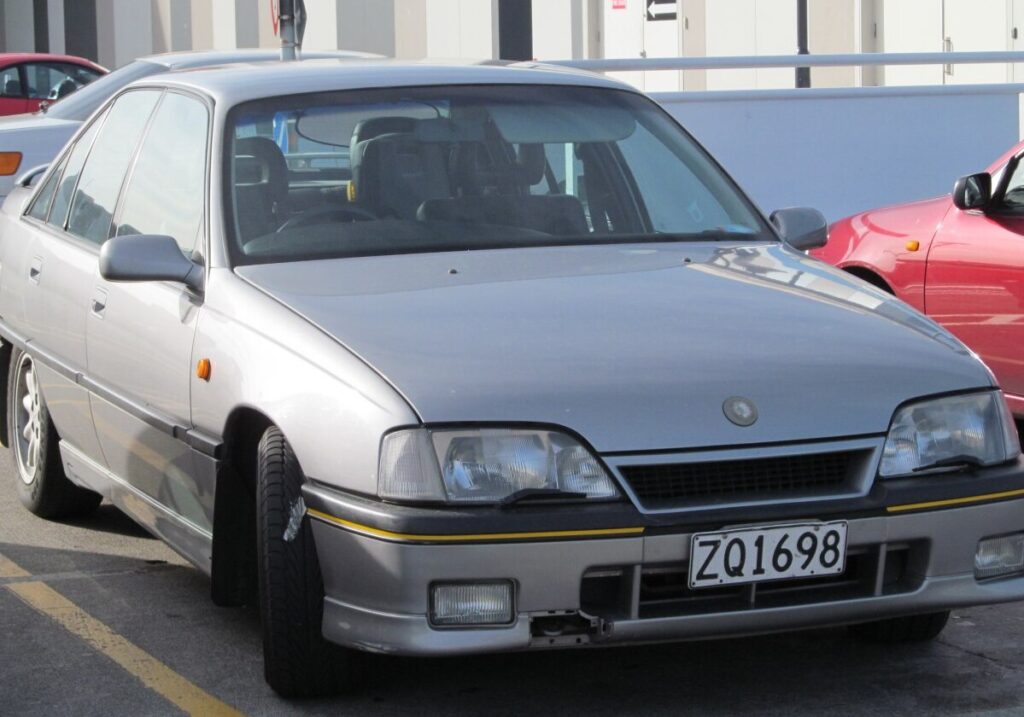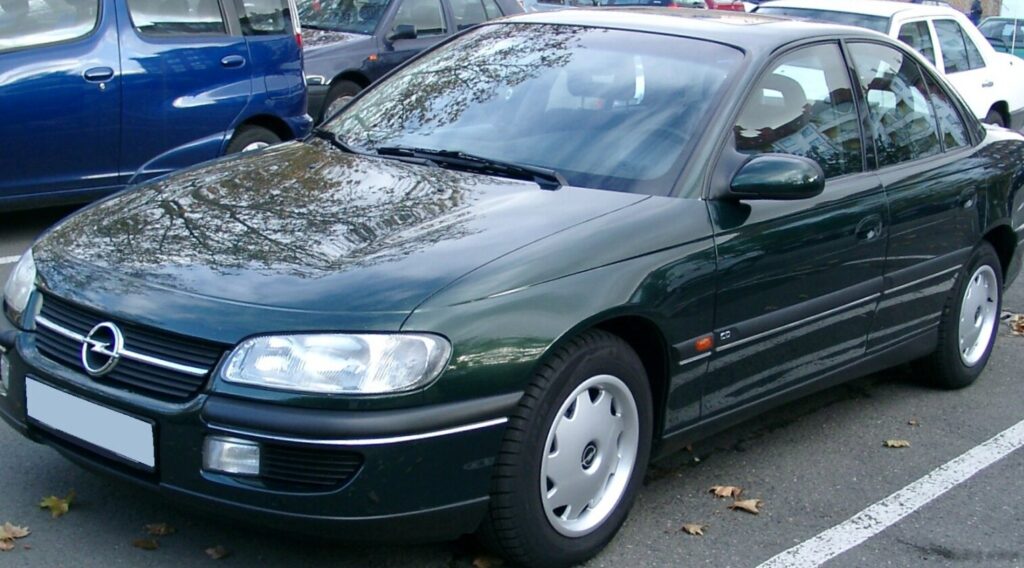
The Opel Omega B 2.0i 16V, produced from April 1994 to July 1999, represented a key entry point into the second generation (Omega B) of Opel’s flagship sedan. Built on the GM E-platform (internally designated as the 1HX0/A3 platform), the 2.0i 16V served as a more accessible alternative to the higher-performance and more expensive Omega variants, such as the 3.0L and 3.6L six-cylinder models. It aimed to provide a comfortable and spacious family sedan with reasonable performance and fuel economy, appealing to a broader customer base than its more sporting siblings.
The heart of the Omega B 2.0i 16V is the X20XEV inline four-cylinder engine, displacing 1998cc (121.93 cubic inches). This engine featured multi-port fuel injection and a double overhead camshaft (DOHC) valvetrain with four valves per cylinder. The X20XEV was a well-regarded engine within the Opel/Vauxhall range, known for its relative reliability and smooth power delivery. It produced 136 horsepower at 5600 rpm and 185 Nm (136.45 lb-ft) of torque at 4000 rpm. The engine’s compression ratio was 10.8:1. While a five-speed manual transmission was standard, a four-speed automatic transmission was also offered, impacting the car’s overall performance and target demographic.
The 2.0i 16V with the automatic transmission offered a comfortable, if not particularly sporty, driving experience. Acceleration from 0 to 100 km/h (0-62 mph) took approximately 11.2 seconds, and 0 to 60 mph was achieved in around 10.6 seconds. Top speed was electronically limited to 210 km/h (130.49 mph). The automatic gearbox, while providing convenience, did diminish the engine’s responsiveness compared to the manual version. Gear ratios were optimized for fuel efficiency and smooth cruising rather than outright acceleration. The rear-wheel-drive configuration contributed to balanced handling, though it wasn’t as agile as front-wheel-drive competitors.
The Omega B 2.0i 16V typically came equipped with a reasonable level of standard features. Interior upholstery was generally cloth, with options for upgraded velour or leather. The dashboard layout was functional and straightforward, featuring analog gauges and basic controls. Standard equipment included power windows, central locking, and an AM/FM radio. Optional extras included air conditioning, a sunroof, alloy wheels, and upgraded audio systems. The Omega B was known for its spacious interior, offering ample legroom and headroom for both front and rear passengers.
The Omega B 2.0i 16V utilized a coil spring suspension system at both the front and rear. Front brakes were ventilated discs, while rear brakes were solid discs. Anti-lock Braking System (ABS) was standard, enhancing safety. The car’s steering employed a hydraulic power steering system for ease of maneuverability. Tire size was typically 195/65 R15, mounted on 6.5J x 15 inch wheel rims. The suspension was tuned for comfort, prioritizing a smooth ride over sharp handling. Stabilizer bars were fitted to both axles to reduce body roll during cornering.
Contemporary reviews of the Omega B 2.0i 16V generally praised its spaciousness, comfort, and build quality. However, the 2.0-liter engine, particularly when paired with the automatic transmission, was often criticized for feeling underpowered, especially when fully loaded. Fuel economy was rated at approximately 9.1 l/100 km (25.8 US mpg) combined, which was average for its class at the time. Compared to the more powerful Omega variants, the 2.0i 16V offered a more affordable entry point, but at the expense of performance. The manual transmission version was generally preferred by enthusiasts for its improved responsiveness.
| Engine Model/Code | X20XEV |
| Engine Displacement | 1998 cm3 (121.93 cu. in.) |
| Number of Cylinders | 4, Inline |
| Power | 136 Hp @ 5600 rpm |
| Torque | 185 Nm @ 4000 rpm (136.45 lb.-ft. @ 4000 rpm) |
| Fuel Type | Petrol (Gasoline) |
| Compression Ratio | 10.8:1 |
| Fuel Injection System | Multi-port manifold injection |
| Valvetrain | DOHC |
| Acceleration 0-100 km/h | 11.2 sec |
| Acceleration 0-60 mph | 10.6 sec |
| Maximum Speed | 210 km/h (130.49 mph) |
| Kerb Weight | 1551 kg (3419.37 lbs.) |
| Fuel Consumption (Combined) | 9.1 l/100 km (25.8 US mpg, 31 UK mpg) |
| CO2 Emissions | 229 g/km |
| Fuel Tank Capacity | 75 l (19.81 US gal, 16.5 UK gal) |
| Trunk Space (Minimum) | 530 l (18.72 cu. ft.) |
| Trunk Space (Maximum) | 830 l (29.31 cu. ft.) |
Today, the Opel Omega B 2.0i 16V is a relatively uncommon sight on the road. The X20XEV engine is generally considered reliable, though age and maintenance history are crucial factors. Parts availability can be a challenge, as the Omega B is no longer in production. The automatic transmission, while comfortable, is potentially more prone to issues than the manual version. Despite its age, the Omega B 2.0i 16V remains a spacious and comfortable classic, appealing to enthusiasts seeking a well-built and relatively affordable vintage sedan. Its rear-wheel-drive layout and understated styling contribute to its unique character in a market dominated by front-wheel-drive alternatives.