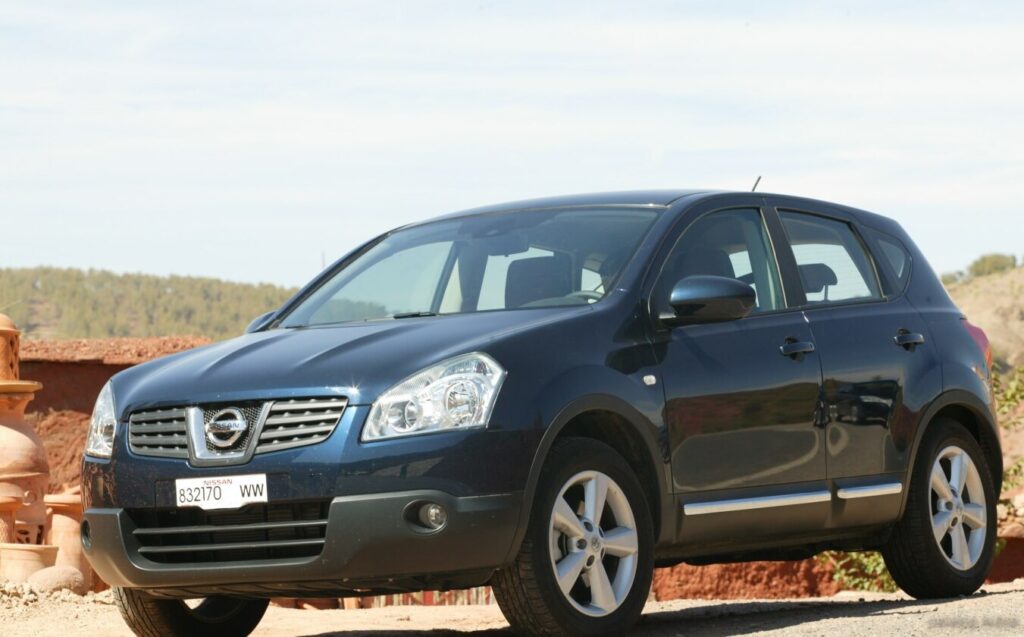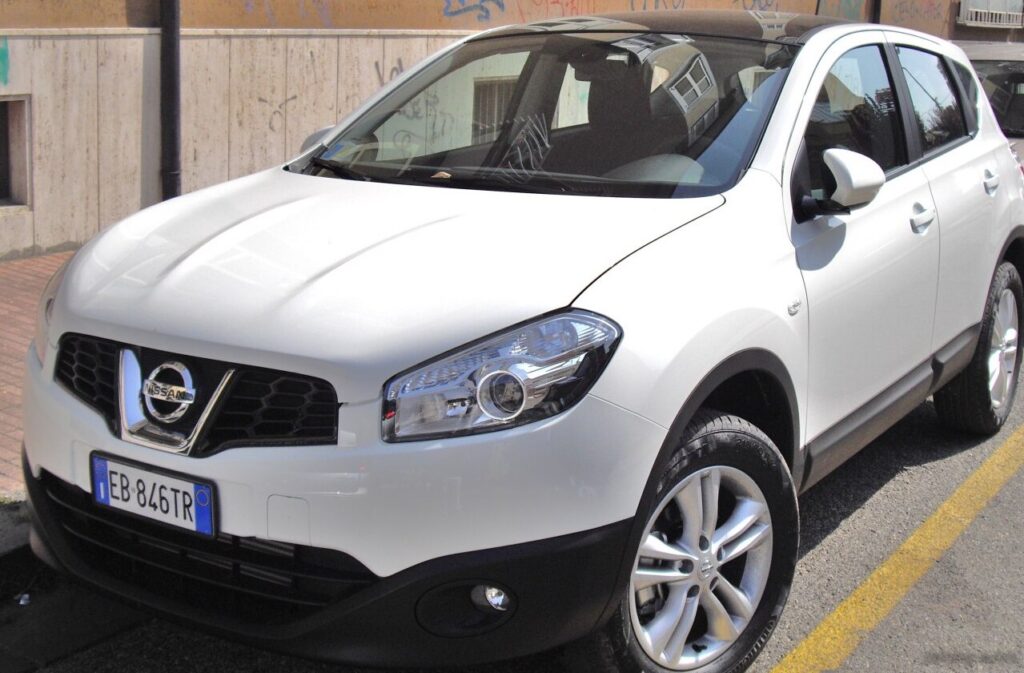
The Nissan Qashqai (marketed as the Dualis in some regions) is a compact crossover SUV produced by the Japanese automaker Nissan since 2006. The first generation, known as the J10, was produced from 2006 to 2014, receiving a significant facelift in 2010. The 2.0 dCi 150 Hp variant, produced from 2010 to 2014, represented a mid-range offering within the Qashqai lineup, positioned above the entry-level 1.6L gasoline models and below the all-wheel-drive variants. This model aimed to provide a balance of fuel efficiency, performance, and practicality for family buyers.
The 2.0 dCi variant is powered by Nissan’s M9R engine, a 2.0-liter four-cylinder diesel engine. This engine utilizes a common rail direct injection system, delivering fuel directly into the cylinders at extremely high pressure for optimized combustion. The M9R engine features a single overhead camshaft (SOHC) valvetrain with four valves per cylinder. A turbocharger with an intercooler is employed to increase power output and improve torque across the rev range. The engine produces 150 horsepower at 4000 rpm and 320 Nm (236 lb-ft) of torque at 2000 rpm. The engine is transversely mounted in the front of the vehicle. The Qashqai 2.0 dCi was primarily offered with a six-speed manual transmission, providing drivers with precise control over gear selection. While an automatic transmission was available in some markets, it was less common with this engine configuration.
In real-world driving conditions, the 2.0 dCi 150 Hp Qashqai offered a noticeable step up in performance compared to the lower-powered gasoline engines. Acceleration from 0 to 100 km/h (0-62 mph) took approximately 9.5 seconds, making it suitable for everyday driving and highway overtaking. The engine’s strong low-end torque provided good responsiveness in urban environments. Compared to the higher-output 2.0 dCi variants with all-wheel drive, the front-wheel-drive 150 Hp model offered slightly less grip and acceleration, but it compensated with improved fuel economy. The six-speed manual transmission allowed for efficient cruising at highway speeds, while the gear ratios were well-suited to maximizing torque delivery.
The 2.0 dCi 150 Hp Qashqai typically came equipped with a reasonably comprehensive set of features. Standard equipment often included air conditioning, power windows, power mirrors, a CD player with auxiliary input, and alloy wheels. Higher trim levels added features such as automatic climate control, a touchscreen infotainment system, Bluetooth connectivity, and parking sensors. Interior upholstery was typically cloth, with options for leather seats available on higher-spec models. The dashboard layout was functional and user-friendly, with a focus on practicality. Optional extras included a panoramic sunroof, heated seats, and a navigation system.
The Qashqai J10 utilized an independent suspension system on both the front and rear axles. The front suspension employed McPherson struts with a coil spring and anti-roll bar, while the rear suspension featured a multi-link setup, also with a stabilizer bar. This configuration provided a comfortable ride quality and decent handling characteristics. Braking duties were handled by ventilated discs on the front wheels and solid discs on the rear. Anti-lock Braking System (ABS) was standard, enhancing braking performance and safety. The steering system was an electric power-assisted rack and pinion, offering light and precise steering feel.
The 2.0 dCi 150 Hp Qashqai received generally positive reviews from automotive critics. It was praised for its fuel efficiency, comfortable ride, and spacious interior. The diesel engine was noted for its strong torque and responsiveness. However, some critics pointed out that the interior materials were not as premium as those found in some competitors. Fuel economy figures were respectable, with combined fuel consumption averaging around 6.4 l/100 km (36.8 US mpg). Reliability was generally good, although some owners reported issues with the diesel particulate filter (DPF) system, a common concern with modern diesel engines. Compared to the 1.6L gasoline models, the 2.0 dCi offered significantly better fuel economy and performance, making it a popular choice for drivers covering long distances.
| Brand | Nissan |
| Model | Qashqai |
| Generation | Qashqai I (J10, facelift 2010) |
| Type (Engine) | 2.0 dCi (150 Hp) |
| Start of production | 2010 |
| End of production | 2014 |
| Fuel consumption (urban) | 8.2 l/100 km (28.7 US mpg) |
| Fuel consumption (extra urban) | 5.4 l/100 km (43.6 US mpg) |
| Fuel consumption (combined) | 6.4 l/100 km (36.8 US mpg) |
| CO2 emissions | 167 g/km |
| Fuel Type | Diesel |
| Acceleration 0 – 100 km/h | 9.5 sec |
| Acceleration 0 – 62 mph | 9.5 sec |
| Maximum speed | 194 km/h (120.55 mph) |
| Engine Model/Code | M9R |
| Engine displacement | 1995 cm3 (121.74 cu. in.) |
| Number of cylinders | 4 |
| Power | 150 Hp @ 4000 rpm |
| Torque | 320 Nm @ 2000 rpm (236.02 lb.-ft. @ 2000 rpm) |
| Kerb Weight | 1503 kg (3313.55 lbs.) |
| Trunk (boot) space (minimum) | 410 l (14.48 cu. ft.) |
| Trunk (boot) space (maximum) | 1513 l (53.43 cu. ft.) |
| Fuel tank capacity | 65 l (17.17 US gal) |
| Number of gears | 6 |
| Gearbox type | Manual |
Today, the Nissan Qashqai J10 2.0 dCi 150 Hp remains a relatively common sight on used car markets. The M9R engine, while generally reliable, requires regular maintenance, particularly concerning the DPF system. Models with a well-documented service history are generally preferred. The Qashqai’s practicality, fuel efficiency, and comfortable ride continue to make it an appealing option for buyers seeking an affordable and versatile compact crossover SUV. Its enduring popularity is a testament to its well-rounded design and engineering.