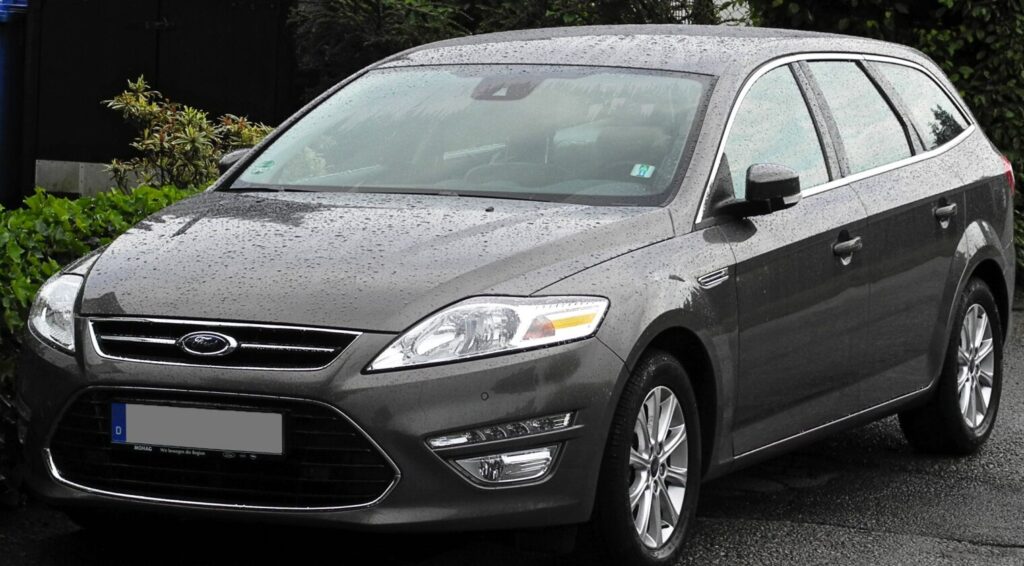
The Ford Mondeo III Wagon, specifically the 2.0 TDCI variant produced from 2010 to 2014, represented a significant offering in the European mid-size station wagon segment. This facelifted version of the third-generation Mondeo (internally designated as the facelifted Mk3) built upon the success of its predecessors, offering a practical and relatively efficient vehicle for families and those requiring substantial cargo space. The 2.0 TDCI 115 horsepower model occupied a middle ground in the Mondeo Wagon lineup, positioned as a balance between affordability, fuel economy, and usable performance. It sat below the more powerful 2.2-liter TDCi models and above the entry-level gasoline engines.
The powertrain at the heart of this Mondeo variant is Ford’s 2.0-liter Duratorq TDCi diesel engine, identified by the engine code TYBA. This engine is a four-cylinder, inline configuration, utilizing a common-rail direct fuel injection system. The Duratorq series was known for its robust construction and relatively straightforward maintenance. The 2.0 TDCI featured a turbocharger with an intercooler to enhance power output and efficiency. The engine produced 115 horsepower at 3750 rpm and 300 Nm (221.27 lb-ft) of torque between 1500 and 2250 rpm. This engine was paired with a six-speed manual transmission, delivering power to the front wheels. While an automatic transmission was available on other Mondeo variants, the 115 hp TDCI was primarily offered with the manual gearbox.
Driving the 2.0 TDCI Mondeo Wagon provided a comfortable and practical experience. Acceleration from 0 to 100 km/h (0-62 mph) took approximately 11.4 seconds, and top speed was rated at 187 km/h (116.2 mph). While not a performance-oriented vehicle, the engine’s torque delivery provided adequate power for everyday driving and hauling loads. The six-speed manual transmission allowed for efficient cruising on highways, while the relatively long gearing helped to maximize fuel economy. Compared to the higher-output 2.2-liter TDCi models, the 2.0 TDCI felt less responsive, particularly during overtaking maneuvers. However, it offered a noticeable improvement in fuel efficiency.
The 2010-2014 facelifted Mondeo Wagon 2.0 TDCI typically came equipped with a reasonable level of standard features. These included air conditioning, power windows, power mirrors, a CD/radio system, and ABS brakes. Higher trim levels, such as Titanium, added features like alloy wheels, automatic climate control, a premium audio system, and parking sensors. Interior upholstery was typically cloth, with leather options available as an upgrade. The dashboard layout was functional and user-friendly, with a focus on ergonomics. Optional extras included a sunroof, navigation system, and heated seats.
The Mondeo Wagon’s chassis featured independent suspension on both the front and rear axles. The front suspension utilized a McPherson strut design with a coil spring and anti-roll bar, while the rear employed a multi-link setup, also with a stabilizer bar. This configuration provided a comfortable ride and decent handling characteristics. Braking duties were handled by ventilated discs on the front wheels and solid discs on the rear. The car’s kerb weight of 1575 kg (3472.28 lbs) influenced its handling and braking performance.
Critics generally viewed the 2.0 TDCI Mondeo Wagon as a sensible and practical choice. It was praised for its spacious interior, large cargo capacity, and good fuel economy – achieving around 5.3 l/100 km (44.4 US mpg) on the combined cycle. However, some reviewers noted that the engine could feel strained when fully loaded or driving uphill. Compared to the 2.2-liter TDCi, the 2.0 TDCI offered a lower purchase price and slightly better fuel efficiency, making it an attractive option for budget-conscious buyers. Reliability was generally good, with the Duratorq engine proving to be durable.
| Brand | Ford |
| Model | Mondeo |
| Generation | Mondeo III Wagon (facelift 2010) |
| Type (Engine) | 2.0 TDCI (115 Hp) Duratorq |
| Start of production | 2010 |
| End of production | 2014 |
| Fuel consumption (urban) | 6.4 l/100 km (36.8 US mpg) |
| Fuel consumption (extra urban) | 4.6 l/100 km (51.1 US mpg) |
| Fuel consumption (combined) | 5.3 l/100 km (44.4 US mpg) |
| CO2 emissions | 139 g/km |
| Fuel Type | Diesel |
| Acceleration 0 – 100 km/h | 11.4 sec |
| Acceleration 0 – 62 mph | 11.4 sec |
| Maximum speed | 187 km/h (116.2 mph) |
| Engine Power | 115 Hp @ 3750 rpm |
| Engine Torque | 300 Nm @ 1500-2250 rpm (221.27 lb.-ft.) |
| Engine Displacement | 1997 cm3 (121.86 cu. in.) |
| Number of cylinders | 4 |
| Kerb Weight | 1575 kg (3472.28 lbs) |
| Max. weight | 2290 kg (5048.59 lbs) |
| Trunk (boot) space (min) | 489 l (17.27 cu. ft.) |
| Trunk (boot) space (max) | 1680 l (59.33 cu. ft.) |
| Number of gears | 6 |
| Gearbox type | Manual |
Today, the 2010-2014 Ford Mondeo III Wagon 2.0 TDCI remains a relatively common sight on used car markets. The Duratorq engine is known for its longevity, and well-maintained examples can still provide reliable transportation. However, potential buyers should be aware of typical diesel engine maintenance requirements, such as regular servicing of the fuel injection system and particulate filter. Overall, this variant represents a practical and affordable option for those seeking a spacious and fuel-efficient station wagon.