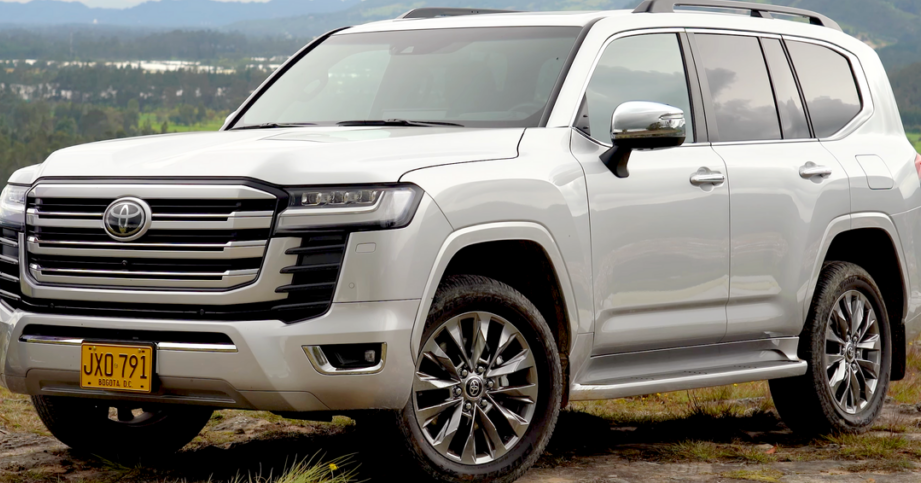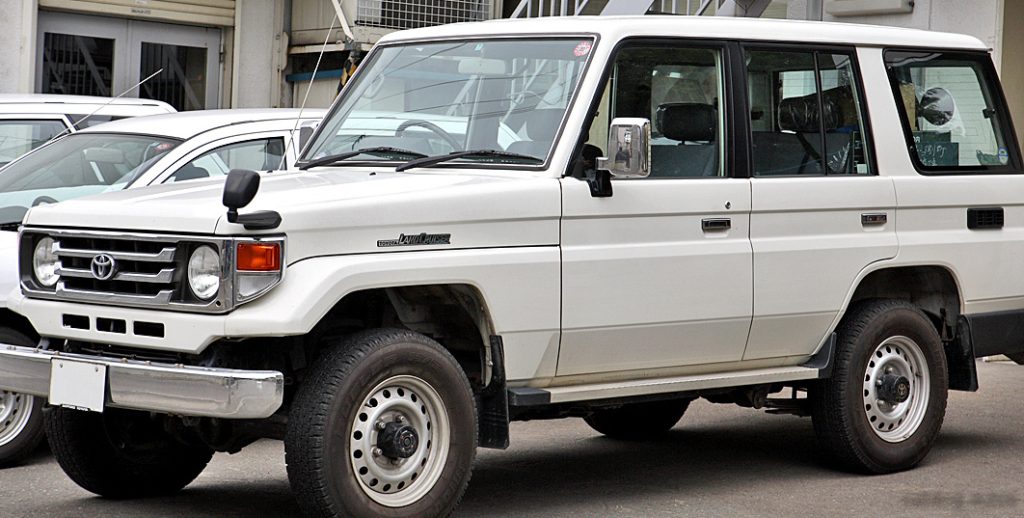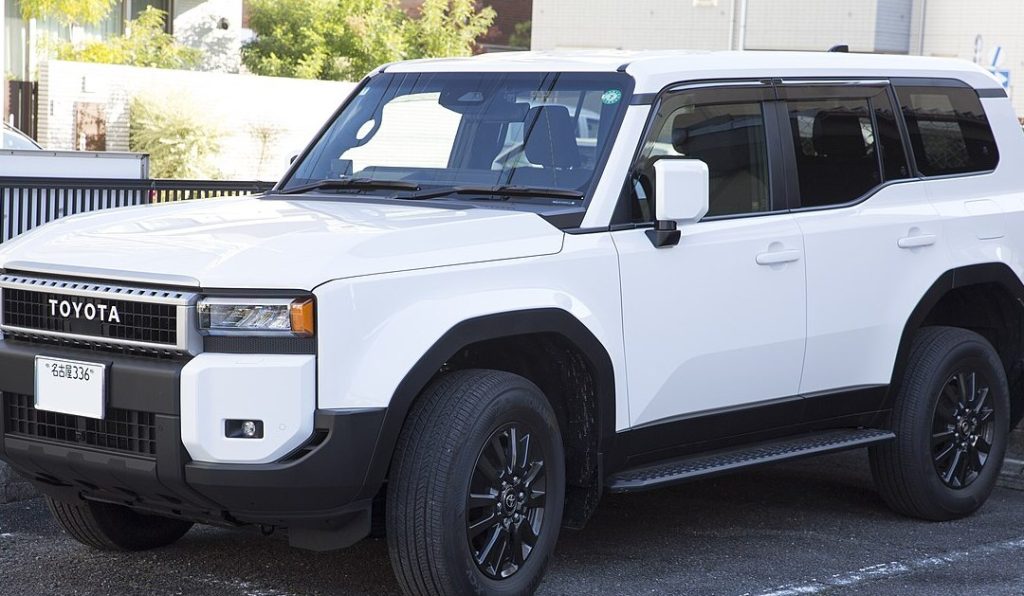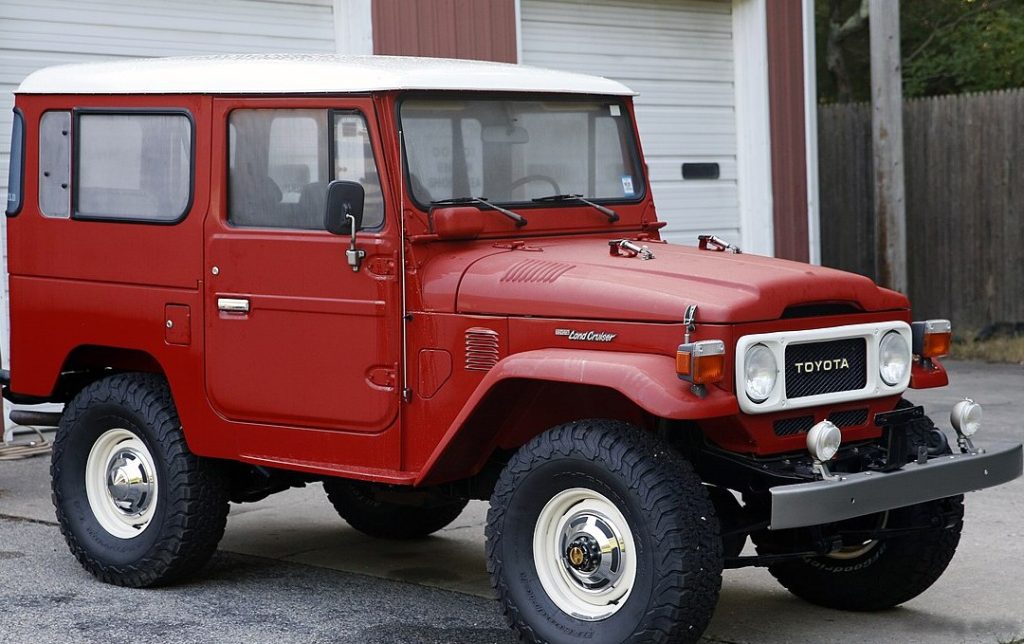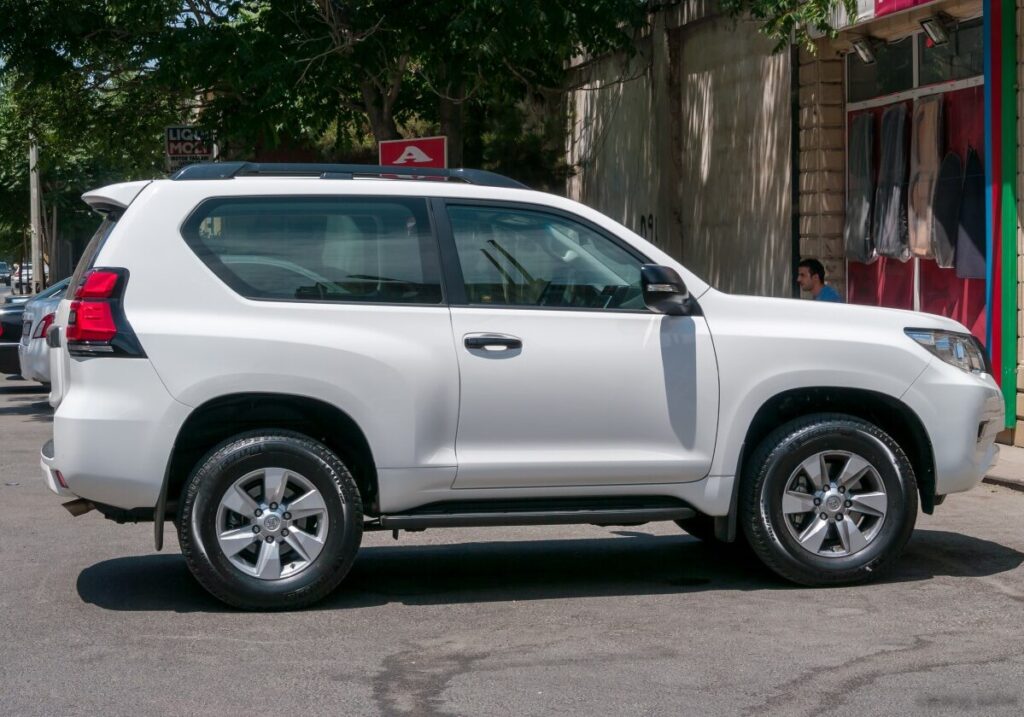
The Toyota Land Cruiser Prado (J150 series, post-facelift introduced in 2017) 3-door model powered by the 2.8 D-4D diesel engine was produced from September 2020 to October 2023. This variant occupied a specific niche within the Prado lineup, offering a more compact and agile alternative to the five-door model, while still retaining the Land Cruiser’s renowned off-road capability. It was positioned as a robust, practical SUV geared towards those prioritizing off-road performance and a smaller footprint over maximum passenger capacity. The J150 Prado series itself represents the fourth generation of the Land Cruiser Prado, built on a body-on-frame chassis for exceptional durability.
The heart of this Prado variant is the 1GD-FTV 2.8-liter inline-four cylinder diesel engine. This engine, a member of Toyota’s GD series, produces 204 horsepower at 3000 rpm and 420 Nm (309.78 lb-ft) of torque between 1400 and 3400 rpm. The engine utilizes a diesel common rail fuel injection system and a turbocharger with intercooler to optimize combustion and power delivery. The valvetrain is a Double Overhead Camshaft (DOHC) configuration with four valves per cylinder, contributing to efficient engine breathing. The engine’s displacement is 2755 cm3 (168.12 cu. in.) and it features a compression ratio of 15.6:1. It also incorporates a Start & Stop system and a particulate filter to meet Euro 6d-ISC-FCM emission standards. The engine is longitudinally mounted in the front of the vehicle.
In real-world driving, the 2.8 D-4D engine in the 3-door Prado provides adequate performance for both on-road and off-road conditions. Acceleration from 0 to 100 km/h (0-62 mph) takes approximately 11.2 seconds, while 0-60 mph is achieved in around 10.6 seconds. The maximum speed is electronically limited to 175 km/h (108.74 mph). While not a sports car, the engine’s strong low-end torque makes it well-suited for tackling challenging terrain and towing. The 6-speed manual transmission allows for precise control, particularly beneficial in off-road situations. Compared to potential higher-output versions (not typically offered in the 3-door configuration), this engine prioritizes fuel efficiency and durability over outright speed.
The 3-door 2.8 D-4D Prado typically came equipped with a practical, utilitarian interior. Standard features included air conditioning, power windows, and a basic audio system. Upholstery was generally cloth, though leather options were available. The dashboard layout was functional and straightforward, prioritizing ease of use. Optional extras included a touchscreen infotainment system, navigation, and upgraded sound systems. The vehicle seats five passengers, though rear seat space is somewhat limited due to the shorter wheelbase. The focus was on providing a durable and functional interior capable of withstanding the rigors of off-road use.
The Prado’s chassis features a robust body-on-frame construction, providing excellent strength and durability. The front suspension utilizes a double wishbone setup with a transverse stabilizer bar, while the rear suspension employs a rigid axle with coil springs. Air suspension was available as an optional upgrade, enhancing ride comfort and off-road capability. Braking is handled by ventilated discs on all four wheels, assisted by an Anti-lock Braking System (ABS). The vehicle’s approach angle is 32 degrees, departure angle is 26 degrees, and ramp-over angle is 25 degrees, demonstrating its off-road prowess. Ground clearance is a substantial 205 mm (8.07 in).
Critics generally praised the 3-door Prado 2.8 D-4D for its off-road capability, fuel efficiency, and reliability. Fuel consumption figures are rated at 7.5-7.7 l/100 km (31.4-30.5 US mpg) combined. The diesel engine is known for its longevity and relatively low maintenance costs. Compared to other Prado trims, this variant offered a more affordable entry point into the Land Cruiser family, albeit with a slightly less refined on-road experience. The manual transmission was appreciated by enthusiasts for its control and engagement. However, some reviewers noted the limited rear passenger space and the relatively modest power output compared to larger-engined models.
| Brand | Toyota |
| Model | Land Cruiser Prado |
| Generation | Land Cruiser Prado (J150, facelift 2017) 3-door |
| Type (Engine) | 2.8 D-4D (204 Hp) 4WD |
| Start of production | September, 2020 |
| End of production | October, 2023 |
| Fuel consumption (urban) | 8.6-8.8 l/100 km (27.4 – 26.7 US mpg) |
| Fuel consumption (extra urban) | 6.9-7.1 l/100 km (34.1 – 33.1 US mpg) |
| Fuel consumption (combined) | 7.5-7.7 l/100 km (31.4 – 30.5 US mpg) |
| CO2 emissions | 199-203 g/km |
| Fuel Type | Diesel |
| Acceleration 0 – 100 km/h | 11.2 sec |
| Maximum speed | 175 km/h (108.74 mph) |
| Engine Model/Code | 1GD-FTV |
| Engine displacement | 2755 cm3 (168.12 cu. in.) |
| Number of cylinders | 4 |
| Power | 204 Hp @ 3000 rpm |
| Torque | 420 Nm @ 1400-3400 rpm (309.78 lb.-ft.) |
| Kerb Weight | 1990 kg (4387.2 lbs.) |
| Max. weight | 2600 kg (5732.02 lbs.) |
| Trunk (boot) space (min/max) | 381 l / 1434 l (13.45 cu. ft. / 50.64 cu. ft.) |
| Fuel tank capacity | 87 l (22.98 US gal) |
| Number of gears | 6 |
| Gearbox type | Manual |
Today, the 2020-2023 Toyota Land Cruiser Prado 3-door 2.8 D-4D holds a strong reputation for reliability and durability in the used car market. The 1GD-FTV engine is well-regarded for its longevity, and parts availability is generally good. These vehicles are often sought after by those looking for a capable and dependable off-road vehicle that doesn’t break the bank. While mileage and maintenance history are crucial considerations, this Prado variant represents a solid investment for buyers prioritizing practicality and off-road performance.