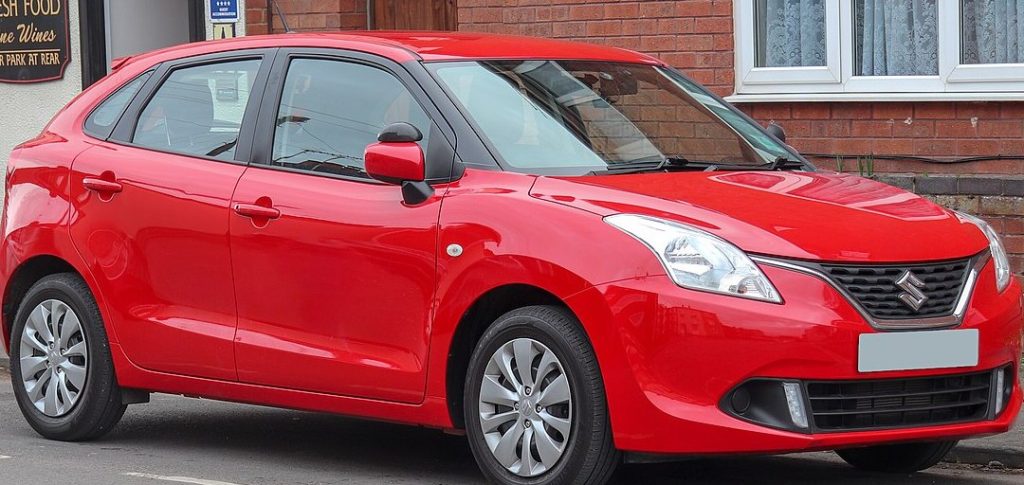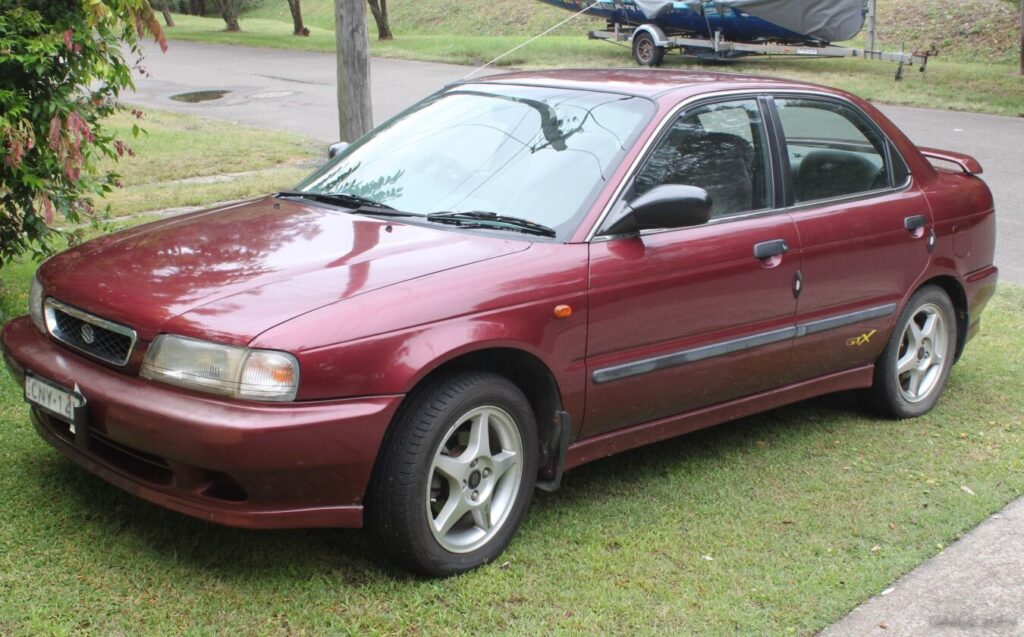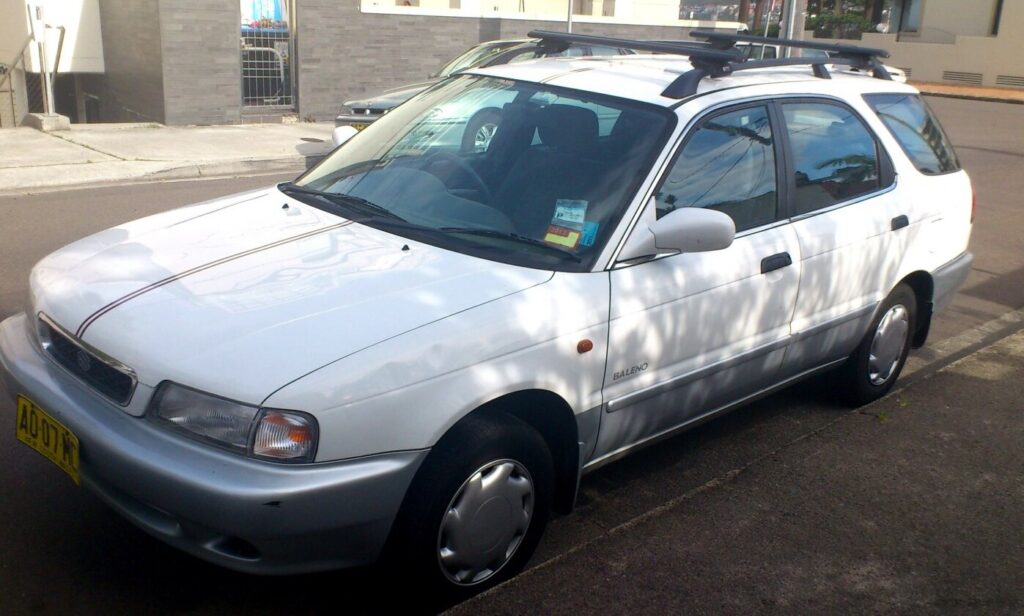
The Suzuki Baleno Combi (EG series), produced from 1996 to 2002, represented Suzuki’s entry into the compact estate (station wagon) market. This variant, specifically the 1.6 i 16V (98 hp) with an automatic transmission, occupied a middle ground within the Baleno Combi lineup, offering a balance between affordability, practicality, and ease of use. It was positioned above the base 1.3L models and below the sportier, though rarely available in the Combi body style, 1.6L manual variants. The EG series Baleno Combi was built on the B platform, shared with other compact Suzuki and General Motors vehicles of the era.
Powertrain & Engine Architecture
The heart of the 1.6 i 16V Baleno Combi was the G16B engine, a 1.6-liter (1590 cc) inline-four cylinder gasoline engine. This engine featured a single overhead camshaft (SOHC) valvetrain with four valves per cylinder, hence the “16V” designation. The G16B was a naturally aspirated engine, meaning it did not utilize a turbocharger or supercharger. Fuel delivery was managed by a multi-port fuel injection system, providing precise fuel metering for improved efficiency and performance. The engine produced 98 horsepower at 6000 rpm and 127 Nm (93.67 lb-ft) of torque at 3200 rpm.
Paired with the G16B engine was a four-speed automatic transmission. This transmission was a conventional hydraulic automatic, offering smooth, if not particularly sporty, gear changes. The automatic transmission was chosen to appeal to buyers prioritizing convenience and ease of driving, particularly in urban environments. The gear ratios were tuned for fuel economy and comfortable cruising, rather than outright acceleration. First gear was relatively short for quick take-offs, while higher gears were spaced to maintain low engine speeds at highway velocities.
Engine Specifications
The G16B engine boasted a bore of 75mm and a stroke of 90mm, resulting in a compression ratio of 9.5:1. The engine required 3.3 liters (3.49 US quarts) of engine oil and 4.2 liters (4.44 US quarts) of coolant. The engine’s design prioritized reliability and ease of maintenance, making it a relatively straightforward engine for mechanics to service.
Driving Characteristics
The 1.6L automatic Baleno Combi offered a comfortable, but not exhilarating, driving experience. Acceleration from 0 to 100 km/h (0-62 mph) took approximately 12 seconds, while 0-60 mph was achieved in around 11.4 seconds. The top speed was rated at 175 km/h (108.74 mph). The automatic transmission, while convenient, did detract from the engine’s potential. Compared to the five-speed manual version of the same engine, the automatic felt noticeably slower, particularly during overtaking maneuvers. The four-speed transmission limited the engine’s ability to stay within its optimal power band.
However, the Baleno Combi’s relatively light weight (1090 kg / 2403.04 lbs) helped to mitigate the performance deficit. The suspension, tuned for comfort, provided a compliant ride, absorbing bumps and imperfections in the road surface effectively. Steering was light and easy, making it well-suited for city driving. Overall, the driving experience was geared towards practicality and ease of use, rather than sporty performance.
Equipment & Trim Levels
The 1.6 i 16V automatic Baleno Combi typically came equipped with a reasonable level of standard features. These included power steering, central locking, electric front windows, and an AM/FM radio. Interior upholstery was typically cloth, with a simple, functional dashboard layout. Air conditioning was often included as standard, or available as an optional extra. Safety features were relatively basic for the time, typically including ABS (Anti-lock Braking System) as an option, and driver and passenger airbags.
Optional extras could include alloy wheels, a sunroof, and upgraded audio systems. Higher trim levels, if available in specific markets, might have featured additional comfort and convenience items, such as a trip computer and upgraded interior trim materials. The Baleno Combi was designed to be a practical and affordable family vehicle, and its equipment levels reflected this.
Chassis & Braking
The Baleno Combi utilized a front-engine, front-wheel-drive layout. The front suspension consisted of wishbone suspension, providing a comfortable ride and predictable handling. The rear suspension also employed a wishbone setup. Braking duties were handled by ventilated discs at the front and drum brakes at the rear. The combination of disc and drum brakes was a cost-saving measure, common in vehicles of this class. The ABS system, when equipped, helped to improve braking performance and stability, particularly on slippery surfaces. The steering system was a rack and pinion type, providing precise and responsive steering feel. The vehicle rode on 175/70 R13 H tires.
Market Reception & Comparison
The Suzuki Baleno Combi 1.6 i 16V automatic was generally well-received by automotive critics as a practical and affordable estate car. It was praised for its spacious interior, comfortable ride, and reasonable fuel economy (8.9 l/100 km urban, 6 l/100 km extra-urban). However, the automatic transmission was often criticized for its sluggish performance compared to the manual gearbox. Compared to other trims in the Baleno lineup, the 1.6L automatic offered a good balance between performance and fuel efficiency. The 1.3L models were more economical but lacked the power for comfortable highway driving, while the 1.6L manual offered better performance but required more driver involvement.
In terms of reliability, the G16B engine and the four-speed automatic transmission were generally considered to be reliable units, provided they were properly maintained. However, like any vehicle, regular servicing and timely repairs were essential to ensure long-term reliability.
Technical Specifications
| Brand | Suzuki |
| Model | Baleno Combi (EG) |
| Type | Station Wagon (Estate) |
| Engine Displacement | 1590 cm3 (97.03 cu. in.) |
| Engine Model/Code | G16B |
| Number of Cylinders | 4, Inline |
| Power | 98 Hp @ 6000 rpm |
| Torque | 127 Nm @ 3200 rpm (93.67 lb.-ft. @ 3200 rpm) |
| Fuel Type | Petrol (Gasoline) |
| Transmission | 4-speed Automatic |
| Drive Wheels | Front Wheel Drive |
| Acceleration 0-100 km/h | 12 sec |
| Acceleration 0-62 mph | 12 sec |
| Maximum Speed | 175 km/h (108.74 mph) |
| Kerb Weight | 1090 kg (2403.04 lbs) |
| Max. Weight | 1560 kg (3439.21 lbs) |
| Fuel Tank Capacity | 51 l (13.47 US gal, 11.22 UK gal) |
| Trunk Space (min/max) | 375 l / 1377 l (13.24 cu. ft. / 48.63 cu. ft.) |
| Length | 4345 mm (171.06 in) |
| Width | 1690 mm (66.54 in) |
| Height | 1460 mm (57.48 in) |
Legacy
The Suzuki Baleno Combi 1.6 i 16V automatic, while not a performance icon, remains a reasonably well-regarded vehicle in the used car market. The G16B engine is known for its durability and relatively low maintenance costs. The four-speed automatic transmission, while not the most modern, is also generally reliable. Today, these vehicles are often sought after by buyers looking for an affordable, practical, and reliable estate car. Parts availability can be a concern in some regions, but the G16B engine was used in a variety of Suzuki and General Motors vehicles, increasing the chances of finding replacement parts. The Baleno Combi represents a solid, if unspectacular, example of a 1990s compact estate car, offering a blend of practicality, affordability, and reliability.